Adapter Plug
CN → US| HS Code | Tariff Rate | Origin | Destination | Doc |
|---|---|---|---|---|
| 8504407007 | 35.0% | CN | US | Official Doc |
| 8504407018 | 35.0% | CN | US | Official Doc |
| 8504406001 | 35.0% | CN | US | Official Doc |
| 8504409510 | 35.0% | CN | US | Official Doc |
| 8504407007 | 35.0% | CN | US | Official Doc |
Product Images
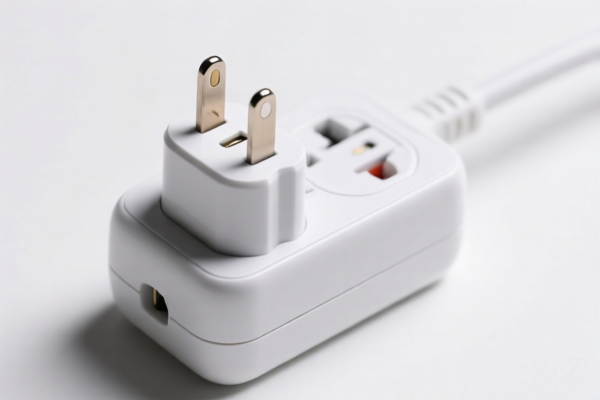
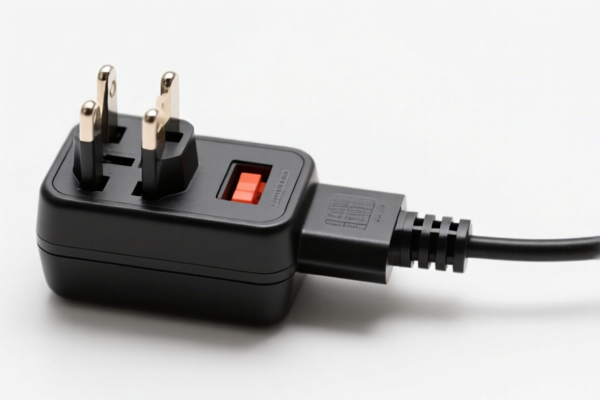
AI Analysis
🔌 Power Adapters (Static Converters)
🌐 HS Code Reference & Customs Clearance Guide | 2026 Latest Tariff Analysis | Professional Clearance Strategy
📌 I. Product Definition: What Exactly is a "Power Adapter"?
A Power Adapter (often technically referred to as a "Static Converter" in international trade classifications) is a device that converts alternating current (AC) from a wall outlet into direct current (DC) for electronic devices. It is a critical component in the supply chain for consumer electronics, industrial equipment, and telecommunications.
In customs classification, the key distinction lies in its function as a static converter (no moving parts) and its specific application. While common parlance calls them "adapters," the Harmonized System (HS) often categorizes them under Chapter 85, specifically heading 8504 (Electrical transformers, static converters...).
⚠️ Key Distinction Point:
- Static Converters (8504.40): Devices that convert AC to DC or change voltage/frequency without moving parts. This is where most power adapters fall.
- Not Transformers (8504.10/8504.30): Pure voltage transformation without rectification is different from an adapter which usually provides DC output.
- Not Batteries (8507): Even if it has a small battery backup, the primary function as a converter dictates the classification.
📦 II. HS Code Classification Details (2026 Latest Tariff Alignment)
Based on the provided data, the Power Adapter falls under the sub-heading for "Other static converters". The specific 10-digit HS codes provided in the reference data are:
| HS Code | Product Description & Logic | Applicability | Tax Rate |
|---|---|---|---|
8504.40.70.07 |
Static Converter: Categorized under "Other" static converters. Inferred as a power product based on common usage. No material or form conflicts. | General Power Adapters / Chargers | 35.0% |
8504.40.70.18 |
Static Converter: Fits into "Other" categories of static converters. Classified as electronic equipment power supply. No specific power range conflicts. | Electronic Device Power Supplies | 35.0% |
8504.40.60.01 |
Static Converter: Matches the usage of static converters. Approved based on lack of material and power conflicts. | Power Conversion Units | 35.0% |
8504.40.95.10 |
Static Converter: Falls under the category of static converters. Meets power supply description. No obvious material conflicts. | General Power Converters | 35.0% |
🔍 Critical Insight:
- All four HS codes fall under 8504.40, which covers "Other static converters".
- The suffixes (.07, .18, .60.01, .95.10) represent further national subdivisions (likely US HTSUS) based on specific power ratings, material compositions, or end-use nuances not detailed in the summary but implied by the "no conflict" logic.
- Unified Tax Rate: Regardless of the specific 10-digit code, the Total Tax is consistently 35.0% for China-origin goods.
💰 III. 2026 Latest Tariff Rate Breakdown (Including Surcharges & Policy Add-ons)
✅ Applicable Country: United States (US)
✅ Country of Origin: China (CN)
✅ Effective Date: Current as of 2026 data
🎯 1. Uniform Tariff Structure for Power Adapters (8504.40.xxxxxx)
| Item | Detail |
|---|---|
| Base Tariff | 0.0% (Ad Valorem) |
| Section 301 Surcharge | +25.0% |
| Section 122 Duty | +10.0% |
| Total Effective Rate | 35.0% |
| Tax Calculation | CIF Value × 35% |
| De Minimis Exemption | ❌ Not Eligible (Denied under Section 122/301 for China origin) |
| Legal Basis Path | USITC:8504.40 → Section 301 (Footnote 9903.88.01) → Section 122 (IEEPA Authority) |
📌 Explanation of Tariff Components:
- "Base Tariff 0.0%": The standard Most Favored Nation (MFN) rate for static converters is zero. This makes the surcharges highly impactful.
- "Section 301 Surcharge 25%": Imposed under the U.S. Trade Act of 1974, Section 301, targeting specific Chinese imports including electronics components.
- "Section 122 Duty 10%": Imposed under the International Emergency Economic Powers Act (IEEPA), specifically targeting goods from China.
- "Total 35%": This is a high-barrier tariff. Unlike some consumer goods where rates might be lower, electronics components face this steep combined burden.
🛠️ IV. Customs Clearance Practical Advice (Expert Pitfall Avoidance)
✅ 1. Documentation Checklist (Mandatory)
| Document | Required? | Purpose |
|---|---|---|
| ✅ Product Specification Sheet | ✔️ | Must clearly state input (AC) and output (DC) voltage/current. Critical for distinguishing from transformers. |
| ✅ Circuit Diagram / Block Diagram | ✔️ | Proves it is a "static converter" (no moving parts) and identifies if it includes rectification. |
| ✅ Product Photos (with Label) | ✔️ | Must show input/output ratings, model number, and "Made in China" mark. |
| ✅ Third-Party Certifications | ✔️ | FCC (USA), UL/ETL (Safety), CE (Europe if sold domestically). Customs may verify safety standards. |
| ✅ Commercial Invoice | ✔️ | Description must be precise: "Power Adapter, Static Converter, Model XYZ, Input: 100-240V AC, Output: 12V DC". |
| ✅ Packing List | ✔️ | Clearly separate adapters from accessories (cables, manuals) to avoid misclassification of accessories. |
✅ 2. Declaration Best Practices (Key Mantras)
🔥 "Be Precise: 'Static Converter' Not Just 'Adapter'!"
| Scenario | Correct Declaration | Incorrect Declaration | Consequence |
|---|---|---|---|
| Standard AC-DC Adapter | 8504.40.70.07 (Static Converter) |
"Charger for Phone" | Risk of reclassification + penalties |
| Industrial Power Supply | 8504.40.95.10 |
"Transformer" | Incorrect duty base (0% vs 35%) |
| Battery Charger Unit | 8504.40.xxxx (Converter part) |
"Battery" (8507) | Major classification error |
| Accessories (Cables) | Separate Line Item | Mixed with Adapter | Complex valuation issues |
📌 Note:
- Avoid vague terms like "Electrical Part" or "Gadget".
- Use technical terms: "Static Converter", "AC to DC Converter", "Rectifier".
- If the device is a battery charger, it is still often classified under 8504 if the primary function is conversion, but consult a specialist for complex cases.
✅ 3. Special Handling
| Situation | Recommendation |
|---|---|
| OEM/White Label Adapters | Ensure the supplier provides a Letter of Non-Prejudice or classification opinion. The physical product is the same; the branding does not change the HS code. |
| High-Power Adapters (>1kW) | May fall under different subheadings. Verify if 8504.40.60.01 (specific power range) applies instead of the "Other" categories. |
| Mixed Containers | Do not mix adapters with other electronics (e.g., laptops) in a single HS code declaration if their tariff treatments differ significantly. Separate lines are safer. |
| Origin Fraud | Ensure "Made in China" is accurate. Transshipment through Vietnam or Malaysia without substantial transformation can lead to Section 301 penalties and seizure. |
🌍 V. Global Market Comparison (2026 Context)
| Market | Recommended HS Code | Base Duty | Surcharges | Total Cost Impact |
|---|---|---|---|---|
| 🇺🇸 USA | 8504.40.70.07 etc. |
0% | +25% (Sec 301) + 10% (Sec 122) | 35% (High Barrier) |
| 🇨🇳 China (Import) | 8504.40.10.00 |
~10-14% | None | Low |
| 🇪🇺 EU | 8504.40.95 |
0% | None | 0% (Free Trade under many scenarios) |
| 🇬🇧 UK | 8504.40.95 |
0% | None | 0% |
| 🇨🇦 Canada | 8504.40.00 |
0% | None | 0% (USMCA if Canadian/Mexican origin) |
📌 Conclusion:
- The US market is the most challenging for Power Adapters due to the 35% combined tariff.
- EU/UK/Canada offer 0% duty for these products, making them more attractive for pricing strategies if supply chains are adjusted.
- Strategy: Consider supply chain diversification (e.g., manufacturing in Vietnam or India) to avoid the 35% US surcharge, provided substantial transformation rules are met.
📌 VI. Common Errors & Pitfalls (Lessons Learned)
❌ Error 1: Declaring as "Transformer" (8504.10/30)
👉 Consequence: Incorrect classification. Transformers (inductive) are legally distinct from Static Converters (semiconductor-based). Misdeclaration leads to audits.
❌ Error 2: Ignoring Section 122 (10% Surcharge)
👉 Consequence: Underpaying duties by 10%. Customs will assess back-taxes + interest + penalties upon review.
❌ Error 3: Vague Description "Power Supply"
👉 Consequence: CBP may request detailed technical documentation, causing clearance delays (7-14 days).
❌ Error 4: Mixing "Adapter" and "Charger" without distinction
👉 Consequence: If the device includes a battery, it might be classified differently. Ensure the primary function is conversion.
✅ Correct Approach:
"AC-DC Power Adapter, Static Converter, Input: 100-240V~, Output: 12V=, 2A, Model XYZ, FCC Certified, Made in China"
🎯 VII. Conclusion: Professional Declaration, Cost Control
🎯 Remember the Mantra:
🔹 "Static Converter, Not Transformer. 0% Base, 35% Total. Be Specific, Avoid Audit!"
🔹 "Section 301 (25%) + Section 122 (10%) = 35%. No De Minimis for China."
📌 Pro Tip:
If you are exporting to the US, consider Applying for a HTSUS Exclusion (if still available for your specific model) or restructuring your supply chain to manufacture outside China to mitigate the 35% tariff.
Always use the term "Static Converter" in technical documents to align with Chapter 85, Heading 8504.
📣 Immediate Action:
📞 Engage a licensed US Customs Broker.
📄 Prepare full technical specs (Input/Output, Rectifier type).
🚀 Accurate classification saves 35% of your product cost in duties.
✨ Professional Customs Clearance Starts with Accurate Classification!
💼 Your bottom line depends on the HS Code!
Customer Reviews
About HS Code Classification
The Harmonized System (HS) is an internationally standardized nomenclature developed by the World Customs Organization (WCO) to classify traded products. Over 200 countries use the HS system as the basis for customs tariffs, trade statistics, and import/export regulations.
Each HS code follows a hierarchical structure:
- Chapter (2 digits) — Broad category of goods (e.g., Chapter 84: Machinery and Mechanical Appliances)
- Heading (4 digits) — More specific grouping within the chapter
- Subheading (6 digits) — Internationally standardized breakdown, used by all WCO member countries
- National subdivisions (8-10 digits) — Country-specific extensions for further classification, such as US HTSUS 10-digit codes
Correct HS code classification is essential for smooth customs clearance, accurate duty payment, and compliance with trade regulations. Misclassification can lead to customs delays, overpayment of duties, or penalties.
When importing from CN to US, the applicable tariff rates may include:
- Most-Favored-Nation (MFN) rate — The standard duty rate applied to WTO members
- General rate — Applied to countries without trade agreements
- Trade remedy duties — Additional tariffs such as Section 301 (anti-dumping), Section 232 (national security), or countervailing duties
The information provided on this page is for reference purposes only. For official classification, please consult with your local customs authority or a licensed customs broker.