Adhesive Fastener
CN → US| HS Code | Tariff Rate | Origin | Destination | Doc |
|---|---|---|---|---|
| 3917400080 | 40.3% | CN | US | Official Doc |
| 3917400095 | 40.3% | CN | US | Official Doc |
| 3926908500 | 24.0% | CN | US | Official Doc |
| 3926909989 | 22.8% | CN | US | Official Doc |
| 7318141060 | 91.2% | CN | US | Official Doc |
Product Images
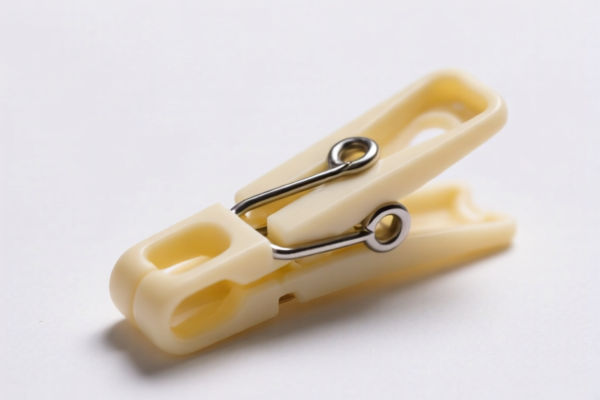
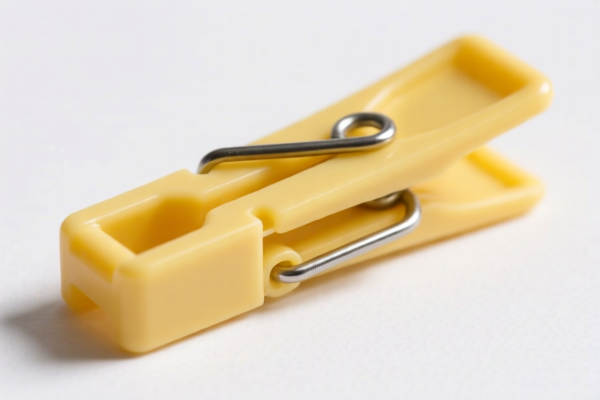
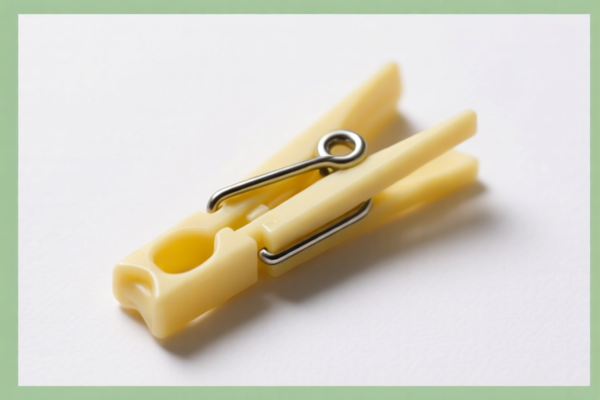
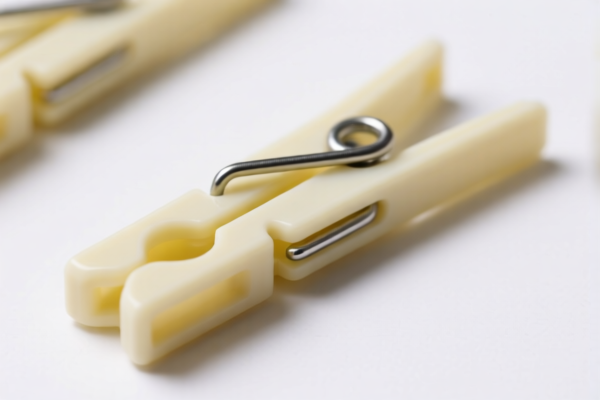
AI Analysis
🔩 Adhesive Fasteners (Plastic & Metal)
🌐 HS Code Classification & Customs Clearance Guide | 2026 Updated Tax Rates | Strategic Compliance Strategy
📌 I. Product Definition: What Exactly is an "Adhesive Fastener"?
An Adhesive Fastener is a general term for fastening components that utilize pressure-sensitive adhesives, epoxy, or other bonding agents to attach to surfaces. In international trade, they are rarely classified as "glue" or "tape" if their primary function is structural fastening. Instead, they are classified based on their material composition and physical form (e.g., pipe fittings, screws, clips).
⚠️ Critical Classification Logic:
- Material Matters: Plastic vs. Metal determines the chapter (Chapter 39 vs. Chapter 73).
- Form Matters: "Pipe Fittings" (3917) differ from "General Accessories" (3917/3926) or "Screws/Bolts" (7318).
- Function Matters: "Clips" (3926) are distinct from "Other Plastic Articles" (3926/3917).
The following analysis strictly adheres to the provided <DATA> set, which categorizes these items into five specific HS Codes with varying tariff burdens.
📦 II. Detailed HS Code Breakdown (Based on Provided Data)
The data reveals that Adhesive Fasteners are split between Plastic (HS 39xx) and Metal (HS 73xx). The tax burden varies dramatically, from 22.8% to 91.2%.
| HS Code | Material | Form/Type | Total Tax Rate | Tax Breakdown |
|---|---|---|---|---|
3917.40.00.80 |
Plastic | Pipe Fittings (管道附件) | 40.3% | Base: 5.3% + Addl: 25.0% + Sec 122: 10% |
3917.40.00.95 |
Plastic | Accessories (配件) | 40.3% | Base: 5.3% + Addl: 25.0% + Sec 122: 10% |
3926.90.85.00 |
Plastic | Clip Fasteners (夹式紧固件) | 24.0% | Base: 6.5% + Addl: 7.5% + Sec 122: 10% |
3926.90.99.89 |
Plastic | Other Articles (其他制品) | 22.8% | Base: 5.3% + Addl: 7.5% + Sec 122: 10% |
7318.14.10.60 |
Metal (Iron/Steel) | Screws & Bolts (螺钉螺栓) | 91.2% | Base: 6.2% + Addl: 25.0% + Sec 122: 10% + Steel/Al/Cu Surcharge: 50% |
🔍 Key Insight:
- Plastic Fasteners generally face 22.8% – 40.3% total tariffs.
- Metal Fasteners (Iron/Steel) face a catastrophic 91.2% total tariff due to the additional 50% surcharge on steel products.
- Avoid7318.14.10.60for cost efficiency unless no plastic alternative exists.
💰 III. Tariff Rate Deep Dive (Detailed Explanation)
✅ Scope: United States (US) Imports
✅ Origin: China (CN)
✅ Effective Dates: As per 2026 Tax Code Rules
🎯 1. Plastic Pipe Fittings & Accessories (3917.40.00.80 & .95)
Total Rate: 40.3%
| Component | Rate | Legal Basis |
|---|---|---|
| Base Duty | 5.3% | General Ad Valorem Rate |
| Additional Duty (Sec 301) | 25.0% | USITC Footnote / Section 301 Tariffs |
| Section 122 Tariff | 10.0% | Specific Tariff Clause for Certain Goods |
| TOTAL | 40.3% |
📌 Explanation:
- These codes cover plastic fasteners that function as pipe fittings or general accessories.
- The high rate is driven by the 25% Section 301 tariff.
- Strategy: If your product is a "clip" rather than a "pipe fitting," you might qualify for3926codes (lower tax).
🎯 2. Plastic Clip Fasteners (3926.90.85.00)
Total Rate: 24.0%
| Component | Rate | Legal Basis |
|---|---|---|
| Base Duty | 6.5% | General Ad Valorem Rate |
| Additional Duty | 7.5% | Reduced Section 301 Rate (Excluded List) |
| Section 122 Tariff | 10.0% | Specific Tariff Clause |
| TOTAL | 24.0% |
📌 Explanation:
- Crucial Savings Opportunity: This code attracts only 7.5% additional duty instead of 25%.
- Condition: The item must be explicitly defined as a "Clip Fastener" (夹式紧固件).
- Action: Ensure product descriptions and images clearly show "clip" functionality, not general "accessory."
🎯 3. Other Plastic Articles (3926.90.99.89)
Total Rate: 22.8%
| Component | Rate | Legal Basis |
|---|---|---|
| Base Duty | 5.3% | General Ad Valorem Rate |
| Additional Duty | 7.5% | Reduced Section 301 Rate |
| Section 122 Tariff | 10.0% | Specific Tariff Clause |
| TOTAL | 22.8% |
📌 Explanation:
- This is the lowest tax rate among plastic fasteners.
- Condition: The item does not fit "pipe fittings" or "clips" but is still a plastic article.
- Risk: Customs may challenge this if the item is clearly a "clip" (which goes to.85.00) or "accessory" (.40.00). Misclassification here can lead to penalties.
🎯 4. Metal Screws & Bolts (7318.14.10.60)
Total Rate: 91.2% ⛔ EXTREMELY HIGH
| Component | Rate | Legal Basis |
|---|---|---|
| Base Duty | 6.2% | General Ad Valorem Rate |
| Additional Duty | 25.0% | Section 301 Tariffs |
| Section 122 Tariff | 10.0% | Specific Tariff Clause |
| Steel/Al/Cu Surcharge | 50.0% | Critical Add-on for Steel Products |
| TOTAL | 91.2% |
📌 Explanation:
- The 50% surcharge for steel, aluminum, and copper products makes this category financially non-viable for most commercial imports.
- Material: Must be Iron or Steel.
- Form: Screws or Bolts.
- Strategy: Replace steel with plastic if possible to reduce tax from 91.2% to ~24-40%.
🛠️ IV. Customs Clearance Practical Advice
✅ 1. Documentation Checklist (Must-Haves)
| Document | Requirement | Why It Matters |
|---|---|---|
| Product Specification Sheet | Must specify Material (Plastic/Metal) and Function (Clip/Pipe/General) | Determines HS Code selection |
| Clear Product Photos | Show adhesive side, fastening mechanism, and overall shape | Proves if it's a "Clip" vs. "Pipe Fitting" |
| Commercial Invoice | Description: "Plastic Adhesive Fastener - Clip Type" or "Steel Screw with Adhesive Pad" | Aligns with HS Code description |
| Material Certificate | Confirms Plastic vs. Iron/Steel | Critical for avoiding the 50% Steel Surcharge |
| Adhesive Composition | Type of adhesive (Acrylic, Epoxy, Pressure-Sensitive) | Helps prove it's a "fastener," not just "tape" (Chapter 40) |
✅ 2. Classification Strategy (How to Lower Tax)
| Scenario | Recommended HS Code | Tax Rate | Why? |
|---|---|---|---|
| Plastic Fastener that Clips onto surfaces | 3926.90.85.00 |
24.0% | Best balance of specificity and lower additional duty (7.5%) |
| Plastic Fastener that is a Pipe Connector | 3917.40.00.80 |
40.3% | Higher tax due to 25% additional duty |
| Plastic Fastener with no specific form | 3926.90.99.89 |
22.8% | Lowest tax, but high audit risk if item is clearly a "clip" |
| Steel Screw with Adhesive Pad | 7318.14.10.60 |
91.2% | AVOID. Consider plastic alternative. |
🔥 Golden Rule:
"Clip = Lower Tax. Pipe = Higher Tax. Steel = Prohibitive Tax."
✅ 3. Common Pitfalls & Solutions
| Pitfall | Consequence | Solution |
|---|---|---|
| Mislabeling Plastic as Metal | Unnecessary 50% Steel Surcharge | Use Plastic fasteners where possible |
| Calling "Clips" "Accessories" | Tax jumps from 24% to 40.3% | Accurately describe as "Clip Fastener" |
| Calling "Pipe Fittings" "Other Articles" | Customs audit for misclassification | If it connects pipes, use 3917 codes |
| Ignoring Adhesive Component | May be classified as "Tape" (Ch 40) or "Glue" (Ch 35) | Emphasize fastening function in description |
🌍 V. Global Market Comparison (2026)
| Market | HS Code (Plastic Clip) | Total Tariff | Notes |
|---|---|---|---|
| 🇺🇸 USA | 3926.90.85.00 |
24.0% | Includes 7.5% Addl + 10% Sec 122 |
| 🇨🇳 China | 3926.90.85.00 |
~6.5% | No Section 301 or Sec 122 |
| 🇪🇺 EU | 3926.90.97 (Est.) |
~0-4% | No equivalent Sec 122 or 301 |
| 🇬🇧 UK | 3926.90.97 (Est.) |
~0-4% | Post-Brexit rates may vary |
📌 Conclusion:
- USA is the most expensive market due to Section 301 and Section 122 tariffs.
- Plastic fasteners are the strategic choice over metal due to the 50% steel surcharge.
📌 VI. Final Recommendations
- Prioritize Plastic Over Metal:
-
Switch from
7318.14.10.60(91.2%) to3926.90.85.00(24.0%) if possible. -
Accurate Description is Key:
- Use "Plastic Adhesive Clip Fastener" for
3926.90.85.00to capture the 7.5% additional duty instead of 25%. -
Avoid vague terms like "Plastic Accessory" if the item is clearly a clip.
-
Prepare for Audit:
- Keep photos and specs that clearly show the adhesive side and fastening mechanism.
-
Ensure the material certificate proves the item is not metal.
-
Cost-Benefit Analysis:
- For metal fasteners, calculate if the cost of switching to plastic outweighs the 67.2% tax savings (91.2% - 24.0%).
🎯 Conclusion: Optimize Your Supply Chain Today
🔹 "Plastic Clips Win, Steel Screws Lose."
🔹 "Accurate Description Saves 16% Instantly."
🔹 "Section 122 is Unavoidable, But Section 301 Can Be Managed."
📌 Pro Tip:
Apply for an Advance Ruling with U.S. Customs if your product falls between "Clip" and "Accessory." A pre-classification decision can save months of delay and potential penalties.
📣 Immediate Action:
📞 Review your Bill of Materials.
🖼️ Update product photos to highlight "Clip" functionality.
📝 Rewrite invoices to specify "Plastic Adhesive Clip Fastener."
🚀 Reduce your tax burden from 91.2% to 24.0% today!
✨ Precision Classification. Strategic Tariff Management. Profit Protection.
Customer Reviews
About HS Code Classification
The Harmonized System (HS) is an internationally standardized nomenclature developed by the World Customs Organization (WCO) to classify traded products. Over 200 countries use the HS system as the basis for customs tariffs, trade statistics, and import/export regulations.
Each HS code follows a hierarchical structure:
- Chapter (2 digits) — Broad category of goods (e.g., Chapter 84: Machinery and Mechanical Appliances)
- Heading (4 digits) — More specific grouping within the chapter
- Subheading (6 digits) — Internationally standardized breakdown, used by all WCO member countries
- National subdivisions (8-10 digits) — Country-specific extensions for further classification, such as US HTSUS 10-digit codes
Correct HS code classification is essential for smooth customs clearance, accurate duty payment, and compliance with trade regulations. Misclassification can lead to customs delays, overpayment of duties, or penalties.
When importing from CN to US, the applicable tariff rates may include:
- Most-Favored-Nation (MFN) rate — The standard duty rate applied to WTO members
- General rate — Applied to countries without trade agreements
- Trade remedy duties — Additional tariffs such as Section 301 (anti-dumping), Section 232 (national security), or countervailing duties
The information provided on this page is for reference purposes only. For official classification, please consult with your local customs authority or a licensed customs broker.