Adhesive Polymer Cork Floor Tiles
CN → US| HS Code | Tariff Rate | Origin | Destination | Doc |
|---|---|---|---|---|
| 3506915000 | 37.1% | CN | US | Official Doc |
| 4504103000 | 35.0% | CN | US | Official Doc |
| 4504101000 | 35.0% | CN | US | Official Doc |
Product Images
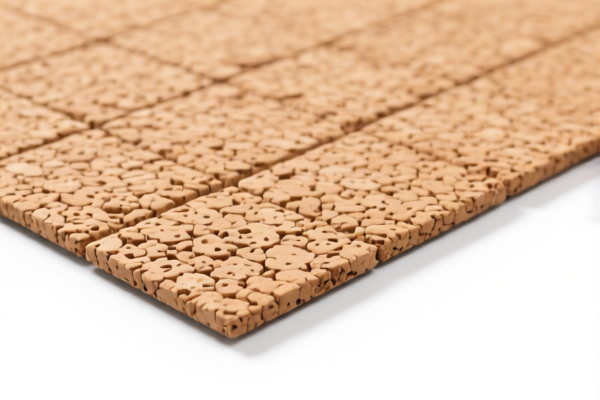
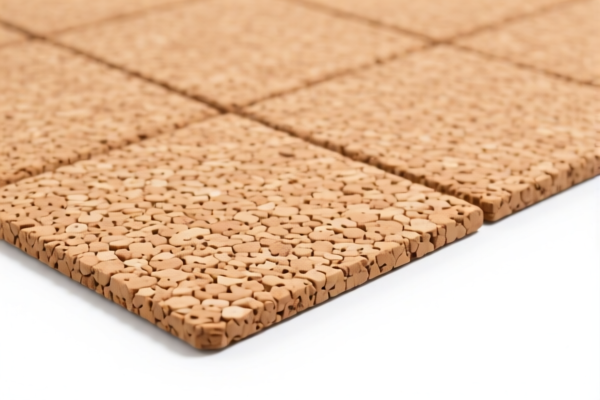
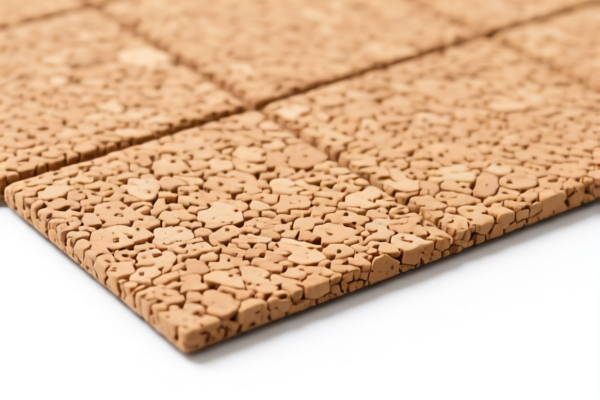
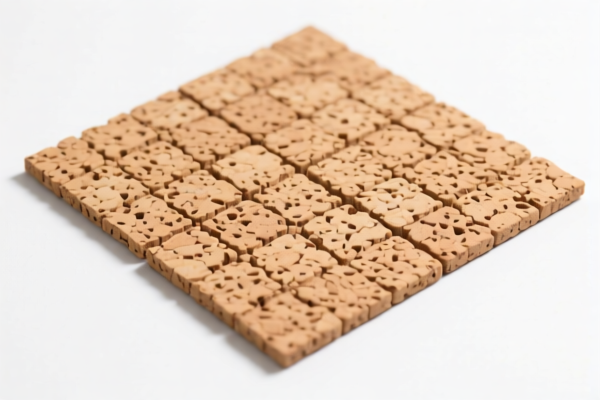
AI Analysis
🧱 Adhesive Polymer Cork Floor Tiles: Import Clearance & HS Code Guide (2026)
🌐 HS Code Reference & Clearance Strategy | Latest Tariff Breakdown | Strategic Entry Compliance
📌 I. Product Definition & Classification: What Are "Adhesive Polymer Cork Floor Tiles"?
These products are flooring materials primarily composed of cork (from the cork oak tree) bound together with an adhesive/polymer resin, featuring a pre-applied adhesive backing for direct installation. They are categorized not as finished wood floors, but as cork-based building materials.
In international trade, the distinction lies in: 1. Material Composition: Is it primarily cork? (Yes → Chapter 45) 2. Form: Is it in tiles, strips, or loose sheets? 3. Binding: Is it bonded with glue/resin?
⚠️ Key Classification Point: - If it is self-adhesive (has a peel-and-stick backing) and comes in strips → 3506.91.50.00 - If it is a glued cork tile (block/brick form) → 4504.10.30.00 or 4504.10.10.00
📦 II. HS Code Classification Details (2026 Latest Tariff Schedule)
| HS Code | Product Description | Scenario | Key Feature |
|---|---|---|---|
3506.91.50.00 |
Self-adhesive cork floor strips Core material is cork; classified as flooring material |
Self-adhesive strips (roll or cut pieces) | ✅ Self-adhesive backing |
4504.10.30.00 |
Adhesive cork floor tiles Material: Cork; Form: Board/Sheet; Use: Floor covering |
Glued cork tiles (general board/sheet form) | ✅ Adhesive-bound, Board/Sheet form |
4504.10.10.00 |
Adhesive cork floor tiles Material: Cork; Form: Brick/Tile; Contains Binder |
Glued cork tiles (specific "brick" form with binder) | ✅ Adhesive-bound, Tile/Brick form |
🔍 Critical Note: - 3506.91.50.00 is for self-adhesive products (peel-and-stick). - 4504.10.x.x is for cork articles bound together by an adhesive (glued tiles), whether they have an additional backing adhesive or not. The distinction between
.10.00and.30.00often depends on the specific "brick" vs "board/sheet" morphology defined by customs authorities.
💰 III. 2026 Latest Tariff Rate Breakdown (Including Additional Taxes)
✅ Applicable Country: United States (US)
✅ Origin: China (CN)
✅ Effective Date: November 10, 2025 onwards (for all subsequent imports)
🎯 1. 3506.91.50.00 —— Self-Adhesive Cork Floor Strips
| Item | Content |
|---|---|
| Base Tariff Rate | 2.1% |
| Section 301 Additional Tariff | +25.0% |
| Section 122 Tariff (IEEPA) | +10.0% (China-specific) |
| Total Effective Rate | 37.1% |
| Calculation Basis | CIF Value × 37.1% |
| De Minimis Eligibility | ❌ NO (deny_de_minimis) |
| Legal Path | Base: 3506.91 → 301: +25% → 122: +10% |
📌 Explanation: - 2.1%: Standard MFN base duty for "Other adhesives... prepared for use as... floor coverings". - 25%: Section 301 Additional Duty (Item List 4B). - 10%: Section 122 Duty under IEEPA (Targeting China-origin goods). - Total 37.1%: This is a high-cost import. Cost planning must include this full burden.
🎯 2. 4504.10.30.00 —— Adhesive Cork Floor Tiles (Board/Sheet Form)
| Item | Content |
|---|---|
| Base Tariff Rate | 0.0% |
| Section 301 Additional Tariff | +25.0% |
| Section 122 Tariff (IEEPA) | +10.0% (China-specific) |
| Total Effective Rate | 35.0% |
| Calculation Basis | CIF Value × 35.0% |
| De Minimis Eligibility | ❌ NO (deny_de_minimis) |
| Legal Path | Base: 4504.10 → 301: +25% → 122: +10% |
📌 Explanation: - 0.0%: Base duty for "Cork articles" is often zero, making the additional taxes the primary cost driver. - 25% + 10%: Same aggressive trade policies apply. - Total 35.0%: Slightly cheaper than self-adhesive strips due to lower base rate, but still very high.
🎯 3. 4504.10.10.00 —— Adhesive Cork Floor Tiles (Brick/Tile Form)
| Item | Content |
|---|---|
| Base Tariff Rate | 0.0% |
| Section 301 Additional Tariff | +25.0% |
| Section 122 Tariff (IEEPA) | +10.0% (China-specific) |
| Total Effective Rate | 35.0% |
| Calculation Basis | CIF Value × 35.0% |
| De Minimis Eligibility | ❌ NO (deny_de_minimis) |
| Legal Path | Base: 4504.10 → 301: +25% → 122: +10% |
📌 Explanation: - Identical tax treatment to
4504.10.30.00. - The distinction is purely descriptive ("brick" vs "board"). Customs may scrutinize this to ensure correct subheading.
🛠️ IV. Customs Clearance Practical Advice (Pitfall Avoidance Guide)
✅ 1. Required Documentation Checklist
| Document | Mandatory? | Explanation |
|---|---|---|
| ✅ Product Specification Sheet | ✔️ | Must state: Core material (100% Cork?), Adhesive type, Thickness, Dimensions. |
| ✅ Product Photos | ✔️ | Clear images of the tile surface, edge, and adhesive backing (if self-adhesive). |
| ✅ Commercial Invoice | ✔️ | Must clearly describe as "Cork Floor Tiles" or "Self-Adhesive Cork Strips". Avoid vague terms like "Flooring". |
| ✅ Packing List | ✔️ | Weight and dimensions per carton. |
| ✅ Certificate of Origin (CO) | ✔️ | To prove Chinese origin (triggers 301/122). |
| ✅ Test Reports | ✔️ | VOC emissions, formaldehyde content (if requested for indoor air quality compliance). |
✅ 2. Classification Strategy & Tips
🔥 "Self-Adhesive vs. Glued: Define Backing Clearly!"
| Scenario | Correct HS Code | Why? |
|---|---|---|
| Peel-and-Stick (Has pressure-sensitive tape on back) | 3506.91.50.00 |
Classified under "Adhesives... prepared for use as... floor coverings". |
| Glued Cork Tiles (Cork granules bonded with resin, no peel-back) | 4504.10.10.00 or .30.00 |
Classified under "Cork articles". |
| Cork Tiles with Separate Glue (Sold with container of glue) | 4504.10.x.x |
The tile itself is the primary good; glue is accessory. |
| Wood-Look Cork Laminate (With plastic wear layer) | Check Laminated Rules | If primarily cork, may still be 4504. If primarily plastic/wood, change chapter. |
✅ 3. Special Considerations
| Situation | Advice |
|---|---|
| De Minimis (Section 321) | ❌ Not Eligible. Both 3506.91 and 4504.10 are subject to Section 301 and Section 122 duties, which are excluded from the $800 de minimis exemption for Chinese goods. |
| Valuation | Ensure Transaction Value includes all costs (shipping, insurance, royalties). High tariffs make valuation discrepancies risky. |
| Anti-Dumping/Countervailing | Currently, no specific AD/CVD orders for cork tiles from China. However, verify with a customs broker. |
🌍 V. Global Market Comparison (2026)
| Country/Region | Recommended HS Code | Total Tariff (CN Origin) | Key Requirements | Notes |
|---|---|---|---|---|
| 🇺🇸 USA | 3506.91.50.00 / 4504.10.x.x |
35.0% - 37.1% | 301 + 122 Duties | Very High Cost. |
| 🇨🇳 China | 3506.91 / 4504.10 |
~0-5% (Export) | VAT Refund Applicable | Export duty low; focus on import duty in US. |
| 🇪🇺 EU | 4504.10 |
0% (Standard) | CE, REACH | No Section 301/122 equivalent. Much more competitive. |
| 🇨🇦 Canada | 4504.10 |
~5-10% | CFS, EPR | Moderate tariffs. |
| 🇬🇧 UK | 4504.10 |
~5-10% | UKCA | Post-Brexit duties apply. |
📌 Conclusion: - The US market is the most expensive due to the叠加 (stacking) of Base Tariff + Section 301 (25%) + Section 122 (10%). - EU and UK markets are significantly more favorable (0-10%) if you are exporting from China. - Consider supply chain diversification (e.g., sourcing from Portugal or Spain, cork producers) to bypass Chinese origin duties if targeting the US.
📌 VI. Common Mistakes & Pitfalls (Blood & Tears Lessons)
❌ Mistake 1: Claiming De Minimis ($800) for small samples or B2B shipments 👉 Result: Seizure or forced payment of 35-37% duties upon formal entry. Never use Section 321 for Chinese cork tiles.
❌ Mistake 2: Misclassifying as "Wood Flooring" (HS 4409) 👉 Result: Wrong HS Code. Cork is Chapter 45. Misclassification can lead to audits and penalties.
❌ Mistake 3: Ignoring the "Self-Adhesive" distinction
👉 Result: If you declare 4504 (Cork Articles) but the product is 3506 (Self-Adhesive Adhesive), customs may reclassify, leading to different duty rates (37.1% vs 35.0%) and delays.
✅ Correct Declaration Example:
"Cork Floor Tiles, Adhesive-backed, 12x12 inch, 100% Natural Cork Core, for Residential Flooring Installation. Model: CT-100."
🎯 VII. Conclusion: Strategic Cost Management
🎯 Key Takeaway:
🔹 "Cork in the US is Taxed Like a Target."
🔹 35-37% Total Duty is non-negotiable for Chinese-origin goods.
🔹 No De Minimis – Plan for formal entry for every shipment.🔹 Action Plan: 1. Verify Classification: Are they self-adhesive (
3506) or glued tiles (4504)? 2. Budget for Duties: Include 37.1% in your landed cost calculation. 3. Document Rigorously: Photos and specs are critical to avoid reclassification. 4. Explore Alternatives: If volume is high, consider sourcing from non-China origins (EU/Portugal) to avoid 301/122 tariffs.
📌 Pro Tip:
For large commercial projects, apply for an Import Administration (IA) Ruling if the classification between
4504.10.10and.30is ambiguous. A pre-ruling can provide certainty and potentially reduce audit risks.
📣 Immediate Action:
📞 Consult a licensed US Customs Broker.
📋 Prepare Product Data Sheet with Adhesive Details.
📉 Calculate Landed Cost including 37.1% Duty.
✨ Precision in Classification, Profit in Import!
💼 Don't let hidden tariffs eat your margin!
Customer Reviews
About HS Code Classification
The Harmonized System (HS) is an internationally standardized nomenclature developed by the World Customs Organization (WCO) to classify traded products. Over 200 countries use the HS system as the basis for customs tariffs, trade statistics, and import/export regulations.
Each HS code follows a hierarchical structure:
- Chapter (2 digits) — Broad category of goods (e.g., Chapter 84: Machinery and Mechanical Appliances)
- Heading (4 digits) — More specific grouping within the chapter
- Subheading (6 digits) — Internationally standardized breakdown, used by all WCO member countries
- National subdivisions (8-10 digits) — Country-specific extensions for further classification, such as US HTSUS 10-digit codes
Correct HS code classification is essential for smooth customs clearance, accurate duty payment, and compliance with trade regulations. Misclassification can lead to customs delays, overpayment of duties, or penalties.
When importing from CN to US, the applicable tariff rates may include:
- Most-Favored-Nation (MFN) rate — The standard duty rate applied to WTO members
- General rate — Applied to countries without trade agreements
- Trade remedy duties — Additional tariffs such as Section 301 (anti-dumping), Section 232 (national security), or countervailing duties
The information provided on this page is for reference purposes only. For official classification, please consult with your local customs authority or a licensed customs broker.