Adjustable Curtain Rod Bracket
CN → US| HS Code | Tariff Rate | Origin | Destination | Doc |
|---|---|---|---|---|
| 7326908630 | 87.9% | CN | US | Official Doc |
| 7616995150 | 37.5% | CN | US | Official Doc |
| 7326908688 | 87.9% | CN | US | Official Doc |
| 8302416050 | 88.9% | CN | US | Official Doc |
| 8302419050 | 38.5% | CN | US | Official Doc |
Product Images
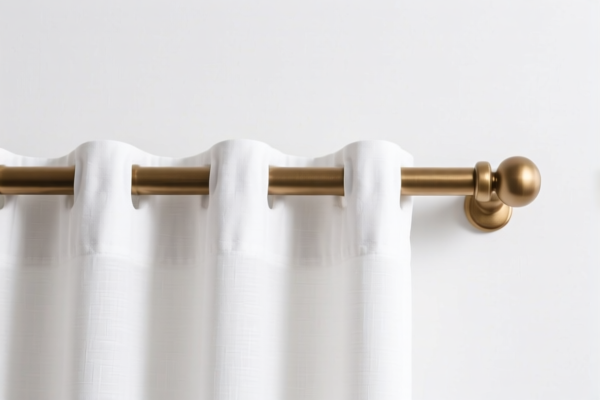
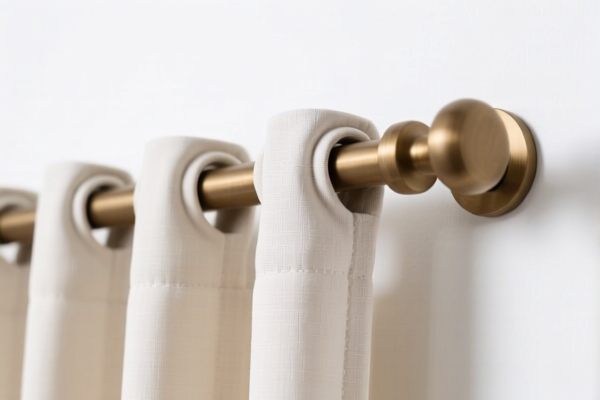
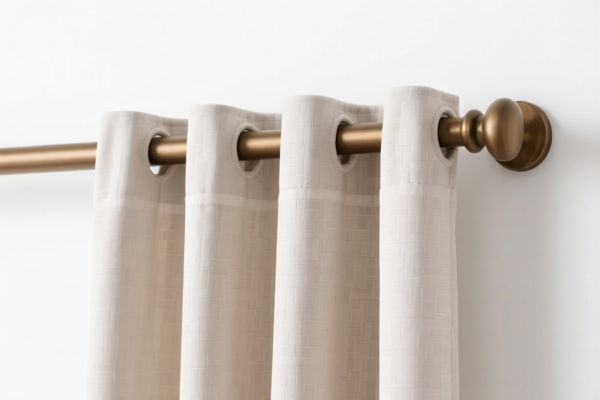
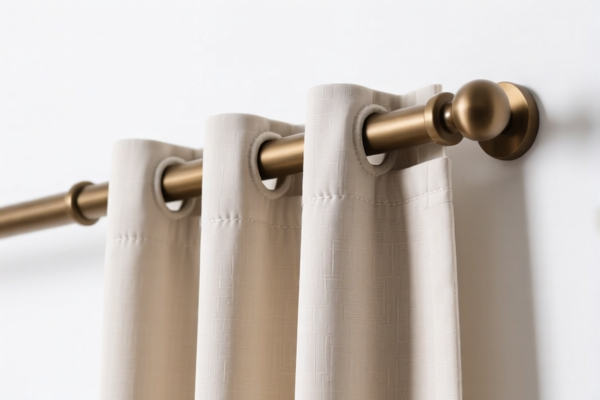
AI Analysis
🪟 Adjustable Curtain Rod Brackets (Hardware for Buildings)
🌐 HS Code Reference & Clearance Guide | 2026 Latest Tariff Analysis | Professional Customs Strategy
📌 1. Product Definition & Classification: What Exactly is a "Curtain Rod Bracket"?
Adjustable Curtain Rod Brackets are essential hardware components used to support curtain rods on walls or ceilings. In international trade, their classification hinges on material and specific function. While they appear similar, the underlying metal type (Iron/Steel vs. Aluminum) drastically changes the HS Code and, consequently, the tariff burden.
Key Distinction Criteria:
- Material Composition: Is it primarily Iron/Steel (73xx) or Aluminum (76xx)?
- Function: Is it a general-purpose building accessory (8302) or a specific support component (7326/7616)?
⚠️ Critical Warning:
- Steel/Iron Brackets often attract higher additional tariffs due to Section 232/301 rules applying specifically to steel and aluminum products.
- Aluminum Brackets have different base rates and additional duty structures.
- General Metal Fittings (Category 8302) may offer a different duty profile than "Other Articles of Iron/Steel" or "Aluminum."
📦 2. HS Code Classification Details (2026 Latest Tariff Authority Comparison)
| HS Code | Product Description | Applicable Scenario | Material Inference |
|---|---|---|---|
7326.90.86.30 |
Other articles of iron or steel; adjustable curtain rod brackets | General metal brackets, steel construction | ✅ Iron/Steel |
7616.99.51.50 |
Other articles of aluminum; supports for curtain rods | Aluminum alloy brackets | ✅ Aluminum |
7326.90.86.88 |
Other articles of iron or steel; spare parts/brackets | General steel supports, unspecified steel type | ✅ Iron/Steel |
8302.41.60.50 |
Base mountings and fittings for doors, windows...; curtain rod brackets | Specific building hardware, metal fittings | ✅ Base Metal (Varies) |
8302.41.90.50 |
Other base mountings and fittings; buildings | General metal accessories for buildings | ✅ Base Metal (Varies) |
🔍 Key Reminder:
- Steel/Iron (7326): Subject to aggressive "Section 232" (Steel/Aluminum) and Section 301 tariffs.
- Aluminum (7616): Subject to Section 232 tariffs but with different base rates.
- Building Fittings (8302): Considered "fittings for buildings," often treated as general hardware, but still subject to Section 301 additional duties.
💰 3. 2026 Latest Tariff Rate Breakdown (Including Additional Duties & Policy Surcharges)
✅ Applicable Country: United States (US)
✅ Country of Origin: China (CN)
✅ Effective Date: Current rates apply as per 2026 trade policy
🎯 1. 7326.90.86.30 & 7326.90.86.88 —— Iron or Steel Articles
| Item | Content |
|---|---|
| Base Duty Rate | 2.9% (Ad valorem) |
| Section 301 Additional Duty | +25.0% (Trade Act of 1974, Section 301) |
| Section 232 Duty | +50.0% (Steel/Aluminum/Copper Products - Specific Clause) |
| Total Effective Rate | 87.9% |
| Tax Calculation | CIF Value × 87.9% |
| De Minimis Eligibility | ❌ Not Eligible (High duty threshold excludes de minimis exemption) |
| Legal Basis Path | HTSUS:7326.90.86 → USITC Footnote 301 → USITC Footnote 232 |
📌 Explanation:
- "87.9%" is a catastrophic effective rate. It combines the low base tariff with massive punitive tariffs.
- The 50% Section 232 duty applies specifically because these are "Steel Articles."
- The 25% Section 301 duty is the standard China-specific penalty.
- Result: Nearly 90% of the item's value goes to customs duties. High Risk of Margin Erosion.
🎯 2. 7616.99.51.50 —— Other Articles of Aluminum
| Item | Content |
|---|---|
| Base Duty Rate | 2.5% (Ad valorem) |
| Section 301 Additional Duty | +25.0% (Trade Act of 1974, Section 301) |
| Section 232 Duty | +10.0% (Specific Aluminum Clause - Lower than Steel) |
| Total Effective Rate | 37.5% |
| Tax Calculation | CIF Value × 37.5% |
| De Minimis Eligibility | ❌ Not Eligible |
| Legal Basis Path | HTSUS:7616.99.51 → USITC Footnote 301 → USITC Footnote 232 |
📌 Explanation:
- Aluminum attracts a lower Section 232 duty (10%) compared to Steel (50%).
- Total 37.5% is significantly more manageable than Steel.
- Strategy: If the design allows, switching to Aluminum can save ~50% in duties.
🎯 3. 8302.41.60.50 —— Base Mountings for Buildings (Specific Curtain Fittings)
| Item | Content |
|---|---|
| Base Duty Rate | 3.9% (Ad valorem) |
| Section 301 Additional Duty | +25.0% (Trade Act of 1974, Section 301) |
| Section 232 Duty | +50.0% (Steel/Aluminum/Copper Products - Specific Clause) |
| Total Effective Rate | 88.9% |
| Tax Calculation | CIF Value × 88.9% |
| De Minimis Eligibility | ❌ Not Eligible |
| Legal Basis Path | HTSUS:8302.41.60 → USITC Footnote 301 → USITC Footnote 232 |
📌 Explanation:
- Even though it’s classified as "Building Hardware," if the material is steel, it may still trigger the 50% Steel Surcharge.
- This is the highest possible rate among the options. Avoid this code unless you have a very specific material argument that excludes it from Section 232.
🎯 4. 8302.41.90.50 —— Other Base Mountings for Buildings
| Item | Content |
|---|---|
| Base Duty Rate | 3.5% (Ad valorem) |
| Section 301 Additional Duty | +25.0% (Trade Act of 1974, Section 301) |
| Section 232 Duty | +10.0% (Aluminum Clause - if aluminum) |
| Total Effective Rate | 38.5% |
| Tax Calculation | CIF Value × 38.5% |
| De Minimis Eligibility | ❌ Not Eligible |
| Legal Basis Path | HTSUS:8302.41.90 → USITC Footnote 301 → USITC Footnote 232 |
📌 Explanation:
- This code offers a moderate rate of 38.5%.
- Likely applies to aluminum or non-steel base fittings.
- Recommendation: If8302.41.90.50is technically accurate, it is a safer option than the7326or8302.41.60codes.
🛠️ 4. Practical Clearance Advice (Pitfall Avoidance Guide)
✅ 1. Preparation Checklist (Non-negotiable)
| Document | Required? | Purpose |
|---|---|---|
| ✅ Product Specifications | ✔️ | Must clearly state Material (e.g., "100% Aluminum Alloy," "Carbon Steel"). |
| ✅ Material Certificate | ✔️ | Proof of composition to defend against Section 232 Steel duties. |
| ✅ Product Photos (Labeled) | ✔️ | Show the bracket, hinges, and any branding. |
| ✅ Commercial Invoice | ✔️ | Description must match HS Code logic (e.g., "Aluminum Curtain Support"). |
| ✅ Bill of Lading | ✔️ | Ensure weight/volume matches invoice. |
✅ 2. Classification Strategy (Key Mantra)
🔥 "Material is King, Steel is Death, Aluminum is Life, Hardware is Maybe!"
| Scenario | Recommended HS Code | Duty Rate | Risk Level |
|---|---|---|---|
| Product is Steel | 7326.90.86.30 / 7326.90.86.88 |
87.9% | 🔴 Extreme |
| Product is Steel | 8302.41.60.50 |
88.9% | 🔴 Extreme |
| Product is Aluminum | 7616.99.51.50 |
37.5% | 🟡 Moderate |
| Product is Aluminum | 8302.41.90.50 |
38.5% | 🟡 Moderate |
⚠️ Critical Warning:
- Do NOT misdeclare Steel as Aluminum. Customs will test the material. If it fails, you face fraud penalties + back duties.
- If you must import Steel, calculate if your margin can absorb ~88%. Usually, it cannot.
✅ 3. Special Considerations
| Situation | Advice |
|---|---|
| Mixed Materials | If the bracket has steel cores and aluminum covers, it may still be classified as Steel. Use Aluminum-only designs. |
| Kit Components | Do not ship brackets as "parts" of a rod if they are sold separately. Declare them as standalone brackets. |
| Pre-Clearance | Request an Advance Ruling from CBP if unsure about the material classification. |
🌍 5. Global Market Comparison (2026 Latest)
| Country/Region | Recommended HS Code | Effective Tariff (China Origin) | Notes |
|---|---|---|---|
| 🇺🇸 USA | 7616.99.51.50 (Aluminum) |
37.5% | Steel codes hit ~88%. Aluminum is preferred. |
| 🇨🇳 China | 7326.90.90.90 (General) |
~5-10% | Lower export/import duties in China. |
| 🇪🇺 EU | 7326.90.98.80 |
~6.5% | No Section 232/301 equivalent. Much lower burden. |
| 🇬🇧 UK | 7326.90.98.80 |
~6.5% | Post-Brexit tariffs apply. |
| 🇦🇺 Australia | 7326.90.99.90 |
~5% | Favorable for hardware. |
📌 Conclusion:
- USA is the most hostile market for Chinese steel/aluminum hardware due to Section 232 & 301.
- EU/UK/Australia are much more tolerant, with standard MFN rates around 5-7%.
- Strategy: If selling to the US, optimize for Aluminum or consider third-country manufacturing (e.g., Vietnam, India) to avoid origin-based surcharges.
📌 6. Common Errors & Pitfalls (Blood & Tears)
❌ Error 1: Declaring Steel Brackets as "General Hardware" to avoid Section 232.
👉 Consequence: Customs inspection reveals steel content → 50% penalty + 50% duty.
❌ Error 2: Using 8302.41.60.50 for Steel Brackets.
👉 Consequence: Highest tax rate (88.9%) → Profit Margin Obliteration.
❌ Error 3: Ignoring "Adjustable" mechanism in description.
👉 Consequence: If the mechanism contains springs/complex gears, it might shift to a different category. Keep description simple: "Metal Bracket."
❌ Error 4: Assuming De Minimis ($800) applies.
👉 Consequence: Duties >30% usually void de minimis exemptions for China-origin goods. Expect full duty payment even for small parcels.
✅ Correct Practice:
"Aluminum Alloy Adjustable Curtain Rod Bracket, Powder Coated, No Steel Components, Model XYZ"
🎯 7. Conclusion: Professional Declaration, Save Costs!
🎯 Remember the Mantra:
🔹 "Steel is 88%, Aluminum is 38%. Choose Aluminum to Survive."
🔹 "HS Code Dictates Profit. A 50% Tariff Difference is a Business Killer."
📌 Pro Tip:
If your product must be steel, explore duty drawback programs or foreign trade zones (FTZ) in the US to defer or reduce duty payments.
For Aluminum, ensure your supplier provides a Mill Test Certificate proving the alloy composition to support the 7616 classification.
📣 Immediate Action:
📞 Consult a licensed customs broker.
📄 Provide Material Test Reports.
🚀 Optimize product design to use Aluminum for the US market.
✨ Professional Clearance Starts with Precise Classification!
💼 Every Percent Saved is Pure Profit!
Customer Reviews
About HS Code Classification
The Harmonized System (HS) is an internationally standardized nomenclature developed by the World Customs Organization (WCO) to classify traded products. Over 200 countries use the HS system as the basis for customs tariffs, trade statistics, and import/export regulations.
Each HS code follows a hierarchical structure:
- Chapter (2 digits) — Broad category of goods (e.g., Chapter 84: Machinery and Mechanical Appliances)
- Heading (4 digits) — More specific grouping within the chapter
- Subheading (6 digits) — Internationally standardized breakdown, used by all WCO member countries
- National subdivisions (8-10 digits) — Country-specific extensions for further classification, such as US HTSUS 10-digit codes
Correct HS code classification is essential for smooth customs clearance, accurate duty payment, and compliance with trade regulations. Misclassification can lead to customs delays, overpayment of duties, or penalties.
When importing from CN to US, the applicable tariff rates may include:
- Most-Favored-Nation (MFN) rate — The standard duty rate applied to WTO members
- General rate — Applied to countries without trade agreements
- Trade remedy duties — Additional tariffs such as Section 301 (anti-dumping), Section 232 (national security), or countervailing duties
The information provided on this page is for reference purposes only. For official classification, please consult with your local customs authority or a licensed customs broker.