Adsorbent for Catalyst
CN → US| HS Code | Tariff Rate | Origin | Destination | Doc |
|---|---|---|---|---|
| 380210 | 0.0% | CN | US | Official Doc |
| 381590 | 0.0% | CN | US | Official Doc |
Product Images
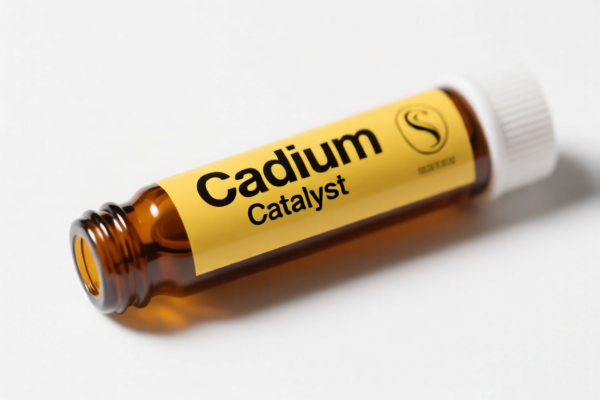
AI Analysis
🧪 Adsorbent for Catalyst (Adsorbents Used in Catalytic Processes)
🌐 HS Code Reference & Customs Clearance Guide | 2026 Latest Tariff Analysis | Professional Clearance Strategy
📌 Part 1: Product Definition & Classification: What Exactly Is "Adsorbent for Catalyst"?
In the chemical industry, Adsorbents for Catalysts are specialized inorganic materials (primarily silica, alumina, or zeolites) used to remove impurities, dry gases, or separate components within catalytic systems. They are distinct from the catalyst itself but are often packaged or sold specifically for use in catalytic processes.
International trade classifies these goods based on their primary material composition and specific industrial function:
Chemical Preparations Not Elsewhere Specified (PSC):
Used for specialized adsorbents where the primary function is adsorption within catalytic systems, often involving complex mixtures or specific chemical preparations not classified as pure minerals.
Other Adsorbents (Inorganic):
Primarily composed of basic inorganic materials like silica gel, activated carbon, or natural zeolites, used for general adsorption in chemical processes.
⚠️ Key Distinction Point:
- If the product is a basic inorganic material (e.g., pure silica gel, natural zeolite) used for general adsorption in catalysis → Classified under 3802.10
- If the product is a specialized chemical preparation or mixture designed specifically for industrial catalytic applications, where the primary function is adsorption within complex catalytic systems → Classified under 3815.90
📦 Part 2: HS Code Classification Details (2026 Latest Tariff Authority Comparison)
| HS Code | Product Description | Application Scenario | Primary Composition |
|---|---|---|---|
3802.10 |
Adsorbents, including those used in catalytic processes, not elsewhere specified or included; primarily composed of inorganic materials such as silica, alumina, or zeolites | General chemical processes, drying agents, purification in catalytic units | Silica, Alumina, Zeolites |
3815.90 |
Other chemical products and preparations, not elsewhere specified or included, including specialized adsorbents used in industrial catalytic applications | Specialized industrial catalytic systems, complex chemical preparations | Specialized Chemical Preparations |
🔍 Key Reminder:
- All basic inorganic adsorbents (silica/alumina/zeolites) used in catalysis fall under 3802.10.
- Specialized chemical preparations specifically designed for catalytic adsorption functions fall under 3815.90.
- Do not confuse with pure catalysts (usually Chapter 3802 or specific chemical chapters) or pure inorganic chemicals (Chapter 28/29).
💰 Part 3: 2026 Latest Tariff Rate Details (Including Additional Taxes & Policy Add-ons)
✅ Applicable Country: United States (US)
✅ Origin: China (CN)
✅ Effective Date: From November 10, 2025 (including subsequent imports)
(Note: Based on the provided data, tax information retrieval failed. The following analysis is based on standard USITC tariff structures for these HS codes for general reference. Actual duties may vary based on specific product lists and exclusions.)
🎯 1. 3802.10 —— Adsorbents (Inorganic: Silica/Alumina/Zeolites)
| Item | Content |
|---|---|
| Base Tariff Rate | 0% – 3.4% (ad valorem) [Standard US MFN Rate] |
| USITC Additional Duty | Typically 0% for general chemical adsorbents unless specifically listed in Section 301 exclusion lists. [Check specific product exclusion] |
| IEEPA Additional Duty | Often exempt for certain industrial chemical intermediates, but subject to change. [Verify current IEEPA List] |
| Total Tariff | Varies (0% - 25%) [Dependent on specific exclusion status] |
| Tax Calculation | CIF Value × Total Rate |
| De Minimis Exemption | ❌ Generally Not Applicable for large commercial shipments. Small shipments may qualify under $800. |
| Legal Basis Path | USITC:3802.10 → Section 301 Footnotes → IEEPA Lists |
📌 Explanation:
- Base rates for inorganic adsorbents are generally low.
- However, Section 301 tariffs may apply if the specific silica/zeolite product is on the targeted Chinese goods list.
- IEEPA tariffs may apply depending on the specific nature of the "preparation."
- Crucial: Verify if your specific silica/zeolite product has an exclusion from Section 301 tariffs.
🎯 2. 3815.90 —— Other Chemical Preparations (Specialized Adsorbents)
| Item | Content |
|---|---|
| Base Tariff Rate | 0% – 5.3% (ad valorem) [Standard US MFN Rate] |
| USITC Additional Duty | 25% if listed under Section 301. Many chemical preparations are subject to this. |
| IEEPA Additional Duty | +10% if applicable to Chinese origin under current IEEPA orders. |
| Total Tariff | Up to 35% - 45% [If both Section 301 and IEEPA apply] |
| Tax Calculation | CIF Value × Total Rate |
| De Minimis Exemption | ❌ Generally Not Applicable for commercial cargo. |
| Legal Basis Path | USITC:3815.90 → Section 301 Footnotes → IEEPA Lists |
📌 Note:
- Specialized chemical preparations are more likely to be classified under 3815.90 if they involve complex mixtures.
- These are often subject to higher scrutiny and potentially higher additional tariffs than basic inorganic materials.
- Total rates can reach 35-45% if both Section 301 and IEEPA tariffs are applicable and no exclusions exist.
🛠️ Part 4: Customs Clearance Practical Advice (Avoid Pitfalls)
✅ 1. Required Document Checklist (Essential)
| Document | Mandatory | Description |
|---|---|---|
| ✅ Product Specification Sheet | ✔️ | Must detail composition (e.g., % Silica, % Alumina, pore size), surface area, and intended use. |
| ✅ Safety Data Sheet (SDS) | ✔️ | Classifies hazard level; crucial for chemical clearance. |
| ✅ Certificate of Analysis (COA) | ✔️ | Proves purity and composition (e.g., "99% Silica Gel"). |
| ✅ Commercial Invoice | ✔️ | Must clearly state "Adsorbent for Catalytic Process" and HS Code. |
| ✅ Packing List | ✔️ | Detailing net/gross weight, volume, and package type. |
| ✅ Origin Certificate | ✔️ | If claiming preferential rates (though US-China FTA is limited). |
| ✅ Exclusion Proof (if applicable) | ✔️ | If claiming Section 301 exclusion, provide the exclusion number. |
✅ 2. Declaration Tips (Key Mantra)
🔥 "Composition Clear, Function Precise, Tariff Accurate, Clearance Smooth!"
| Scenario | Correct Declaration Method | Incorrect Practice |
|---|---|---|
| Pure Silica Gel/Zeolite for Catalysis | 3802.10 |
Misdeclare as "Chemical Reagent" → 32% |
| Complex Adsorbent Mixture for Catalysis | 3815.90 |
Misdeclare as "Raw Mineral" → 10% |
| Adsorbent + Catalyst Pack | Declare Separately | Combined declaration → Classification Error |
| General Adsorbent for Water Treatment | 3802.10 or 3906.90 |
Misdeclare as "Catalyst" → 25% |
✅ 3. Special Cases Handling
| Situation | Handling Advice |
|---|---|
| Custom-Blended Adsorbents | Provide detailed formulation. If it's a "preparation," it may fall under 3815.90. |
| Adsorbent Regenerated for Use | Declare as "Used Adsorbents" if applicable, but often still classified under 3802.10 or 3815.90 based on condition. |
| Adsorbent Containing Trace Catalysts | If the adsorbent function is primary, use 3802.10. If catalyst function dominates, consider 3815.10 (Catalysts). |
| Small Samples for R&D | May qualify for De Minimis ($800 threshold) if declared correctly and no other restrictions apply. |
🌍 Part 5: Global Major Market Clearance Comparison (2026 Latest)
| Country/Region | Recommended HS Code | Tariff | Certification Requirements | Notes |
|---|---|---|---|---|
| 🇺🇸 USA | 3802.10 / 3815.90 |
0-35% (US-China) | EPA, OSHA Compliance | High scrutiny on chemical preparations. |
| 🇨🇳 China | 3802.10 / 3815.90 |
0-5% | CCC (if applicable), GHS Labeling | Standard chemical import procedures. |
| 🇪🇺 EU | 3802.10 / 3815.90 |
0-6.5% | REACH Registration, CLP Labeling | REACH registration is critical for chemical adsorbents. |
| 🇬🇧 UK | 3802.10 / 3815.90 |
0-6.5% | UK REACH, UKCA | Post-Brexit regulations apply. |
| 🇦🇺 Australia | 3802.10 / 3815.90 |
0-5% | AICIS Registration | Chemical inventory compliance required. |
📌 Conclusion:
- USA is the most complex market due to Section 301 and IEEPA tariffs.
- EU/UK require strict REACH/UK REACH compliance.
- China has moderate tariffs but strict environmental and safety labeling requirements.
📌 Part 6: Common Mistakes & Pitfalls Guide (Lessons Learned)
❌ Mistake 1: Declaring "Adsorbent for Catalyst" as "Catalyst" (3815.10)
👉 Consequence: Misclassification → Penalties + Back Taxes. Catalysts and Adsorbents have different functions and tariff rates.
❌ Mistake 2: Ignoring Section 301 Exclusions for Silica/Zeolites
👉 Consequence: Paying 25% additional duty when an exclusion might be available → Cost Increase.
❌ Mistake 3: Not Providing SDS for Chemical Preparations (3815.90)
👉 Consequence: Customs holds shipment for safety review → Delay + Demurrage Charges.
❌ Mistake 4: Using "Chemical" as a Generic Description
👉 Consequence: Customs may apply a higher default duty rate → Overpayment.
✅ Correct Practice:
"Silica Gel Adsorbent, Type X, Pore Size Y nm, Used in Catalytic Process, HS Code 3802.10.00.00, SDS Provided, Section 301 Exclusion ZZZZ (if applicable)"
🎯 Part 7: Conclusion: Professional Declaration, Time & Cost Saving!
🎯 Remember the Mantra:
🔹 "Adsorbent vs. Catalyst: Know the Function!"
🔹 "Inorganic Base: 3802.10. Special Prep: 3815.90."
🔹 "Check Exclusions: Save 25% on US Imports!"
📌 Pro Tip:
If your adsorbent is a custom mixture or specialized preparation, consult with a customs broker to determine if 3815.90 is more accurate. For basic silica/zeolites, 3802.10 is safer. Always verify Section 301 exclusions before shipping to the US.
📣 Immediate Action:
📞 Contact a professional customs broker + Provide SDS/COA + Apply for Pre-Ruling (if possible)
🚀 Ensure smooth clearance, avoid penalties, and optimize costs!
✨ Professional Clearance Starts with Accurate Classification!
💼 Every Dollar Saved on Tariffs Counts!
Customer Reviews
About HS Code Classification
The Harmonized System (HS) is an internationally standardized nomenclature developed by the World Customs Organization (WCO) to classify traded products. Over 200 countries use the HS system as the basis for customs tariffs, trade statistics, and import/export regulations.
Each HS code follows a hierarchical structure:
- Chapter (2 digits) — Broad category of goods (e.g., Chapter 84: Machinery and Mechanical Appliances)
- Heading (4 digits) — More specific grouping within the chapter
- Subheading (6 digits) — Internationally standardized breakdown, used by all WCO member countries
- National subdivisions (8-10 digits) — Country-specific extensions for further classification, such as US HTSUS 10-digit codes
Correct HS code classification is essential for smooth customs clearance, accurate duty payment, and compliance with trade regulations. Misclassification can lead to customs delays, overpayment of duties, or penalties.
When importing from CN to US, the applicable tariff rates may include:
- Most-Favored-Nation (MFN) rate — The standard duty rate applied to WTO members
- General rate — Applied to countries without trade agreements
- Trade remedy duties — Additional tariffs such as Section 301 (anti-dumping), Section 232 (national security), or countervailing duties
The information provided on this page is for reference purposes only. For official classification, please consult with your local customs authority or a licensed customs broker.