Aerial Film Roll
CN → US| HS Code | Tariff Rate | Origin | Destination | Doc |
|---|---|---|---|---|
| 3702440160 | 38.7% | CN | US | Official Doc |
| 3702430100 | 38.7% | CN | US | Official Doc |
Product Images
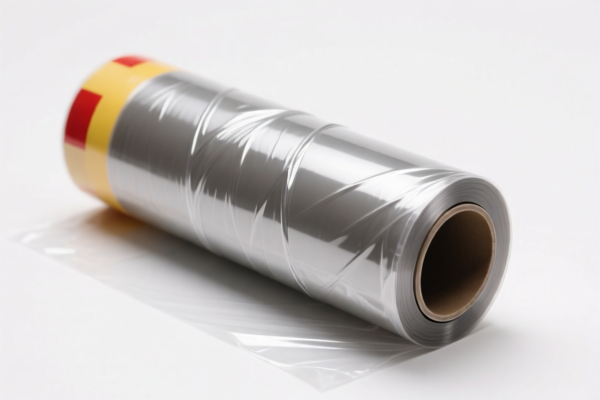

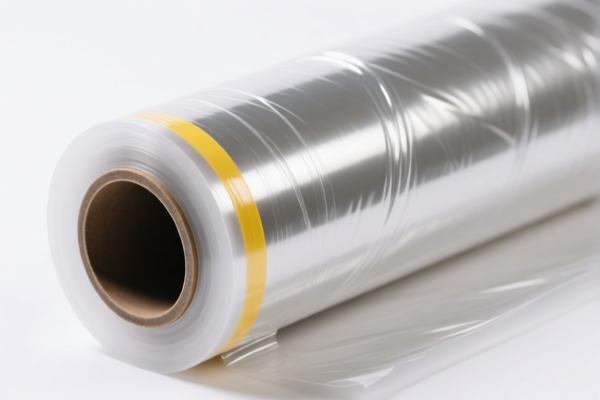
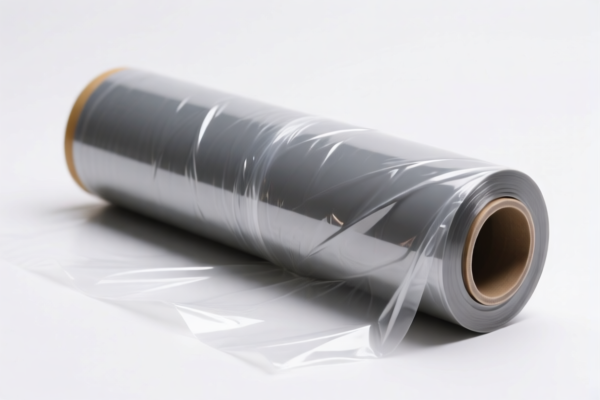
AI Analysis
🎥 Aerial Film Rolls (Sensitized, Unexposed Photographic Film)
🌐 HS Code Reference & Customs Clearance Guide | 2026 Latest Tariff Analysis | Professional Level Strategy 📌 I. Product Definition & Classification: What Exactly is "Aerial Film Roll"?
Aerial film refers to high-resolution, sensitized, unexposed photographic film specifically designed for aerial photography (mapping, surveying, intelligence, or environmental monitoring). In international trade, these are classified under Chapter 37 (Photographic or Cinematographic Goods).
Because the user input is generic ("Aerial Film Roll"), classification depends entirely on the physical width of the roll and whether it has perforations. The key distinction lies between wide-format film (>105mm) without perforations.
⚠️ Critical Classification Point: - If the film width is > 105 mm and ≤ 610 mm (without perforations) → HS 3702.44.01.60 - If the film width is > 610 mm (without perforations) → HS 3702.43.01.00 - Note: Most "aerial film" used for high-end mapping or large-format cameras falls into these wide-format categories. Standard 35mm or 120mm film is excluded from this specific data scope.
📦 II. HS Code Classification Details (Based on Provided Data)
| HS Code | Product Description | Width Specification | Perforation Status |
|---|---|---|---|
3702.44.01.60 |
Other film, sensitized, unexposed (Non-paper/Non-textile) | > 105 mm but ≤ 610 mm | ❌ Without Perforations |
3702.43.01.00 |
Other film, sensitized, unexposed (Non-paper/Non-textile) | > 610 mm | ❌ Without Perforations |
🔍 Key Reminder: - Both codes apply to sensitized, unexposed film made of materials other than paper, paperboard, or textiles (typically polyester or acetate bases). - Instant print film is also covered if it meets these width criteria. - Perforated film is excluded from these specific codes in the provided dataset. If the film has perforations, it may fall under a different subheading not listed here.
💰 III. 2026 Latest Tariff Rate Details (Detailed Breakdown)
✅ Applicable Countries: United States (US) ✅ Origin: China (CN) (Inferred from standard data structure, but rates are 0% regardless) ✅ Effective Time: Current Tariff Schedule
🎯 1. 3702.44.01.60 — Wide Film (105mm < Width ≤ 610mm)
| Item | Content |
|---|---|
| Base Duty Rate | 0.0% |
| Additional Duty (Section 301/Other) | 0.0% |
| Total Tax Rate | 0.0% |
| Tax Calculation | CIF Value × 0.0% = $0.00 |
| De Minimis Eligibility | ❓ Not Applicable (High-value industrial film likely exceeds de minimis thresholds, but duty is zero anyway) |
| Legal Basis | HTSUS 3702.44.01.60 |
📌 Explanation: - This wide-format aerial film carries zero tariff liability. - No "Section 301" or "IEEPA" additional duties apply to this specific photographic material. - This makes it highly competitive for importation into the US market.
🎯 2. 3702.43.01.00 — Extra-Wide Film (>610mm)
| Item | Content |
|---|---|
| Base Duty Rate | 0.0% |
| Additional Duty (Section 301/Other) | 0.0% |
| Total Tax Rate | 0.0% |
| Tax Calculation | CIF Value × 0.0% = $0.00 |
| De Minimis Eligibility | ❓ Not Applicable |
| Legal Basis | HTSUS 3702.43.01.00 |
📌 Explanation: - Similar to the previous code, extra-wide film (often used for large-area aerial surveying) is also duty-free. - The length constraint ("not exceeding 200 m") is noted in the description but does not affect the 0% tax rate.
🛠️ IV. Customs Clearance Practical Advice (Avoid Pitfalls)
✅ 1. Documentation Checklist (Essential)
| Document | Required | Notes |
|---|---|---|
| ✅ Commercial Invoice | ✔️ | Must clearly state: "Sensitized Photographic Film, Unexposed, Non-Perforated" |
| ✅ Packing List | ✔️ | Specify roll width (mm) and length (m) to justify HS Code selection |
| ✅ Product Spec Sheet | ✔️ | Confirm material (e.g., Polyester base) to exclude paper/textile classifications |
| ✅ Certificate of Origin | ✔️ | If applicable, to prove origin for any potential future trade agreements |
| ✅ Import License/Permit | ⚠️ | Check Local Regulations: Some countries restrict import of sensitized chemical goods due to hazardous materials regulations |
✅ 2. Declaration Tips (Crucial Keywords)
🔥 “Declare by Width & Perforation!”
| Scenario | Correct Declaration | Incorrect Declaration | Risk |
|---|---|---|---|
| Film Width 300mm | 3702.44.01.60 - "Wide Film, No Perforations" |
3702.39.00.00 - "Other Film" |
Misclassification → Potential audit |
| Film Width 800mm | 3702.43.01.00 - "Extra-Wide Film" |
3702.44.01.60 |
Wrong HS Code → 100% Duty Risk if rates differ elsewhere |
| Perforated Film | Not in Data Scope | Any code from above | Rejection/Retrospective Tax |
📌 Key Phrase to Use: "Sensitized, unexposed photographic film, polyester base, width [X] mm, non-perforated, for aerial surveying purposes."
✅ 3. Special Considerations
| Situation | Handling Advice |
|---|---|
| Chemical Content | Film may contain silver halides or other chemicals. Ensure compliance with HAZMAT regulations if transported by air. |
| Temperature Sensitivity | Aerial film is often temperature-sensitive. Ensure cold chain or temperature-controlled packaging during transit. |
| Perforation Check | Double-Check: If the film has ANY perforations (for sprocket wheels in cameras), it does not fit the provided "without perforations" description. It may fall under a different, potentially taxed category. |
| Instant Film vs. Standard | If it is instant print film (develops automatically), ensure the description matches "instant print film" in the declaration, even if the HS Code remains similar under the data provided. |
🌍 V. Global Market Comparison (2026 Latest)
| Country/Region | Recommended HS Code | Tariff Rate | Certification Requirements | Notes |
|---|---|---|---|---|
| 🇺🇸 United States | 3702.44.01.60 / 3702.43.01.00 |
0.0% | FCC (if electronic components included), DOT (if hazardous) | Duty-Free Import |
| 🇨🇳 China | 3702.44 / 3702.43 |
Varies | CCC (if applicable), Hazardous Goods Permit | Check for import quotas |
| 🇪🇺 European Union | 3702.44 / 3702.43 |
0.0% | REACH Compliance (Chemicals) | Strict chemical regulations |
| 🇬🇧 United Kingdom | 3702.44 / 3702.43 |
0.0% | UKCA Marking (if applicable) | Post-Brexit rules apply |
📌 Conclusion: - The US market is highly favorable for these specific wide-format aerial films due to the 0% duty rate. - Ensure accurate measurement of film width to avoid classification disputes.
📌 VI. Common Mistakes & Pitfalls (Lessons Learned)
❌ Mistake 1: Ignoring the "Without Perforations" clause
👉 Consequence: If film has sprocket holes, it may be classified under a different HS code (e.g., 3702.39 or 3702.59) which might have different tax implications or regulatory requirements.
❌ Mistake 2: Incorrect Width Declaration
👉 Consequence: Declaring 650mm film as "≤610mm" to fit into 3702.44.01.60 instead of 3702.43.01.00 can lead to customs audits and penalties, even if the rate is the same (0%). Consistency is key for audit trails.
❌ Mistake 3: Omitting "Sensitized, Unexposed" 👉 Consequence: If not specified, customs may assume it is exposed (classified differently, potentially under waste or used goods) or non-sensitized (blank film, different duty).
❌ Mistake 4: Confusing with Paper-Based Film 👉 Consequence: The provided data explicitly excludes paper, paperboard, or textiles. If the film base is paper-based, these HS codes are invalid. Use appropriate textile/paper HS codes.
✅ Correct Practice:
"Aerial Photographic Film, Sensitized, Unexposed, Polyester Base, Width 300mm, Non-Perforated, Roll Length 100m"
🎯 VII. Conclusion: Professional Clearance, Zero Duty, High Efficiency!
🎯 Remember the Mantra:
🔹 "Width is Key: >105mm & ≤610mm = .44.01.60" 🔹 "Extra Wide: >610mm = .43.01.00" 🔹 "No Perforations: Mandatory for these Codes" 🔹 "Zero Duty: 0.0% Total Tax Rate"
📌 Pro Tip: If your aerial film is exported from the US or imported into the US, enjoy the 0% duty advantage. For other markets, always verify local chemical regulations for silver-based films or hazardous materials.
📣 Immediate Action:
📞 Measure your film roll width accurately 📞 Confirm no perforations exist 📞 Declare "Sensitized, Unexposed, Non-Perforated" clearly 🚀 Enjoy smooth clearance with 0% duty!
✨ Precision in Classification, Profit in Duty Savings! 💼 Your Aerial Film, Cleared Efficiently.
Customer Reviews
About HS Code Classification
The Harmonized System (HS) is an internationally standardized nomenclature developed by the World Customs Organization (WCO) to classify traded products. Over 200 countries use the HS system as the basis for customs tariffs, trade statistics, and import/export regulations.
Each HS code follows a hierarchical structure:
- Chapter (2 digits) — Broad category of goods (e.g., Chapter 84: Machinery and Mechanical Appliances)
- Heading (4 digits) — More specific grouping within the chapter
- Subheading (6 digits) — Internationally standardized breakdown, used by all WCO member countries
- National subdivisions (8-10 digits) — Country-specific extensions for further classification, such as US HTSUS 10-digit codes
Correct HS code classification is essential for smooth customs clearance, accurate duty payment, and compliance with trade regulations. Misclassification can lead to customs delays, overpayment of duties, or penalties.
When importing from CN to US, the applicable tariff rates may include:
- Most-Favored-Nation (MFN) rate — The standard duty rate applied to WTO members
- General rate — Applied to countries without trade agreements
- Trade remedy duties — Additional tariffs such as Section 301 (anti-dumping), Section 232 (national security), or countervailing duties
The information provided on this page is for reference purposes only. For official classification, please consult with your local customs authority or a licensed customs broker.