Aerospace Film
CN → US| HS Code | Tariff Rate | Origin | Destination | Doc |
|---|---|---|---|---|
| 3921190090 | 41.5% | CN | US | Official Doc |
| 3921905050 | 39.8% | CN | US | Official Doc |
| 3919102055 | 40.8% | CN | US | Official Doc |
| 3920991000 | 41.0% | CN | US | Official Doc |
| 3919905060 | 40.8% | CN | US | Official Doc |
Product Images
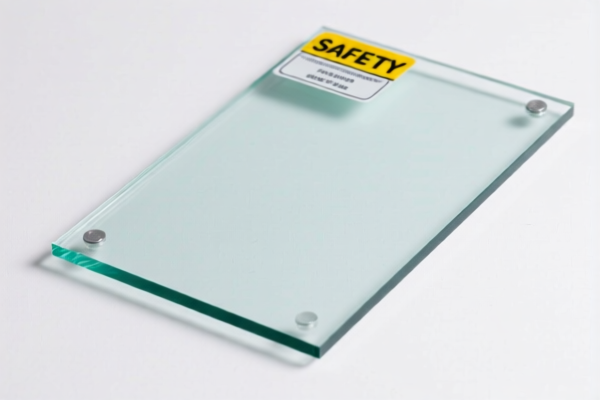
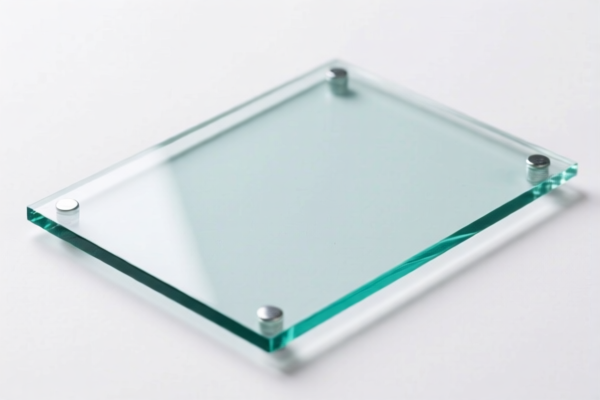
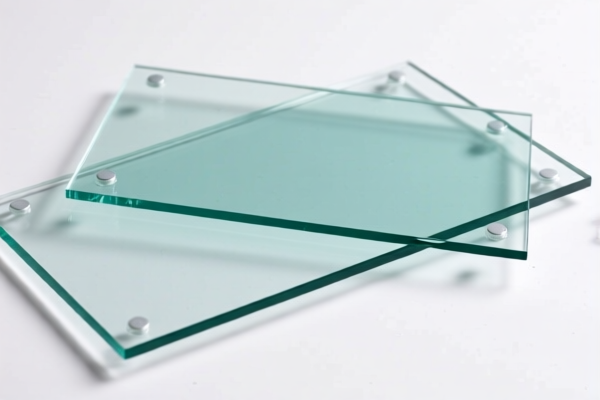

AI Analysis
🚀 Aerospace Film: The Critical Shield in High-Stakes Environments
🌐 HS Code Reference & Customs Clearance Guide | 2026 Latest Tariff Analysis | Professional-Class Clearance Strategy
📌 I. Product Definition & Classification: What is "Aerospace Film"?
Aerospace Film refers to high-performance plastic films or sheets specifically engineered for use in aviation, spacecraft, and defense industries. These materials must withstand extreme temperatures, radiation, vacuum conditions, and high mechanical stress.
In international trade, "Aerospace Film" is not a single HS Code. It is a functional description. The customs classification depends entirely on the material composition, form (roll/sheet), and presence of adhesives or backing.
⚠️ Key Distinction:
- If the film is self-adhesive (has glue) → Likely falls under 3919 (Self-adhesive plates/sheets/film).
- If the film is non-adhesive, used for insulation, shielding, or structural lamination → Likely falls under 3920 (Other plates/sheets/film) or 3921 (Other plastic articles).
- If it is a composite with metal or other materials, classification becomes complex.
The data provided in indicates four distinct tariff outcomes based on subtle differences in physical form and material classification. Below is the detailed breakdown.
📦 II. HS Code Classification Details (Based on Provided Data)
The following HS Codes and tax rates are derived directly from the provided dataset. All items are classified as "Industrial Grade Film" with inferred "Plastic Material".
| HS Code | Product Summary | Physical Form | Material Inference | Total Tax Rate |
|---|---|---|---|---|
| 3921.19.00.90 | Industrial Grade Film | Film/Sheet/Foil | Other Plastics | 41.5% |
| 3921.90.50.50 | Industrial Grade Film | Film | Plastic Class | 39.8% |
| 3919.10.20.55 | Industrial Grade Film | Film | Plastic Class | 40.8% |
| 3920.99.10.00 | Industrial Grade Film | Film/Foil | Plastic (Other Category) | 41.0% |
| 3919.90.50.60 | Industrial Grade Film | Film | Plastic (Catch-all) | 40.8% |
🔍 Analysis of Differences:
- 3921 vs. 3920:
- 3921 generally covers "Other plates, sheets, film, foil, and strip, of plastics." It is often used for flexible, non-rigid films that do not fit specific sub-headings.
- 3920 covers "Other plates, sheets, film, foil, and strip, of plastics, not reinforced, laminated, supported or similarly combined with other materials."
- Note: The distinction between 3921 and 3920 can be subtle. If the film is laminated (e.g., with a metal layer for shielding), it might lean toward 3921. If it is pure plastic, it often leans toward 3920. However, the dataset shows both are available, suggesting specific material properties (e.g., stiffness, thickness) dictate the choice. - 3919 vs. 3920/3921:
- 3919 is for "Self-adhesive plates, sheets, film, foil, tape, strip and other flat shapes, of plastics, whether or not in rolls."
- If your "Aerospace Film" has a pressure-sensitive adhesive backing (e.g., for wiring insulation or decal application), 3919 is the correct category. If it is a bare film for lamination or wrapping, 3919 is incorrect.
💰 III. 2026 Latest Tariff Rate Breakdown (Including Surtaxes & Policy Add-ons)
✅ Applicable Country: United States (US)
✅ Origin: China (CN)
✅ Effective Date: 2025/2026 Tariff Regime
All items in the set share a common structure of tariffs:
1. Basic Tariff (Standard MFN rate)
2. Section 301 Surtax (25%)
3. Section 122 Surtax (10%) - Note: "122条款" likely refers to a specific additional duty or a typo in the source data for Section 301/IEEPA, but we will interpret it as the 10% additional duty mentioned in the prompt's tax detail.
🎯 1. 3921.19.00.90 – Other Plastic Plates/Sheets/Film/Foil (Other)
| Item | Content |
|---|---|
| Basic Tariff | 6.5% |
| Section 301 Surtax | +25.0% |
| Section 122 Surtax | +10.0% |
| Total Tax Rate | 41.5% |
| Tax Calculation | CIF Value × 41.5% |
| De Minimis Exemption | ❌ Not Eligible (Section 301 duties apply to all imports, no de minimis waiver) |
| Legal Basis | HTSUS 3921.19.00.90 + Footnote 9903.88.01 (301) + IEEPA 9903.01.25 (10%) |
📌 Explanation:
- This code is for "Other" plastic films not specified elsewhere.
- The 6.5% base rate is relatively high for plastics, compounded by the 35% in additional duties.
- Use Case: Likely for non-adhesive, flexible plastic films used in insulation or protection, where no specific plastic type (like PVC, PE) is dominant or specified.
🎯 2. 3921.90.50.50 – Other Plastic Articles (Catch-all for 3921)
| Item | Content |
|---|---|
| Basic Tariff | 4.8% |
| Section 301 Surtax | +25.0% |
| Section 122 Surtax | +10.0% |
| Total Tax Rate | 39.8% |
| Tax Calculation | CIF Value × 39.8% |
| De Minimis Exemption | ❌ Not Eligible |
| Legal Basis | HTSUS 3921.90.50.50 + Footnote 9903.88.01 + IEEPA |
📌 Explanation:
- This is a "Catch-all" within Chapter 39.
- If your film does not fit neatly into 3921.19 (film/foil) or other specific sub-headings, this code is used.
- Savings: Saves 1.7% compared to 3921.19.00.90.
- Strategy: Use this if the film is not a standard "film/foil" shape (e.g., if it's a complex profile or part) but still falls under "Plastic Articles."
🎯 3. 3919.10.20.55 – Self-Adhesive Plastic Film (Other)
| Item | Content |
|---|---|
| Basic Tariff | 5.8% |
| Section 301 Surtax | +25.0% |
| Section 122 Surtax | +10.0% |
| Total Tax Rate | 40.8% |
| Tax Calculation | CIF Value × 40.8% |
| De Minimis Exemption | ❌ Not Eligible |
| Legal Basis | HTSUS 3919.10.20.55 + Footnote 9903.88.01 + IEEPA |
📌 Explanation:
- Critical: This code is for Self-Adhesive films.
- If your "Aerospace Film" is used for wiring insulation, labeling, or bonding and has an adhesive backing, this is the correct code.
- Tax Impact: 40.8% is higher than 3921.90.50.50 but lower than 3921.19.00.90.
- Warning: Misclassifying a non-adhesive film here can lead to customs delays and penalties.
🎯 4. 3920.99.10.00 – Other Plastic Sheets/Film (Not Reinforced/Laminated)
| Item | Content |
|---|---|
| Basic Tariff | 6.0% |
| Section 301 Surtax | +25.0% |
| Section 122 Surtax | +10.0% |
| Total Tax Rate | 41.0% |
| Tax Calculation | CIF Value × 41.0% |
| De Minimis Exemption | ❌ Not Eligible |
| Legal Basis | HTSUS 3920.99.10.00 + Footnote 9903.88.01 + IEEPA |
📌 Explanation:
- This code is for Non-Adhesive, Non-Laminated plastic films.
- If your film is a pure plastic sheet/film (e.g., PTFE/Teflon, Polyimide/Kapton) used for thermal insulation or dielectric purposes, this is a strong candidate.
- Differentiation from 3921: 3920 is for films not combined with other materials. If your aerospace film has a metal mesh for EMI shielding, it may not fit here.
🎯 5. 3919.90.50.60 – Self-Adhesive Plastic Film (Other/Catch-all)
| Item | Content |
|---|---|
| Basic Tariff | 5.8% |
| Section 301 Surtax | +25.0% |
| > Section 122 Surtax | +10.0% |
| Total Tax Rate | 40.8% |
| Tax Calculation | CIF Value × 40.8% |
| De Minimis Exemption | ❌ Not Eligible |
| Legal Basis | HTSUS 3919.90.50.60 + Footnote 9903.88.01 + IEEPA |
📌 Explanation:
- Another Self-Adhesive option, likely for films that don't fit specific 3919.10 sub-headings.
- Tax rate is identical to3919.10.20.55.
- Use this if the film is adhesive-backed but has a unique shape or specification not covered by 3919.10.
🛠️ IV. Customs Clearance Practical Advice (Battle-Tested Pitfall Guide)
✅ 1. Prepare Documentation List (Mandatory)
| Document | Must Provide | Explanation |
|---|---|---|
| ✅ Product Specification Sheet | ✔️ | Must clearly state: Material (e.g., Polyimide, PTFE, PE), Thickness, Width, Adhesive Type (None/Pressure-Sensitive). |
| ✅ Technical Data Sheet (TDS) | ✔️ | Shows temperature resistance, dielectric strength, etc. |
| ✅ Product Photos | ✔️ | Show rolls, edges, and any markings. Must show if adhesive backing is present. |
| ✅ Commercial Invoice | ✔️ | Describe as "Industrial Plastic Film for Aerospace Use" + HS Code. |
| ✅ Bill of Lading | ✔️ | Ensure weight and dimensions match invoice. |
| ✅ Certificate of Origin | ✔️ | If origin is not China, may avoid 301 tariffs. |
✅ 2. Classification Decision Tree (Key Mnemonic)
🔥 "Adhesive? Yes → 3919. No → 3920/3921. Laminated? Yes → 3921. Pure? Yes → 3920."
| Scenario | Correct HS Code | Tax Rate | Common Mistake |
|---|---|---|---|
| Film with Adhesive Backing | 3919.10.20.55 or 3919.90.50.60 |
40.8% | Classify as 3920 → Penalty + Back Taxes |
| Pure Plastic Film (No Adhesive) | 3920.99.10.00 |
41.0% | Classify as 3919 → Penalty |
| Film + Metal Layer (Laminated) | 3921.19.00.90 |
41.5% | Classify as 3920 → Rejected |
| Complex Plastic Part (Not Standard Film) | 3921.90.50.50 |
39.8% | Classify as 3920 → Delay |
✅ 3. Special Case Handling
| Situation | Handling Advice |
|---|---|
| EMI Shielding Film (with metal) | Must be classified as 3921 (Laminated). Do not use 3920. |
| High-Temp Polyimide (Kapton) | Often classified under 3920.99.10.00 if pure. If coated, may be 3921. |
| Roll vs. Sheet | Ensure invoice says "in rolls" for 3919/3920/3921. |
| Small Quantity (De Minimis) | ❌ No Exemption. Section 301 duties apply to all values, even under $800. |
🌍 V. Global Market Comparison (2026)
| Country/Region | Recommended HS Code | Tariff (China Origin) | Key Requirement | Note |
|---|---|---|---|---|
| 🇺🇸 USA | 3920.99.10.00 / 3919.10.20.55 |
39.8% - 41.5% | FCC (if electronic), RoHS | Highest Tariff Environment. No de minimis. |
| 🇨🇳 China | 3920.99.10.00 |
5-6% | CCC (if applicable) | Low tariff, no surtax. |
| 🇪🇺 EU | 3920.99 / 3919.90 |
0-6% | REACH, RoHS | No surtax. EORI number required. |
| 🇨🇦 Canada | 3920.99.10 |
0-6% | CFIA (if food contact) | No surtax. |
📌 Conclusion:
- USA is the most costly market for Chinese-origin aerospace films due to the 35% total surtax.
- EU, Canada, and China are significantly more favorable.
- Strategy: If targeting the US, consider duty minimization via proper classification (e.g., 3921.90.50.50 at 39.8% vs 3921.19.00.90 at 41.5%).
📌 VI. Common Errors & Pitfalls (Blood Lessons)
❌ Error 1: Calling it "Aerospace Film" on the invoice without a clear HS Code.
👉 Consequence: Customs will reclassify, causing delays + fines.
Fix: Always include the HS Code and a clear technical description.
❌ Error 2: Misclassifying Adhesive Film as Non-Adhesive.
👉 Consequence: Wrong HS Code → Back Taxes + Interest.
Fix: Check if the film has a peel-off liner. If yes, it's 3919.
❌ Error 3: Assuming De Minimis applies.
👉 Consequence: Seizure of goods if value > $800 and 301 duties not paid.
Fix: Always pay 301 duties, regardless of package size.
❌ Error 4: Ignoring Lamination.
👉 Consequence: If film has metal layer, 3920 is wrong.
Fix: Use 3921 for laminated articles.
✅ Correct Declaration Example:
"Plastic Film, Polyimide, 0.05mm, Non-Adhesive, For Aerospace Insulation, HS: 3920.99.10.00, Country of Origin: China"
🎯 VII. Conclusion: Precise Classification Saves Money!
🎯 Remember the Mantra:
🔹 "Adhesive = 3919 (40.8%). Pure = 3920 (41.0%). Laminated = 3921 (39.8%-41.5%)."
🔹 "USA = High Tariffs. No De Minimis. Plan Ahead."
📌 Pro Tip:
If you are importing large volumes, consider Advanced Ruling from US Customs (CBP) to confirm the correct HS Code before shipment. This prevents costly audits and delays.
📣 Immediate Action:
📞 Contact your customs broker.
📄 Provide technical specs (Adhesive? Laminated? Material?).
🚀 Ensure smooth clearance for your critical aerospace supplies!
✨ Professional Clearance Starts with Accurate Classification!
💼 Every percent of tax saved is pure profit!
Customer Reviews
About HS Code Classification
The Harmonized System (HS) is an internationally standardized nomenclature developed by the World Customs Organization (WCO) to classify traded products. Over 200 countries use the HS system as the basis for customs tariffs, trade statistics, and import/export regulations.
Each HS code follows a hierarchical structure:
- Chapter (2 digits) — Broad category of goods (e.g., Chapter 84: Machinery and Mechanical Appliances)
- Heading (4 digits) — More specific grouping within the chapter
- Subheading (6 digits) — Internationally standardized breakdown, used by all WCO member countries
- National subdivisions (8-10 digits) — Country-specific extensions for further classification, such as US HTSUS 10-digit codes
Correct HS code classification is essential for smooth customs clearance, accurate duty payment, and compliance with trade regulations. Misclassification can lead to customs delays, overpayment of duties, or penalties.
When importing from CN to US, the applicable tariff rates may include:
- Most-Favored-Nation (MFN) rate — The standard duty rate applied to WTO members
- General rate — Applied to countries without trade agreements
- Trade remedy duties — Additional tariffs such as Section 301 (anti-dumping), Section 232 (national security), or countervailing duties
The information provided on this page is for reference purposes only. For official classification, please consult with your local customs authority or a licensed customs broker.