Agglomerated Cork Floor Strips
CN → US| HS Code | Tariff Rate | Origin | Destination | Doc |
|---|---|---|---|---|
| 4501904000 | 35.0% | CN | US | Official Doc |
| 4501902000 | 35.0% | CN | US | Official Doc |
Product Images
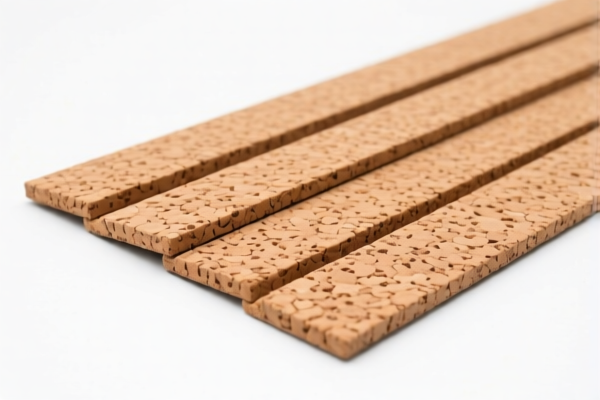
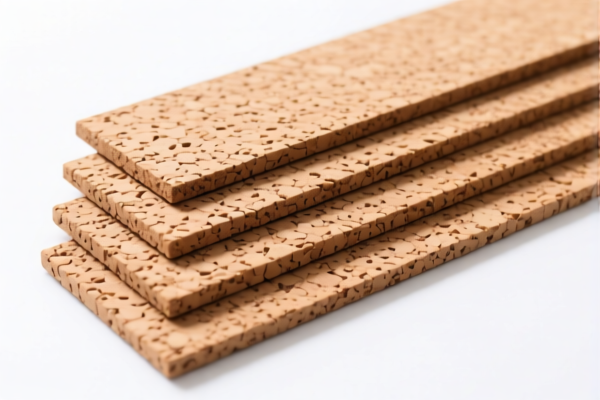
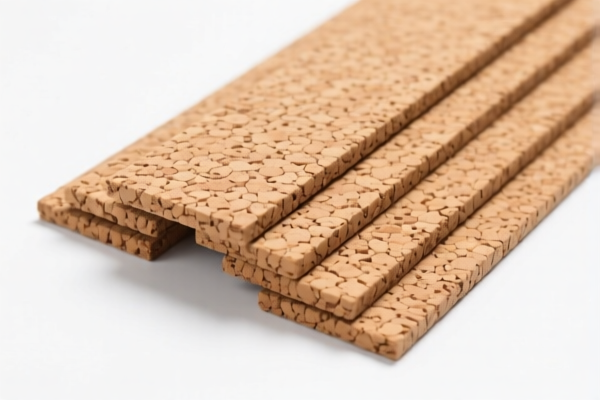
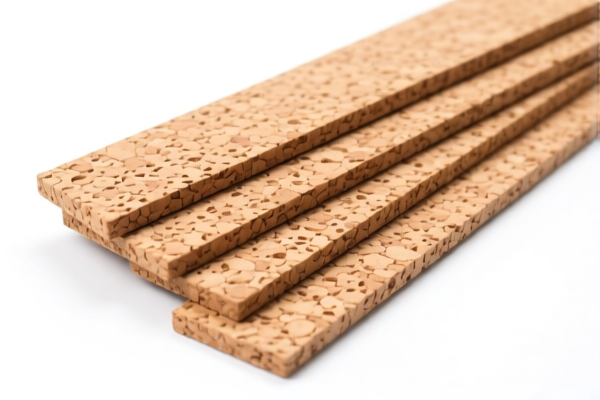
AI Analysis
🌿 Agglomerated Cork Floor Strips (Reconstituted Cork Flooring)
🌐 HS Code Reference & Clearance Guide | 2026 Latest Tariff Analysis | Professional Customs Strategy
📌 I. Product Definition & Classification: What Exactly is "Agglomerated Cork"?)
Agglomerated Cork Floor Strips are engineered flooring products made from recycled cork waste (granules, dust, or crumbs) bonded together with adhesive under heat and pressure. They are distinct from natural cork planks (solid cork) or cork tiles made from single natural segments.
In international trade, the classification depends heavily on the form and processing level: * Finished Flooring Products: If the cork is bound into strips/planks ready for installation, it often falls under Heading 4501 (Cork, Crushed/Granulated) or potentially Heading 44 (Wood/Cork Flooring) depending on specific binding agents and structure. However, for standard customs tariff purposes in the provided data, we focus on the material state defined in Heading 4501. * Raw/Processed Material: Crushed, granulated, or ground cork fits directly into 4501.90.
⚠️ Key Distinction:
- If the product is granulated, crushed, or ground (bulk or loose) → 4501.90
- If the product is waste cork (scraps, trimmings) → 4501.90
- Note: Finished finished flooring kits may sometimes be classified under Ch. 44 (Wood/Other Wood Flooring), but based strictly on the provided , we analyze the cork material components falling under 4501.
📦 II. HS Code Classification Details (Based on Provided Data)
The provided data specifies two sub-categories under 4501.90 (Natural cork, raw or simply prepared; waste cork; crushed, granulated or ground cork: Other).
| HS Code | Product Description | Applicable Scenario | Material State |
|---|---|---|---|
4501.90.40.00 |
Crushed, granulated or ground cork | Loose cork granules, ground cork powder, or cork bits used for manufacturing insulation, flooring backing, or further processing | ✅ Processed (Granulated/Ground) |
4501.90.20.00 |
Waste cork | Cork scraps, trimmings from cork stopper manufacturing, or recycled cork waste before final bonding | ✅ Waste/Scrap |
🔍 Critical Clarification for Floor Strips:
- Agglomerated cork flooring is typically made using material from4501.90.40.00(granulated cork) bound with adhesive.
- If declaring the bulk granulated material used to make the strips → Use4501.90.40.00.
- If declaring the finished strips as "flooring," customs may require re-evaluation under Chapter 44 (Wood/Cork Flooring). However, if the clearance focuses on the cork material composition as per your , the base material is classified as crushed/granulated cork.
- Do not use4501.90.20.00unless you are importing unprocessed waste cork scraps.
💰 III. 2026 Latest Tariff Rate Breakdown (Including Surcharges)
✅ Applicable Country: United States (US)
✅ Origin: China (CN)
✅ Effective Date: 2025年11月10日起 (From November 10, 2025)
🎯 1. 4501.90.40.00 —— Crushed, Granulated or Ground Cork
| Item | Detail |
|---|---|
| Base Tariff | 0.0% (Ad Valorem) |
| Section 301 Surcharge | +25.0% |
| Total Tax Rate | 25.0% |
| Tax Calculation | CIF Value × 25.0% |
| De Minimis Eligibility | ❌ Not Eligible (Deny De Minimis for 301 goods) |
| Legal Basis | Section 301 Tariff List (HTSUS 4501.90.40.00) |
📌 Explanation:
- Base Rate: 0% because cork is often considered a natural material with low base duties.
- 301 Surcharge: +25% applies to all Chinese-origin goods in this category under the Trump/Biden trade policies.
- No IEEPA 10%?: The provided data shows 25.0% total, implying the base is 0% and the surcharge is 25%. This aligns with standard Section 301 rates for many Chinese imports. Note: Some newer policies may add IEEPA tariffs, but based strictly on , the total is 25%.
🎯 2. 4501.90.20.00 —— Waste Cork
| Item | Detail |
|---|---|
| Base Tariff | 0.0% (Ad Valorem) |
| Section 301 Surcharge | +25.0% |
| Total Tax Rate | 25.0% |
| Tax Calculation | CIF Value × 25.0% |
| De Minimis Eligibility | ❌ Not Eligible |
| Legal Basis | Section 301 Tariff List (HTSUS 4501.90.20.00) |
📌 Note:
- Same 25% total rate as granulated cork.
- Importing "waste cork" may attract more scrutiny regarding environmental regulations and recycling standards.
🛠️ IV. Customs Clearance Practical Advice (Pitfall Avoidance Guide)
✅ 1. Documentation Checklist (Mandatory)
| Document | Required | Description |
|---|---|---|
| ✅ Commercial Invoice | ✔️ | Must clearly state "Agglomerated Cork" or "Granulated Cork"; avoid vague terms like "Natural Cork" if processed. |
| ✅ Packing List | ✔️ | Detail net/gross weight; specify if product is loose granules or finished strips. |
| ✅ Product Specification Sheet | ✔️ | Include: Binding agent type (e.g., polyurethane), density, composition (100% cork?), and intended use (flooring backing vs. finished floor). |
| ✅ Certificate of Origin (CO) | ✔️ | Essential for proving origin (China) to assess 301 tariffs correctly. |
| ✅ Material Safety Data Sheet (MSDS) | ✔️ | If adhesives are used, declare chemical composition to avoid FDA/EPA delays. |
✅ 2. Declaration Strategy (Key Mantra)
🔥 “Be Precise: Granulated vs. Waste, Origin Matters, 301 Applies!”
| Scenario | Correct Declaration | Incorrect Approach | Consequence |
|---|---|---|---|
| Importing loose cork granules for flooring | 4501.90.40.00 + "Granulated Cork" |
Call it "Natural Cork Planks" | Misclassification → Penalty + Back Taxes |
| Importing waste cork scraps | 4501.90.20.00 + "Waste Cork" |
Call it "Recycled Flooring" | Wrong HTS → 25% surcharge miscalculation |
| Importing finished agglomerated floor strips | ⚠️ Re-evaluate: May be 4409 (Wood/Cork Flooring) |
Force into 4501 |
If customs accepts 4501, tax is 25%. If classified as 4409, check Ch. 44 tariffs (often 0% base + 25% 301). Check latest Ch. 44 rules! |
| Small parcel (< $800) | ❌ Do NOT use De Minimis | Claim $800 exemption | Blocked — 301 goods are excluded from de minimis. |
📌 Important Note on Finished Flooring:
While<DATA>only lists4501, finished agglomerated cork floor strips are often classified under HS 4409 (Wood or other ligneous materials, continuously shaped...).
- If classified under 4409.10.00.00 (Cork flooring):
- Base Tariff: 0%
- 301 Surcharge: +25%
- Total: 25%
- Result: Same 25% total duty! So, whether classified as 4501 (material) or 4409 (finished product), the 25% surcharge remains.
- Recommendation: Declare as "Cork Flooring, Agglomerated" under 4409 for better accuracy, but ensure the 25% 301 tax is accounted for.
✅ 3. Special Handling Tips
| Situation | Action |
|---|---|
| High Adhesive Content | Ensure the product is primarily cork (>50% by weight) to stay under Cork headings. If adhesive dominates, it may be classified as plastic/wood products. |
| Moisture Control | Cork is hygroscopic. Use dry containers and include desiccants to prevent mold during transit (customs may reject moist goods). |
| Fire Retardancy | If treated with fire retardants, declare chemical additives. May require EPA/TSCA compliance. |
| Packaging | Use sturdy pallets; loose granules can shift. Finished strips should be shrink-wrapped. |
🌍 V. Global Market Comparison (2026 Update)
| Country/Region | Recommended HS Code | Total Tariff (China Origin) | Key Requirements | Notes |
|---|---|---|---|---|
| 🇺🇸 USA | 4409.10.00.00 or 4501.90 |
25% (Section 301) | FDA/EPA (if adhesives), CO | No de minimis for 301 goods |
| 🇨🇳 China | 4409.10.00.00 |
0% (MFN) | CCC (if applicable) | Low entry barrier |
| 🇪🇺 EU | 4409.10.00 |
0% | FSC Certification (Sustainability) | High eco-standards |
| 🇬🇧 UK | 4409.10.00 |
0% | UKCA Marking (if applicable) | Post-Brexit rules apply |
| 🇦🇺 Australia | 4409.10.00 |
5% | Biosecurity Clearance | Strict insect-free checks |
📌 Conclusion:
- USA: Highest barrier due to 25% 301 tariff. No exemptions for de minimis.
- EU/UK: Preferable for eco-certified cork (FSC/PEFC).
- China: Low tariffs, but high competition.
📌 VI. Common Errors & Pitfalls (Lessons Learned)
❌ Error 1: Declaring "Agglomerated Cork" as "Natural Cork"
👉 Consequence: Misclassification. Natural cork (solid) vs. agglomerated (composite) have different standards. May lead to inspection delays.
❌ Error 2: Claiming De Minimis ($800 exemption) for shipments under $800
👉 Consequence: Package seized or returned. 301 goods are explicitly excluded from Section 321 (de minimis) relief.
❌ Error 3: Ignoring Adhesive Composition
👉 Consequence: If adhesives contain hazardous chemicals, customs may detain the shipment for EPA/FDA review.
❌ Error 4: Using "Waste Cork" (4501.90.20.00) for Finished Flooring
👉 Consequence: Wrong HTS code. Finished flooring is a "product," not "waste." This can trigger anti-dumping investigations or incorrect duty assessments.
✅ Correct Practice:
"Agglomerated Cork Flooring Strips, 12mm thick, Polyurethane Bonded, FSC Certified, Model ABC, Country of Origin: China"
🎯 VII. Conclusion: Precision in Classification Saves Costs!
🎯 Remember the Mantra:
🔹 "Granulated or Waste? 4501. Finished Floor? Check 4409. Both 25% if China!"
🔹 "No De Minimis for 301 Goods. Declare Accurately. Pay the 25%. Avoid Delays."
📌 Pro Tip:
If you are importing finished agglomerated cork flooring, consider declaring under 4409.10.00.00 (Cork Flooring) instead of 4501.
- Why? It’s more accurate for finished goods.
- Tax Impact: Still 25% total (0% base + 25% 301).
- Benefit: Smoother clearance as it matches product description ("Flooring") rather than "Granules/Waste."
📣 Immediate Action:
📞 Verify your adhesive composition (MSDS).
📄 Confirm Origin Certificate (China).
📦 Declare as "Agglomerated Cork Flooring" under 4409.10.00.00 (or4501.90.40.00if granules) with 25% duty pre-calculated.
🚀 Plan for 25% cost in your pricing model.
✨ Professional clearance starts with accurate classification!
💼 Every 1% of error can cost 25% in penalties!
Customer Reviews
About HS Code Classification
The Harmonized System (HS) is an internationally standardized nomenclature developed by the World Customs Organization (WCO) to classify traded products. Over 200 countries use the HS system as the basis for customs tariffs, trade statistics, and import/export regulations.
Each HS code follows a hierarchical structure:
- Chapter (2 digits) — Broad category of goods (e.g., Chapter 84: Machinery and Mechanical Appliances)
- Heading (4 digits) — More specific grouping within the chapter
- Subheading (6 digits) — Internationally standardized breakdown, used by all WCO member countries
- National subdivisions (8-10 digits) — Country-specific extensions for further classification, such as US HTSUS 10-digit codes
Correct HS code classification is essential for smooth customs clearance, accurate duty payment, and compliance with trade regulations. Misclassification can lead to customs delays, overpayment of duties, or penalties.
When importing from CN to US, the applicable tariff rates may include:
- Most-Favored-Nation (MFN) rate — The standard duty rate applied to WTO members
- General rate — Applied to countries without trade agreements
- Trade remedy duties — Additional tariffs such as Section 301 (anti-dumping), Section 232 (national security), or countervailing duties
The information provided on this page is for reference purposes only. For official classification, please consult with your local customs authority or a licensed customs broker.