Agglomerated Cork Floor Tiles with Binder
CN → US| HS Code | Tariff Rate | Origin | Destination | Doc |
|---|---|---|---|---|
| 4504103000 | 35.0% | CN | US | Official Doc |
| 4504101000 | 35.0% | CN | US | Official Doc |
| 6804226000 | 35.0% | CN | US | Official Doc |
| 6804230000 | 35.0% | CN | US | Official Doc |
| 3918901000 | 40.3% | CN | US | Official Doc |
| 3918101040 | 40.3% | CN | US | Official Doc |
Product Images
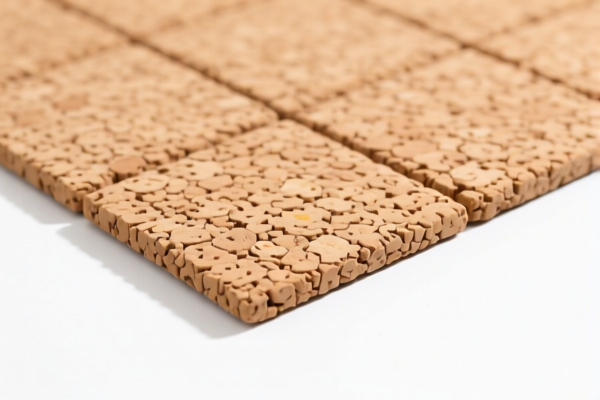
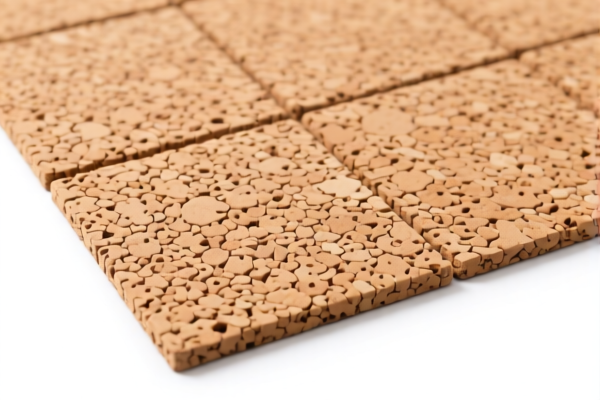
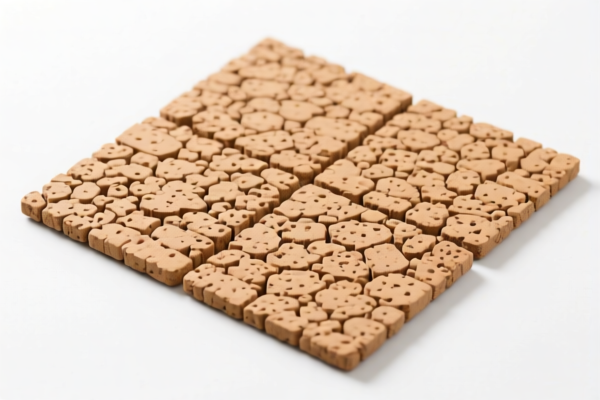
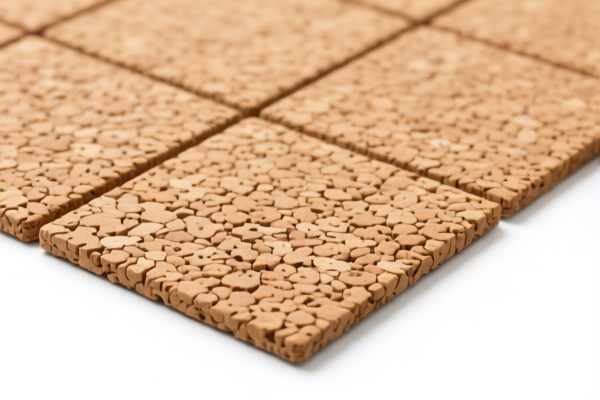
AI Analysis
🍄 Agglomerated Cork Floor Tiles with Binder (Cork-Based Floor Coverings)
🌐 HS Code Reference & Customs Clearance Guide | 2026 Latest Tariff Analysis | Specialized Strategy for Cork Products
📌 I. Product Definition & Classification: Do You Truly Understand "Agglomerated Cork"?
Agglomerated Cork (also known as bonded cork or cork granules) refers to cork granules, powder, or dust that are bonded together using a binding substance (often natural latex or synthetic resins). Unlike natural cork sheets, these are engineered products.
In international trade, distinguishing between natural cork articles and engineered cork composites is critical for accurate HS Code classification:
Agglomerated Cork Articles (Chapter 45): Products made from ground/pulverized cork bonded together. Plastic Floor Coverings (Chapter 39): If the product is primarily plastic with cork filling, it may fall here, but pure agglomerated cork belongs to Chapter 45.
⚠️ Key Distinction Point:
- If the product is wholly of ground/pulverized cork and rubber → It falls under 4504.10.10.00 (Special high-tax category).
- If it is standard agglomerated cork floor covering (with or without binder) → It falls under 4504.10.30.00 (Low-tax category).
- Crucial: Do not confuse with PVC/Vinyl tiles (3918) or grinding wheels (6804), even if they look similar or share industrial applications.
📦 II. HS Code Classification Details (2026 Latest Tariff Authority Comparison)
| HS Code | Product Description | Applicable Scenario | Key Material Composition |
|---|---|---|---|
4504.10.30.00 |
Agglomerated cork floor coverings (blocks, plates, sheets, strip, tiles, cylinders) | Standard cork flooring, wall tiles, floor underlays made of agglomerated cork | Cork granules + Binder |
4504.10.10.00 |
Vulcanized sheets/slabs of ground/pulverized cork and rubber | Industrial mats, anti-vibration pads, specialized rubber-cork composites | Ground Cork + Rubber (Vulcanized) |
3918.90.10.00 |
Floor coverings of plastics (e.g., PVC/Peel-and-stick) | Vinyl tiles, laminate flooring with plastic core | Plastics (PVC, PE, etc.) |
3918.10.10.40 |
Floor coverings of polymers of vinyl chloride (Vinyl Tile Other) | Specialized vinyl tiles for commercial use | Polyvinyl Chloride (PVC) |
6804.22.60.00 |
Millstones/grinding wheels of agglomerated abrasives/ceramics | NOT flooring – Industrial grinding tools | Agglomerated abrasives/ceramics |
6804.23.00.00 |
Millstones of natural stone | NOT flooring – Natural stone grinding tools | Natural stone |
🔍 Important Reminder:
- If your "cork tile" contains rubber and is vulcanized, it is classified as4504.10.10.00, not standard cork flooring.
- If it is purely cork + binder (latex/resin) and used as floor covering, it is4504.10.30.00.
- Misclassification Risk: Declaring rubber-cork composites as standard cork flooring (4504.10.30.00) to avoid higher taxes will result in severe penalties and back taxes.
💰 III. 2026 Latest Tariff Rate Details (Including Additional Taxes & Policy Surcharges)
✅ Applicable Country: United States (US)
✅ Origin: China (CN)
✅ Effective Date: From November 10, 2025 (including subsequent imports)
🎯 1. 4504.10.30.00 —— Agglomerated Cork Floor Coverings (Standard)
| Item | Content |
|---|---|
| Base Tariff | 0% (ad valorem) |
| Additional Tariff (Section 301) | 0% |
| Total Tax Rate | 0.0% |
| Tax Calculation | CIF Value × 0% = $0 |
| De Minimis Exemption | ✅ Eligible (If shipped via low-value packages, e.g., under $800) |
| Legal Basis Path | USITC:4504.10.30.00 (No footnote surcharge applies to this specific subheading for cork flooring) |
📌 Explanation:
- This code enjoys a 0% total tariff rate.
- Unlike many Chinese-made goods, cork floor coverings in this specific subheading are exempt from the 25% Section 301 surcharge.
- Cost Advantage: Zero duty makes this highly competitive for US importers.
🎯 2. 4504.10.10.00 —— Agglomerated Cork & Rubber Vulcanized Sheets/Slabs
| Item | Content |
|---|---|
| Base Tariff | 0% (ad valorem) |
| Additional Tariff (Section 301) | +25% |
| Total Tax Rate | 25.0% |
| Tax Calculation | CIF Value × 25% |
| De Minimis Exemption | ❌ Not Eligible (deny_de_minimis) |
| Legal Basis Path | USITC:4504.10.10.00 → FOOTNOTE:301.8 (Section 301 surcharge applies) |
📌 Critical Warning:
- Although the base tariff is 0%, the 25% additional tariff applies to this specific code.
- This applies only if the product is vulcanized and contains rubber.
- Do NOT use this code for standard cork flooring unless it is explicitly a rubber-cork composite.
🎯 3. 3918.90.10.00 & 3918.10.10.40 —— Plastic/Vinyl Floor Coverings (For Comparison)
| Item | Content |
|---|---|
| Base Tariff | 5.3% (for 3918.90.10.00) / 0.0% (for 3918.10.10.40) |
| Additional Tariff | +25% (for 3918.90.10.00) / 0.0% (for 3918.10.10.40) |
| Total Tax Rate | 30.3% (for 3918.90.10.00) / 0.0% (for 3918.10.10.40) |
| De Minimis | ❌ Not Eligible for 3918.90.10.00 |
📌 Note:
- Some "cork-look" vinyl tiles are classified as3918.10.10.40(0% tax).
- However, if the product is genuine agglomerated cork, it must be declared as Chapter 45. Misdeclaring cork as plastic (3918) is fraud.
🛠️ IV. Customs Clearance Practical Advice (Battle-Tested Pitfall Guide)
✅ 1. Preparation Checklist (All Required)
| Material | Mandatory? | Description |
|---|---|---|
| ✅ Product Specification Sheet | ✔️ | Must specify: "Agglomerated Cork", "Binder Type (e.g., Latex/Resin)", "No Rubber Content" (if claiming 0% tax). |
| ✅ Material Composition Certificate | ✔️ | Lab test report proving the material is Cork + Binder, NOT Cork + Rubber. |
| ✅ Product Photos | ✔️ | Clear images of the tile structure, showing granules and binder, not a plastic surface. |
| ✅ Commercial Invoice | ✔️ | Description must read: "Floor Coverings of Agglomerated Cork, with Binder, Not Containing Rubber". |
| ✅ Packing List | ✔️ | Consistent with invoice. |
✅ 2. Declaration Strategy (Key Mnemonics)
🔥 “Cork Without Rubber, Code .30, Zero Tax Rule!”
| Scenario | Correct HS Code | Error Consequence |
|---|---|---|
| Standard Cork Tiles (Cork + Binder) | 4504.10.30.00 |
0% Tax ✅ |
| Cork-Rubber Composite Mats (Vulcanized) | 4504.10.10.00 |
25% Tax ❌ (If declared as .30) |
| PVC/Vinyl Tiles with Cork Pattern | 3918.10.10.40 |
0% Tax (But must be plastic) |
| Grinding Wheels (Industrial) | 6804.22.60.00 |
25% Tax (Do not confuse with flooring) |
📌 Note:
- Ensure the declaration explicitly states "Floor Coverings" to match the description of4504.10.30.00.
- If the product is also used as wall covering, it still falls under this code if it is agglomerated cork.
✅ 3. Special Case Handling
| Case | Handling Advice |
|---|---|
| OEM Custom Cork Tiles | Provide design drawings. Ensure no rubber backing is used if claiming 0% tax. |
| Cork with Acoustic Pad | If the acoustic pad is rubber, the entire product may be classified as 4504.10.10.00 (25% tax). Solution: Use non-rubber foam backing. |
| Imported as Raw Blocks | If imported as "blocks" to be cut into tiles in the US, still classify as 4504.10.30.00. |
| Mixing with Other Goods | Do not mix cork tiles with vinyl tiles in the same shipment without separate documentation. |
🌍 V. Global Market Clearance Comparison (2026 Latest)
| Country/Region | Recommended HS Code | Tariff (China Origin) | Certification | Notes |
|---|---|---|---|---|
| 🇺🇸 USA | 4504.10.30.00 |
0% | None specific | Zero duty advantage! |
| 🇪🇺 EU | 4504.10.00 |
0% | CE (if under consumer protection) | Generally low duty |
| 🇨🇳 China | 4504.10.30.00 |
0% | None | Export from China to USA is tax-free |
| 🇬🇧 UK | 4504.10.00 |
0% | UKCA | Similar to EU |
📌 Conclusion:
- USA offers a 0% tariff for agglomerated cork floor coverings (4504.10.30.00), making it a tax-efficient import category compared to many other materials.
- Caution: Do not let rubber content sneak into the product, which would trigger the 25% tax.
📌 VI. Common Errors & Pitfall Guide (Blood Lessons)
❌ Error 1: Declaring "Cork-Rubber Mats" as "Agglomerated Cork Floor Tiles" (4504.10.30.00)
👉 Consequence: 25% Back Tax + Penalty. Customs will test for rubber content.
❌ Error 2: Declaring Vinyl Tiles as Cork Tiles
👉 Consequence: Fraud charges, goods seized. Even if it looks like cork, if it's plastic, it's 3918.
❌ Error 3: Using "Grinding Wheels" description for Cork Tiles
👉 Consequence: Misclassification to 6804.22.60.00 (25% tax) due to vague description.
❌ Error 4: Ignoring the "Binder" Component
👉 Consequence: If the binder is significant, ensure it doesn't change the essential character to rubber.
✅ Correct Description Example:
"Agglomerated Cork Floor Tiles, 12mm thickness, bonded with natural latex, 0% rubber content, for residential flooring use."
🎯 VII. Conclusion: Professional Declaration, Save Costs, Avoid Risks!
🎯 Remember the Mnemonic:
🔹 "Cork Plus Binder, Code .30, Zero Duty for You!"
🔹 "If Rubber is Present, Code .10, Twenty-Five Percent Penalty!"
🔹 "Don't Confuse Cork with Plastic, Code .39 is Different!"
📌 Tips:
- For cork flooring imports to the US, verify the rubber content is 0%.
- If using acoustic backing, ensure it is foam or felt, not rubber, to maintain the 0% rate.
- Advance Ruling: Consider applying for a binding ruling from CBP if the product has a complex composite structure.
📣 Immediate Action:
📞 Contact a licensed customs broker + Provide material test reports (confirming NO rubber) + Apply for HS Code Pre-determination.
🚀 Ensure your cork flooring enjoys 0% tariffs in the US market!
✨ Professional Clearance Starts with Accurate Classification!
💼 Every Percent Saved is Pure Profit!
Customer Reviews
About HS Code Classification
The Harmonized System (HS) is an internationally standardized nomenclature developed by the World Customs Organization (WCO) to classify traded products. Over 200 countries use the HS system as the basis for customs tariffs, trade statistics, and import/export regulations.
Each HS code follows a hierarchical structure:
- Chapter (2 digits) — Broad category of goods (e.g., Chapter 84: Machinery and Mechanical Appliances)
- Heading (4 digits) — More specific grouping within the chapter
- Subheading (6 digits) — Internationally standardized breakdown, used by all WCO member countries
- National subdivisions (8-10 digits) — Country-specific extensions for further classification, such as US HTSUS 10-digit codes
Correct HS code classification is essential for smooth customs clearance, accurate duty payment, and compliance with trade regulations. Misclassification can lead to customs delays, overpayment of duties, or penalties.
When importing from CN to US, the applicable tariff rates may include:
- Most-Favored-Nation (MFN) rate — The standard duty rate applied to WTO members
- General rate — Applied to countries without trade agreements
- Trade remedy duties — Additional tariffs such as Section 301 (anti-dumping), Section 232 (national security), or countervailing duties
The information provided on this page is for reference purposes only. For official classification, please consult with your local customs authority or a licensed customs broker.