Agricultural Crop Spraying Drone
CN → US| HS Code | Tariff Rate | Origin | Destination | Doc |
|---|---|---|---|---|
| 8424820090 | 37.4% | CN | US | Official Doc |
| 8424899000 | 36.8% | CN | US | Official Doc |
| 8806240000 | 35.0% | CN | US | Official Doc |
| 8424490000 | 37.4% | CN | US | Official Doc |
Product Images
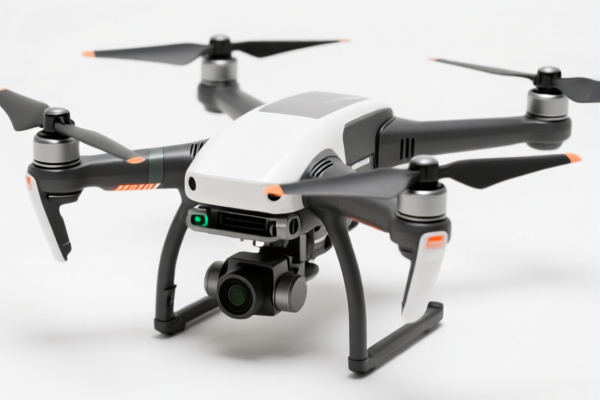
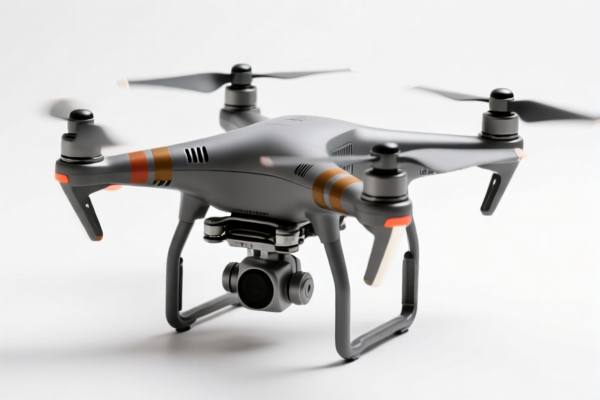


AI Analysis
🚁 Agricultural Crop Spraying Drones (Unmanned Aerial Vehicles for Agricultural Use)
🌐 HS Code Reference & Customs Clearance Guide | 2026 Latest Tariff Analysis | Professional通关 Strategy
📌 I. Product Definition & Classification: Do You Truly Understand "Agri-Drones"?
Agricultural Crop Spraying Drones are specialized unmanned aerial vehicles (UAVs) designed specifically for precision agriculture. They are primarily used to spray liquids (pesticides, fertilizers) or powders over crops. In international trade, their classification is complex because they straddle two distinct categories: Agricultural Machinery and Aerospace/Aviation Products.
The correct HS Code depends entirely on the primary function, design intent, and technical specifications of the drone at the time of import.
⚠️ Key Distinction Point:
- If the drone is designed as a mechanical spraying device (focusing on the nozzles, tanks, and spray mechanism), it may fall under Chapter 84.
- If the drone is defined primarily as an unmanned aircraft (focusing on flight capability, weight, and aerodynamics), it falls under Chapter 88.
- Crucial Note: Regardless of the chapter, additional duties (25% Section 301 + 10% IEEPA) apply to Chinese-origin goods in the US, pushing total tax rates to 35%-37.4%.
📦 II. HS Code Classification Details (2026 Latest Tariff Authority对照)
Below are the four specific HS Codes derived from the provided data, each representing a different classification angle for the same product.
| HS Code | Product Description | Applicable Scenario | Classification Logic |
|---|---|---|---|
8424.82.00.90 |
Agricultural crop spraying drone, used for spraying liquids or powders, fitting the description of machinery for agricultural or horticultural purposes. | Drones classified primarily as agricultural machinery based on their spraying function. | Chapter 84 Logic: Treated as a "spraying machinery" rather than an aircraft. |
8424.89.90.00 |
Other machinery for projecting, dispersing, or spraying liquids or powders, designed for agricultural or horticultural use. | Drones with complex spraying systems that don't fit neatly into the specific "82" sub-heading, but are still viewed as spraying equipment. | Chapter 84 Logic: "Other" spraying machinery for agriculture. |
8806.24.00.00 |
Agricultural crop spraying drone, categorized as an unmanned aircraft, typically designed with a weight scale larger than 25kg. | Drones classified primarily as unmanned aircraft (UAVs) due to flight capabilities and weight (>25kg). | Chapter 88 Logic: Treated as an aircraft first, spraying function second. |
8424.49.00.00 |
Agricultural crop spraying drone, having spraying functions, fitting the description of machinery for agricultural or horticultural purposes. | Drones classified as spraying machinery with specific nozzle/dispersal mechanisms. | Chapter 84 Logic: Specific sub-heading for spraying machinery. |
🔍 Critical Warning:
- Misclassification Risk: Classifying a heavy UAV (>25kg) under Chapter 84 to avoid aviation regulations is risky if the customs officer emphasizes the flight mechanism. Conversely, classifying a small spray drone under Chapter 88 might attract unnecessary aviation scrutiny.
- Documentation is Key: The Bill of Lading and Commercial Invoice must clearly define whether the primary characteristic is "Spraying Machinery" or "Unmanned Aircraft."
💰 III. 2026 Latest Tariff Rate Breakdown (Including Additional Duties & Policy Surcharges)
✅ Applicable Country: United States (US)
✅ Origin: China (CN)
✅ Effective Time: Current (Post-2025 Adjustments)
All four HS Codes share a similar tax structure due to the ongoing trade measures. Below is the detailed breakdown.
🎯 1. 8424.82.00.90 & 8424.49.00.00 —— Agricultural Spraying Machinery
| Item | Content |
|---|---|
| Basic Tariff | 2.4% (Ad Valorem) |
| Section 301 Additional Duty | +25.0% (USITC Footnote) |
| IEEPA Additional Duty | +10.0% (Targeting Chinese Products, effective Nov 10, 2025) |
| Total Tax Rate | 37.4% |
| Tax Calculation | CIF Value × 37.4% |
| De Minimis Exemption? | ❌ No (deny_de_minimis) |
| Legal Path | IEEPA:9903.01.24 → Section 301: 25% → HS: 8424/8424.49 |
📌 Explanation:
- The 2.4% is the standard Most Favored Nation (MFN) rate for agricultural machinery.
- The 25% is the punitive tariff under Section 301 for Chinese tech/goods.
- The 10% is the additional IEEPA tariff.
- Total: 37.4%. This is a significant cost factor for exporters.
🎯 2. 8424.89.90.00 —— Other Agricultural Spraying Machinery
| Item | Content |
|---|---|
| Basic Tariff | 1.8% (Ad Valorem) |
| Section 301 Additional Duty | +25.0% |
| IEEPA Additional Duty | +10.0% |
| Total Tax Rate | 36.8% |
| Tax Calculation | CIF Value × 36.8% |
| De Minimis Exemption? | ❌ No |
| Legal Path | IEEPA:9903.01.24 → Section 301: 25% → HS: 8424.89 |
📌 Explanation:
- Slightly lower basic rate (1.8%) than8424.82(2.4%), resulting in a total of 36.8%.
- Useful if the drone’s spraying mechanism is complex and doesn't fit8424.82.
🎯 3. 8806.24.00.00 —— Unmanned Aircraft (UAV) > 25kg
| Item | Content |
|---|---|
| Basic Tariff | 0.0% (Ad Valorem) |
| Section 301 Additional Duty | +25.0% |
| IEEPA Additional Duty | +10.0% |
| Total Tax Rate | 35.0% |
| Tax Calculation | CIF Value × 35.0% |
| De Minimis Exemption? | ❌ No |
| Legal Path | IEEPA:9903.01.24 → Section 301: 25% → HS: 8806.24 |
📌 Explanation:
- Best for Cost: This code has a 0% basic tariff, making the total 35.0%, which is the lowest among the four options.
- Condition: The drone must be clearly defined as an "Unmanned Aircraft" and typically weigh >25kg to fit8806.24.
- Risk: Higher regulatory scrutiny from FAA/Customs regarding aviation safety and payload restrictions.
🛠️ IV. Customs Clearance Practical Advice (Battle-Tested Pitfall Avoidance)
✅ 1. Required Documentation Checklist (Non-Negotiable)
| Document | Mandatory? | Notes |
|---|---|---|
| ✅ Product Specification Sheet | ✔️ | Must detail weight, spray capacity, flight range, and primary function (Spray vs. Flight). |
| ✅ Circuit & Structure Diagrams | ✔️ | To prove whether the drone is primarily an "aircraft" (8806) or "machine" (8424). |
| ✅ Product Photos (Clear Label) | ✔️ | Show model number, brand, input/output voltage, and spray nozzles. |
| ✅ Third-Party Test Reports | ✔️ | FCC (Radio Frequency), CE (Europe), or ISO standards. Critical for 8806 classification. |
| ✅ Commercial Invoice | ✔️ | Description must be precise: "Unmanned Aerial Vehicle for Agricultural Spraying" or "Agricultural Spraying Machinery". |
| ✅ Certificate of Origin (CO) | ✔️ | Essential for determining origin (China) and applying the correct additional tariffs. |
| ✅ Packing List | ✔️ | Separate parts (batteries, nozzles, main body) to avoid misdeclaration. |
✅ 2. Declaration Strategy (Key Mnemonic)
🔥 “Weight Matters: >25kg go to 8806, <25kg go to 8424. Name it Right, Save 2.4%!”
| Scenario | Correct HS Code | Error Consequence |
|---|---|---|
| Heavy Drone (>25kg), primarily flight-capable | 8806.24.00.00 |
Misclassified as 8424 → Overpay Tax (37.4% vs 35.0%) |
| Light Drone (<25kg), primarily spray machinery | 8424.82.00.90 |
Misclassified as 8806 → High Scrutiny/Rejection |
| Complex Spraying System (Unique Mechanism) | 8424.89.90.00 |
Generic classification → Delay for Review |
| Standard Sprayer Function | 8424.49.00.00 |
Incorrectly used for flight-heavy units → Customs Query |
✅ 3. Special Case Handling
| Situation | Recommendation |
|---|---|
| UAVs with >25kg Payload | Strictly use 8806.24.00.00 if flight is the main feature. Declare as "Unmanned Aircraft." |
| Drones with Lithium Batteries | Must declare UN3480/UN3481 for shipping. Insurance and special handling fees apply. |
| OEM Custom Drones | Provide customer design specs to justify the classification. If the customer is in agriculture, lean towards 8424. |
| Dual-Use (Military/Civilian) | High risk of export control checks (EAR/ITAR). Ensure all export licenses are in place. |
🌍 V. Global Market Comparison for Agri-Drones (2026)
| Country/Region | Recommended HS Code | Total Tax Rate (China Origin) | Certification Requirements | Notes |
|---|---|---|---|---|
| 🇺🇸 USA | 8806.24.00.00 (Preferred) |
35.0% | FCC + FAA Registration | Lowest tax rate among options; strict aviation rules. |
| 🇪🇺 EU | 8806.21 or 8432 |
0% - 4.5% | CE + EASA Compliance | No Section 301/IEEPA tariffs. |
| 🇨🇳 China | 8806.21 |
1% - 5% | MIIT License | Low import duty; high domestic competition. |
| 🇦🇺 Australia | 8806.21 |
5% | RCM + CASA Approval | Strict drone registration. |
📌 Conclusion:
- USA is the most expensive market due to the 35%-37.4% total tariff burden.
- Optimization Tip: If your drone weighs >25kg and is certified as an aircraft,8806.24.00.00(35.0%) is the best legal option to minimize costs compared to Chapter 84 codes (36.8%-37.4%).
- European Market: Avoid US tariffs by diversifying supply chains if targeting non-US markets.
📌 VI. Common Mistakes & Pitfalls (Lessons from the Field)
❌ Mistake 1: Declaring all drones as 8424 to avoid aviation checks.
👉 Result: Customs flags weight discrepancies. If >25kg, it’s likely an aircraft. Penalty + Back Taxes.
❌ Mistake 2: Ignoring the 10% IEEPA Tariff.
👉 Result: Underpricing the CIF value. Customs audits reveal the true cost, leading to 10% shortfall + Interest.
❌ Mistake 3: Using vague descriptions like "Flying Robot."
👉 Result: Customs assigns a default high-rate code. Delay of 2-4 weeks.
❌ Mistake 4: Mixing batteries and main units in one HS Code without proper UN declaration.
👉 Result: Rejection at Port due to safety violations.
✅ Correct Declaration Example:
"Unmanned Aerial Vehicle for Agricultural Spraying, Weight 30kg, Model XYZ, FCC Certified, Includes 2 Batteries (UN3480). HS Code: 8806.24.00.00."
🎯 VII. Conclusion: Precision Classification, Maximum Profit!
🎯 Remember the Mnemonic:
🔹 “Heavy Drones (>25kg) → 8806 (35%)! Light Sprayers → 8424 (37.4%)! Name it Right, Save 2.4%!”
🔹 “HS Code Decides Fate, 2.4% Difference is Real, Wrong Step Means Tears!”
📌 Pro Tip:
- If you are exporting to the USA, prioritize 8806.24.00.00 for drones >25kg to save 2.4% on the CIF value.
- Always apply for an Advance Ruling from US Customs (CBP) if unsure. It provides legal protection against future misclassification claims.
📣 Immediate Action Required:
📞 Consult with a licensed customs broker.
📸 Provide detailed photos and specs.
🚀 Classify correctly, clear customs smoothly, and maximize your profit margins!
✨ Professional Clearance Starts with Accurate Classification!
💼 Every Percent Saved is Pure Profit!
Customer Reviews
About HS Code Classification
The Harmonized System (HS) is an internationally standardized nomenclature developed by the World Customs Organization (WCO) to classify traded products. Over 200 countries use the HS system as the basis for customs tariffs, trade statistics, and import/export regulations.
Each HS code follows a hierarchical structure:
- Chapter (2 digits) — Broad category of goods (e.g., Chapter 84: Machinery and Mechanical Appliances)
- Heading (4 digits) — More specific grouping within the chapter
- Subheading (6 digits) — Internationally standardized breakdown, used by all WCO member countries
- National subdivisions (8-10 digits) — Country-specific extensions for further classification, such as US HTSUS 10-digit codes
Correct HS code classification is essential for smooth customs clearance, accurate duty payment, and compliance with trade regulations. Misclassification can lead to customs delays, overpayment of duties, or penalties.
When importing from CN to US, the applicable tariff rates may include:
- Most-Favored-Nation (MFN) rate — The standard duty rate applied to WTO members
- General rate — Applied to countries without trade agreements
- Trade remedy duties — Additional tariffs such as Section 301 (anti-dumping), Section 232 (national security), or countervailing duties
The information provided on this page is for reference purposes only. For official classification, please consult with your local customs authority or a licensed customs broker.