Agricultural Grade Plastic Pipe Fittings
CN → US| HS Code | Tariff Rate | Origin | Destination | Doc |
|---|---|---|---|---|
| 3917400050 | 40.3% | CN | US | Official Doc |
| 3917400095 | 40.3% | CN | US | Official Doc |
Product Images
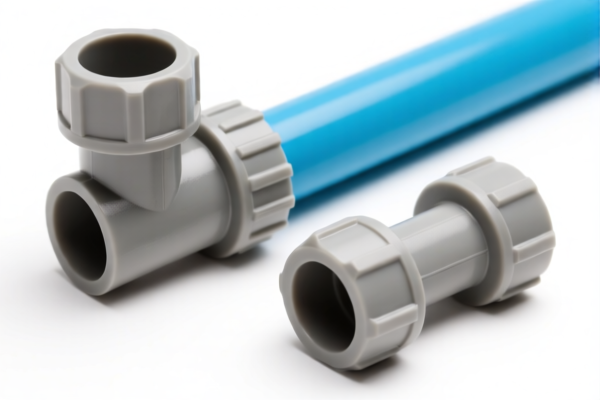
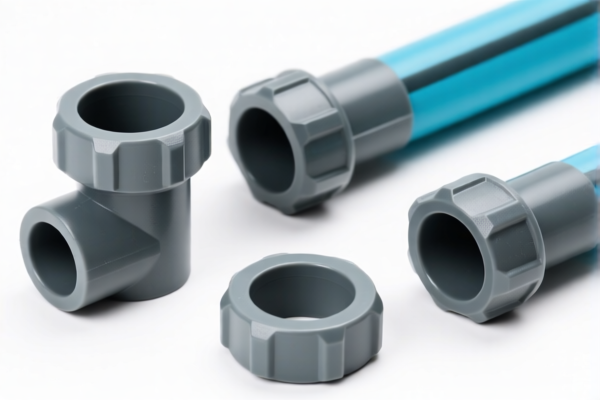
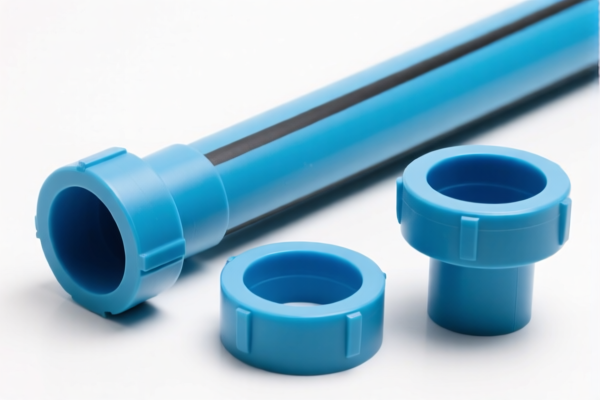
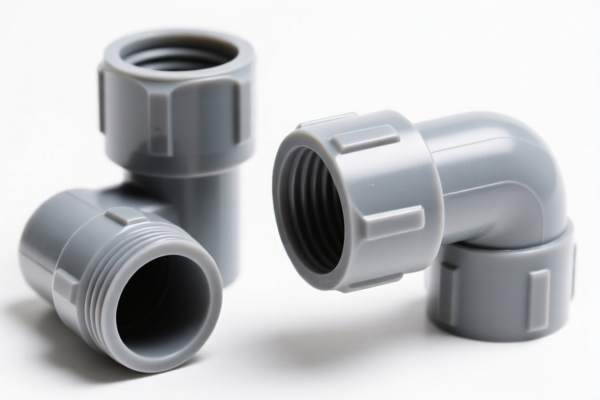
AI Analysis
🚜 Agricultural Grade Plastic Pipe Fittings
🌐 HS Code Reference & Customs Clearance Guide | 2026 Latest Tariff Analysis | Professional-Level Strategy
📌 I. Product Definition & Classification: What Are "Agricultural Grade Plastic Pipe Fittings"?
Agricultural pipe fittings are critical components in irrigation systems, greenhouse watering networks, and agricultural drainage infrastructure. Unlike standard household plumbing, these fittings are designed to withstand outdoor environmental stressors (UV exposure, soil pressure, fluctuating temperatures) and are often made from durable polymers like PVC, HDPE, or PP.
In international trade, these items fall under Chapter 39 (Plastics and Articles Thereof). The key distinction lies in the function and pressure rating:
1. DWV Fittings (Drain, Waste, Vent):
These are non-pressure rated fittings used for gravity-fed systems. In agriculture, this includes simple connectors for drainage trenches or simple water disposal lines where no pump pressure is involved.
Target HS Code: 3917.40.00.50
2. Other Fittings:
This category captures fittings that do not fit the specific "Plumbing/DWV" definition or are used in pressurized agricultural irrigation lines (sprinklers, drip irrigation manifolds) that are not explicitly classified as plumbing fixtures.
Target HS Code: 3917.40.00.95
⚠️ Critical Distinction:
- If the fitting is explicitly for plumbing/drainage (no pressure) → 3917.40.00.50
- If the fitting is for general industrial/agricultural use or pressurized systems not covered under plumbing → 3917.40.00.95
- Do not classify these as "parts of vehicles" (Ch 87) or "machinery parts" (Ch 84). They are distinct plastic article fittings.
📦 II. HS Code Classification Details (2026 Latest Tariff Authority对照)
| HS Code | Product Description | Application Scenario | Pressure Rating |
|---|---|---|---|
3917.40.00.50 |
Fittings Plumbing fittings, not pressure rated (Drain/Waste/Vent (DWV)): Other | Gravity-fed agricultural drainage, simple water channels, non-pressurized connector joints | ❌ No Pressure |
3917.40.00.95 |
Fittings Other | Pressurized irrigation systems, greenhouse piping, industrial agricultural fluid transfer | ✅ Yes/General |
🔍 Key Reminder:
- The term "Agricultural Grade" is a quality/usage descriptor, not a tariff classifier. Customs looks at the HS Code description.
- If your fitting is used in a pressurized irrigation system, it likely falls under 3917.40.00.95.
- If it is purely for drainage (gravity), it may qualify for 3917.40.00.50.
💰 III. 2026 Latest Tariff Rate Breakdown (Including Additional Taxes & Policy Add-ons)
✅ Applicable Country: United States (US)
✅ Country of Origin: China (CN)
✅ Effective Date: 2025-11-10 onwards (for subsequent imports)
🎯 1. 3917.40.00.50 —— Plumbing Fittings, Not Pressure Rated (DWV)
| Item | Content |
|---|---|
| Base Tariff Rate | 0.0% (ad valorem) |
| Additional Tariff (Section 301/IEEPA) | 0.0% |
| Total Tax Rate | 0.0% |
| Tax Calculation | CIF Value × 0% = $0 |
| De Minimis Eligibility | ✅ Yes (Subject to standard $800 de minimis rules if applicable for low-value shipments) |
| Legal Authority Path | HTSUS:3917.40.00.50 → No Footnotes Applied |
📌 Explanation:
- This specific subheading (3917.40.00.50) is exempt from the additional tariffs typically imposed on plastics and fittings from China.
- Both the Base Tariff and the Additional Tariff are 0.0%.
- This makes it a highly cost-effective classification if the product fits the "DWV/Non-Pressure" description.
🎯 2. 3917.40.00.95 —— Other Fittings
| Item | Content |
|---|---|
| Base Tariff Rate | 0.0% (ad valorem) |
| Additional Tariff (Section 301/IEEPA) | 0.0% |
| Total Tax Rate | 0.0% |
| Tax Calculation | CIF Value × 0% = $0 |
| De Minimis Eligibility | ✅ Yes (Subject to standard $800 de minimis rules if applicable) |
| Legal Authority Path | HTSUS:3917.40.00.95 → No Footnotes Applied |
📌 Note:
- Like the previous code, this subheading also carries 0.0% total tax.
- This applies to general-purpose plastic fittings used in agriculture that do not meet the strict "Plumbing/DWV" definition.
- Crucial: Ensure the product description does not accidentally trigger other duty-bearing categories (e.g., if labeled as "Valves," it might move to 8481). Stick to "Fittings."
🛠️ IV. Customs Clearance Practical Advice (Battle-Tested Pitfall Avoidance)
✅ 1. Preparation Checklist (Mandatory Documents)
| Document | Required? | Description |
|---|---|---|
| ✅ Product Specification Sheet | ✔️ | Must specify material (PVC/HDPE), diameter, and pressure rating (e.g., "Non-Pressure" or "Max Pressure: 150 PSI"). |
| ✅ Clear Product Photos | ✔️ | Show fittings with pipes, highlighting connection types (solvent weld, threaded, push-fit). |
| ✅ Commercial Invoice | ✔️ | Must explicitly state: "Plastic Pipe Fittings for Agricultural Irrigation/Drainage" |
| ✅ Packing List | ✔️ | Detail contents to avoid "Miscellaneous Parts" confusion. |
| ✅ Material Safety Data Sheet (MSDS) | ❌ Optional | Sometimes requested if the fitting contains specific chemical treatments. |
✅ 2. Declaration Strategy (Key Mantra)
🔥 “Pressure Defines the Code, Description Defines the Flow, Be Precise or Pay the Price!”
| Scenario | Correct Declaration | Incorrect Practice |
|---|---|---|
| Gravity Drainage Pipe Connector | 3917.40.00.50 (DWV, Non-Pressure) |
Vague term "Plastic Part" → May be flagged for inspection |
| Pressurized Irrigation Connector | 3917.40.00.95 (Other Fittings) |
Classifying as "Valve" (8481) → Higher duties & stricter rules |
| Fittings for Household Plumbing | 3917.40.00.50 |
Using agricultural invoices for plumbing parts → Misdeclaration |
| Complete Irrigation Kits (Pipes + Fittings) | Split or Main Item? | Usually, fittings are classified separately. Pipes fall under 3917.23/24. |
✅ 3. Special Handling Tips
| Situation | Recommendation |
|---|---|
| OEM Agricultural Fittings | Ensure the invoice mentions "For Agricultural Use" but do not claim special agricultural exemptions unless a specific HTS exists. Stick to 3917.40.00.50/95. |
| High-Pressure Fittings | If the fitting is rated for >150 PSI, it is not DWV. Use 3917.40.00.95. Do not force it into 3917.40.00.50. |
| Mixed Containers | If shipping with other plastics, ensure the invoice clearly separates "Pipe Fittings" from "Raw Plastic Granules" or "Sheets" to avoid customs delays. |
| Origin Labeling | Ensure "Made in China" is clearly marked on the product or packaging to avoid origin disputes. |
🌍 V. Global Market Clearance Comparison (2026 Latest)
| Country/Region | Recommended HS Code | Tariff | Certification | Notes |
|---|---|---|---|---|
| 🇺🇸 USA | 3917.40.00.50 / .95 |
0.0% | None | Best Market: Zero duty on these specific codes. |
| 🇨🇳 China | 3917.40.00.95 |
~6-8% | CCC (if applicable) | Imports into China have base tariffs. |
| 🇪🇺 EU | 3917.29.90 / 3917.39 |
~0-3% | REACH / RoHS | EU classification differs slightly; often grouped under "Tubes/Pipes." |
| 🇬🇧 UK | 3917.40.00.00 |
~0% | UKCA | Post-Brexit, similar to EU but requires UKCA marking. |
| 🇦🇺 Australia | 3917.40.00.00 |
~5% | GEMS | Standard duties apply. |
📌 Conclusion:
- The USA offers a competitive advantage for Chinese-made plastic pipe fittings due to the 0.0% tariff on both subheadings.
- However, strict classification accuracy is required. Misclassifying a pressurized fitting as DWV can lead to fraud penalties.
📌 VI. Common Errors & Pitfall Guide (Lessons Learned)
❌ Error 1: Classifying Pressurized fittings as DWV (3917.40.00.50)
👉 Consequence: Customs may reclassify to 3917.40.00.95 (same tax here, but different inspection scrutiny) or flag for misdeclaration.
👉 Fix: Clearly state "Non-Pressure" or "DWV Only" on the invoice.
❌ Error 2: Using "Valve" instead of "Fitting"
👉 Consequence: Valves (8481) have different tariff structures and regulatory requirements (e.g., pressure testing certificates).
👉 Fix: If it’s a passive connector (elbow, tee, coupling), call it a Fitting. If it controls flow (ball valve, gate valve), call it a Valve.
❌ Error 3: Vague Description "Plastic Parts"
👉 Consequence: Customs examiners will open the package and classify based on visual inspection, potentially using a higher-duty "Other" code.
👉 Fix: Use specific language: "HDPE Plastic Elbow Fitting, 2-inch, for Agricultural Drainage."
🎯 VII. Conclusion: Professional Declaration, Cost Savings, Risk Reduction
🎯 Remember the Mantra:
🔹 "DWV is 0%, Other is 0%, but Precision is Key!"
🔹 "Pressure Rated = 3917.40.00.95 | Non-Pressure = 3917.40.00.50"
📌 Pro Tip:
If your agricultural fittings are simple, non-pressurized, and low-value, consider using the $800 De Minimis entry (Type 86) for small shipments to streamline clearance, provided they meet the "personal consumption" or "low value" criteria.
📣 Immediate Action:
📞 Consult a Customs Broker for an Advance Ruling if your product is on the borderline between DWV and General Fittings.
🚀 Ensure your invoice language is watertight to secure the 0.0% tariff advantage.
✨ Professional Customs Clearance Starts with Accurate Classification!
💼 Every Dollar Saved in Tariffs is Profit Returned to Your Business!
Customer Reviews
About HS Code Classification
The Harmonized System (HS) is an internationally standardized nomenclature developed by the World Customs Organization (WCO) to classify traded products. Over 200 countries use the HS system as the basis for customs tariffs, trade statistics, and import/export regulations.
Each HS code follows a hierarchical structure:
- Chapter (2 digits) — Broad category of goods (e.g., Chapter 84: Machinery and Mechanical Appliances)
- Heading (4 digits) — More specific grouping within the chapter
- Subheading (6 digits) — Internationally standardized breakdown, used by all WCO member countries
- National subdivisions (8-10 digits) — Country-specific extensions for further classification, such as US HTSUS 10-digit codes
Correct HS code classification is essential for smooth customs clearance, accurate duty payment, and compliance with trade regulations. Misclassification can lead to customs delays, overpayment of duties, or penalties.
When importing from CN to US, the applicable tariff rates may include:
- Most-Favored-Nation (MFN) rate — The standard duty rate applied to WTO members
- General rate — Applied to countries without trade agreements
- Trade remedy duties — Additional tariffs such as Section 301 (anti-dumping), Section 232 (national security), or countervailing duties
The information provided on this page is for reference purposes only. For official classification, please consult with your local customs authority or a licensed customs broker.