Agricultural Herbicide (Wettable Powder)
CN → US| HS Code | Tariff Rate | Origin | Destination | Doc |
|---|---|---|---|---|
| 3105900050 | 35.0% | CN | US | Official Doc |
| 3105100000 | 35.0% | CN | US | Official Doc |
| 3808935040 | 40.0% | CN | US | Official Doc |
| 3808695000 | 40.0% | CN | US | Official Doc |
Product Images
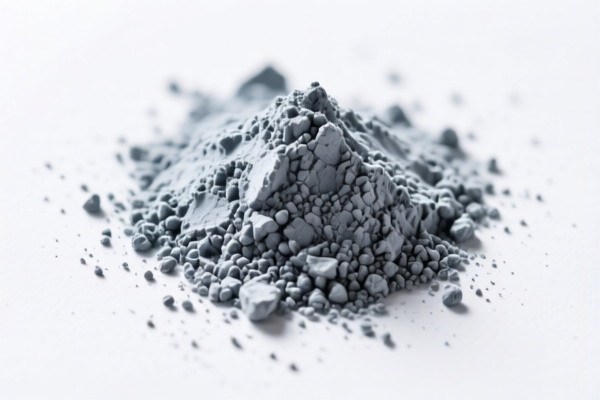
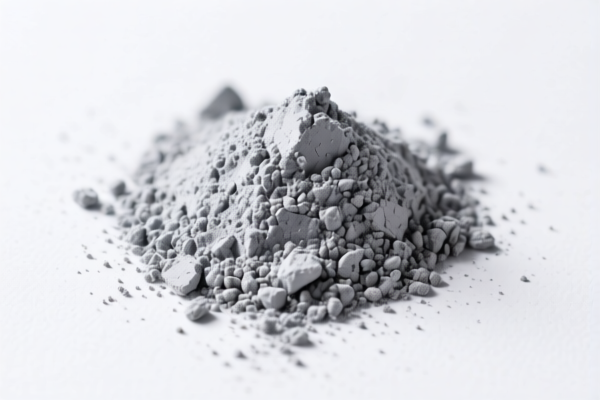
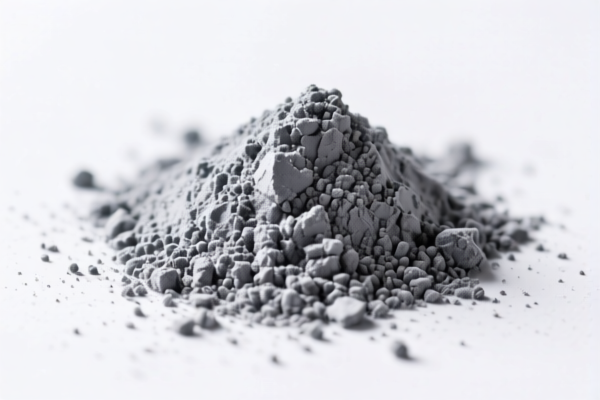
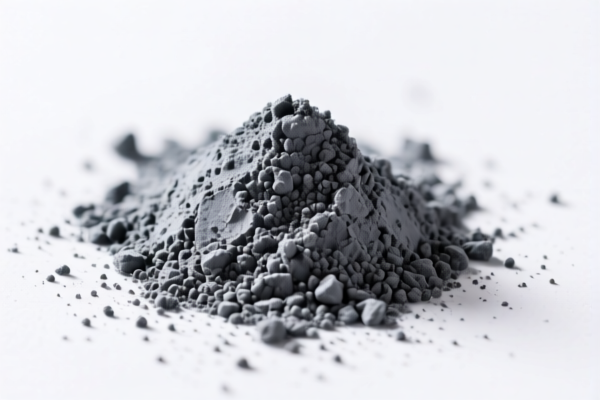
AI Analysis
🌿 Agricultural Herbicide (Wettable Powder)
🌐 HS Code Reference & Customs Clearance Guide | 2026 Latest Tariff Full Analysis | Professional Clearance Strategy
📌 Part 1: Product Definition & Classification: Do You Really Understand "Agricultural Herbicide"?
Agricultural Herbicide, specifically in the form of Wettable Powder (WP), is a pesticide formulation designed to control unwanted plants in agricultural settings. The "Wettable Powder" form indicates that the active ingredient is mixed with inert carriers and adjuvants, requiring water suspension before application.
In international trade, the classification of herbicides depends heavily on their primary function, chemical composition, and whether they are classified as fertilizers or plant growth regulators.
⚠️ Critical Distinction:
- If the product is explicitly labeled and used as a Fertilizer or Plant Growth Regulator (promoting growth, not killing weeds), it may fall under Chapter 31 or Chapter 38 depending on the specific chemical nature.
- If the product is strictly a Herbicide (killing plants), it generally falls under Chapter 38 (Pesticides, Insecticides, etc.).
- Note: The provided data suggests two potential pathways: Fertilizer-related (Chapter 31) or Pesticide/Herbicide-related (Chapter 38). The choice depends on the dominant function declared and supported by technical data sheets.
📦 Part 2: HS Code Classification Details (2026 Latest Tariff Authority Comparison)
| HS Code | Product Description | Applicable Scenario | Key Classification Feature |
|---|---|---|---|
3105.90.00.50 |
Plant Growth Regulators, Wettable Powder, classified under Fertilizer-related Chemicals | Products labeled as "Plant Growth Regulators" or "Fertilizer Additives" that promote growth | ✅ Classified as Fertilizer-related |
3105.10.00.00 |
Plant Growth Regulators, Wettable Powder, Powder Form Characteristic | Similar to above, focusing on the powder form and fertilizer/chemical category | ✅ Classified as Fertilizer-related |
3808.93.50.40 |
Plant Growth Regulators/Herbicides, Wettable Powder, Hericidal/Anti-germination Traits | Products with herbicidal, anti-germination, or plant growth-regulating properties under pesticide chapter | ✅ Classified as Pesticide/Herbicide |
3808.69.50.00 |
Preparations/Items under Pesticide Category, Wettable Powder | General Pesticide Preparations fitting the制剂 (formulation) form | ✅ Classified as Pesticide/Herbicide |
🔍 Key Reminder:
- Chapter 31 (3105.10/3105.90) applies if the product is primarily a fertilizer or plant growth regulator. - Chapter 38 (3808.93/3808.69) applies if the product is primarily a herbicide or pesticide. - Misclassification Risk: Declaring a herbicide as a fertilizer (or vice versa) can lead to severe penalties, duty underpayment, or customs seizure.
💰 Part 3: 2026 Latest Tariff Rate Details (Including Additional Taxes, Policy Add-ons)
✅ Applicable Country: United States (US)
✅ Country of Origin: China (CN)
✅ Effective Time: From November 10, 2025 onwards
🎯 1. 3105.90.00.50 & 3105.10.00.00 —— Classified as Fertilizer/Plant Growth Regulator
| Item | Content |
|---|---|
| Base Duty Rate | 0.0% (ad valorem) |
| USITC Additional Duty | +25.0% (under Section 301) |
| 122 Clause Duty | +10.0% (under Section 122 of Trade Facilitation and Trade Enforcement Act) |
| Total Tax Rate | 35.0% |
| Tax Calculation | CIF Value × 35% |
| De Minimis Exemption Eligible? | ❌ No (deny_de_minimis) |
| Legal Basis Path | Section 301: 25% → Section 122: 10% → HS: 3105.x0.00.x0 |
📌 Explanation:
- The Base Duty is 0% for these fertilizer-related chemical codes. - The 25% Section 301 tariff applies to most Chinese-origin goods. - The 10% Section 122 tariff is a specific additional duty on certain Chinese goods. - Total: 35%. This is a moderate-high duty, but significantly lower than the pesticide classification in some contexts due to the 0% base.
🎯 2. 3808.93.50.40 & 3808.69.50.00 —— Classified as Pesticide/Herbicide
| Item | Content |
|---|---|
| Base Duty Rate | 5.0% (ad valorem) |
| USITC Additional Duty | +25.0% (under Section 301) |
| 122 Clause Duty | +10.0% (under Section 122 of Trade Facilitation and Trade Enforcement Act) |
| Total Tax Rate | 40.0% |
| Tax Calculation | CIF Value × 40% |
| De Minimis Exemption Eligible? | ❌ No (deny_de_minimis) |
| Legal Basis Path | Base: 5% → Section 301: 25% → Section 122: 10% → HS: 3808.x9.50.x0 |
📌 Explanation:
- The Base Duty is 5% for these pesticide-related chemical codes. - The 25% Section 301 tariff applies to most Chinese-origin goods. - The 10% Section 122 tariff is a specific additional duty on certain Chinese goods. - Total: 40%. This is higher than the fertilizer classification due to the 5% base rate.
🛠️ Part 4: Customs Clearance Practical Advice (Combat Pit-avoidance Guide)
✅ 1. Required Documentation Checklist (Essential)
| Document | Must Provide | Explanation |
|---|---|---|
| ✅ Product Specification Sheet | ✔️ | Must clearly state Formulation Type (e.g., Wettable Powder), Active Ingredient, and Function (Herbicidal vs. Growth Regulating) |
| ✅ Technical Data Sheet (TDS) | ✔️ | Confirms if the product is a Herbicide (kills plants) or Plant Growth Regulator (promotes growth) |
| ✅ Safety Data Sheet (SDS) | ✔️ | Required for hazardous chemicals; confirms handling and classification |
| ✅ Commercial Invoice | ✔️ | Must accurately describe the product using the correct HS Code and function |
| ✅ Packing List | ✔️ | Details net/gross weight, number of packages |
| ✅ Certificate of Origin (CO) | ✔️ | Proves Chinese origin, subjecting it to Section 301 and 122 duties |
| ✅ EPA Registration Number (if applicable) | ✔️ | For pesticides/herbicides in the US, EPA registration is often required for entry |
✅ 2. Declaration Strategy (Key Mnemonics)
🔥 “Function First, HS Code Follows, Duty Savings Can Be Won!”
| Scenario | Correct Declaration | Incorrect Practice |
|---|---|---|
| Product promotes plant growth (Regulator) | 3105.90.00.50 or 3105.10.00.00 |
Misdeclare as Herbicide → 40% tax |
| Product kills weeds (Herbicide) | 3808.93.50.40 or 3808.69.50.00 |
Misdeclare as Fertilizer → Risk of penalty/seizure |
| Wettable Powder form | Clearly state "Wettable Powder" in description | Vague terms like "Chemical" → Custom delays |
✅ 3. Special Case Handling
| Situation | Handling Advice |
|---|---|
| Dual-Use Products (e.g., Fertilizer + Herbicide) | Declare based on primary function. Provide technical data to support the primary claim. |
| Unregistered Pesticides | Ensure EPA registration is obtained. Undeclared pesticides will be rejected at customs. |
| Wettable Powder | Ensure packaging is moisture-proof and labeled correctly. Leakage can cause customs inspection delays. |
| Origin Declaration | Clearly mark "Made in China" to ensure correct application of Section 301 and 122 duties. |
🌍 Part 5: Global Major Market Customs Comparison (2026 Latest)
| Country/Region | Recommended HS Code | Tariff Rate | Certification Requirements | Notes |
|---|---|---|---|---|
| 🇺🇸 USA | 3105.90.00.50 or 3808.93.50.40 |
35% (Fertilizer) / 40% (Herbicide) | EPA Registration (for Herbicides) | High duties due to Section 301 & 122 |
| 🇨🇳 China | 3105.90.00.50 or 3808.93.50.40 |
0% - 5% | Pesticide Registration Certificate | No Section 301/122 |
| 🇪🇺 EU | 3808.94.00 (Herbicides) |
0% - 5% | EFSA Approval, REACH | Varies by active ingredient |
| 🇦🇺 Australia | 3808.94.00 (Herbicides) |
5% | APVMA Registration | High regulatory standards |
| 🇯🇵 Japan | 3808.94.00 (Herbicides) |
0% - 5% | MAFF Registration | Stringent residue limits |
📌 Conclusion:
- USA has the highest tariffs due to additional duties (Section 301 + 122). - Correct HS Code selection is critical: Choosing the wrong code can lead to higher duties (35% vs 40%) or legal penalties. - EPA Registration is mandatory for herbicides in the US.
📌 Part 6: Common Mistakes & Pit-avoidance Guide (Lessons Learned)
❌ Mistake 1: Declaring a Herbicide as a Fertilizer to avoid higher duties
👉 Consequence: Customs audit reveals the true function → Penalties, Back Taxes, and Seizure.
❌ Mistake 2: Not providing EPA Registration Number for herbicides
👉 Consequence: Goods rejected at customs → Return or Destruction.
❌ Mistake 3: Using vague terms like "Plant Chemical" instead of "Wettable Powder Herbicide"
👉 Consequence: Customs classification delay → Storage Fees and Delays.
❌ Mistake 4: Ignoring Section 122 additional duty
👉 Consequence: Underpayment of 10% → Back Taxes and Interest.
✅ Correct Practice:
"Plant Growth Regulator, Wettable Powder, EPA Reg. No. XXXXX-XXX, For Promoting Plant Growth, Model XYZ, Made in China"
OR
"Herbicide, Wettable Powder, EPA Reg. No. XXXXX-XXX, For Weed Control, Model XYZ, Made in China"
🎯 Part 7: Conclusion: Precise Classification Saves Money!
🎯 Remember:
🔹 "Function Determines HS Code, HS Code Determines Duty."
🔹 "Fertilizer Path: 35% Total Duty."
🔹 "Herbicide Path: 40% Total Duty."
🔹 "EPA Registration is a Must for Herbicides."
📌 Pro Tip:
- If your product is a Plant Growth Regulator, strive for 3105.x0.00.x0 to benefit from the 0% base rate.
- If your product is a Herbicide, prepare for 40% total duty and ensure EPA compliance.
- Apply for Advance Rulings with US Customs (CBP) if there is ambiguity about the product's classification.
📣 Immediate Action:
📞 Contact a Professional Customs Broker + Provide Product Specs + Apply for EPA Registration (if herbicide)
🚀 Ensure Smooth Clearance, Avoid Penalties, and Optimize Your Supply Chain!
✨ Professional Clearance Starts with Accurate Classification!
💼 Every Percent of Duty Saved is Pure Profit!
Customer Reviews
About HS Code Classification
The Harmonized System (HS) is an internationally standardized nomenclature developed by the World Customs Organization (WCO) to classify traded products. Over 200 countries use the HS system as the basis for customs tariffs, trade statistics, and import/export regulations.
Each HS code follows a hierarchical structure:
- Chapter (2 digits) — Broad category of goods (e.g., Chapter 84: Machinery and Mechanical Appliances)
- Heading (4 digits) — More specific grouping within the chapter
- Subheading (6 digits) — Internationally standardized breakdown, used by all WCO member countries
- National subdivisions (8-10 digits) — Country-specific extensions for further classification, such as US HTSUS 10-digit codes
Correct HS code classification is essential for smooth customs clearance, accurate duty payment, and compliance with trade regulations. Misclassification can lead to customs delays, overpayment of duties, or penalties.
When importing from CN to US, the applicable tariff rates may include:
- Most-Favored-Nation (MFN) rate — The standard duty rate applied to WTO members
- General rate — Applied to countries without trade agreements
- Trade remedy duties — Additional tariffs such as Section 301 (anti-dumping), Section 232 (national security), or countervailing duties
The information provided on this page is for reference purposes only. For official classification, please consult with your local customs authority or a licensed customs broker.