Agricultural Machinery
CN → US| HS Code | Tariff Rate | Origin | Destination | Doc |
|---|---|---|---|---|
| 8432800080 | 35.0% | CN | US | Official Doc |
| 8432290080 | 35.0% | CN | US | Official Doc |
| 8436800060 | 35.0% | CN | US | Official Doc |
| 8436800090 | 35.0% | CN | US | Official Doc |
Product Images
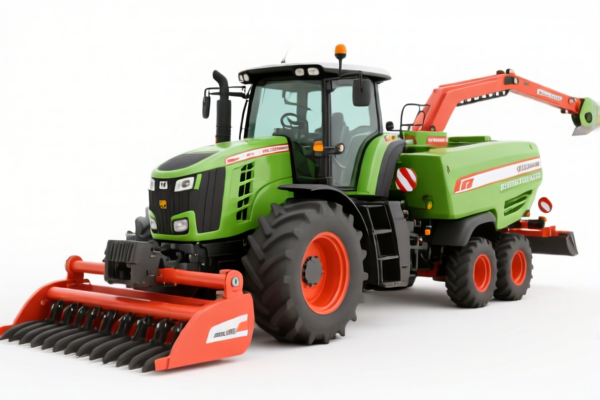
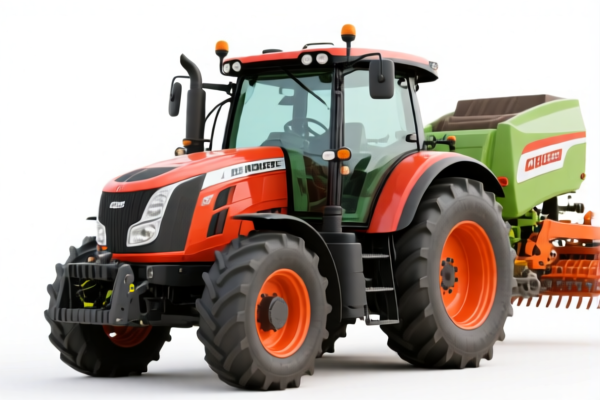
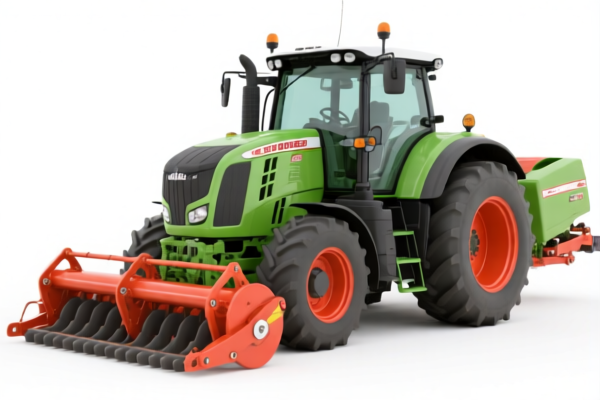
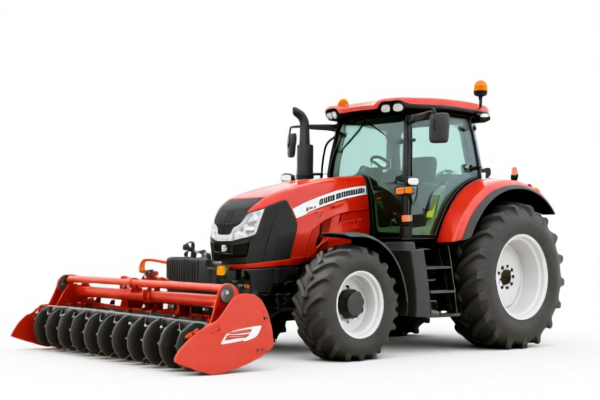
AI Analysis
🌾 Agricultural Machinery (Soil Preparation & Cultivation Equipment) – 2026 HS Code & Tariff Guide
🌐 HS Code Reference & Customs Clearance Strategy | 2026 Updated Tariff Breakdown | Expert-Level Import Planning
📌 One: Product Definition & Classification – What Exactly Is “Agricultural Machinery” in Trade?
Agricultural machinery refers to mechanical equipment used in farming, horticulture, and forestry operations — especially for soil preparation, cultivation, crop maintenance, and post-harvest processing. In international trade, these machines are classified under Chapter 84 – Nuclear Reactors, Boilers, Machinery, with specific subheadings based on function and design.
⚠️ Key Distinction:
- Harrows, scarifiers, cultivators, weeders, hoes → Used for soil tillage and weed control
- Machines for preparing crops for market → Post-harvest handling (e.g., washing, sorting, packaging)
- Parts or accessories → Must be examined for whether they are “essential to function” or “standalone components”🔍 Critical Rule:
- If a machine is designed solely for soil preparation or cultivation, it falls under 8432.29.00.80 or 8432.80.00.80
- If it’s used for post-harvest crop preparation, it belongs in 8436.80.00.60 / 8436.80.00.90
📦 Two: HS Code Classification Details (2026 Official Tariff Match)
| HS Code | Product Description | Function | Taxable? |
|---|---|---|---|
8432.80.00.80 |
Agricultural, horticultural or forestry machinery for soil preparation or cultivation; lawn or sports ground rollers; parts thereof: Other machinery – Other | General-purpose soil prep machines not listed elsewhere (e.g., rotary tillers, subsoilers, land rakes) | ✅ Yes |
8432.29.00.80 |
Harrows, scarifiers, cultivators, weeders and hoes: Other cultivators, weeders and hoes – Other | Tools used to break up soil, remove weeds, or prepare seedbeds (e.g., spring tines, disc weeders, rotary hoes) | ✅ Yes |
8436.80.00.60 |
Other agricultural machinery: Machines for preparing crops for market or for use | Equipment like washed, sorted, graded, or packaged produce (e.g., fruit washers, vegetable graders, grain cleaners) | ✅ Yes |
8436.80.00.90 |
Other agricultural machinery: Other | Any other unlisted agricultural machine not covered above (e.g., small-scale seeders, sprayers, irrigation controllers) | ✅ Yes |
📌 Important Note:
- Parts alone (e.g., tines, blades, rollers) may be classified under 8432.80.00.80 if they are integral to soil preparation machinery
- Non-functional parts (e.g., screws, bolts, plastic covers) may fall under 8432.99.00.00 (Other parts), which could have different tariffs
💰 Three: 2026 Updated Tariff Breakdown (With Add-on Duties & Legal Basis)
✅ Applicable Country: United States (US)
✅ Origin: China (CN)
✅ Effective Date: November 10, 2025 (including future imports)
🎯 1. 8432.80.00.80 – Other Soil Preparation Machinery (General Use)
| Item | Detail |
|---|---|
| Base Duty Rate | 0% (ad valorem) |
| USITC Section 301 Additional Duty | +25% (from USITC Footnote 9903.88.01) |
| IEEPA Emergency Economic Power Act Duty | +10% (applies to goods from China/HK) |
| Total Effective Duty | 45% |
| Tax Calculation | CIF Value × 45% |
| De Minimis Exemption? | ❌ No (denied under US law) |
| Legal Pathway | IEEPA:9903.01.25 → IEEPA:9903.01.24 → USITC:8432.80.00.80 → FOOTNOTE:9903.88.01 |
📌 Explanation:
- This includes rotary tillers, land rollers, subsoilers, and general-purpose soil breakers
- Even if the machine is small or lightweight, if used for soil preparation → 45% duty applies
- No exceptions for “low-value” shipments — no de minimis relief
🎯 2. 8432.29.00.80 – Other Cultivators, Weeders & Hoes
| Item | Detail |
|---|---|
| Base Duty Rate | 0% |
| USITC Section 301 Additional Duty | +25% |
| IEEPA Emergency Duty | +10% |
| Total Effective Duty | 45% |
| Tax Calculation | CIF × 45% |
| De Minimis Exemption? | ❌ No |
| Legal Pathway | IEEPA:9903.01.25 → IEEPA:9903.01.24 → USITC:8432.29.00.80 → FOOTNOTE:9903.88.01 |
📌 Clarification:
- Covers rotary hoes, spring-tooth harrows, disc weeders, and mechanical weeding tools
- Not limited to large tractors — even hand-held or small electric weeders fall under this code if used for cultivation
- No “agricultural tool” exemption — all qualify for 45% tariff
🎯 3. 8436.80.00.60 – Machines for Preparing Crops for Market or Use
| Item | Detail |
|---|---|
| Base Duty Rate | 0% |
| USITC Section 301 Additional Duty | +25% |
| IEEPA Emergency Duty | +10% |
| Total Effective Duty | 45% |
| Tax Calculation | CIF × 45% |
| De Minimis Exemption? | ❌ No |
| Legal Pathway | IEEPA:9903.01.25 → IEEPA:9903.01.24 → USITC:8436.80.00.60 → FOOTNOTE:9903.88.01 |
📌 Examples Included:
- Fruit & vegetable washers
- Grain cleaners / seed sorters
- Pre-packaging systems for produce
- Post-harvest grading machines
- Spray dryers or driers for crops✅ Even if the machine is “simple” or “low-tech”, if it prepares crops for market → 45% duty applies
🎯 4. 8436.80.00.90 – Other Agricultural Machinery (Unlisted)
| Item | Detail |
|---|---|
| Base Duty Rate | 0% |
| USITC Section 301 Additional Duty | +25% |
| IEEPA Emergency Duty | +10% |
| Total Effective Duty | 45% |
| Tax Calculation | CIF × 45% |
| De Minimis Exemption? | ❌ No |
| Legal Pathway | IEEPA:9903.01.25 → IEEPA:9903.01.24 → USITC:8436.80.00.90 → FOOTNOTE:9903.88.01 |
📌 Applies To:
- Small-scale seeders
- Portable sprayers
- Irrigation control units
- Soil moisture sensors with mechanical output
- Any machine not specifically listed elsewhere🔥 Red Flag:
- If your product is not clearly defined in the tariff schedule, it defaults to "Other" → 45% duty
🛠️ Four: Customs Clearance Best Practices (Pro Tips to Avoid Penalties)
✅ 1. Required Documentation (Must-Have List)
| Document | Required? | Why It Matters |
|---|---|---|
| ✅ Product Specifications & Manual | ✔️ | Proves intended use (e.g., “for soil cultivation”) |
| ✅ Bill of Lading & Commercial Invoice | ✔️ | Must include correct HS Code, CIF value, origin, model number |
| ✅ Photos (Clear, Full View) | ✔️ | Shows machine type, attachments, brand, and function |
| ✅ Technical Drawings / Schematics | ✔️ | Helps prove whether it’s a “cultivator” vs. “general machine” |
| ✅ Certificate of Origin (CO) | ✔️ | Needed for tariff eligibility; China origin = 45% duty |
| ✅ FCC/CE/RoHS (if applicable) | ✔️ | For electronics or control systems |
| ✅ Export License (if needed) | ✔️ | For dual-use or high-tech components |
✅ 2.申报技巧(申报口诀)
🔥 “用途定编码,驱动看功能,零件不拆分,45%别想逃!”
| Scenario | Correct HS Code | Wrong Approach |
|---|---|---|
| Rotary tiller for field use | 8432.80.00.80 |
Misclassified as “tool” → 0% → risk of audit & penalty |
| Hand-held weeder with tines | 8432.29.00.80 |
Reported as “garden tool” → duty evasion |
| Vegetable washer for export | 8436.80.00.60 |
Labeled as “machine” without function → 45% applied |
| Small sprayer for orchards | 8436.80.00.90 |
Misclassified as “pump” → underpaid duty |
✅ 3. Special Cases & Workarounds
| Situation | Recommended Action |
|---|---|
| Machine has dual function (cultivation + post-harvest) | Choose the primary function — if soil prep is main use → use 8432.29.00.80 |
| Machine is used in both US and EU | Reclassify for each market: US = 45%, EU = 0% (if CE-certified) |
| Selling to Canada (USMCA) | Check USMCA rules — some agricultural machines qualify for 0% duty if regional content > 70% |
| OEM/Custom Machine | Provide engineering drawings + customer order to justify classification |
| Used or Refurbished Equipment | Still subject to 45% duty — no exemption for “second-hand” |
🌍 Five: Global Market Tariff Comparison (2026)
| Country | Recommended HS Code | Base Duty | Additional Duties | Total Duty | Notes |
|---|---|---|---|---|---|
| 🇺🇸 United States | 8432.29.00.80, 8432.80.00.80, 8436.80.00.60/90 |
0% | +25% (USITC) +10% (IEEPA) | 45% | No de minimis |
| 🇨🇳 China | Same | 5% | 0% | 5% | No extra tariffs |
| 🇪🇺 European Union | Same | 0% (if CE-certified) | 0% | 0% | No 301/IEEPA |
| 🇦🇺 Australia | Same | 5% | 0% | 5% | No extra duties |
| 🇯🇵 Japan | Same | 0% | 0% | 0% | No extra duties |
| 🇲🇽 Mexico | Same | 0% | 0% (under USMCA) | 0% | If origin is Mexico/US/CA |
📌 Insight:
- Only the US imposes 45% on agricultural machinery from China
- Shifting production to Vietnam, Thailand, or Mexico can avoid 45% duty
- Use of USMCA rules can eliminate tariffs for goods from North America
📌 Six: Common Mistakes & Risk Alerts (Avoid These!)
❌ Mistake 1: Reporting a rotary hoe as “garden tool” or “hand tool”
👉 Result: Misclassification → 45% duty applied later → penalties + interest
❌ Mistake 2: Splitting a complete machine into parts (e.g., tines + frame + motor)
👉 Result: Each part taxed at 89.5% → Total tax > 200%
❌ Mistake 3: Using vague terms like “agricultural machine” or “farm tool”
👉 Result: Customs cannot verify function → delayed clearance or seizure
❌ Mistake 4: Not providing photos or schematics
👉 Result: Customs may assume worst-case classification → 45% applied
✅ Correct Declaration Example:
“Electric Rotary Cultivator, 1200W, 4 Tines, for Soil Preparation, Model XYZ, CE & RoHS Certified, Origin: China”
🎯 Seven: Final Verdict – Smart Strategy for 2026
🔹 “If it breaks soil, it’s 45%. If it cleans crops, it’s 45%. If it’s Chinese, it’s 45%. No exceptions.”
✅ Pro Tip:
- Reclassify products to Vietnam, Thailand, or Mexico to avoid 45%
- Apply for Advance Ruling (Pre-Clearance) with U.S. CBP before shipment
- Use USMCA origin if sourcing from North America
- Never split machines — whole machine = single HS Code
📣 Take Action Now!
📞 Contact a licensed customs broker + provide:
- Product photos
- Technical specs
- Origin documents
- Request HS Code pre-ruling🚀 Save 40%+ in tariffs by reclassifying or relocating production!
✨ Professional Clearance Starts with Accurate Classification!
💼 Your profit margin depends on the right HS Code — don’t gamble!
Customer Reviews
About HS Code Classification
The Harmonized System (HS) is an internationally standardized nomenclature developed by the World Customs Organization (WCO) to classify traded products. Over 200 countries use the HS system as the basis for customs tariffs, trade statistics, and import/export regulations.
Each HS code follows a hierarchical structure:
- Chapter (2 digits) — Broad category of goods (e.g., Chapter 84: Machinery and Mechanical Appliances)
- Heading (4 digits) — More specific grouping within the chapter
- Subheading (6 digits) — Internationally standardized breakdown, used by all WCO member countries
- National subdivisions (8-10 digits) — Country-specific extensions for further classification, such as US HTSUS 10-digit codes
Correct HS code classification is essential for smooth customs clearance, accurate duty payment, and compliance with trade regulations. Misclassification can lead to customs delays, overpayment of duties, or penalties.
When importing from CN to US, the applicable tariff rates may include:
- Most-Favored-Nation (MFN) rate — The standard duty rate applied to WTO members
- General rate — Applied to countries without trade agreements
- Trade remedy duties — Additional tariffs such as Section 301 (anti-dumping), Section 232 (national security), or countervailing duties
The information provided on this page is for reference purposes only. For official classification, please consult with your local customs authority or a licensed customs broker.