Agricultural Machinery Rubber Solid Tires
CN → US| HS Code | Tariff Rate | Origin | Destination | Doc |
|---|---|---|---|---|
| 4012124035 | 39.0% | CN | US | Official Doc |
| 4012118000 | 38.4% | CN | US | Official Doc |
| 4013100010 | 38.7% | CN | US | Official Doc |
| 4012904500 | 39.2% | CN | US | Official Doc |
| 4012901000 | 35.0% | CN | US | Official Doc |
Product Images
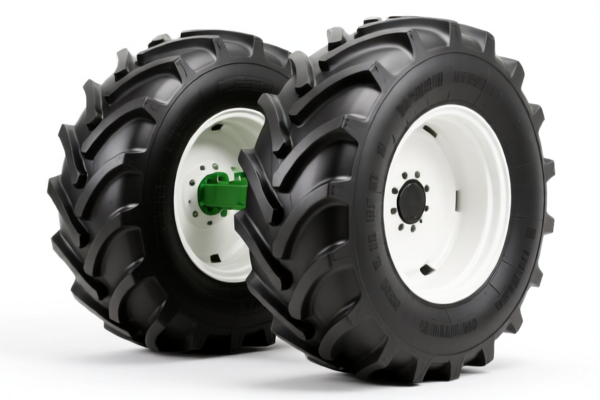
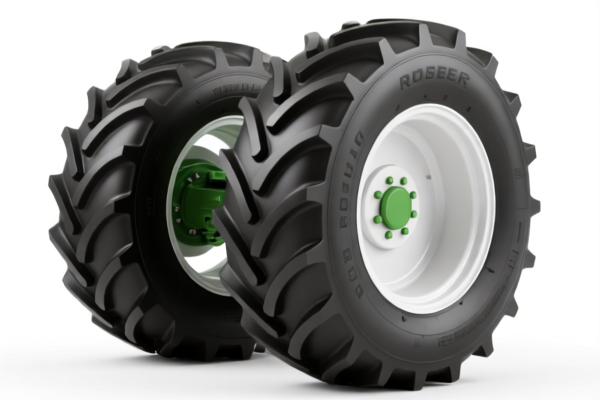
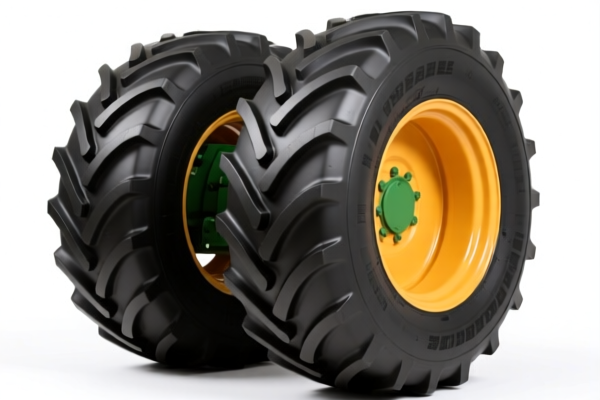
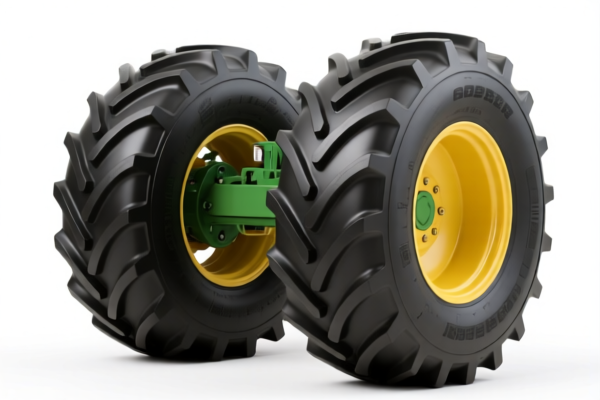
AI Analysis
🚜 Agricultural Machinery Rubber Solid Tires (Industrial Rubber Solid Tires)
🌐 HS Code Reference & Customs Clearance Guide | 2026 Latest Tariff Analysis | Professional Customs Strategy for Forklift & Agricultural Solid Tires
📌 I. Product Definition & Classification: What Are "Agricultural Machinery Rubber Solid Tires"?
Agricultural machinery rubber solid tires (often overlapping with industrial forklift tires) are non-pneumatic rubber tires designed for heavy-duty off-road and industrial applications. Unlike pneumatic tires, they are solid rubber or press-on rubber filled with foam/air, providing puncture-proof durability for tractors, harvesters, forklifts, and loaders.
In international trade, these are categorized primarily under Chapter 40: Rubber and Articles Thereof. The critical distinction lies in whether the tire is: * Pneumatic (Air-filled): Classified under 4013.10. * Non-pneumatic (Solid/Press-on): Classified under 4012.90 (specifically for industrial/agricultural use) or 4012.12/11 (general vehicle tires if not specified as industrial).
⚠️ Key Distinction Point:
- If the tire is solid rubber (non-pneumatic) used for forklifts, tractors, or industrial machinery → It falls under 4012.90 (Other tires of rubber).
- If the description is vague ("Rubber Tire") without specifying "Solid" or "Industrial," customs may default to general vehicle tires (4012.12), which often incur higher penalties due to broader "catch-all" classifications.
- Material Matters: Natural rubber vs. synthetic can influence sub-headings, but the structure (Solid vs. Pneumatic) is the primary classifier.
📦 II. HS Code Classification Details (2026 Latest Tariff Authority Comparison)
| HS Code | Product Description | Application Scenario | Key Feature |
|---|---|---|---|
4012.90.45.00 |
Solid Tires for Forklifts/Agricultural Machinery | Forklifts, Tractors, Industrial Loaders | ✅ Perfect Match: Specifies "Solid," "Natural Rubber," and "Forklift/Agricultural Use." |
4012.90.10.00 |
Solid Tires (General Industrial/Agri) | General Industrial Solid Tires | ✅ Good Match: Specifies "Solid" and "Natural Rubber," broader than 45.00. |
4012.12.40.35 |
Rubber Tires (General Vehicle) | Cars, Trucks (Non-Solid/Pneumatic implied) | ⚠️ Risky: "General" category; often used for pneumatic tires. High penalty if misapplied to solid tires. |
4012.11.80.00 |
Used/Rubber Tires (Catch-All) | Any Rubber Tire not elsewhere specified | ⚠️ Lowest Base Rate: Uses "Other" catch-all rule. Low base tariff but high scrutiny. |
4013.10.00.10 |
Pneumatic Rubber Tires | Cars, Buses, Trucks (Air-filled) | ❌ Incorrect: Only for pneumatic (air-filled) tires. Do not use for solid tires. |
🔍 Critical Reminder:
- Solid Tires MUST be declared as 4012.90 (Other tires).
- Pneumatic Tires MUST be declared as 4013.10.
- Misclassifying a Solid Tire as a Pneumatic Tire (4013) or General Tire (4012.12) can lead to rejection, fines, or delayed clearance because the physical characteristics (no air valve, solid core) contradict the HS definition.
💰 III. 2026 Latest Tariff Rate Breakdown (Including Surtaxes & Policy Add-ons)
✅ Applicable Country: United States (US)
✅ Origin: China (CN)
✅ Effective Date: From November 10, 2025 (including subsequent imports)
📌 Note: All tariffs below include Base Tariff + Section 301 Surtax (25%) + Section 122/IEEPA Surtax (10%).
🎯 1. 4012.90.45.00 — Best Match for Forklift/Agri Solid Tires
| Item | Content |
|---|---|
| Base Tariff | 4.2% (Ad Valorem) |
| Section 301 Surtax | +25.0% (USITC Footnote 9903.88.01) |
| Section 122/IEEPA Surtax | +10.0% (针对中国/香港产品,自2025年11月10日起) |
| Total Tariff Rate | 39.2% |
| Tax Calculation | CIF Value × 39.2% |
| De Minimis Exemption | ❌ Not Available (deny_de_minimis) |
| Legal Basis Path | IEEPA:9903.01.25 → IEEPA:9903.01.24 → USITC:4012.90.45.00 → FOOTNOTE:9903.88.01 |
📌 Explanation:
- This is the most precise classification for Solid Tires used in Forklifts or Agricultural Machinery.
- The 39.2% rate is high due to the cumulative surtaxes, but it is legally safer than using catch-all codes.
- Natural Rubber content is explicitly matched, reducing the risk of misclassification disputes.
🎯 2. 4012.90.10.00 — General Solid Tires
| Item | Content |
|---|---|
| Base Tariff | 0.0% (Ad Valorem) |
| Section 301 Surtax | +25.0% |
| Section 122/IEEPA Surtax | +10.0% |
| Total Tariff Rate | 35.0% |
| Tax Calculation | CIF Value × 35.0% |
| De Minimis Exemption | ❌ Not Available |
| Legal Basis Path | IEEPA:9901.25 → IEEPA:9903.01.24 → USITC:4012.90.10.00 → FOOTNOTE:9903.88.01 |
📌 Note:
- This code has a 0% base tariff, resulting in a lower total rate (35.0%) compared to4012.90.45.00.
- However, it is a broader category. If your product is specifically for forklifts, using4012.90.45.00is more compliant. Using4012.90.10.00for forklift tires might trigger an audit if documentation doesn't support the "general" claim.
🎯 3. 4012.12.40.35 — General Rubber Tires (High Risk)
| Item | Content |
|---|---|
| Base Tariff | 4.0% |
| Section 301 Surtax | +25.0% |
| Section 122/IEEPA Surtax | +10.0% |
| Total Tariff Rate | 39.0% |
| Tax Calculation | CIF Value × 39.0% |
| De Minimis Exemption | ❌ Not Available |
📌 Risk Alert:
- This code is typically for pneumatic vehicle tires. If you import Solid Tires and declare this code, customs may reject the entry because the physical product (solid, no air valve) does not match the HS description (general vehicle tire, often implying pneumatic).
- Result: Potential fines, re-inspection, or forced reclassification.
🎯 4. 4012.11.80.00 — Catch-All "Other" Tires
| Item | Content |
|---|---|
| Base Tariff | 3.4% |
| Section 301 Surtax | +25.0% |
| Section 122/IEEPA Surtax | +10.0% |
| Total Tariff Rate | 38.4% |
| Tax Calculation | CIF Value × 38.4% |
📌 Note:
- Uses the "Other" catch-all rule.
- Lower base tariff (3.4%) but higher risk of being flagged as incorrect classification.
- Suitable only if the product is truly ambiguous and cannot be fitted into 4012.90.
🎯 5. 4013.10.00.10 — Pneumatic Tires (WRONG FOR SOLID TIRES)
| Item | Content |
|---|---|
| Base Tariff | 3.7% |
| Section 301 Surtax | +25.0% |
| Section 122/IEEPA Surtax | +10.0% |
| Total Tariff Rate | 38.7% |
📌 Critical Warning:
- DO NOT USE this code for Solid Tires.
- HS Code 4013 is exclusively for Pneumatic (Air-Filled) Tires.
- Misclassification leads to severe penalties because the product’s physical structure (solid vs. pneumatic) is fundamentally different.
- This code is only for cars, buses, and trucks with air-filled tires.
🛠️ IV. Customs Clearance Practical Advice (Pitfall Avoidance Guide)
✅ 1. Required Documentation Checklist (Non-Negotiable)
| Document | Required | Explanation |
|---|---|---|
| ✅ Product Spec Sheet | ✔️ | Must clearly state: "Solid Tire," "Non-Pneumatic," "Material: Natural Rubber," "Application: Forklift/Agricultural". |
| ✅ Photos (Clear View) | ✔️ | Must show no air valve, solid core, and treads. Include cross-section if possible. |
| ✅ Commercial Invoice | ✔️ | Must match HS Code description. Use precise terms: "Solid Rubber Tire for Agricultural Machinery." |
| ✅ Packing List | ✔️ | List quantities, weights, and dimensions. |
| ✅ Certificate of Origin (CO) | ✔️ | Required for tariff verification and trade policy compliance. |
| ✅ FCC/CE/RoHS Certs | ❌ | Not typically required for tires, but useful for market access in EU/Asia. |
✅ 2. Declaration Tips (Key Mantra)
🔥 "Solid Tire, No Air, 4012.90; Pneumatic Tire, Has Air, 4013.10. Do Not Mix!"
| Scenario | Correct Declaration | Wrong Declaration | Consequence |
|---|---|---|---|
| Solid Forklift Tire | 4012.90.45.00 |
4013.10.00.10 (Pneumatic) |
Rejection/Fines: Physical mismatch. |
| Solid Agri Tire | 4012.90.45.00 |
4012.12.40.35 (General) |
Audit Risk: May be flagged as misclassification. |
| Solid Tire (Generic) | 4012.90.10.00 |
4012.11.80.00 (Catch-all) |
Delay: Customs may request proof of "non-industrial" use. |
| Pneumatic Tire | 4013.10.00.10 |
4012.90.45.00 (Solid) |
Penalty: Wrong tariff and physical mismatch. |
✅ 3. Special Cases Handling
| Case | Handling Advice |
|---|---|
| OEM Custom Solid Tires | Provide design drawings showing solid core. Avoid ambiguous terms like "rubber wheel." |
| Mixed Containers (Solid + Pneumatic) | Declare separately. Do not mix HS codes. Use separate invoices or clear line items. |
| Used Solid Tires | Banned/Restricted in many jurisdictions. Ensure compliance with EPA/CEPA regulations. |
| Tires with Steel Belts | Still classified under 4012.90 if rubber-dominated. Declare "Steel-Reinforced Solid Tire." |
🌍 V. Global Market Clearance Comparison (2026 Latest)
| Country/Region | Recommended HS Code | Tariff Rate (China Origin) | Certification Requirements | Notes |
|---|---|---|---|---|
| 🇺🇸 USA | 4012.90.45.00 |
39.2% (Total) | No specific cert, but must comply with DOT standards if on-road. | Highest tariff due to surtaxes. |
| 🇨🇳 China | 4012.90.45.00 |
5-10% (Import Duty) | CCC (if applicable), RoHS | No Section 301 surtax. |
| 🇪🇺 EU | 4012.90.90 |
0-5% (MFN) | ECE R54 (for industrial tires), CE | Lower tariffs, strict safety standards. |
| 🇦🇺 Australia | 4012.90.90 |
5% | RCM (if electrical), AS/NZS Standards | No surtaxes. |
| 🇯🇵 Japan | 4012.90.00 |
0-5% | JIS Standards | No surtaxes. |
📌 Conclusion:
- USA is the most expensive market for Chinese rubber tires due to Section 301 + IEEPA surtaxes.
- EU/Asia offer lower tariffs but stricter safety certifications (ECE JIS).
- Solid Tires are less regulated than pneumatic tires in some regions, but documentation must prove non-pneumatic status.
📌 VI. Common Mistakes & Pitfall Guide (Blood & Tears Lessons)
❌ Mistake 1: Declaring Solid Tires as Pneumatic Tires (4013)
👉 Consequence: Customs inspects and finds no air valve → Entry rejected, fines applied, shipment delayed.
❌ Mistake 2: Using Catch-All Code (4012.11) for Forklift Tires
👉 Consequence: Customs questions the "general" classification → Audit, potential reclassification to 4012.90 with higher scrutiny.
❌ Mistake 3: Omitting "Solid" in the product description
👉 Consequence: Customs assumes pneumatic → Misclassification, penalty, or return.
❌ Mistake 4: Using 4012.12 for Industrial Tires
👉 Consequence: High risk of being flagged as "General Vehicle Tire" → Penalty for wrong origin/use classification.
✅ Correct Practice:
"Solid Rubber Tire, Non-Pneumatic, Natural Rubber, for Forklift/Agricultural Machinery, Model XYZ, Cross-Sectioned Core, No Air Valve"
🎯 VII. Conclusion: Precise Classification, Smooth Clearance, Cost Efficiency!
🎯 Remember the Mantra:
🔹 "Solid Tire, 4012.90; Pneumatic, 4013.10. Never Mix!"
🔹 "Base Tariff Low, Surtax High: Total 39.2% for Solid Tires to USA!"
🔹 "HS Code Determines Destiny, Misclassification Costs Thousands!"
📌 Pro Tip:
If your solid tires are originating from Vietnam, Mexico, Thailand, or Malaysia, you may qualify for IEEPA Exemptions or Lower Tariffs under free trade agreements (USMCA, ASEAN).
Recommendation: Apply for Advance Ruling from US Customs (CBP) to confirm HS Code and tariff liability before shipping.
📣 Immediate Action:
📞 Contact a Professional Customs Broker + Provide Product Photos + Apply for HS Code Advance Ruling
🚀 Let Your Tires Clear Customs Smoothly, Export Efficiently, and Boost Profits!
✨ Professional Customs Clearance Starts with Precise Classification!
💼 Every Penny of Your Cost Deserves to be Calculated Precisely!
Customer Reviews
About HS Code Classification
The Harmonized System (HS) is an internationally standardized nomenclature developed by the World Customs Organization (WCO) to classify traded products. Over 200 countries use the HS system as the basis for customs tariffs, trade statistics, and import/export regulations.
Each HS code follows a hierarchical structure:
- Chapter (2 digits) — Broad category of goods (e.g., Chapter 84: Machinery and Mechanical Appliances)
- Heading (4 digits) — More specific grouping within the chapter
- Subheading (6 digits) — Internationally standardized breakdown, used by all WCO member countries
- National subdivisions (8-10 digits) — Country-specific extensions for further classification, such as US HTSUS 10-digit codes
Correct HS code classification is essential for smooth customs clearance, accurate duty payment, and compliance with trade regulations. Misclassification can lead to customs delays, overpayment of duties, or penalties.
When importing from CN to US, the applicable tariff rates may include:
- Most-Favored-Nation (MFN) rate — The standard duty rate applied to WTO members
- General rate — Applied to countries without trade agreements
- Trade remedy duties — Additional tariffs such as Section 301 (anti-dumping), Section 232 (national security), or countervailing duties
The information provided on this page is for reference purposes only. For official classification, please consult with your local customs authority or a licensed customs broker.