Agricultural Machinery for Soil Preparation
CN → US| HS Code | Tariff Rate | Origin | Destination | Doc |
|---|---|---|---|---|
| 8432290060 | 35.0% | CN | US | Official Doc |
| 8432100020 | 85.0% | CN | US | Official Doc |
Product Images
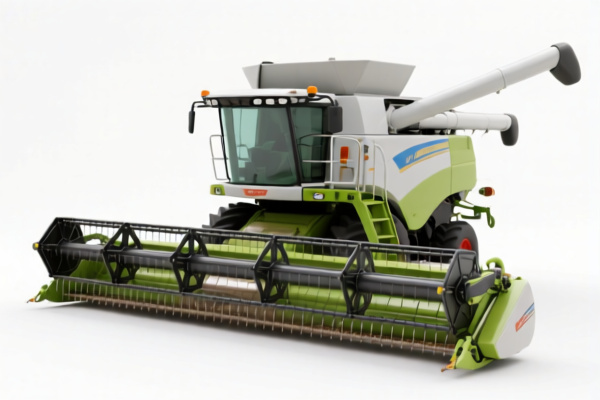
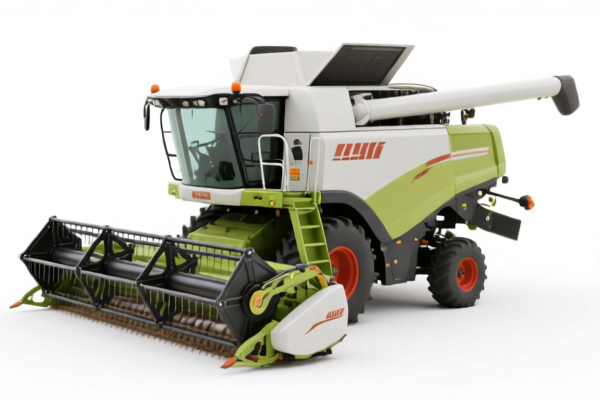
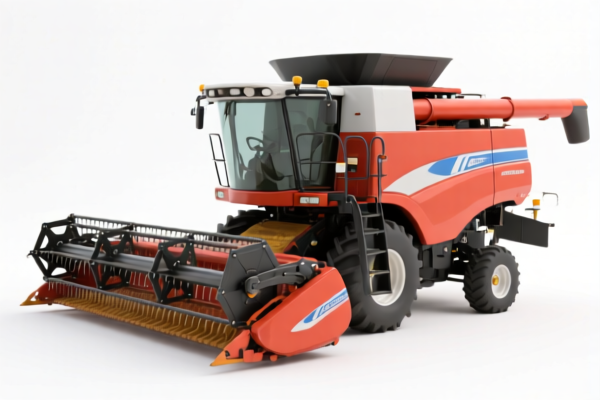
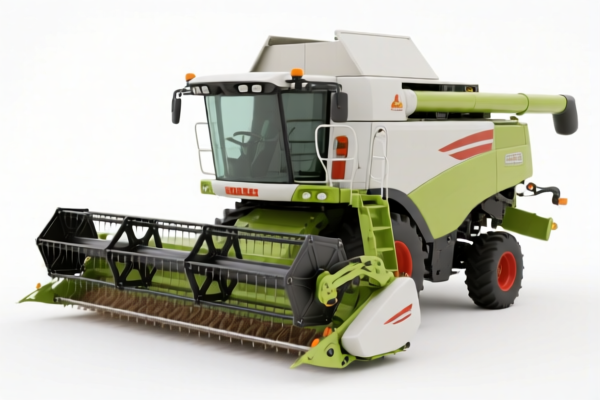
AI Analysis
🚜 Agricultural Machinery for Soil Preparation (Harrows, Cultivators & Plows)
🌐 HS Code Reference & Customs Clearance Guide | 2026 Latest Tariff Analysis | Professional Clearance Strategy
📌 I. Product Definition & Classification: Do You Really Understand "Soil Preparation Machinery"?
Agricultural machinery for soil preparation is the cornerstone of modern farming, including forestry and horticulture. In international trade, these goods are strictly categorized by their mechanical function and structural complexity. Misclassification between "simple tools" and "complex machinery" can lead to severe tariff discrepancies and customs delays.
The dataset provided focuses on two critical sub-categories: 1. Walk-behind Rotary Tillers (Active rotary machines, typically lighter duty). 2. Moldboard Plows (Passive tillage tools, specifically steel/aluminum/copper components subject to trade wars).
⚠️ Key Distinction Point:
- If the machine is a walk-behind rotary tiller/cultivator → It falls under 8432.29.00.60.
- If the item is a Moldboard Plow (especially with metal components like steel/aluminum) → It falls under 8432.10.00.20.
- Note: Simple hand tools (non-mechanical) are excluded; this data applies to mechanical/agricultural machinery.
📦 II. HS Code Classification Details (2026 Latest Tariff Authority Comparison)
| HS Code | Product Description | Application Scenario | Key Identification Feature |
|--------|--------------------------|--------------------------|
| 8432.29.00.60 | Walk-behind Rotary Tillers
(Other cultivators, weeders, hoes) | Small-scale farming, gardens, landscaping. Motor-driven rotary blades. | Rotary Action: Engine-powered, rotating tines that churn soil. Often "walk-behind." |
| 8432.10.00.20 | Moldboard Plows
(Plows, except listers) | Large-scale field preparation. Turning over the soil layer. | Passive/Towed: Typically attached to a tractor; uses a curved blade (moldboard) to lift/turn soil. |
🔍 Critical Alert:
- 8432.29.00.60 is for active rotary machinery (cultivators/tillers).
- 8432.10.00.20 is specifically for Moldboard Plows. Other plows (like disc plows) might fall under different sub-headings not listed here, but Moldboard Plows are explicitly covered in the data.
- Material Sensitivity: The second HS Code carries a special "Steel, Aluminum, Copper Products" surcharge, highlighting that metal content is a key risk factor for customs valuation.
💰 III. 2026 Latest Tariff Rate Details (Detailed Tax Breakdown)
✅ Applicable Market: United States (US)
✅ Origin: China (CN) (Implied by the 25% Section 301 tariff and "Steel/Aluminum/Copper" surcharge context)
✅ Effective Date: Current applicable rates for Chinese origin goods.
🎯 1. 8432.29.00.60 —— Walk-Behind Rotary Tillers (Other Cultivators)
| Item | Content |
|---|---|
| Base Tariff | 0.0% (Ad Valorem) |
| Additional Tariff (Section 301) | +25.0% |
| Special Metal Surcharge | ❌ None (No specific steel/aluminum surcharge applied in this data) |
| Total Tariff Rate | 25.0% |
| Tax Calculation | CIF Value × 25% |
| De Minimis Exemption | ❌ Not Applicable (Goods over $800 usually require formal entry; however, Section 301 tariffs often apply even to low-value shipments if not exempted by specific executive orders, but primarily affects formal imports). Note: Standard de minimis ($800) may still apply for Section 301 unless specifically revoked by CBP for this category, but generally, Section 301 applies to formal entries. |
| Legal Basis | HTSUS: 8432.29.00.60 → Section 301 Footnote: Additional 25% |
📌 Explanation:
- This category represents mechanical rotary tillers.
- The 25% additional tariff is the standard Section 301 penalty on Chinese agricultural machinery.
- The base rate is 0%, meaning the entire tax burden comes from the trade sanction.
🎯 2. 8432.10.00.20 —— Moldboard Plows
| Item | Content |
|---|---|
| Base Tariff | 0.0% (Ad Valorem) |
| Additional Tariff (Section 301) | +25.0% |
| Special Metal Surcharge (Steel/Aluminum/Copper) | +50.0% |
| Total Tariff Rate | 75.0% |
| Tax Calculation | CIF Value × 75% |
| De Minimis Exemption | ❌ High Risk |
| Legal Basis | HTSUS: 8432.10.00.20 → Section 301: 25% → Section 232/Metal Surcharge: 50% |
📌 Explanation:
- This is a high-risk classification.
- The 75% total rate is composed of:
1. 25% for Section 301 (General Chinese agricultural machinery penalty).
2. 50% for the Steel, Aluminum, and Copper Products Surcharge.
- Why 50%? Because moldboard plows are predominantly made of steel (the moldboard, shank, and frame). Customs authorities aggressively apply the 50% surcharge on agricultural steel products from China to protect domestic metal industries.
- This is a CATASTROPHIC rate for importers.
🛠️ IV. Customs Clearance Practical Advice (Battle-Tested Pitfall Guide)
✅ 1. Required Documentation Checklist (Non-Negotiable)
| Document | Mandatory? | Purpose |
|---|---|---|
| ✅ Product Specifications Sheet | ✔️ | Must detail: Weight, Material (Steel/Aluminum %), Power Source (Gas/Electric), Tine type. |
| ✅ Commercial Invoice | ✔️ | Must clearly state: "Walk-Behind Rotary Tiller" OR "Moldboard Plow". Avoid vague terms like "Farm Tool." |
| ✅ Material Composition Proof | ✔️ | Critical for 8432.10.00.20. Certificate of Material Analysis proving steel content to justify or contest the 50% surcharge. |
| ✅ Photographs (Clear & Detailed) | ✔️ | Show the machine in operation and close-ups of the working part (tines vs. moldboard blade). |
| ✅ Manufacturer's Declaration | ✔️ | Confirming origin and that it is not a "hand tool" but a "motorized/mechanical" unit. |
✅ 2. Declaration Strategy (Key Mnemonics)
🔥 "Rotary is 25%, Plow is 75% - Material Matters!"
| Scenario | Correct HS Code | Tax Rate | Why? |
|---|---|---|---|
| Walk-Behind Rotary Tiller (Motorized, rotating tines) | 8432.29.00.60 |
25% | Classified as "Other Cultivators." No specific metal surcharge in this data set. |
| Moldboard Plow (Tractor-towed, curved steel blade) | 8432.10.00.20 |
75% | Classified as "Plows." Triggered by Steel/Aluminum/Copper surcharge (+50%) + Section 301 (+25%). |
| Hand Hoe / Manual Weeder | ❌ Not in Data | Varies | If non-mechanical, it might fall under 8201 (Hand Tools), which has different rates. Do NOT misdeclare hand tools as machinery to avoid 75% tax. |
| Disc Plow | ❌ Not in Data | Varies | Disc plows are not "Moldboard Plows." They may fall under 8432.21 or similar, which might have different tariffs. Verify separately. |
✅ 3. Special Handling & Risk Mitigation
| Situation | Recommendation |
|---|---|
| Misclassification Risk | Do NOT declare a Moldboard Plow as a "Rotary Tiller" to save tax. Customs will inspect the metal content and apply the 50% surcharge + penalties + back-taxes. |
| Material Substitution | If you use composite materials (e.g., fiberglass moldboards) instead of steel, you MAY be able to contest the 50% surcharge. Provide lab reports proving <50% metal content by weight/value. |
| Partial Assembly | If importing kits, ensure the working mechanism is present. Incomplete kits may still be classified as the final product. |
| Origin Proof | Ensure the Certificate of Origin explicitly states "Made in China." If transshipped through Vietnam/Mexico, ensure substantial transformation occurred, or face Section 301 evasion penalties. |
🌍 V. Global Market Comparison (2026 Snapshot)
| Country/Region | HS Code (Approx.) | Base Tariff | Additional Tax (China Origin) | Total Estimate | Notes |
|---|---|---|---|---|---|
| 🇺🇸 USA | 8432.29.00.60 / 8432.10.00.20 |
0% | +25% / +75% | 25% / 75% | Highest Risk Market due to 301 & Metal Surcharges. |
| 🇪🇺 EU | 8432.29 / 8432.10 | 4.5% - 6.5% | 0% (Generally) | ~5% | No Section 301. Check for local eco-taxes. |
| 🇨🇳 China | 8432.29 / 8432.10 | 10% - 15% | 0% | ~12% | Import duties apply, but no US-style surcharges. |
| 🇯🇵 Japan | 8432.29 / 8432.10 | 5% - 7% | 0% | ~6% | Low tariffs, high technical standards (JAS). |
📌 Conclusion:
- The US market is uniquely punitive for these goods due to the 75% rate on Plows.
- Rotary Tillers (25%) are manageable but still costly.
- Moldboard Plows (75%) are often economically unviable for direct export to the US unless value-added significantly or material composition is changed.
📌 VI. Common Mistakes & Pitfall Guide (Blood & Tears Lessons)
❌ Mistake 1: Declaring a Moldboard Plow as a "Cultivator" to get 25% tax.
👉 Consequence: Customs inspects the steel content. Applies 75% rate + 10% penalty + Back Taxes. Total loss >20%.
❌ Mistake 2: Ignoring the 50% Metal Surcharge on Plows.
👉 Consequence: Importer underpays by 50%. CBP issues a Notice of Liability within 5 years.
❌ Mistake 3: Vague Description: "Farm Machinery."
👉 Consequence: Customs officer assigns the highest possible duty or holds shipment for inspection. Delays = Storage Fees.
✅ Correct Practice:
"Walk-Behind Rotary Tiller, Gas-Powered, 5HP, Steel Tines, Model XYZ" (For
8432.29.00.60)
"Moldboard Plow, Steel Blade, Tractor-Hitched, Model ABC" (For8432.10.00.20- Accept the 75% cost or redesign)
🎯 VII. Conclusion: Strategic Sourcing & Cost Control
🎯 Remember the Rule:
🔹 "Rotary = 25%, Plow = 75%."
🔹 "Steel = Surcharge, Plastic/Composite = Potential Savings."
📌 Actionable Tips:
1. For Rotary Tillers: Focus on efficiency and speed. The 25% tax is standard. Optimize supply chain volume to absorb costs.
2. For Plows:
* Option A: Re-engineer. Use composite/fiberglass moldboards to avoid the "Steel" classification and escape the 50% surcharge.
* Option B: Absorb Cost. Only viable for high-end, specialized agricultural equipment where demand is inelastic.
* Option C: Third-Country Assembly. Ensure genuine substantial transformation in a non-subject country (e.g., Vietnam, Thailand) to change origin. Note: CBP is aggressive on "transshipment" without real manufacturing.
📣 Immediate Action:
📞 Contact Your Customs Broker NOW.
📄 Prepare Material Composition Reports.
🚫 DO NOT SHIP Moldboard Plows to the US under 8432.10.00.20 without accepting the 75% tax or redesigning the product.
✨ Professional Clearance Starts with Precise Classification!
💼 Your Profit Margin Depends on Your HS Code!
Customer Reviews
About HS Code Classification
The Harmonized System (HS) is an internationally standardized nomenclature developed by the World Customs Organization (WCO) to classify traded products. Over 200 countries use the HS system as the basis for customs tariffs, trade statistics, and import/export regulations.
Each HS code follows a hierarchical structure:
- Chapter (2 digits) — Broad category of goods (e.g., Chapter 84: Machinery and Mechanical Appliances)
- Heading (4 digits) — More specific grouping within the chapter
- Subheading (6 digits) — Internationally standardized breakdown, used by all WCO member countries
- National subdivisions (8-10 digits) — Country-specific extensions for further classification, such as US HTSUS 10-digit codes
Correct HS code classification is essential for smooth customs clearance, accurate duty payment, and compliance with trade regulations. Misclassification can lead to customs delays, overpayment of duties, or penalties.
When importing from CN to US, the applicable tariff rates may include:
- Most-Favored-Nation (MFN) rate — The standard duty rate applied to WTO members
- General rate — Applied to countries without trade agreements
- Trade remedy duties — Additional tariffs such as Section 301 (anti-dumping), Section 232 (national security), or countervailing duties
The information provided on this page is for reference purposes only. For official classification, please consult with your local customs authority or a licensed customs broker.