Agricultural Natural Magnesite Powder
CN → US| HS Code | Tariff Rate | Origin | Destination | Doc |
|---|---|---|---|---|
| 2519100000 | 10.0% | CN | US | Official Doc |
| 2519902000 | 10.0% | CN | US | Official Doc |
| 3105900050 | 35.0% | CN | US | Official Doc |
| 3105900010 | 35.0% | CN | US | Official Doc |
Product Images

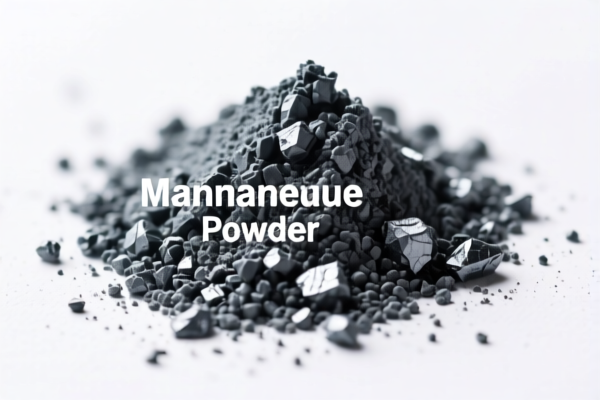
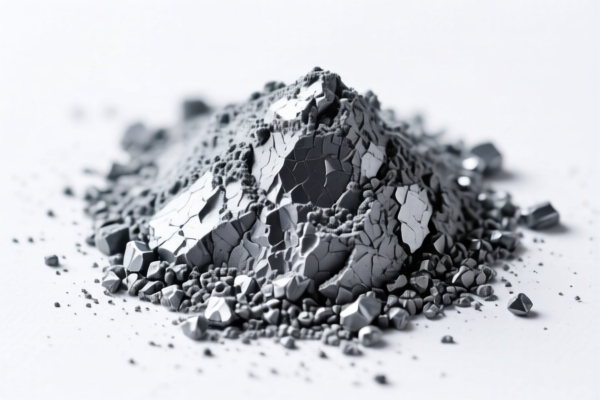
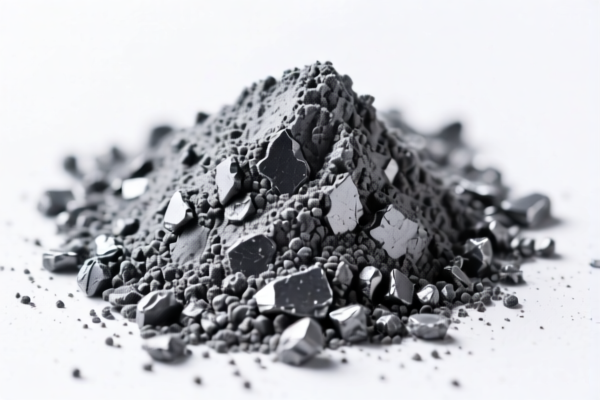
AI Analysis
🌱 Agricultural Natural Magnesite Powder
🌐 HS Code Reference & Customs Clearance Guide | 2026 Latest Tariff Analysis | Professional Customs Strategy
📌 I. Product Definition & Classification: Is It Fertilizer or Ore?
Natural Magnesite Powder is a magnesium carbonate mineral ($MgCO_3$) processed into a fine powder. In international trade, its classification hinges entirely on its intended use and physical form.
Two Main Pathways: 1. Industrial/Mining Category (HS 2519): If used primarily for material science, refractory purposes, or if the "agricultural use" is merely incidental or not the primary declared function at the border. 2. Fertilizer Category (HS 3105): If explicitly declared and processed specifically as a soil amendment to provide Magnesium (Mg), a secondary macronutrient for plants. The powder form is considered a "primary form" for fertilizers.
⚠️ Key Distinction Point:
- If the product is raw, unprocessed, or intended for industrial applications (even if sold to an agri-company for soil treatment) → Classify under Chapter 25.
- If the product is processed specifically for soil enrichment, labeled as fertilizer, and intended for direct agricultural application → Classify under Chapter 31.
📦 II. HS Code Classification Details (2026 Latest Tariff Authority Comparison)
Based on the provided data, there are four potential HS Codes depending on the specific classification logic applied by customs (Ore vs. Fertilizer).
| HS Code | Product Description | Category Logic | Total Tax Rate |
|---|---|---|---|
2519.10.00.00 |
Natural Magnesite Powder (Ore) | Classified as Magnesium Carbonate Ore. "Agricultural use" does not change the mineral classification. | 10.0% |
2519.90.20.00 |
Other Magnesite Powder (Ore) | Classified as Other Magnesite. Based on "other category" principles due to powder form. | 10.0% |
3105.90.00.50 |
Other Fertilizers (Powder Form) | Classified as Fertilizer. Powder fits primary fertilizer form; agricultural use aligns with fertilizer purpose. | 35.0% |
3105.90.00.10 |
Other Fertilizers (Mineral Origin) | Classified as Fertilizer. Powder form + Agricultural use + Mineral source. No conflict with fertilizer categories. | 35.0% |
🔍 Critical Reminder:
- HS 2519 treats the product as Mineral Ore.
- HS 3105 treats the product as Agricultural Input.
- The tax difference is massive (10% vs. 35%). Customs will scrutinize the Declaration of Purpose. If you declare it as fertilizer but provide no proof of agricultural formulation, you risk being reclassified to HS 2519 (or vice versa, depending on anti-dumping/fraud checks).
💰 III. 2026 Latest Tariff Rate Breakdown (Including Surtaxes & Policy Surcharges)
✅ Applicable Country: United States (US)
✅ Origin: China (CN)
✅ Effective Time: Post-November 2025 (Current 2026 Rules)
🎯 1. 2519.10.00.00 & 2519.90.20.00 —— Natural Magnesite (Ore Classification)
| Item | Content |
|---|---|
| Base Tariff | 0% (ad valorem) |
| Section 301 Surtax | 0% (No additional Section 301 tax for these specific subheadings based on provided data) |
| Section 122 Tariff | +10% (Specific clause applied to magnesite/related minerals) |
| Total Effective Rate | 10.0% |
| Tax Calculation | CIF Value × 10% |
| De Minimis Eligibility | ❌ No (Typically excluded for high-tariff mineral commodities) |
| Legal Basis Path | HS:2519.xxxxxx → Sect122:10% |
📌 Explanation:
- The 10% rate comes solely from Section 122.
- There is no 25% Section 301 tax applied here in the provided data, making this the lowest tax option if correctly classified as ore.
- Risk: If customs determines it is primarily a fertilizer, they may force reclassification to HS 3105, resulting in a 25% penalty difference plus potential fines.
🎯 2. 3105.90.00.50 & 3105.90.00.10 —— Other Fertilizers (Fertilizer Classification)
| Item | Content |
|---|---|
| Base Tariff | 0% (ad valorem) |
| Section 301 Surtax | +25% (Standard Section 301 surtax for Chapter 31 fertilizers from China) |
| Section 122 Tariff | +10% (Specific clause applied) |
| Total Effective Rate | 35.0% |
| Tax Calculation | CIF Value × 35% |
| De Minimis Eligibility | ❌ No (High surtax items are excluded) |
| Legal Basis Path | HS:3105.xxxxxx → Sec301:25% → Sect122:10% |
📌 Explanation:
- The 35% rate is a combination of 25% (Section 301) and 10% (Section 122).
- This is the standard high-tax path for agricultural inputs from China.
- Benefit: If your product is genuinely processed fertilizer, this is the correct classification. Misdeclaring as HS 2519 to save 25% constitutes customs fraud.
🛠️ IV. Customs Clearance Practical Advice (Pitfall Avoidance Guide)
✅ 1. Required Documentation Checklist (Non-Negotiable)
| Document | Required? | Note |
|---|---|---|
| ✅ Product Specification Sheet | ✔️ | Must detail MgCO₃ content, particle size, and intended use. |
| ✅ Labeling & Packaging Photos | ✔️ | Must show "Fertilizer" or "Agricultural Use" if claiming HS 3105. |
| ✅ Commercial Invoice | ✔️ | Clear description: "Natural Magnesite Powder for Agricultural Soil Amendment" OR "Raw Magnesite Ore Powder". |
| ✅ Certificate of Origin (CO) | ✔️ | To prove Chinese origin (triggers surtaxes). |
| ✅ Bill of Lading | ✔️ | Standard shipping document. |
| ✅ Fertilizer Registration (if applicable) | ✔️ | If claiming HS 3105, some states require proof of agricultural registration. |
✅ 2. Declaration Strategy (Key Mnemonic)
🔥 “Use Determines Code, Tax Doubles if Wrong!”
| Scenario | Correct HS Code | Consequence of Error |
|---|---|---|
| Raw Ore / Industrial Use | 2519.10.00.00 / 2519.90.20.00 |
If misdeclared as Fertilizer → Overpay 25%. If misdeclared as Ore when it's Fertilizer → Penalty + Back Taxes. |
| Explicit Fertilizer | 3105.90.00.50 / 3105.90.00.10 |
Must provide proof of agricultural intent. |
| Unclear Intent | High Risk | Customs may audit and reclassify. Best to consult a broker before shipment. |
📌 Key Advice:
- If the powder is unprocessed natural ore, even if sold to a farmer, it is safer to declare under HS 2519 (10% tax) unless it has been formulated with other nutrients.
- If it is blended or marketed strictly as a magnesium fertilizer, declare under HS 3105 (35% tax) to avoid fraud allegations.
✅ 3. Special Situation Handling
| Situation | Handling Suggestion |
|---|---|
| Blended Fertilizer | If mixed with N/P/K, it must be HS 3105. Do not try to hide it as pure magnesite. |
| Raw Ore Sold to Agri-Firm | Declare as HS 2519. The end-use does not change the customs classification at import unless specifically regulated as a fertilizer at the border. |
| Sample Imports | Still subject to tax. No de minimis exemption for Section 122/301 items. |
🌍 V. Global Market Comparison (2026 Latest)
| Country/Region | Recommended HS Code | Tax Rate (China Origin) | Notes |
|---|---|---|---|
| 🇺🇸 USA | 2519.10.00.00 (Ore) or 3105.90.00.50 (Fertilizer) |
10% (Ore) vs 35% (Fertilizer) | US is unique: High Section 122 surtax. Section 301 adds 25% to fertilizers. |
| 🇨🇳 China | 2519.90.90.90 (Ore) |
0% (Export duty may apply) | Export duties may apply for minerals. |
| 🇪🇺 EU | 2519.90 (Ore) |
0% (Most Favored Nation) | No Section 122/301 equivalent. Lower tax burden. |
| 🇮🇳 India | 2519.90 (Ore) |
0-5% | Check basic customs duty for magnesite. |
📌 Conclusion:
- USA is the most expensive market due to the Section 122 (10%) and Section 301 (25%) surtaxes.
- Strategic Choice: If the product is raw ore, HS 2519 is significantly cheaper (10% vs 35%). If it is a formulated fertilizer, you must pay the 35% but avoid legal risks.
📌 VI. Common Mistakes & Pitfall Guide (Blood & Tears Lessons)
❌ Mistake 1: Declaring Fertilizer as Ore to save 25%.
👉 Consequence: Customs detects "agricultural labeling" on packaging → 25% back taxes + 20-30% penalty + seizure risk.
❌ Mistake 2: Declaring Ore as Fertilizer unnecessarily.
👉 Consequence: Overpay 25% on CIF value. No refund possible if declaration is clear.
❌ Mistake 3: Vague description "Magnesite Powder".
👉 Consequence: Customs examiner has discretion → Likely to choose the higher tax or demand extensive documentation → Delays & Demurrage Costs.
✅ Correct Practice:
"Natural Magnesite Powder (MgCO₃ > 90%), Raw Ore, Not Processed for Fertilizer, For Industrial Use" → HS 2519
"Magnesium Fertilizer, Natural Magnesite Powder, Soil Amendment, Agricultural Use" → HS 3105
🎯 VII. Conclusion: Precise Classification, Cost Optimization!
🎯 Remember the Mnemonic:
🔹 "Ore is 10%, Fertilizer is 35%. Use Determines Code, Fraud is a Crime!"
🔹 "Section 122 adds 10%, Section 301 adds 25%. Know your product, know your tax."
📌 Pro Tip:
If your magnesite powder is raw and unprocessed, declare it as HS 2519 (10% tax) to minimize costs. Only declare as HS 3105 (35% tax) if it is explicitly formulated and marketed as a fertilizer.
Consult a licensed customs broker to review your product samples and packaging before shipping to the US.
📣 Immediate Action:
📞 Contact a Customs Broker + Provide Product Spec + Confirm Intended Use
🚀 Save 25% Tax Legally, Ensure Smooth Customs Clearance, Maximize Profit!
✨ Professional Customs Clearance Starts with Accurate Classification!
💼 Every Dollar Saved in Tax is Pure Profit!
Customer Reviews
About HS Code Classification
The Harmonized System (HS) is an internationally standardized nomenclature developed by the World Customs Organization (WCO) to classify traded products. Over 200 countries use the HS system as the basis for customs tariffs, trade statistics, and import/export regulations.
Each HS code follows a hierarchical structure:
- Chapter (2 digits) — Broad category of goods (e.g., Chapter 84: Machinery and Mechanical Appliances)
- Heading (4 digits) — More specific grouping within the chapter
- Subheading (6 digits) — Internationally standardized breakdown, used by all WCO member countries
- National subdivisions (8-10 digits) — Country-specific extensions for further classification, such as US HTSUS 10-digit codes
Correct HS code classification is essential for smooth customs clearance, accurate duty payment, and compliance with trade regulations. Misclassification can lead to customs delays, overpayment of duties, or penalties.
When importing from CN to US, the applicable tariff rates may include:
- Most-Favored-Nation (MFN) rate — The standard duty rate applied to WTO members
- General rate — Applied to countries without trade agreements
- Trade remedy duties — Additional tariffs such as Section 301 (anti-dumping), Section 232 (national security), or countervailing duties
The information provided on this page is for reference purposes only. For official classification, please consult with your local customs authority or a licensed customs broker.