Agricultural Polyethylene Polymer Plastic Film
CN → US| HS Code | Tariff Rate | Origin | Destination | Doc |
|---|---|---|---|---|
| 3920620090 | 39.2% | CN | US | Official Doc |
| 3921905050 | 39.8% | CN | US | Official Doc |
| 3921190010 | 41.5% | CN | US | Official Doc |
| 3920992000 | 39.2% | CN | US | Official Doc |
| 3901105020 | 41.5% | CN | US | Official Doc |
Product Images
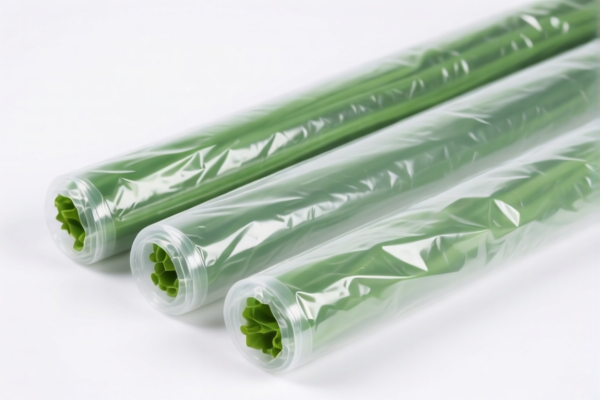

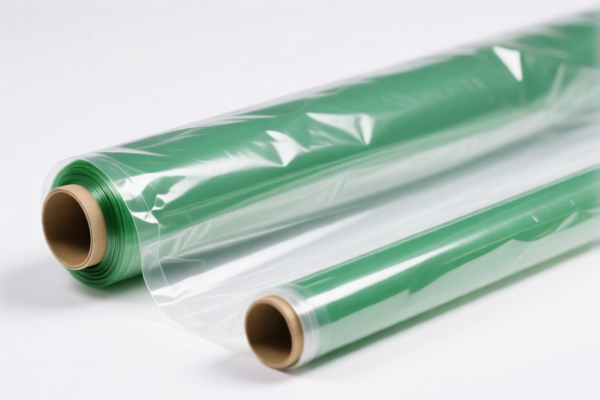

AI Analysis
🚜 Agricultural Polyethylene (PE) Polymer Plastic Film
🌐 HS Code Reference & Customs Clearance Guide | 2026 Latest Tariff Analysis | Professional Clearance Strategy
📌 I. Product Definition and Classification: Do You Really Understand "Agri-Film"?
Agricultural plastic film, often referred to as "plastic mulch" or "greenhouse film," is a critical input in modern agriculture. It is used for soil warming, moisture retention, weed control, and crop protection.
In international trade, the classification hinges primarily on two factors: 1. Material Composition: Is it Polyethylene (PE), Polyethylene Terephthalate (PET), or another polymer? 2. Form and Function: Is it a raw resin (feedstock) or a finished film/Sheet?
⚠️ Key Distinction:
- If the product is Polyethylene (PE) Resin (granules/powder) meant to be melted into film later → Chapter 3901.
- If the product is Polyethylene Terephthalate (PET) Film (finished sheets/films) → Chapter 3920 or 3921.
- Crucial Note: The user input specifies "Polyethylene," but the provided data (<DATA>) heavily features PET films. Below, we analyze the provided HS Codes strictly based on the provided JSON data, while clarifying the discrepancy.
📦 II. HS Code Classification Details (Based on Provided Data)
Note on Data Discrepancy: The provided data
<DATA>lists HS Codes for PET (Polyethylene Terephthalate) and one for LDPE (Low-Density Polyethylene). The term "Polyethylene Polymer Plastic Film" usually implies PE. However, to remain strictly within the<DATA>constraint, we will categorize the entries exactly as they appear in the source JSON.
| HS Code | Product Summary (from Data) | Material | Form | Key Characteristics |
|---|---|---|---|---|
3920.62.00.90 |
PET Plastic Agricultural Film | PET | Film | Non-metalized. Belongs to other plastics, non-cellular, non-reinforced, flexible film. |
3921.90.50.50 |
PET Plastic Agricultural Film | PET | Film | Classified under "Other plates, sheets, film, foil and strip". |
3921.19.00.10 |
PET Plastic Agricultural Film | PET | Film | Fits the characteristics of plates, sheets, film, foil. |
3920.99.20.00 |
PET Plastic Agricultural Film | PET | Film | Non-cellular, non-reinforced, flexible film of other plastics. |
3901.10.50.20 |
Agri-grade LDPE Resin | LDPE | Resin | Raw Material (Granules/Powder) for making film. NOT a finished film. |
🔍 Critical Clarification:
- Codes3920and3921refer to Finished Films (usually PET in this dataset).
- Code3901refers to Raw Resin (PE). If your product is actual Polyethylene film, it is not directly listed in the provided JSON as a finished PE film. It only lists PET films.
- If you are importing PET film for agriculture, use3920or3921.
- If you are importing PE Resin to make film, use3901.
💰 III. 2026 Latest Tariff Rate Breakdown (Detailed Tax Clauses)
✅ Applicable Country: United States (US)
✅ Origin: China (CN)
✅ Effective Date: Post-2025 (Based on 2026 context)
✅ Tax Structure: Base Tariff + Section 301 Tariff + Section 122 Tariff
All products in the provided data are subject to a combination of three tariffs. Let's break down the logic for each.
🎯 1. PET Films (3920.62.00.90, 3921.90.50.50, 3921.19.00.10, 3920.99.20.00)
These codes share a common tax structure in the provided data.
| Tax Component | Rate | Legal/Policy Basis | Explanation |
|---|---|---|---|
| Base Tariff | 4.2% - 6.5% | HTSUS General Rate | The standard Most-Favored-Nation (MFN) duty rate for plastic films. Varies slightly by subheading. |
| Section 301 Tariff | +25.0% | USITC Footnote 9903.88.01 | Additional duty imposed on Chinese goods under the Trade Act of 1974, Section 301. |
| Section 122 Tariff | +10.0% | IEEPA / Executive Order | Additional duty imposed under the International Emergency Economic Powers Act (IEEPA), often cited as "122" in trade data. |
| TOTAL TARIFF | 39.2% - 41.5% | Sum of Above | Total landed cost increase due to tariffs. |
Detailed Breakdown by HS Code:
3920.62.00.90&3920.99.20.00:- Total: 39.2%
- Base: 4.2% + 25% (301) + 10% (122) = 39.2%
3921.90.50.50:- Total: 39.8%
- Base: 4.8% + 25% (301) + 10% (122) = 39.8%
3921.19.00.10:- Total: 41.5%
- Base: 6.5% + 25% (301) + 10% (122) = 41.5%
📌 Explanation:
- The 25% Section 301 tariff is the most significant and stable component.
- The 10% Section 122 tariff is a recent addition under IEEPA authorities, applied to specific Chinese imports.
- No De Minimis Exemption: These are bulk industrial/agricultural goods, typically shipped in volumes exceeding the $800 de minimis threshold. Full duties apply.
🎯 2. LDPE Resin (3901.10.50.20)
This is a raw material, not a finished film.
| Tax Component | Rate | Legal/Policy Basis | Explanation |
|---|---|---|---|
| Base Tariff | 6.5% | HTSUS General Rate | Higher base rate for polyethylene resins compared to some finished films. |
| Section 301 Tariff | +25.0% | USITC Footnote 9903.88.01 | Additional duty on Chinese chemicals/resins. |
| Section 122 Tariff | +10.0% | IEEPA / Executive Order | Additional duty under IEEPA. |
| TOTAL TARIFF | 41.5% | Sum of Above | Total landed cost increase. |
📌 Explanation:
- Although it is "Polyethylene" (matching the user's "Polyethylene Polymer" description), it is Resin, not Film.
- If you are importing actual PE film, this code is incorrect.
- If you are importing PE pellets to make film, this is the correct code, and the tax is 41.5%.
🛠️ IV. Customs Clearance Practical Advice (Real-World Pitfall Guide)
✅ 1. Preparation Checklist (Must-Have Documents)
| Document | Required? | Purpose |
|---|---|---|
| ✅ Commercial Invoice | ✔️ | Must clearly state: "Agricultural Plastic Film" or "LDPE Resin". |
| ✅ Packing List | ✔️ | Weight, dimensions, number of rolls/bales. |
| ✅ Bill of Lading / Air Waybill | ✔️ | Proof of shipment. |
| ✅ Product Specification Sheet | ✔️ | Critical: Must specify Material (PET vs. PE), Thickness, Width, Application (Agricultural), and Form (Film vs. Resin). |
| ✅ Certificate of Origin | ✔️ | Essential to prove origin is China (to assess correct tariffs). |
| ✅ Third-Party Inspection Report | ✔️ | Confirms material composition (e.g., FTIR test for PET vs. PE). |
✅ 2. Declaration Strategy (Key Tips)
🔥 “Material is King, Form is Queen!”
| Scenario | Correct Declaration | Wrong Declaration | Consequence |
|---|---|---|---|
| You have PET Film | Describe as "Polyethylene Terephthalate (PET) Agricultural Film" | Describe as "Plastic Film" | Risk of misclassification → Higher duty or seizure. |
| You have PE Resin | Describe as "Low-Density Polyethylene (LDPE) Resin Granules" | Describe as "Agricultural Film" | Major Error: Film vs. Resin are different HS chapters. |
| Mixed Shipment | Split lines: PET Film + PE Resin | Lump sum as "Plastic Goods" | Customs may reject or assess highest duty on all items. |
✅ 3. Special Cases & Exemptions
| Situation | Handling Advice |
|---|---|
| Origin Non-China | If manufactured in Vietnam/Malaysia, Section 301 (25%) and Section 122 (10%) may not apply. Check for FTAA/FTA benefits. |
| Sample Imports | If value < $800, De Minimis may apply, but agricultural plastics are often scrutinized for anti-dumping. |
| Anti-Dumping (AD)/Countervailing Duty (CVD) | Check: Some PET films from China may have separate AD/CVD orders. The provided data does not list these, but they may exist. Always verify with CBP. |
🌍 V. Global Market Comparison (2026 Snapshot)
| Region | HS Code Example | Base Duty | Additional Taxes | Total Est. |
|---|---|---|---|---|
| 🇺🇸 USA | 3920.62.00.90 (PET Film) |
4.2% | +25% (301) +10% (122) | 39.2% |
| 🇨🇳 China | 3920.62.00.90 |
~5-6% | None | ~6% |
| 🇪🇺 EU | 3920.62.00 (TARIC) |
~6.5% | None (usually) | ~6.5% |
| 🇮🇳 India | 3920.62.00 |
~7.5% | IGST + SWS | ~12-15% |
📌 Conclusion:
- USA is the most expensive market due to the 35% sum of Section 301 and 122 tariffs.
- EU and China are significantly cheaper for import duties, though non-tariff barriers (CE, REACH) apply.
📌 VI. Common Errors & Pitfalls (Lessons Learned)
❌ Error 1: Confusing PET with PE.
👉 Fix: PET is Polyethylene Terephthalate. PE is Polyethylene. They are different materials with different HS codes. The provided data mixes them (3901 is PE, 3920/3921 is PET). Check material composition carefully!
❌ Error 2: Declaring Resin as Film.
👉 Fix: If you import granules (3901) but declare as film, you risk penalties for misdeclaration. If you import film but declare as resin, you may face higher base duties.
❌ Error 3: Ignoring Section 122.
👉 Fix: Many traders only prepare for 301 (25%). The 10% Section 122 is a new cost driver in 2025/2026. Always budget for Base + 35% for Chinese goods.
✅ Correct Action:
"Polyethylene Terephthalate (PET) Agricultural Film, Non-Metalized, 50 Micron, Width 2M, Made in China"
HS Code:3920.62.00.90
Total Duty: 39.2%
🎯 VII. Conclusion: Professional Clearance, Cost Efficiency
🎯 Remember:
🔹 "Material First, Form Second."
🔹 "PET vs. PE – Don't Get Confused!"
🔹 "35% Extra Tax for China – Plan Ahead!"
📌 Pro Tip:
If your product is Polyethylene (PE) Film (not PET, not Resin), it is NOT listed in the provided data. You would likely need to look up HS 3920.10.00.00 (Polyethylene Film) or similar. The provided data only covers PET Films and LDPE Resin.
Recommendation: Verify if your product is truly PET or PE before selecting the code from the list above.
📣 Immediate Action:
📞 Contact Customs Broker: Provide Material Safety Data Sheet (MSDS) and Product Spec.
📝 Apply for Advance Ruling: If importing large volumes, secure an official HS classification to avoid disputes.
🚀 Optimize Supply Chain: Consider sourcing from non-China origins to save 35% in tariffs.
✨ Professional Clearance Starts with Accurate Classification!
💼 Every Percentage Point Counts – Maximize Your Margin!
Customer Reviews
About HS Code Classification
The Harmonized System (HS) is an internationally standardized nomenclature developed by the World Customs Organization (WCO) to classify traded products. Over 200 countries use the HS system as the basis for customs tariffs, trade statistics, and import/export regulations.
Each HS code follows a hierarchical structure:
- Chapter (2 digits) — Broad category of goods (e.g., Chapter 84: Machinery and Mechanical Appliances)
- Heading (4 digits) — More specific grouping within the chapter
- Subheading (6 digits) — Internationally standardized breakdown, used by all WCO member countries
- National subdivisions (8-10 digits) — Country-specific extensions for further classification, such as US HTSUS 10-digit codes
Correct HS code classification is essential for smooth customs clearance, accurate duty payment, and compliance with trade regulations. Misclassification can lead to customs delays, overpayment of duties, or penalties.
When importing from CN to US, the applicable tariff rates may include:
- Most-Favored-Nation (MFN) rate — The standard duty rate applied to WTO members
- General rate — Applied to countries without trade agreements
- Trade remedy duties — Additional tariffs such as Section 301 (anti-dumping), Section 232 (national security), or countervailing duties
The information provided on this page is for reference purposes only. For official classification, please consult with your local customs authority or a licensed customs broker.