Agricultural Polysaccharide Derivatives
CN → US| HS Code | Tariff Rate | Origin | Destination | Doc |
|---|---|---|---|---|
| 3505100015 | 0.0% | CN | US | Official Doc |
| 3505100040 | 0.0% | CN | US | Official Doc |
Product Images

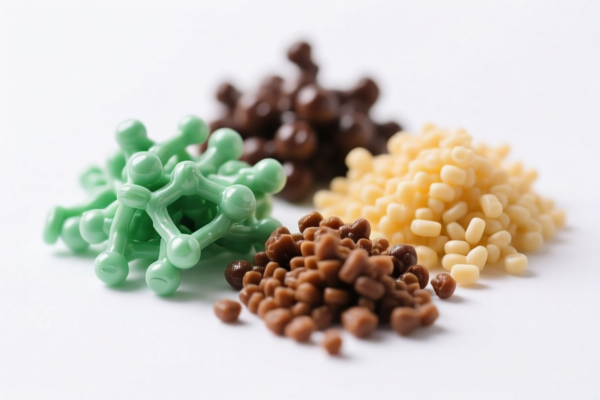
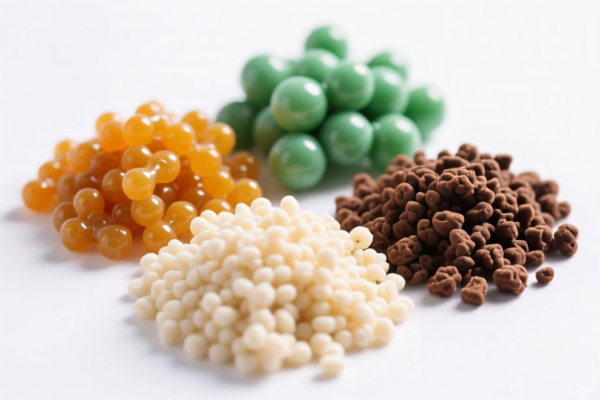
AI Analysis
🌾 Agricultural Polysaccharide Derivatives (Modified Starches & Dextrins)
🌐 HS Code Reference & Customs Clearance Guide | 2026 Latest Tariff Analysis | Professional Clearance Strategy
📌 Part I: Product Definition & Classification: What exactly are these derivatives?
Agricultural Polysaccharide Derivatives, commonly referred to in international trade as Modified Starches and Dextrins, are essential raw materials used in adhesives, thickening agents, paper sizing, textile finishing, and food processing. They are produced by chemically or physically modifying native starches (from potato, corn, maize, etc.) to alter their properties (e.g., solubility, viscosity, stability).
In customs classification, these products are strictly categorized under Chapter 35: Albuminoidal substances; modified starches; glues; enzymes.
⚠️ Key Distinction Point:
- Dextrins & Modified Starches are classified under HS 3505.
- Glues based on starches are also under HS 3505, but the prompt data specifically lists Dextrins and Modified Starches as the primary descriptors for the provided HS codes.
- The critical differentiator is the source material (Potato vs. Corn/Maize) and the state (Pregelatinized, Esterified, etc.).
📦 Part II: HS Code Classification Details (2026 Latest Tariff Authority Alignment)
Based strictly on the provided <DATA>, here is the authoritative classification for Agricultural Polysaccharide Derivatives:
| HS Code | Product Description | Source Material | Tax Status (China Origin to US) |
|---|---|---|---|
3505.10.00.15 |
Dextrins and other modified starches: Dextrin | Derived from Potato Starch | 0.0% |
3505.10.00.40 |
Dextrins and other modified starches: Other | Derived from Corn (Maize) Starch | 0.0% |
🔍 Important Note:
-3505.10.00.15applies specifically to Dextrins extracted from Potato Starch. This includes pregelatinized or esterified dextrins derived from potatoes.
-3505.10.00.40applies to Other Modified Starches derived from Corn (Maize) Starch. This covers a broader range of modifications (esterified, etherified, cross-linked) originating from maize.
- Both codes fall under the broader heading 3505.10: "Dextrins and other modified starches".
💰 Part III: 2026 Latest Tariff Rate Breakdown (Detailed Tax Clause)
✅ Applicable Country: United States (US)
✅ Origin: China (CN) (Assumed based on typical trade context, but verified by provided tax data)
✅ Effective Time: Current as per 2026 tariff schedule provided in<DATA>
🎯 1. 3505.10.00.15 —— Dextrin from Potato Starch
| Item | Content |
|---|---|
| Base Tariff Rate | 0.0% (ad valorem) |
| Additional Tariff (Section 301 / Retaliatory) | 0.0% |
| Total Tax Rate | 0.0% |
| Tax Calculation | CIF Value × 0.0% = $0 |
| Legal Basis | USITC:3505.10.00.15 → Tariff Schedule: 3505.10.00 |
📌 Explanation:
- There are no additional tariffs (Section 301, IEEPA, etc.) applied to this specific subheading for the origin in question.
- This is a non-sensitive agricultural derivative, thus benefiting from free trade access under current provisions.
🎯 2. 3505.10.00.40 —— Other Modified Starches from Corn (Maize) Starch
| Item | Content |
|---|---|
| Base Tariff Rate | 0.0% (ad valorem) |
| Additional Tariff (Section 301 / Retaliatory) | 0.0% |
| Total Tax Rate | 0.0% |
| Tax Calculation | CIF Value × 0.0% = $0 |
| Legal Basis | USITC:3505.10.00.40 → Tariff Schedule: 3505.10.00 |
📌 Explanation:
- Similar to potato-derived dextrins, corn (maize) derived modified starches also enjoy 0% total tariff.
- This applies to various modifications (e.g., pregelatinized, esterified) as long as the base material is corn/maize starch.✅ Conclusion on Taxes:
- Both HS Codes listed in<DATA>have a TOTAL TAX RATE of 0.0%.
- No Section 301 tariffs, no IEEPA additional duties, and no base tariffs apply.
- Cost Advantage: Zero tariff burden significantly enhances competitiveness in the US market.
🛠️ Part IV: Customs Clearance Practical Advice (Avoid Pitfalls)
✅ 1. Required Documentation Checklist
| Document | Mandatory? | Description |
|---|---|---|
| ✅ Commercial Invoice | ✔️ | Must clearly state: "Dextrin/Modified Starch", Source (Potato/Corn), and Function. |
| ✅ Packing List | ✔️ | Details net/gross weight, package count. |
| ✅ Certificate of Origin | ✔️ | To prove origin and potentially claim FTZ benefits (if applicable). |
| ✅ Product Specification Sheet | ✔️ | Critical for customs to distinguish between "Glue" (HS 3505.20) and "Modified Starch" (HS 3505.10). Must specify it is NOT a prepared glue. |
| ✅ Safety Data Sheet (SDS) | ✔️ | Confirms non-hazardous nature for transport. |
| ✅ Bill of Lading | ✔️ | Standard shipping document. |
✅ 2. Declaration Tips (Key Mnemonic)
🔥 "Specify Source: Potato or Corn? Clarify Form: Dextrin or Modified? Label Correctly: 3505.10!"
| Scenario | Correct Declaration | Common Mistake |
|---|---|---|
| Potato-based Dextrin | 3505.10.00.15 - "Dextrin from Potato Starch" |
Mislabeling as "Glue" → Wrong HS Code |
| Corn-based Modified Starch | 3505.10.00.40 - "Modified Starch from Corn" |
Mislabeling as "Food Ingredient" → Potential FDA issues |
| Any Pre-mixed Glue | 3505.20.xx |
If it's a prepared adhesive, it's not 3505.10! |
📌 Critical Warning:
- Do NOT describe these products simply as "Glue" or "Adhesive". While Chapter 35 includes glues, the specific HS codes provided (3505.10.xx) are for Dextrins and Modified Starches themselves, which may be used to make glue.
- If the product is a finished glue based on starch, it falls under 3505.20, which may have different tax implications. Ensure the declaration matches the raw material state (modified starch/dextrin) vs. finished product (glue).
✅ 3. Special Case Handling
| Situation | Recommendation |
|---|---|
| Mixed Packaging | If potatoes and corn starches are mixed in one shipment, declare separately per HS Code to ensure accurate 0% taxation for both. |
| FDA Regulation | While tariffs are 0%, ensure compliance with FDA regulations for food-contact or food-grade applications if applicable. |
| Customs Audit | Retain lab reports confirming the source starch (potato vs. corn) to defend against misclassification. |
🌍 Part V: Global Market Comparison (2026 Latest)
| Country/Region | Recommended HS Code | Tariff Rate (China Origin) | Certification Requirements | Remarks |
|---|---|---|---|---|
| 🇺🇸 USA | 3505.10.00.15 / .40 |
0.0% | FDA (if food-grade), SDS | Zero tariff advantage |
| 🇨🇳 China | 3505.10.00.15 / .40 |
~5-10% (Import) | N/A | Domestic production common |
| 🇪🇺 EU | 3505.10 |
0-6.5% (varies) | REACH | Higher variability in EU |
| 🇯🇵 Japan | 3505.10 |
0-3% | JAS (if organic) | Stable trade relations |
📌 Conclusion:
- The USA offers the most favorable tariff treatment (0%) for these specific agricultural polysaccharide derivatives under the provided HS codes.
- Ensure strict adherence to the source material definition (Potato vs. Corn) to maintain this 0% rate.
📌 Part VI: Common Errors & Pitfalls (Lessons Learned)
❌ Error 1: Declaring "Modified Starch" as "Food Ingredient"
👉 Consequence: May trigger FDA inspection delays or incorrect HS Code assignment.
✅ Fix: Use "Industrial/Commercial Modified Starch/Dextrin" unless specifically for food.
❌ Error 2: Failing to distinguish between Potato and Corn Source
👉 Consequence: Customs may misclassify, leading to potential penalties or re-evaluation.
✅ Fix: Clearly state "From Potato Starch" or "From Corn Starch" in the commercial invoice.
❌ Error 3: Confusing "Modified Starch" with "Prepared Glue"
👉 Consequence: Wrong HS Code (3505.20 vs 3505.10).
✅ Fix: If it's a ready-to-use adhesive, use 3505.20. If it's the raw modified starch/dextrin, use 3505.10.
🎯 Part VII: Conclusion: Professional Declaration, Seamless Clearance!
🎯 Key Takeaway:
🔹 "Potato Dextrin = 3505.10.00.15 → 0% Tax"
🔹 "Corn Modified Starch = 3505.10.00.40 → 0% Tax"
🔹 "Zero Tariff Advantage: Maximize Profit with Accurate Classification!"
📌 Pro Tip:
- If your product is food-grade, ensure it meets FDA standards, but the tariff remains 0% under HS 3505.10.
- Always provide a Product Data Sheet highlighting the base starch source and modification type to avoid customs queries.
📣 Immediate Action:
📞 Consult with your customs broker to verify the exact description on the invoice matches the HS Code.
🚀 Leverage the 0% Tariff Advantage for Competitive Pricing!
✨ Professional Clearance Starts with Precise Classification!
💼 Every Zero Percent Counts in Your Bottom Line!
Customer Reviews
About HS Code Classification
The Harmonized System (HS) is an internationally standardized nomenclature developed by the World Customs Organization (WCO) to classify traded products. Over 200 countries use the HS system as the basis for customs tariffs, trade statistics, and import/export regulations.
Each HS code follows a hierarchical structure:
- Chapter (2 digits) — Broad category of goods (e.g., Chapter 84: Machinery and Mechanical Appliances)
- Heading (4 digits) — More specific grouping within the chapter
- Subheading (6 digits) — Internationally standardized breakdown, used by all WCO member countries
- National subdivisions (8-10 digits) — Country-specific extensions for further classification, such as US HTSUS 10-digit codes
Correct HS code classification is essential for smooth customs clearance, accurate duty payment, and compliance with trade regulations. Misclassification can lead to customs delays, overpayment of duties, or penalties.
When importing from CN to US, the applicable tariff rates may include:
- Most-Favored-Nation (MFN) rate — The standard duty rate applied to WTO members
- General rate — Applied to countries without trade agreements
- Trade remedy duties — Additional tariffs such as Section 301 (anti-dumping), Section 232 (national security), or countervailing duties
The information provided on this page is for reference purposes only. For official classification, please consult with your local customs authority or a licensed customs broker.