Agricultural Reinforced Rubber Hose
CN → US| HS Code | Tariff Rate | Origin | Destination | Doc |
|---|---|---|---|---|
| 4009310000 | 37.5% | CN | US | Official Doc |
| 4009320050 | 37.5% | CN | US | Official Doc |
Product Images
AI Analysis
🌿 Agricultural Reinforced Rubber Hose (Water & Fertilizer Transfer Systems)
🌐 HS Code Reference & Customs Clearance Guide | 2026 Latest Tariff Analysis | Professional Compliance Strategy
📌 I. Product Definition & Classification: Do You Really Understand "Reinforced Rubber Hoses"?
Agricultural Reinforced Rubber Hoses are critical components in modern irrigation, pesticide spraying, and hydroponic systems. Unlike standard industrial hoses, these are often subjected to high pressure, chemical fertilizers, and UV exposure. In international trade, the classification hinges on two factors: material composition and presence of fittings.
Vulcanized Rubber (Non-Hard):
Flexible hoses used for water, air, or non-corrosive liquids.
Reinforcement:
- Textile-Reinforced: The most common for agriculture. Uses fabric/polyester/cotton layers to withstand pressure.
- Combined: Only with textile materials (no metal wire armor).
⚠️ Key Distinction Point:
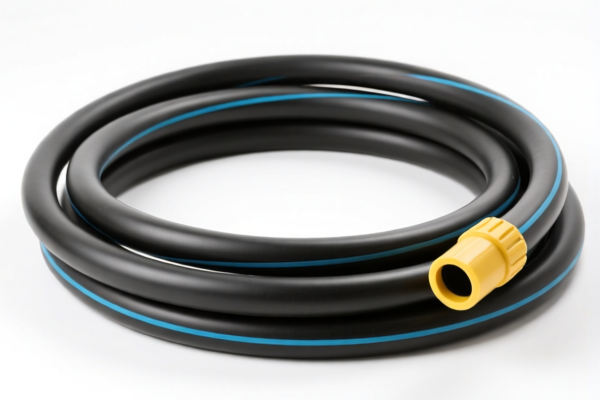
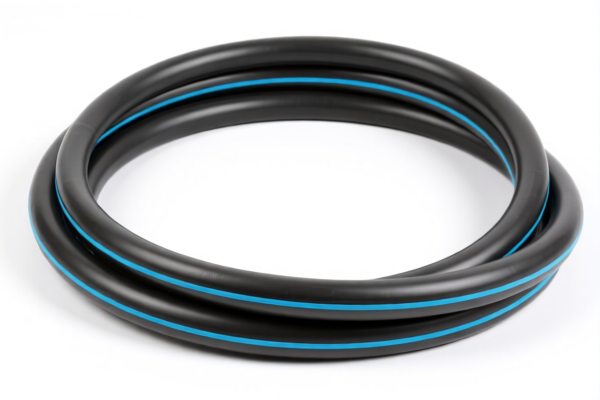
- Without Fittings: The hose is sold as a straight tube or coil. Ends are raw/cut. → HS 4009.31
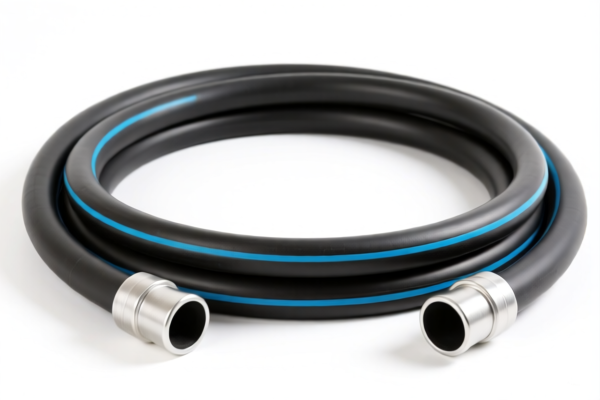
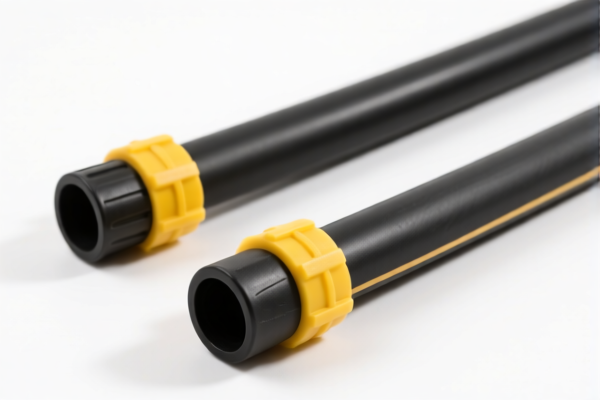
- With Fittings: The hose comes with pre-attached couplings, elbows, flanges, or connectors. → HS 4009.32
📦 II. HS Code Classification Details (2026 Latest Tariff Authority Comparison)
| HS Code | Product Description | Applicable Scenario | Fittings Included? | Reinforcement Material |
|---|---|---|---|---|
4009.31.00.00 |
Tubes, pipes, hoses, of vulcanized rubber other than hard rubber: Reinforced or otherwise combined only with textile materials: Without fittings | Bulk hose reels, raw hose coils, DIY irrigation kits (buyer installs own connectors) | ❌ No | Textile (Polyester, Nylon, Cotton) |
4009.32.00.50 |
Tubes, pipes, hoses, of vulcanized rubber other than hard rubber: Reinforced or otherwise combined only with textile materials: With fittings Other | Pre-assembled spray booms, ready-to-use irrigation lines, hose sets with couplers | ✅ Yes | Textile (Polyester, Nylon, Cotton) |
🔍 Critical Reminder:
- If the hose arrives with any attached joint, elbow, or flange (even if just for transport), it MUST be declared under 4009.32.00.50.
- If the hose is purely tubular with no attachments, it falls under 4009.31.00.00.
- Do not mix "hose" and "fittings" in separate line items if they are supplied together as a single functional unit; this can lead to customs scrutiny or penalty for improper splitting.
💰 III. 2026 Latest Tariff Rate Detailed Explanation
✅ Applicable Market: United States (US)
✅ Origin: China (CN)
✅ Effective Date: Current 2026 Tariff Schedule
🎯 1. 4009.31.00.00 —— Rubber Hoses, Reinforced with Textile, Without Fittings
| Item | Content |
|---|---|
| Base Tariff | 0.0% (ad valorem) |
| Section 301 Additional Tariff | 0.0% |
| IEEPA Additional Tariff | 0.0% |
| Total Effective Tax Rate | 0.0% |
| Tax Calculation | CIF Value × 0% = $0 |
| De Minimis Eligibility | ✅ Yes (if value < $800 per shipment, though rare for industrial hoses) |
| Legal Basis | HTSUS 4009.31.00.00 |
📌 Explanation:
- Agricultural rubber hoses reinforced only with textile materials (without metal cores) are classified under 4009.31.
- Crucially, there are NO additional 25% or 10% tariffs applied to this specific HS code under current Section 301 and IEEPA measures.
- This makes it a zero-duty import for US-bound shipments from China, offering significant cost advantages compared to metal or electronic goods.
🎯 2. 4009.32.00.50 —— Rubber Hoses, Reinforced with Textile, With Fittings
| Item | Content |
|---|---|
| Base Tariff | 0.0% |
| Section 301 Additional Tariff | 0.0% |
| IEEPA Additional Tariff | 0.0% |
| Total Effective Tax Rate | 0.0% |
| Tax Calculation | CIF Value × 0% = $0 |
| De Minimis Eligibility | ✅ Yes (if value < $800) |
| Legal Basis | HTSUS 4009.32.00.50 |
📌 Explanation:
- Even when fittings (joints, elbows, flanges) are attached, as long as the hose is only reinforced with textile (no metal wire), it remains duty-free.
- Many importers mistakenly believe that adding "fittings" triggers metal tariffs. This is false if the primary material is rubber/textile and fittings are minor or non-metallic.
- Total Tax: 0.0%. This is a highly competitive product category for agricultural supply chains.
🛠️ IV. Customs Clearance Practical Advice (Real-World Pitfall Avoidance)
✅ 1. Required Documentation Checklist
| Document | Mandatory? | Notes |
|---|---|---|
| ✅ Commercial Invoice | ✔️ | Must clearly state: "Rubber Hose, Reinforced with Textile, Without/With Fittings" |
| ✅ Packing List | ✔️ | Specify whether fittings are included in the HS code description |
| ✅ Product Specification Sheet | ✔️ | Detail: Rubber type (vulcanized), Reinforcement (textile only), Max Pressure, Diameter |
| ✅ Material Composition Proof | ✔️ | Critical: Prove NO metal reinforcement. If metal wire is present, HS code changes to 4009.41/42, which may have different duties |
| ✅ Photos of Product | ✔️ | Show hose cross-section to prove textile-only reinforcement |
✅ 2. Declaration Strategy (Key Tips)
🔥 "Textile Only = Zero Duty! Metal Core = Higher Risk!"
| Scenario | Correct Declaration | Risk if Incorrect |
|---|---|---|
| Raw Hose Coil | 4009.31.00.00 |
Low risk, but ensure "Without Fittings" is stated |
| Hose with Plastic/Metal Connectors | 4009.32.00.50 |
Ensure connectors are considered "parts" of the hose, not separate goods |
| Hose with Steel Wire Reinforcement | Wrong HS! (Likely 4009.41.00.00 or similar) | High Risk: May be subject to 25% Section 301 duties if misclassified |
| Hard Rubber (Ebonite) Pipe | Wrong HS! (Chapter 40, but different subheading) | Hard rubber is excluded from 4009; check Chapter 39 or 40 elsewhere |
✅ 3. Special Cases & Handling
| Situation | Handling Advice |
|---|---|
| OEM Branding | Ensure invoice lists both manufacturer and buyer if required, but HS code remains the same |
| Mix of Sizes/Lengths | Declare as a single line item if same HS code, or list separately with same code |
| Fittings Sold Separately | If fittings are shipped in a different package or bill, declare them separately. Fittings may fall under 4016.99 or 7307 depending on material |
| Chemical Resistance | If hose is for aggressive chemicals, ensure material data sheet matches "Vulcanized Rubber" |
🌍 V. Global Market Comparison (2026 Latest)
| Country/Region | Recommended HS Code | Tariff (China Origin) | Key Certification | Notes |
|---|---|---|---|---|
| 🇺🇸 USA | 4009.31.00.00 / 4009.32.00.50 |
0.0% | None usually required | Zero duty advantage |
| 🇨🇳 China | 4009.31.00.00 / 4009.32.00.50 |
5.0% - 10% | CCC (if applicable) | Import duties apply domestically |
| 🇪🇺 EU | 4009.31.00 / 4009.32.00 |
0.0% - 4.5% | REACH Compliance | Varies by member state |
| 🇨🇦 Canada | 4009.31.00.00 / 4009.32.00.50 |
0.0% (MFN) | None | No Section 301 equivalent |
📌 Conclusion:
- The US market offers a significant tariff advantage (0%) for textile-reinforced rubber hoses compared to many other industrial goods.
- Ensure accurate classification to maintain this 0% duty rate. Misclassification as metal-reinforced hose could trigger unexpected 25% tariffs.
📌 VI. Common Errors & Pitfalls (Lessons Learned)
❌ Error 1: Assuming all rubber hoses are duty-free.
👉 Consequence: If the hose has metal wire reinforcement, it may fall under a different HS code subject to 25% tariffs.
✅ Fix: Always specify "Textile Reinforced Only" in documentation.
❌ Error 2: Splitting "Hose + Fittings" into two line items to confuse customs.
👉 Consequence: Customs may consolidate and assess higher duties or penalties for false declaration.
✅ Fix: Declare as one unit under 4009.32.00.50 if fittings are attached.
❌ Error 3: Using "Hose" without specifying "Vulcanized Rubber".
👉 Consequence: Ambiguity leads to manual inspection delays.
✅ Fix: Use precise description: "Vulcanized Rubber Hose, Reinforced with Textile, Agricultural Use".
🎯 VII. Conclusion: Precision Leads to Profit
🎯 Remember This:
🔹 "Textile Reinforced = 0% Duty in US"
🔹 "Metal Core = Check Duty Rate"
🔹 "With Fittings = 4009.32; Without = 4009.31"
📌 Pro Tip:
- If you are exporting to the US, leverage the 0% tariff by ensuring your supply chain uses textile-reinforced hoses only.
- For high-pressure applications, if metal reinforcement is unavoidable, consult a customs broker to check if 4009.41 or 4009.42 still enjoys zero duty (some do, some don’t).
📣 Immediate Action:
📞 Contact a Customs Broker to confirm your specific hose composition (rubber type + reinforcement material).
🚀 Optimize Your Landed Cost by declaring the correct HS code and enjoying the 0% tariff benefit!
✨ Professional Clearance Starts with Accurate Classification!
💼 Every Percent Saved is Pure Profit!
Customer Reviews
About HS Code Classification
The Harmonized System (HS) is an internationally standardized nomenclature developed by the World Customs Organization (WCO) to classify traded products. Over 200 countries use the HS system as the basis for customs tariffs, trade statistics, and import/export regulations.
Each HS code follows a hierarchical structure:
- Chapter (2 digits) — Broad category of goods (e.g., Chapter 84: Machinery and Mechanical Appliances)
- Heading (4 digits) — More specific grouping within the chapter
- Subheading (6 digits) — Internationally standardized breakdown, used by all WCO member countries
- National subdivisions (8-10 digits) — Country-specific extensions for further classification, such as US HTSUS 10-digit codes
Correct HS code classification is essential for smooth customs clearance, accurate duty payment, and compliance with trade regulations. Misclassification can lead to customs delays, overpayment of duties, or penalties.
When importing from CN to US, the applicable tariff rates may include:
- Most-Favored-Nation (MFN) rate — The standard duty rate applied to WTO members
- General rate — Applied to countries without trade agreements
- Trade remedy duties — Additional tariffs such as Section 301 (anti-dumping), Section 232 (national security), or countervailing duties
The information provided on this page is for reference purposes only. For official classification, please consult with your local customs authority or a licensed customs broker.