Agricultural Use
CN → US| HS Code | Tariff Rate | Origin | Destination | Doc |
|---|---|---|---|---|
| 8432290060 | 35.0% | CN | US | Official Doc |
| 8436800060 | 35.0% | CN | US | Official Doc |
| 8433530000 | 35.0% | CN | US | Official Doc |
| 8433590090 | 35.0% | CN | US | Official Doc |
Product Images
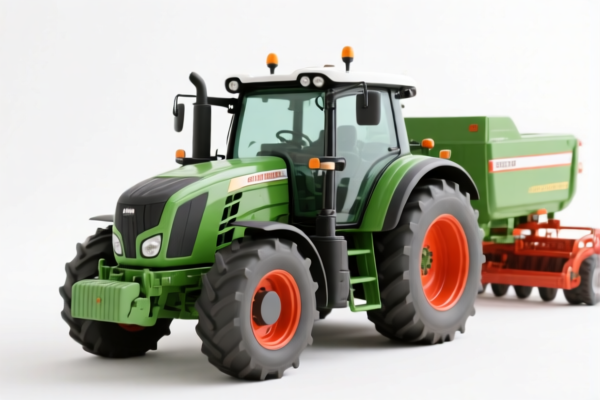
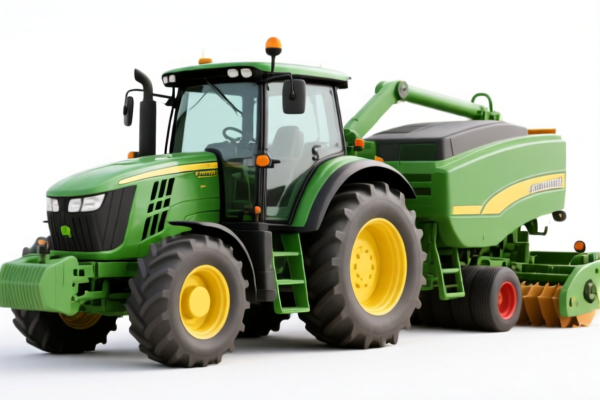

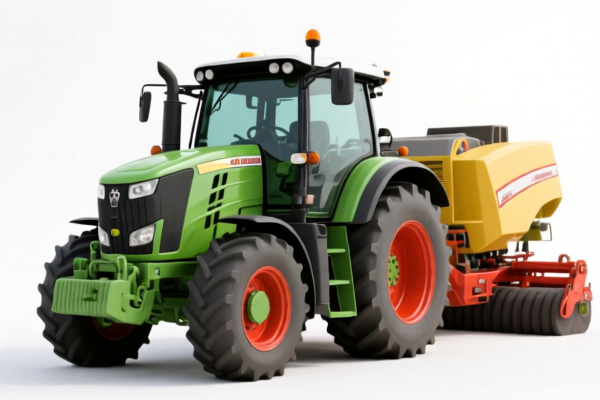
AI Analysis
🚜 Agricultural Use Machinery & Equipment
🌐 HS Code Reference & Clearance Guide | 2026 Latest Tariff Analysis | Professional Customs Strategy
📌 Part 1: Product Definition & Classification: What Exactly is "Agricultural Use"?
"Agricultural Use" is a broad functional description applied to machinery, tools, and equipment designed for farming, gardening, or forestry purposes. In international trade, this term is not a specific product name but a functional category. Customs authorities require specific形态 (form/shape) and function to classify these items accurately.
Since the input "Agricultural Use" lacks specific mechanical details (e.g., is it a plow? a harvester? a sprayer?), we apply the "Bottom-Up/Dump Category Principle" (兜底类目原则). This means we look for HS Codes that serve as catch-all categories for agricultural machinery where no more specific description fits.
⚠️ Key Distinction:
- If the item is a specific machine (e.g., a combine harvester), it falls under precise codes like 8433.
- If the item is miscellaneous agricultural equipment not listed elsewhere, it falls under "Other" (其他) subheadings in Chapter 84.
- Conflict Check: No material conflicts (e.g., if it were made entirely of ceramic, it might shift to Chapter 69, but machinery is typically metal/plastic). Therefore, we assume standard metal/plastic construction.
📦 Part 2: HS Code Classification Details (2026 Latest Tariff Authority Cross-Reference)
Based on the provided data, four potential HS Codes are identified as Probable Matches (可能符合) due to the functional alignment of "Agricultural Use" and the lack of conflicting physical characteristics.
| HS Code | Product Description (Summary) | Application Scenario | Match Logic |
|---|---|---|---|
8432.29.00.60 |
Other machinery for preparing or working soil | Soil tillage, gardening tools, small tractors | Functional match: "Agriculture/Gardening/Forestry use" aligns perfectly. |
8436.80.00.60 |
Other agricultural machinery | Crop preparation, processing, or other unspecified farm tasks | Functional match: "Agricultural use" fits the broad scope of "Crop marketing preparation/use machines." |
8433.53.00.00 |
Threshing or cleaning machinery | Harvesting, threshing, cleaning, sorting produce | Functional match: High alignment with harvesting and post-harvest processing. |
8433.59.00.90 |
Other threshing or cleaning machinery | Miscellaneous harvesting/cleaning equipment not covered above | Functional match: Catch-all for harvesting/cleaning machinery. |
🔍 Important Note:
- All four codes fall under the "Other" (其他) or Sub-Catch-all categories within Chapter 84.
- They are marked as "Probable Match" (可能符合) because "Agricultural Use" is extremely vague. Without knowing the exact shape or specific mechanical action, we rely on the highest probability of functional intent.
- No Material Conflict: Assuming standard industrial materials, these codes are viable.
💰 Part 3: 2026 Latest Tariff Rate Breakdown (Including Surcharges & Policy Add-ons)
✅ Applicable Country: United States (US)
✅ Origin: China (CN)
✅ Effective Date: From Nov 10, 2025 (and subsequent imports)
🎯 1. HS Codes: 8432.29.00.60, 8436.80.00.60, 8433.53.00.00, 8433.59.00.90
For all four identified HS Codes, the tariff structure is identical due to their origin (China) and the current US trade policy.
| Item | Content |
|---|---|
| Base Tariff | 0.0% (Ad Valorem) |
| Section 301 Surcharge | +25.0% (USITC Footnote for Chinese goods) |
| Section 122 Tariff | +10.0% (Specific provision for certain agricultural/mechanical imports) |
| Total Effective Rate | 35.0% |
| Tax Calculation | CIF Value × 35% |
| De Minimis Eligibility | ❌ Not Eligible (High tariff rate excludes small package exemptions) |
| Legal Basis Path | USITC:8432/8433/8436 → Section 301: 25% → Section 122: 10% |
📌 Explanation:
- Base Rate (0%): Most machinery for soil preparation, harvesting, or general agricultural use has a low base duty.
- Section 301 (25%): This is the primary tariff on Chinese mechanical goods under the US-China trade war framework.
- Section 122 (10%): This additional 10% tariff applies specifically to certain agricultural and related mechanical items, further increasing the cost.
- Total 35%: This is a significant cost factor. Importers must factor this into their landed cost calculations.
🛠️ Part 4: Practical Customs Clearance Advice (Real-World Pitfall Avoidance)
✅ 1. Required Documentation Checklist (Non-Negotiable)
| Document | Mandatory? | Description |
|---|---|---|
| ✅ Detailed Product Specification | ✔️ | Must specify: Type of machine, function (e.g., "Soil Tiller," "Harvester"), dimensions, weight. |
| ✅ Photos (Clear & Labeled) | ✔️ | Show the machine from all angles, including nameplates, control panels, and any attachments. |
| ✅ Commercial Invoice | ✔️ | Clearly state: "Agricultural Machinery for [Specific Use], Origin: China." |
| ✅ Packing List | ✔️ | Detail each unit, ensuring no ambiguity about what constitutes a "set." |
| ✅ Certification (if applicable) | ✔️ | EPA (Environmental Protection Agency) for engines; UL/CE for electrical components. |
✅ 2. Declaration Strategy (Key Mantra)
🔥 “Be Specific, Don’t Be Vague! ‘Agricultural Use’ is not a product name!”
| Scenario | Correct Declaration | Wrong Practice |
|---|---|---|
| Vague Input | Provide the exact model and specific function (e.g., "Rotary Tiller for Soil Preparation"). | Simply writing "Agricultural Use" → High risk of rejection or reclassification. |
| Multi-Function Machine | Declare based on the primary function (e.g., if it tills AND harvests, declare as "Soil Preparation" if that’s the main intent). | Listing multiple functions without a primary HS Code → Confusion. |
| Accessories | If shipped with the machine, declare as part of the main unit if it doesn’t have a separate value/function. | Splitting accessories into separate lines → Could trigger different tariff treatments or inspection delays. |
✅ 3. Special Case Handling
| Scenario | Handling Advice |
|---|---|
| OEM Custom Machinery | Provide client design drawings and order confirmation to prove the specific agricultural function. |
| Used Machinery | Ensure it meets US EPA emission standards for used agricultural equipment; may require additional inspection. |
| High-Value Items | Consider Advance Ruling (Pre-classification) from CBP to lock in the HS Code and avoid post-import audits. |
| Material Conflicts | If the machine contains significant non-metal parts (e.g., large ceramic components), re-evaluate Chapter 69 or 85. |
🌍 Part 5: Global Market Comparison (2026 Update)
| Country/Region | Recommended HS Code (General Agri-Machinery) | Tariff (China Origin) | Certification Requirements | Notes |
|---|---|---|---|---|
| 🇺🇸 USA | 8432.29.00.60 / 8433.53.00.00 etc. |
35% (0% Base + 25% Sec 301 + 10% Sec 122) | EPA (for engines), UL (electric) | Highest barrier due to Section 122 & 301. |
| 🇨🇳 China | 8432.29.00.00 / 8433.53.00.00 |
5% - 10% | CCC (if applicable) | Lower entry barrier for domestic use. |
| 🇪🇺 EU | 8432 / 8433 series |
0% - 4.5% | CE Marking, Machinery Directive | No additional trade war tariffs. |
| 🇯🇵 Japan | 8432 / 8433 series |
0% - 3% | PSE (for electric parts) | Free Trade Agreement benefits may apply. |
| 🇦🇺 Australia | 8432 / 8433 series |
5% | RCM (for electric parts) | No major surcharges. |
📌 Conclusion:
- The US market is the most expensive for Chinese agricultural machinery due to the 35% combined tariff.
- EU and Asian markets offer significantly lower duty rates but require strict compliance with CE or local safety standards.
- Strategy: For US-bound goods, consider Value Engineering (reducing CIF value legally) or Supply Chain Diversification (e.g., final assembly in a third country, if rules of origin allow).
📌 Part 6: Common Errors & Pitfall Guide (Lessons Learned)
❌ Error 1: Using "Agricultural Use" as the Product Name in the commercial invoice.
👉 Consequence: Customs may reject the declaration for being too vague, leading to delays, fines, or re-shipment.
❌ Error 2: Misclassifying a Harvester as a Soil Tiller to avoid specific regulations.
👉 Consequence: If inspected, the mismatch will result in penalties and back-taxes.
❌ Error 3: Ignoring EPA Regulations for engines/machinery.
👉 Consequence: Equipment may be seized or destroyed at the port if it doesn’t meet US environmental standards.
❌ Error 4: Assuming all agricultural tools are exempt from Section 301.
👉 Consequence: Section 301 (25%) applies to most machinery in Chapter 84. Only specific exemptions exist, and they are narrow.
✅ Correct Approach:
"Rotary Tiller, Model XYZ, 15HP Gasoline Engine, for Soil Preparation, Origin: China, Certified by EPA"
🎯 Part 7: Conclusion: Precision is Profit
🎯 Remember the Mantra:
🔹 "Vague Name, High Risk! Specific Function, Clear Path!"
🔹 "35% US Tariff is Real! Plan Your Margin!"
🔹 "EPA & CE are Key! Compliance Saves Ships!"
📌 Pro Tip:
If your agricultural machinery is originating from Vietnam, Mexico, or Thailand, you may be eligible for lower or zero tariffs under USMCA or other FTAs.
For US imports, always apply for a CBP Advance Ruling if the product is complex or high-value.
📣 Immediate Action:
📞 Contact a licensed Customs Broker + Provide Detailed Specs + Apply for EPA/UL Certifications
🚀 Ensure your agricultural equipment clears smoothly, avoids 35% surprises, and maximizes your profit!
✨ Professional Clearance Starts with Precise Classification!
💼 Every percentage point of tax matters!
Customer Reviews
About HS Code Classification
The Harmonized System (HS) is an internationally standardized nomenclature developed by the World Customs Organization (WCO) to classify traded products. Over 200 countries use the HS system as the basis for customs tariffs, trade statistics, and import/export regulations.
Each HS code follows a hierarchical structure:
- Chapter (2 digits) — Broad category of goods (e.g., Chapter 84: Machinery and Mechanical Appliances)
- Heading (4 digits) — More specific grouping within the chapter
- Subheading (6 digits) — Internationally standardized breakdown, used by all WCO member countries
- National subdivisions (8-10 digits) — Country-specific extensions for further classification, such as US HTSUS 10-digit codes
Correct HS code classification is essential for smooth customs clearance, accurate duty payment, and compliance with trade regulations. Misclassification can lead to customs delays, overpayment of duties, or penalties.
When importing from CN to US, the applicable tariff rates may include:
- Most-Favored-Nation (MFN) rate — The standard duty rate applied to WTO members
- General rate — Applied to countries without trade agreements
- Trade remedy duties — Additional tariffs such as Section 301 (anti-dumping), Section 232 (national security), or countervailing duties
The information provided on this page is for reference purposes only. For official classification, please consult with your local customs authority or a licensed customs broker.