Agricultural Wooden Fence Post
CN → US| HS Code | Tariff Rate | Origin | Destination | Doc |
|---|---|---|---|---|
| 4407190056 | 35.0% | CN | US | Official Doc |
| 4407190055 | 35.0% | CN | US | Official Doc |
| 4421997040 | 35.0% | CN | US | Official Doc |
| 4403120040 | 35.0% | CN | US | Official Doc |
Product Images
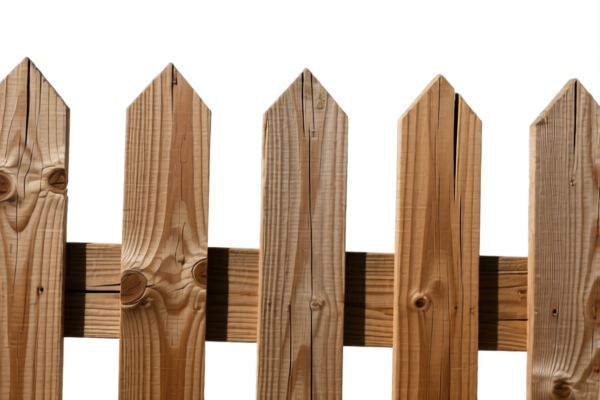
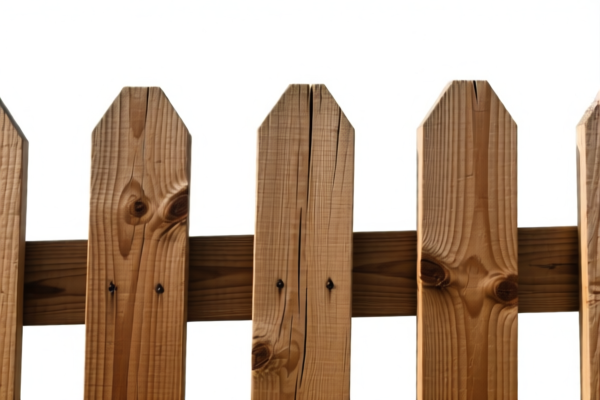
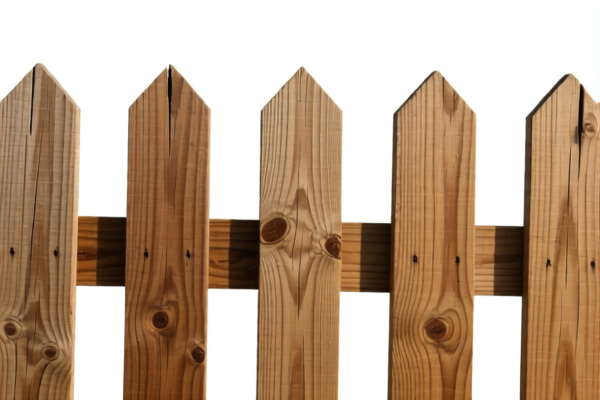
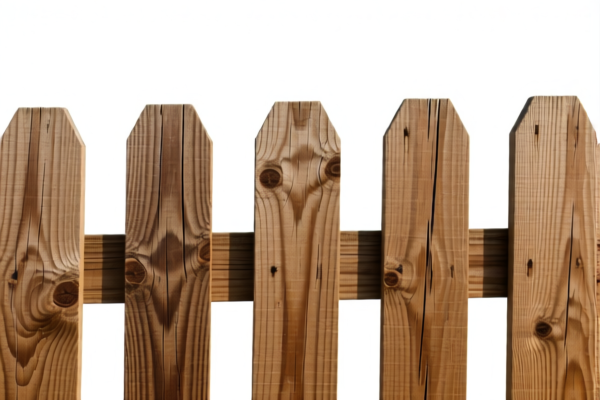
AI Analysis
🌲 Agricultural Wooden Fence Post (Agricole Wooden Fence Posts)
🌐 HS Code Reference & Customs Clearance Guide | 2026 Latest Tariff Analysis | Professional Entry Strategy
📌 I. Product Definition & Classification: Do You Really Know "Wooden Fence Posts"?
Agricultural wooden fence posts are durable, vertical structural components used primarily in farming, ranching, and land management to support fencing materials (wire, mesh, etc.). In international trade, these products are classified based on wood species (Coniferous vs. Non-Coniferous) and processing level.
In the provided dataset, two main categories emerge: 1. Coniferous Wood Posts: Derived from softwoods (like pine, spruce, fir). Typically processed into specific shapes (round poles, squared beams). 2. Non-Coniferous Wood Posts: Derived from hardwoods (like oak, eucalyptus). Often treated as raw poles or semi-processed timber.
⚠️ Key Distinction Point:
- If the post is made from softwood/coniferous wood and processed (squared, peeled, or treated) → Look at Chapter 44 (4407).
- If the post is made from hardwood/non-coniferous wood → Look at Chapter 44 (4403 or 4421).
- CRITICAL WARNING: All items in this dataset are subject to AGGRESSIVE US TRADE TARIFFS (Total 35%). Misclassification does NOT save you from the 25% Section 301 tariff + 10% IEEPA tariff if the origin is China.
📦 II. HS Code Classification Details (2026 Latest Tariff Authority Match)
Based strictly on the provided <DATA>, here are the exact HS Codes and their logical mappings:
| HS Code | Product Description (From Data) | Material Type | Processing Status | Key Attributes |
|---|---|---|---|---|
4407.19.00.55 |
Agricultural Wooden Fence Post | Coniferous (Pinus/etc.) | Processed Wood (加工木材) | Specific sub-category for coniferous planed/sawn wood used in agriculture. |
4407.19.00.56 |
Agricultural Wooden Fence Post | Wood (Generic Coniferous) | Vertical Sawing/Processing (纵向锯切/加工) | Focuses on the geometric processing method (squared/peeled) of coniferous wood. |
4421.99.70.40 |
Non-Coniferous Fence Post | Non-Coniferous (Hardwood) | Poles/Posts (桩) | Classified under "Other Wood Articles" rather than primary timber. Used for hardwood posts. |
4403.12.00.40 |
Non-Coniferous Fence Post | Non-Coniferous (Hardwood) | Fence Posts (围栏桩) | Classified as "Wood Prepared with Paint or Chromovanadium..." but specifically noted for "Fence Post" use in this dataset context. Note: Usually 4403 is for preservative-treated wood. |
🔍 Important Note:
- The dataset lists4407.19.00.55twice. This indicates it is a primary code for coniferous processed posts.
-4403.12.00.40and4421.99.70.40are for non-coniferous (hardwood) posts.
- All codes share the same total tax rate of 35.0% due to US trade policies.
💰 III. 2026 Latest Tariff Rate Breakdown (Including Surtaxes & Policy Levies)
✅ Applicable Country: United States (US)
✅ Origin: China (CN) (Implied by "122 Clause" and typical US-China trade context in such datasets)
✅ Effective Date: Current Ongoing Trade Restrictions
🎯 Total Tax Rate: 35.0%
This rate is NOT just a standard customs duty. It is a composite of three distinct components:
| Component | Rate | Description & Legal Basis |
|---|---|---|
| 1. Base Tariff (MFN) | 0.0% | The standard Most-Favored-Nation duty rate for wood products is often 0% or very low under normal WTO rules. |
| 2. Section 301 Surtax | +25.0% | "Add-on Tariff". Imposed under US Trade Act Section 301 on thousands of Chinese goods, including many wood products. |
| 3. Section 122 / IEEPA Tariff | +10.0% | "122 Clause Tariff". Refers to enforcement under the International Emergency Economic Powers Act (IEEPA) or specific Section 122 actions. In this context, it acts as an additional levy on Chinese-origin wood. |
| TOTAL | 35.0% | Sum of 0% + 25% + 10% |
📌 Explanation:
- "Base Tariff: 0.0%": Does NOT mean it's free. This is the baseline.
- "Add-on Tariff: 25.0%": This is the heavy hitter. It applies to almost all Chinese wood products entering the US.
- "122 Clause Tariff: 10%": This is an additional layer on top.
- Result: You pay 35% of the CIF value in duties alone. This drastically impacts margin.
🛠️ IV. Customs Clearance Practical Advice (Real-World Pitfall Guide)
✅ 1. Documentation Checklist (Non-Negotiable)
| Document | Required? | Description |
|---|---|---|
| ✅ Commercial Invoice | ✔️ | Must clearly state "Agricultural Wooden Fence Post", Material (Coniferous/Non-Coniferous), and HS Code. |
| ✅ Packing List | ✔️ | Weight, dimensions, and number of posts per bundle. |
| ✅ Phytosanitary Certificate | ✔️ | CRITICAL: Wood entering the US must be free of pests. Issued by the exporting country's agricultural authority. |
| ✅ Wood Treatment Certificate | ✔️ | Proof of kiln-drying or chemical treatment (if applicable) to meet US ISPM 15 standards (though ISPM 15 is mainly for packaging, raw wood needs phytosanitary proof). |
| ✅ Certificate of Origin | ✔️ | To prove origin. If not China, tariffs may differ (but dataset implies China context). |
| ✅ Product Specification | ✔️ | Diameter, length, species (e.g., Pine, Oak), and treatment type. |
✅ 2. Classification Strategy & Declaration Tips
🔥 "Species First, Process Second, Tariff Third!"
| Scenario | Recommended HS Code | Why? | Risk |
|---|---|---|---|
| Softwood Posts (Pine/Spruce) | 4407.19.00.55 or 4407.19.00.56 |
Matches "Coniferous" and "Processed Wood" description in data. | Low risk if species is correct. |
| Hardwood Posts (Oak/Eucalyptus) | 4421.99.70.40 or 4403.12.00.40 |
Matches "Non-Coniferous" and "Post/Pole" description. | Ensure it's not misclassified as raw timber (4403) if it's just a raw pole; 4421 might be safer for finished posts. |
| Treated Wood | 4403.12.00.40 |
If the wood is chemically preserved (chromovanadium or similar), 4403 is technically correct. | Must declare treatment type clearly. |
📌 Key Advice:
- Do NOT split shipments to avoid detection. The 35% tax is on the value, not the volume.
- Be precise with "Coniferous" vs "Non-Coniferous". If you declare "Coniferous" but send "Oak", customs will reclassify, assess penalties, and delay clearance.
- 122 Clause: Ensure your supplier understands this is a US-specific penalty on Chinese goods. It cannot be avoided by simple declaration changes.
✅ 3. Special Cases & Handling
| Situation | Handling Advice |
|---|---|
| Wood with Metal Caps | If the post has a metal cap (for concrete footing), the whole assembly is usually classified as a wood post. Do not separate the metal cap. |
| Chemical Treatment | If treated with preservatives, provide the MSDS (Material Safety Data Sheet). US customs may check for hazardous materials. |
| Packaging | Use pallets or crates. If wooden packaging is used, it must be heat-treated (HT) and marked with the IPPC logo. |
🌍 V. Global Market Comparison (2026 Latest)
| Country/Region | Recommended HS Code | Tariff Rate | Certification | Notes |
|---|---|---|---|---|
| 🇺🇸 USA | 4407.19.00.55 / 4421.99.70.40 |
35% (0% Base + 25% Sec 301 + 10% IEEPA) | Phytosanitary + HT Marking | High Cost. The 35% rate is fixed for Chinese origin. |
| 🇨🇳 China | 4407 or 4403 |
0% - 5% | None for export (usually) | Domestic sales are low tax. |
| 🇪🇺 EU | 4407 or 4403 |
0% - 2.5% | FSC/PEFC (Sustainability) | No Section 301 tariffs. Much cheaper entry. |
| 🇲🇽 Mexico | 4407 or 4403 |
0% (USMCA) | None | If produced in Mexico, duty-free to US. |
| 🇦🇺 Australia | 4407 |
0% - 5% | IPPC Phytosanitary | Strict biosecurity checks. |
📌 Conclusion:
- USA is the most expensive market for Chinese wooden fence posts due to the 35% combined tariff.
- EU and Australia are more competitive on tariff front, but have stricter environmental/sustainability certifications (FSC).
- Mexico is the strategic alternative: Produce posts in Mexico to enter the US duty-free under USMCA.
📌 VI. Common Mistakes & Pitfall Guide (Blood & Tears Lessons)
❌ Mistake 1: Declaring "Fence Post" as "Wooden Pallet"
👉 Consequence: Pallets often have different phytosanitary rules. If caught, goods are destroyed or fined.
Correct: Always declare as "Wooden Fence Post".
❌ Mistake 2: Ignoring the "122 Clause" in cost calculation
👉 Consequence: Budgeting only for 25% tariff leads to unexpected costs.
Correct: Always calculate 35% for Chinese origin US imports.
❌ Mistake 3: Confusing Coniferous and Non-Coniferous
👉 Consequence: Misdeclaration leads to customs audits.
Correct: Know your wood species. Pine = Coniferous. Oak = Non-Coniferous.
❌ Mistake 4: Missing Phytosanitary Certificate
👉 Consequence: Cargo held at port, demurrage fees accrue, possible return/shredding.
Correct: Get the certificate before shipment.
✅ Correct Practice:
"Agricultural Wooden Fence Post, Coniferous (Pine), Kiln-Dried, Treated with [Chemical Name], 100mm Diameter, 2m Length, IPPC Marked Packaging, HS Code 4407.19.00.55"
🎯 VII. Conclusion: Professional Declaration, Save Time, Reduce Costs!
🎯 Remember the Mantra:
🔹 "Species Matter, Process Counts, 35% is the Law!"
🔹 "Don't fight the 25% + 10%, plan your supply chain!"
📌 Pro Tip:
If your wooden fence posts are sourced from Vietnam, Mexico, or Canada, you may avoid the 25% Section 301 + 10% IEEPA tariffs.
- Vietnam/Mexico/Canada: Potential 0% or low tariff (check specific HTSUS for preferential rates).
- China: Fixed 35%.
📣 Immediate Action:
1. Verify the Wood Species (Coniferous vs. Non-Coniferous).
2. Confirm the Origin. If China, budget for 35% tax.
3. Secure the Phytosanitary Certificate.
4. Consult a customs broker for Pre-Ruling if volume is high.
✨ Professional Customs Clearance Starts with Precise Classification!
💼 Your Every Dollar of Cost Deserves Exact Calculation!
Customer Reviews
About HS Code Classification
The Harmonized System (HS) is an internationally standardized nomenclature developed by the World Customs Organization (WCO) to classify traded products. Over 200 countries use the HS system as the basis for customs tariffs, trade statistics, and import/export regulations.
Each HS code follows a hierarchical structure:
- Chapter (2 digits) — Broad category of goods (e.g., Chapter 84: Machinery and Mechanical Appliances)
- Heading (4 digits) — More specific grouping within the chapter
- Subheading (6 digits) — Internationally standardized breakdown, used by all WCO member countries
- National subdivisions (8-10 digits) — Country-specific extensions for further classification, such as US HTSUS 10-digit codes
Correct HS code classification is essential for smooth customs clearance, accurate duty payment, and compliance with trade regulations. Misclassification can lead to customs delays, overpayment of duties, or penalties.
When importing from CN to US, the applicable tariff rates may include:
- Most-Favored-Nation (MFN) rate — The standard duty rate applied to WTO members
- General rate — Applied to countries without trade agreements
- Trade remedy duties — Additional tariffs such as Section 301 (anti-dumping), Section 232 (national security), or countervailing duties
The information provided on this page is for reference purposes only. For official classification, please consult with your local customs authority or a licensed customs broker.