Air Blower Gun
CN → US| HS Code | Tariff Rate | Origin | Destination | Doc |
|---|---|---|---|---|
| 7326908688 | 87.9% | CN | US | Official Doc |
| 7326190080 | 87.9% | CN | US | Official Doc |
| 8467920090 | 17.5% | CN | US | Official Doc |
| 8467195090 | 35.0% | CN | US | Official Doc |
| 9304004000 | 17.5% | CN | US | Official Doc |
Product Images
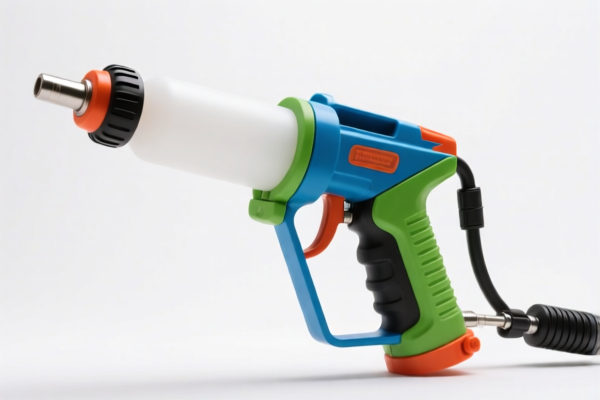
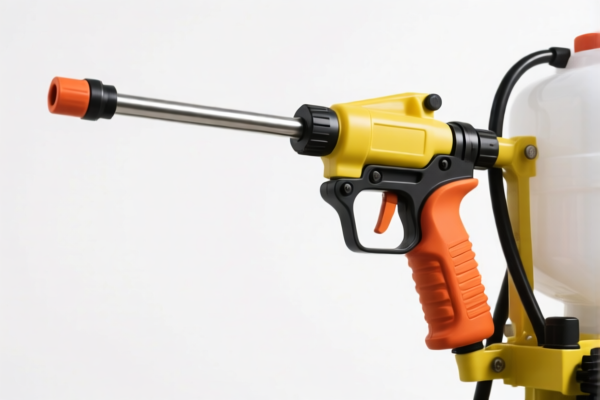
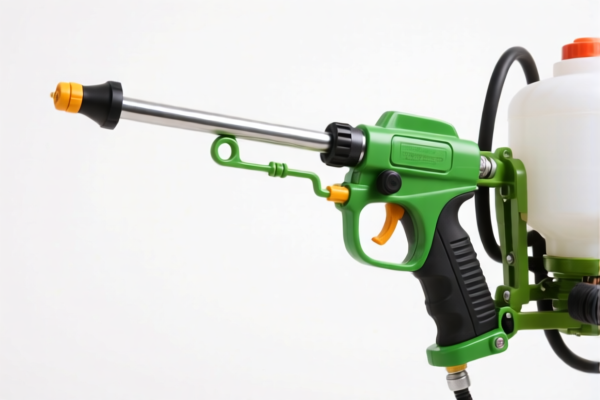

AI Analysis
🔫 Air Blower Gun (Pneumatic Blowing Gun)
🌐 HS Code Reference & Customs Clearance Guide | 2026 Latest Tariff Analysis | Professional Entry Strategy
📌 I. Product Definition & Classification: Do You Really Understand "Air Blower Gun"?
An Air Blower Gun (often referred to as a Pneumatic Blowing Gun or Dust Blower) is a handheld tool powered by compressed air. It is primarily used in industrial, automotive, and manufacturing settings to clean debris, dust, and chips from workpieces, machinery, and hard-to-reach areas.
In international trade, its classification is controversial and highly dependent on the material composition and the specific design intent. It sits at the intersection of Tools (Chapter 84) and Articles of Iron/Steel (Chapter 73).
⚠️ Key Classification Pivot Point:
- Is it considered a pneumatic tool part/accessory → Chapter 84?
- Is it considered an iron/steel article (generic metal object) → Chapter 73?
- Note: While some models resemble "air guns" used for marking or cleaning, they are generally not classified as weapons (Chapter 93) unless specifically designed to project projectiles for offensive/defensive purposes, which is rare for standard industrial blowers.
📦 II. HS Code Classification Details (2026 Latest Tariff Authority Cross-Reference)
Based on the provided data, here are the five potential HS Code classifications for Air Blower Guns, ranging from tool parts to generic steel articles.
| HS Code | Product Description | Application Scenario | Tax Rate (CN→US) |
|---|---|---|---|
| 8467.92.00.90 | Parts/Accessories of Pneumatic Tools | Designed specifically as a nozzle or accessory for pneumatic systems; focuses on "pneumatic tool function." | 17.5% |
| 8467.19.50.90 | Other Pneumatic Tools | Classified as a standalone "Pneumatic Tool" with air as the core动力 source; falls under "other" category for pneumatic tools. | 35.0% |
| 7326.90.86.88 | Other Articles of Iron or Steel | Made of metal (steel/iron); considered a generic metal article when tool-specific attributes are weak. | 87.9% |
| 7326.19.00.80 | Other Articles of Iron/Steel (Fallback) | Metal or plastic construction; treated as a "catch-all" category for steel articles not specified elsewhere. | 87.9% |
| 9304.00.40.00 | Other Arms (Reference Only) | Note: Based on QA logic for "air guns," this is a rare/high-risk classification if customs perceives it as a projectile device. Not recommended for standard industrial blowers. | 17.5% |
🔍 Critical Insight:
- Lowest Tax Strategy: Aim for 8467.92.00.90 (17.5%) by proving it is a dedicated part/accessory of a pneumatic tool system.
- Highest Tax Risk: 7326. Series (87.9%). This occurs if customs views the product merely as a "metal tube" without sufficient technical documentation linking it to a specific tool system.
- Middle Ground: 8467.19.50.90 (35.0%) treats it as a standalone tool, which is more accurate than 7326 but more expensive than 8467.92.
💰 III. 2026 Latest Tariff Rate Breakdown (Including Surcharges & Policy Add-ons)
✅ Destination: United States (US)
✅ Origin: China (CN)
✅ Effective Date: 2025/2026 Import Timeline
🎯 1. 8467.92.00.90 — Parts/Accessories of Pneumatic Tools (Recommended)
| Item | Details |
|---|---|
| Basic Tariff | 0.0% |
| Section 301 Surcharge | +7.5% |
| 122 Clause Surcharge | +10% (For steel/aluminum/copper articles, if applicable) |
| Total Tax Rate | 17.5% |
| Tax Calculation | CIF Value × 17.5% |
| De Minimis Eligibility | ❌ No (Subject to Section 301/122 rules) |
| Legal Basis Path | USITC:8467.92.00.90 → Section 301: 7.5% → 122 Clause: 10% |
📌 Explanation:
- 0% Base: Pneumatic tool parts often enjoy low base rates.
- 7.5% Section 301: Standard additional tariff for Chinese goods in this HTS category.
- 10% Clause 122: If the blower gun is made of steel/aluminum, it triggers the "Steel/Aluminum/Copper Articles" surcharge.
- Why it wins: 17.5% is significantly lower than the 87.9% for generic steel goods.
🎯 2. 8467.19.50.90 — Other Pneumatic Tools
| Item | Details |
|---|---|
| Basic Tariff | 0.0% |
| Section 301 Surcharge | +25.0% |
| 122 Clause Surcharge | +10% |
| Total Tax Rate | 35.0% |
| Tax Calculation | CIF Value × 35.0% |
| Legal Basis Path | USITC:8467.19.50.90 → Section 301: 25% → 122 Clause: 10% |
📌 Explanation:
- Classified as a "tool" rather than a "part."
- Section 301 surcharge jumps to 25% for standalone pneumatic tools.
- Use case: If the product is sold as a complete, standalone unit with no accompanying tool system.
🎯 3. 7326.90.86.88 & 7326.19.00.80 — Other Articles of Iron/Steel
| Item | Details |
|---|---|
| Basic Tariff | 2.9% |
| Section 301 Surcharge | +25.0% |
| 122 Clause Surcharge | +50% (Steel/Aluminum/Copper Articles) |
| Total Tax Rate | 87.9% |
| Tax Calculation | CIF Value × 87.9% |
| Legal Basis Path | USITC:7326.90.86.88 → Section 301: 25% → 122 Clause: 50% |
📌 Warning:
- This is the highest penalty tier.
- It applies if customs determines the product is not a tool/part but merely a metal object.
- The 50% Clause 122 is the killer here, applied to steel articles.
- Avoid this classification at all costs unless you have no technical documentation.
🎯 4. 9304.00.40.00 — Other Arms (Reference Only)
| Item | Details |
|---|---|
| Basic Tariff | 0.0% |
| Section 301 Surcharge | +7.5% |
| 122 Clause Surcharge | +10% |
| Total Tax Rate | 17.5% |
| Legal Basis Path | USITC:9304.00.40.00 → Section 301: 7.5% → 122 Clause: 10% |
📌 Note:
- While the rate is low (17.5%), classifying a cleaning blower as a "weapon/arm" is highly risky and may trigger security reviews, delays, or rejection.
- Only use if explicitly advised by legal counsel for specific niche products.
🛠️ IV. Customs Clearance Practical Advice (Real-World Pitfall Guide)
✅ 1. Documentation Checklist (Essential)
| Document | Required? | Purpose |
|---|---|---|
| ✅ Product Specification Sheet | ✔️ | Must state: "Pneumatic Air Blower," "Air Powered," "Industrial Cleaning Tool." |
| ✅ Technical Diagram | ✔️ | Show air inlet, trigger mechanism, and nozzle. Prove it connects to pneumatic systems. |
| ✅ Commercial Invoice | ✔️ | Description: "Pneumatic Blowing Gun, Part for Air Tools" (Avoid "Weapon," "Gun," or "Steel Pipe"). |
| ✅ Material Declaration | ✔️ | Specify metal type (e.g., Zinc Alloy, Steel, Plastic). Critical for 122 Clause determination. |
| ✅ OEM/ODM Agreement | ✔️ | If applicable, prove it's a standardized tool part, not a custom metal fabrication. |
✅ 2. Declaration Strategy (Key Mantras)
🔥 "Pneumatic Part, Not Steel Pipe; Tool Function, Not Generic Object!"
| Scenario | Correct Declaration | Incorrect Declaration |
|---|---|---|
| Metal Blower Gun | 8467.92.00.90 (Pneumatic Tool Part) |
7326.90.86.88 (Steel Article) → 87.9% |
| Plastic Blower Gun | 8467.92.00.90 or 7326 if no pneumatic link |
Misclassified as "Plastic Article" → High Risk |
| Standalone Unit | 8467.19.50.90 (Pneumatic Tool) |
7326 → 87.9% |
| With Nozzle/Adapter | 8467.92.00.90 (Accessory) |
9304 (Weapon) → Security Risk |
✅ 3. Special Considerations
| Situation | Handling Advice |
|---|---|
| Material Mix (Metal + Plastic) | Emphasize the pneumatic function over material. If >50% value is in the pneumatic mechanism, argue for Chapter 84. |
| "Air Gun" Terminology | NEVER use the word "Gun" alone in the description if it can be confused with firearms. Use "Blowing Gun," "Dust Blower," or "Air Nozzle." |
| 122 Clause Trigger | If made of steel, expect the 10% or 50% surcharge. To avoid 50%, ensure it's classified as a tool part (7.5% Section 301) rather than a generic steel article (50% Clause 122). |
| Customs Audit | Be prepared to show that the item is not a generic plumbing pipe or decorative item. It must have a trigger valve and pneumatic interface. |
🌍 V. Global Market Comparison (2026 Latest)
| Country/Region | Recommended HS Code | Tariff (CN→Region) | Key Certification | Remarks |
|---|---|---|---|---|
| 🇺🇸 USA | 8467.92.00.90 |
17.5% | None | Best option. Avoids 87.9% steel tariff. |
| 🇨🇳 China | 8467.92.00.90 |
0-6% | None | Low import duty. |
| 🇪🇺 EU | 8467.92.00.90 |
0-4% | CE | No Section 301/122 equivalent. |
| 🇬🇧 UK | 8467.92.00.90 |
0-4% | UKCA | Post-Brexit rules apply, but low tariffs for tools. |
📌 Conclusion:
- USA is the most complex market due to Section 301 and Clause 122.
- Classifying as8467.92.00.90saves you ~70% in taxes compared to7326.
- EU/UK are straightforward: classify as pneumatic tools/parts, pay minimal duty.
📌 VI. Common Mistakes & Pitfall Guide (Lessons Learned)
❌ Mistake 1: Using "Steel Pipe" or "Metal Tube" in the description
👉 Result: Customs reclassifies to 7326 → 87.9% Tax!
❌ Mistake 2: Omitting "Pneumatic" in the product name
👉 Result: Loses tool classification → Reverts to general metal article → 87.9% Tax!
❌ Mistake 3: Using "Air Gun" without context
👉 Result: Security alert, potential seizure, or classification under 9304 (if interpreted as weapon) → Delays!
❌ Mistake 4: Ignoring Clause 122 for steel parts
👉 Result: Paying 50% surcharge instead of 10% or 7.5%.
✅ Correct Approach:
"Pneumatic Air Blowing Gun, Zinc Alloy, Trigger Valve, Industrial Cleaning Accessory, No Projectiles, Model: ABC-123"
🎯 VII. Conclusion: Professional Declaration, Lower Costs, Faster Clearance!
🎯 Remember the Mantra:
🔹 "Pneumatic Part, Not Steel Pipe; 17.5% is the goal, 87.9% is the trap!"
🔹 "HS Code defines fate; 70% tax difference means profit or loss!"
📌 Pro Tip:
If your Air Blower Gun is made of plastic or aluminum, you may still qualify for 8467.92.00.90 (17.5%) by proving its pneumatic tool accessory status. Aluminum may avoid the higher 122 Clause penalties depending on specific USITC rulings, but steel always triggers it.
Recommendation:
📞 Contact a Professional Broker + Provide Technical Diagrams + Apply for Pre-Ruling (ISF/ACE) if high volume.
🚀 Ensure your Air Blower Gun clears customs smoothly, efficiently, and profitably!
✨ Professional Clearance Starts with Accurate Classification!
💼 Every percentage point of tax savings is pure profit!
Customer Reviews
About HS Code Classification
The Harmonized System (HS) is an internationally standardized nomenclature developed by the World Customs Organization (WCO) to classify traded products. Over 200 countries use the HS system as the basis for customs tariffs, trade statistics, and import/export regulations.
Each HS code follows a hierarchical structure:
- Chapter (2 digits) — Broad category of goods (e.g., Chapter 84: Machinery and Mechanical Appliances)
- Heading (4 digits) — More specific grouping within the chapter
- Subheading (6 digits) — Internationally standardized breakdown, used by all WCO member countries
- National subdivisions (8-10 digits) — Country-specific extensions for further classification, such as US HTSUS 10-digit codes
Correct HS code classification is essential for smooth customs clearance, accurate duty payment, and compliance with trade regulations. Misclassification can lead to customs delays, overpayment of duties, or penalties.
When importing from CN to US, the applicable tariff rates may include:
- Most-Favored-Nation (MFN) rate — The standard duty rate applied to WTO members
- General rate — Applied to countries without trade agreements
- Trade remedy duties — Additional tariffs such as Section 301 (anti-dumping), Section 232 (national security), or countervailing duties
The information provided on this page is for reference purposes only. For official classification, please consult with your local customs authority or a licensed customs broker.