Air Flow Meter
CN → US| HS Code | Tariff Rate | Origin | Destination | Doc |
|---|---|---|---|---|
| 9026104000 | 17.5% | CN | US | Official Doc |
| 8479899560 | 37.5% | CN | US | Official Doc |
| 8479896500 | 20.3% | CN | US | Official Doc |
| 8479899560 | 37.5% | CN | US | Official Doc |
| 8479899560 | 37.5% | CN | US | Official Doc |
Product Images
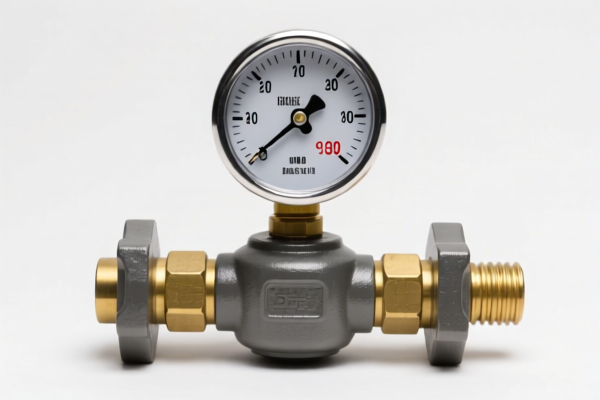
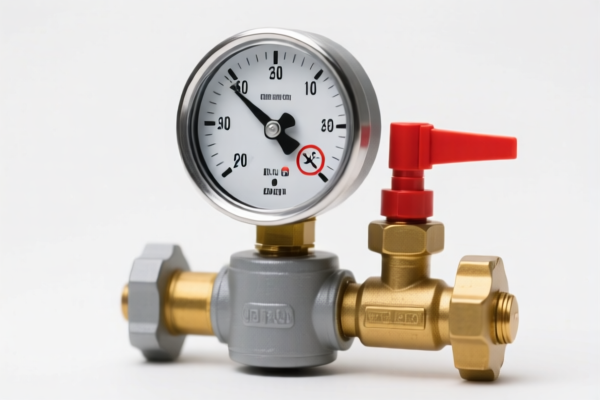
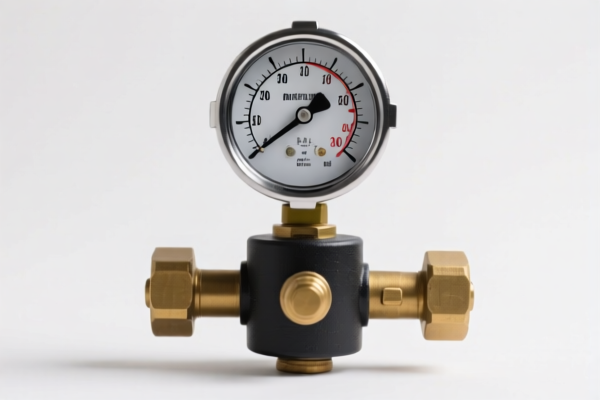
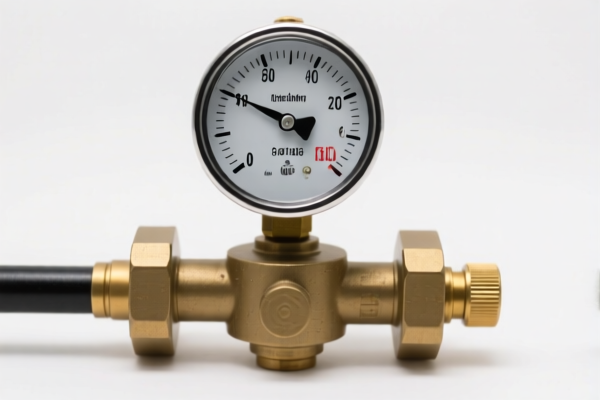
AI Analysis
🌬️ Air Flow Meter (Mass Air Flow Sensor)
🌐 HS Code Reference & Customs Clearance Guide | 2026 Latest Tariff Analysis | Professional Clearance Strategy
📌 I. Product Definition & Classification: What Exactly is an "Air Flow Meter"?
The Air Flow Meter (also known as Mass Air Flow Sensor or MAF) is a critical electronic component in modern internal combustion engines. Its primary function is to measure the volume or mass of air entering the engine to allow the engine control unit (ECU) to calculate the correct fuel injection amount.
In international trade, its classification is highly contested and depends entirely on the functional interpretation chosen by customs authorities: 1. As a Mechanical/Electrical Apparatus: Viewed as a mechanical device with independent function, potentially containing a self-contained motor (in some sensor designs). 2. As a Measurement Instrument: Viewed strictly as a device for measuring gas flow, fitting into scientific/instrumental categories. 3. As an Automotive Part: Viewed as a spare part for automotive repair and maintenance.
⚠️ Key Distinction Point:
- If classified as a Measurement Instrument (9026): Lower base duty, but subject to specific trade remedies.
- If classified as an Automotive Part/Machinery (8479): Higher duties due to US-China trade tensions (Section 301 + IEEPA).
- Risk: Misclassification can lead to significant tariff differences (17.5% vs. 37.5%).
📦 II. HS Code Classification Details (2026 Latest Tariff Authority Comparison)
Based on the provided data, there are three distinct HS Codes applied to Air Flow Meters, resulting in two different total tax rates.
| HS Code | Product Description & Rationale | Applicable Scenario | Total Tax Rate |
|---|---|---|---|
8479.89.65.00 |
Mechanical/Electrical Apparatus: Classified as a mechanical device with independent function, potentially involving self-contained electric motors. | General mechanical components, non-specific measurement tools | 20.3% |
9026.10.40.00 |
Measurement Instrument: Specifically for instruments measuring or checking the flow of liquids or gases. | Most Accurate Technical Fit: Directly measures air/gas flow | 17.5% |
8479.89.95.60 |
Automotive Part / Other Machinery: Classified as a functional machine for automotive repair/maintenance or other general machinery. | Spare parts for car engines, automotive aftermarket parts | 37.5% |
🔍 Critical Reminder:
- The same product can be assigned different HS codes depending on whether the declarant emphasizes its measurement function (9026) or its mechanical/automotive nature (8479).
-9026.10.40.00offers the lowest tax burden (17.5%) but requires strong justification that the device is primarily a "flow measuring instrument."
-8479.89.95.60is the highest tax burden (37.5%) and is often applied if customs view it strictly as a "car part" or "other machinery" not specifically listed elsewhere.
💰 III. 2026 Latest Tariff Rate Breakdown (Including Surcharges & Policy Add-ons)
✅ Applicable Country: United States (US)
✅ Origin: China (CN)
✅ Effective Time: 2025/2026 Import Period
🎯 1. 9026.10.40.00 —— Instruments for Measuring Gas Flow (Lowest Cost)
| Item | Content |
|---|---|
| Base Duty | 0.0% |
| USITC Surcharge (Section 301) | +7.5% |
| IEEPA Surcharge (China-specific) | +10% |
| Total Tax Rate | 17.5% |
| Tax Calculation | CIF Value × 17.5% |
| De Minimis Exemption? | ❌ Not Applicable (High tariff threshold excludes de minimis benefits in many cases) |
| Legal Basis Path | USITC:9026.10.40.00 → USITC:301.301.07 (7.5%) → IEEPA:9903.01.10 (10%) |
📌 Explanation:
- Base Duty 0%: Under HTSUS, flow measurement instruments for gases often carry 0% base duty.
- Section 301 (7.5%): Applies to specific machinery/instrument categories from China.
- IEEPA (10%): Applies to all Chinese-origin goods under the International Emergency Economic Powers Act.
- Why it’s better: Despite the surcharges, the 0% base rate makes the total effective duty significantly lower than the 8479 codes.
🎯 2. 8479.89.65.00 —— Other Mechanical/Electrical Apparatus (Medium Cost)
| Item | Content |
|---|---|
| Base Duty | 2.8% |
| USITC Surcharge (Section 301) | +7.5% |
| IEEPA Surcharge (China-specific) | +10% |
| Total Tax Rate | 20.3% |
| Tax Calculation | CIF Value × 20.3% |
| De Minimis Exemption? | ❌ Not Applicable |
| Legal Basis Path | USITC:8479.89.65.00 → USITC:301.301.07 (7.5%) → IEEPA:9903.01.10 (10%) |
📌 Explanation:
- Classified as "Other machines and mechanical appliances having individual functions."
- The 2.8% base duty adds to the cost, making it slightly more expensive than9026.
- Often used when the "measurement" aspect is not emphasized, or if the device has complex mechanical components that don't fit neatly into9026.
🎯 3. 8479.89.95.60 —— Automotive Parts / Other Machinery (Highest Cost)
| Item | Content |
|---|---|
| Base Duty | 2.5% |
| USITC Surcharge (Section 301) | +25.0% |
| IEEPA Surcharge (China-specific) | +10% |
| Total Tax Rate | 37.5% |
| Tax Calculation | CIF Value × 37.5% |
| De Minimis Exemption? | ❌ Not Applicable |
| Legal Basis Path | USITC:8479.89.95.60 → USITC:301.301.25 (25%) → IEEPA:9903.01.10 (10%) |
📌 Explanation:
- High Risk Category: The 25% Section 301 Surcharge is the primary driver of this high cost.
- Often applied if the item is declared explicitly as a "car part" or "automotive sensor" without leveraging the "instrument" classification.
- Cost Impact: This is more than double the tax of the9026classification.
🛠️ IV. Customs Clearance Practical Advice (Battle-Tested Pitfall Avoidance)
✅ 1. Document Preparation Checklist (Non-Negotiable)
| Document | Mandatory? | Explanation |
|---|---|---|
| ✅ Product Specification Sheet | ✔️ | Must clearly state "Gas Flow Measurement" and technical parameters (e.g., range, accuracy). |
| ✅ Circuit Diagram / Schematic | ✔️ | To prove the internal mechanism is a sensor/transducer, supporting the 9026 classification. |
| ✅ Product Photos (with Labels) | ✔️ | Show model number, brand, and any "MAF" or "Flow Sensor" labels. |
| ✅ Commercial Invoice | ✔️ | Description should be precise: "Air Flow Sensor for Engine Control, Model XYZ, Not for Personal Use Only" |
| ✅ Packing List | ✔️ | Ensure quantities and weights match the invoice. |
| ✅ Certifications | ✔️ | UL, CE, or ISO reports if available, to prove quality and specific function. |
✅ 2. Declaration Strategy (Key Mantras)
🔥 "Measure Flow, Not Car Parts; Cite 9026 to Save Cash!"
| Scenario | Correct Declaration | Incorrect Declaration |
|---|---|---|
| Primary Function | "Air Flow Meter, Electronic Sensor for Measuring Gas Volume" | "Car Part," "Engine Component," "Automotive Sensor" |
| HS Code Choice | 9026.10.40.00 (17.5%) |
8479.89.95.60 (37.5%) |
| Risk | Low if documentation supports measurement function | High: Triggers highest 301 tariff |
| Alternative | 8479.89.65.00 (20.3%) if 9026 is rejected |
Avoid if 9026 is viable |
📌 Note:
- Do not simply write "Auto Part" or "Car Accessory." This invites customs to classify it under automotive parts, which often fall under higher-duty machinery categories in this context.
- Emphasize the scientific/measurement function (gas flow) to justify9026.
✅ 3. Special Cases Handling
| Situation | Handling Advice |
|---|---|
| OEM Custom Sensors | Provide OEM contract + technical drawings showing flow measurement capability. |
| Used/Refurbished Sensors | Must declare as "Used." Additional inspections may apply. Ensure functionality is certified. |
| Bundled with ECU | If sold as a complete unit with Engine Control Unit, re-evaluate classification (possibly 8537 for control panels). |
| Dispute Resolution | If customs insists on 8479, file a Reconsideration Request citing HTSUS Note 1 to Chapter 90 (Measurement/Testing Instruments). |
🌍 V. Global Market Customs Comparison (2026 Latest)
| Country/Region | Recommended HS Code | Duty Rate | Certification Req. | Notes |
|---|---|---|---|---|
| 🇺🇸 USA | 9026.10.40.00 |
17.5% | FCC, EPA (if applicable) | Best Option. Avoid 8479 if possible. |
| 🇨🇳 China | 9026.10.40.00 |
0% | CCC (if mandatory) | Base duty is 0%; no surcharges. |
| 🇪🇺 EU | 9026.10.00 |
0% | CE, RoHS | Generally 0% for flow meters. |
| 🇬🇧 UK | 9026.10.00 |
0% | UKCA, RoHS | Post-Brexit rules similar to EU for this code. |
| 🇦🇺 Australia | 9026.10.00 |
5% | RCM | Low duty, no anti-dumping. |
📌 Conclusion:
- The USA is the only major market with significant Section 301 and IEEPA surcharges.
- Strategic Priority: Always argue for9026.10.40.00in US imports to minimize the 7.5% + 10% surcharges on a 0% base, rather than paying them on a 2.5-2.8% base (8479).
📌 VI. Common Errors & Pitfalls (Lessons Learned)
❌ Error 1: Declaring as "Automotive Part" → 8479.89.95.60
👉 Consequence: Tax jumps from 17.5% to 37.5%.
👉 Cost Impact: On a $10,000 shipment, you lose $2,000 in extra duties.
❌ Error 2: Using vague descriptions like "Sensor" without function
👉 Consequence: Customs may default to the highest duty category (8479) due to ambiguity.
👉 Remedy: Always specify "Gas Flow Measurement Sensor."
❌ Error 3: Ignoring IEEPA 10% Surcharge
👉 Consequence: Surprise bills at customs clearance.
👉 Remedy: Factor the 10% IEEPA into all China-origin import cost models.
✅ Correct Practice:
"Electronic Air Mass Flow Meter for Internal Combustion Engines, Model XYZ, Designed to Measure Gas Flow Volume, Certified for Precision Measurement"
🎯 VII. Conclusion: Precise Classification Saves Money!
🎯 Remember the Mantra:
🔹 "Measure Flow, Not Cars: 9026 is King!"
🔹 "17.5% vs 37.5%: A $20,000 Difference on $100k!"
🔹 "Base 0% + Surcharges < Base 2.5% + Higher Surcharges"
📌 Pro Tip:
If your Air Flow Meter is originating from Vietnam, Mexico, or Thailand, check for IEEPA Exemptions or lower duty rates under USMCA/FTA agreements.
Consider applying for an Advance Ruling (Pre-classification) from CBP to lock in the 9026 classification before shipment.
📣 Immediate Action:
📞 Consult a Licensed Customs Broker
📄 Provide Technical Datasheets highlighting "Flow Measurement"
🚀 Ensure Smooth Customs Clearance, Maximize Profit Margins!
✨ Professional Clearance Starts with Accurate Classification!
💼 Your Bottom Line Depends on the First 8 Digits of the HS Code!
Customer Reviews
About HS Code Classification
The Harmonized System (HS) is an internationally standardized nomenclature developed by the World Customs Organization (WCO) to classify traded products. Over 200 countries use the HS system as the basis for customs tariffs, trade statistics, and import/export regulations.
Each HS code follows a hierarchical structure:
- Chapter (2 digits) — Broad category of goods (e.g., Chapter 84: Machinery and Mechanical Appliances)
- Heading (4 digits) — More specific grouping within the chapter
- Subheading (6 digits) — Internationally standardized breakdown, used by all WCO member countries
- National subdivisions (8-10 digits) — Country-specific extensions for further classification, such as US HTSUS 10-digit codes
Correct HS code classification is essential for smooth customs clearance, accurate duty payment, and compliance with trade regulations. Misclassification can lead to customs delays, overpayment of duties, or penalties.
When importing from CN to US, the applicable tariff rates may include:
- Most-Favored-Nation (MFN) rate — The standard duty rate applied to WTO members
- General rate — Applied to countries without trade agreements
- Trade remedy duties — Additional tariffs such as Section 301 (anti-dumping), Section 232 (national security), or countervailing duties
The information provided on this page is for reference purposes only. For official classification, please consult with your local customs authority or a licensed customs broker.