Air Nozzle
CN → US| HS Code | Tariff Rate | Origin | Destination | Doc |
|---|---|---|---|---|
| 7326908688 | 87.9% | CN | US | Official Doc |
| 4016990300 | 38.0% | CN | US | Official Doc |
| 8481909060 | 85.0% | CN | US | Official Doc |
| 7326200090 | 88.9% | CN | US | Official Doc |
| 4016996010 | 37.5% | CN | US | Official Doc |
Product Images
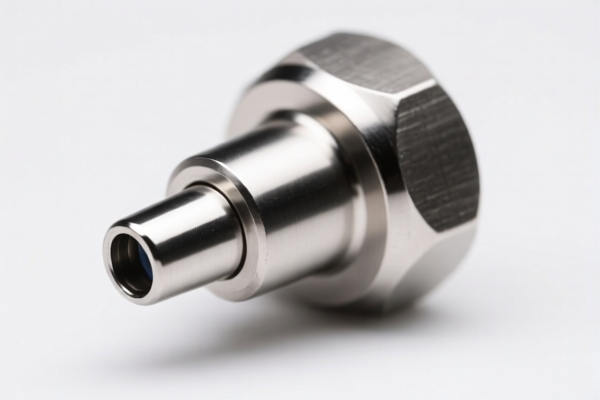
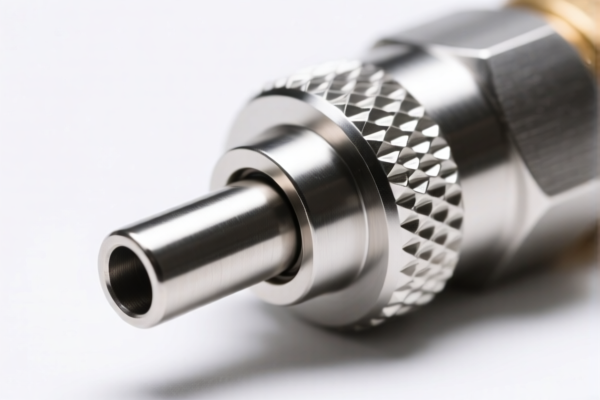
AI Analysis
💨 Air Nozzles (Nozzles for Air Distribution/Exhaust)
🌐 HS Code Reference & Customs Clearance Guide | 2026 Latest Tariff Analysis | Professional Clearance Strategy
📌 I. Product Definition & Classification: Do You Really Know "Air Nozzles"?
Air Nozzles, often used in industrial ventilation, pneumatic systems, or automotive applications (sometimes referred to as "valve stems" or "stem valves" depending on the specific component context in the provided data), are critical components for controlling airflow or gas pressure. In international trade, their classification heavily depends on their material and functional identity.
Based on the provided dataset, Air Nozzles are primarily classified into two main categories: 1. Rubber Components: Where the nozzle acts as a sealing or flexible part. 2. Metal Parts: Where the nozzle is a rigid structural component (iron/steel). 3. Valve Parts: Where the nozzle is considered an integral accessory to a valve system.
⚠️ Key Distinction Point:
- If the nozzle is made of rubber (e.g., for sealing or flexible air release) → It falls under Chapter 40 (Rubber Articles).
- If the nozzle is made of metal (iron/steel) → It falls under Chapter 73 (Articles of Iron or Steel).
- If it is explicitly defined as a part of a valve (8481) → It falls under Chapter 84.
📦 II. HS Code Classification Details (2026 Latest Tariff Authority Comparison)
| HS Code | Product Description | Material | Key Feature |
|---|---|---|---|
4016.99.03.00 |
Other vulcanized rubber articles (Air Nozzle) | Rubber (Vulcanized) | Flexible, non-mechanical rubber part |
4016.99.60.10 |
Other vulcanized rubber articles - Auto mechanical parts | Rubber | Specific to automotive machinery parts |
7326.90.86.88 |
Other articles of iron or steel (Air Nozzle) | Metal (Iron/Steel) | General metal nozzle, not wire/strand |
7326.20.00.90 |
Other articles of iron or steel - Wire/strand products | Metal (Iron/Steel) | Made from iron/steel wire or strands |
8481.90.90.60 |
Parts of valves and similar apparatus (Air Nozzle) | Any | Classified as a valve part/accessory |
🔍 Focus Reminder:
- Rubber Nozzles generally have lower base tariffs (0-3%) but still face significant additive taxes.
- Metal Nozzles face higher base tariffs (2.9-3.9%) and are subject to specific 122-section tariffs if they qualify as steel/aluminum/copper products.
- Valve Parts (8481) may have 0% base tariff but are heavily impacted by additive taxes.
💰 III. 2026 Latest Tariff Rate Details (Including Additive Taxes, Policy Additions)
✅ Applicable Country: United States (US)
✅ Origin: China (CN)
✅ Effective Date: From November 10, 2025 (including subsequent imports)
🎯 1. 4016.99.03.00 & 4016.99.60.10 —— Rubber Air Nozzles
These codes classify air nozzles made of vulcanized rubber. The tax structure is relatively straightforward but includes substantial additive tariffs.
| Item | Content |
|---|---|
| Base Tariff | 3.0% (for 03.00) / 2.5% (for 60.10) |
| Additive Tariff (Section 301) | +25% |
| 122 Section Tariff | +10% (Specific to certain rubber articles) |
| Total Tariff | 38.0% (03.00) / 37.5% (60.10) |
| Tax Calculation | CIF Value × Total Rate |
| De Minimis Exemption | ❌ Not Eligible (deny_de_minimis) |
| Legal Basis Path | USITC:4016.99.03.00 → Section 301: 25% → 122 Section: 10% |
📌 Explanation:
- Although rubber has a low base duty, the 25% Section 301 tariff and 10% Section 122 tariff drive the total cost up to ~38%.
- This applies to most standard rubber air nozzles and automotive rubber parts.
🎯 2. 7326.90.86.88 & 7326.20.00.90 —— Metal (Iron/Steel) Air Nozzles
Metal nozzles are subject to higher base tariffs and stricter "122 Section" rules due to steel/aluminum content.
| Item | Content |
|---|---|
| Base Tariff | 2.9% (86.88) / 3.9% (20.90) |
| Additive Tariff (Section 301) | +25% |
| 122 Section Tariff (Steel/Aluminum) | +50% (Specific to steel/aluminum/copper products) |
| Total Tariff | 87.9% (86.88) / 88.9% (20.90) |
| Tax Calculation | CIF Value × Total Rate |
| De Minimis Exemption | ❌ Not Eligible (deny_de_minimis) |
| Legal Basis Path | USITC:7326.90.86.88 → Section 301: 25% → Section 122: 50% |
📌 Critical Warning:
- The 50% Section 122 tariff is the dominant cost driver here.
- 87.9% - 88.9% is an extremely high total tariff.
- This applies to iron/steel nozzles. Even a small metal nozzle incurs massive tax costs.
🎯 3. 8481.90.90.60 —— Valve Parts (Air Nozzle as Valve Accessory)
If the air nozzle is defined strictly as a part of a valve system, it may fall under Chapter 84.
| Item | Content |
|---|---|
| Base Tariff | 0.0% |
| Additive Tariff (Section 301) | +25% |
| 122 Section Tariff (Steel/Aluminum) | +50% (If made of steel/aluminum/copper) |
| Total Tariff | 85.0% |
| Tax Calculation | CIF Value × Total Rate |
| De Minimis Exemption | ❌ Not Eligible (deny_de_minimis) |
| Legal Basis Path | USITC:8481.90.90.60 → Section 301: 25% → Section 122: 50% |
📌 Note:
- While the base tariff is 0%, the 50% Section 122 and 25% Section 301 still result in an 85% total duty.
- Classification as a "valve part" does not eliminate the heavy additive tariffs on steel/aluminum content.
🛠️ IV. Customs Clearance Practical Suggestions (Real-World Pitfall Avoidance Guide)
✅ 1. Preparation Checklist (Missing Documents = Delay/Rejection)
| Document | Mandatory? | Description |
|---|---|---|
| ✅ Product Specification Sheet | ✔️ | Must clearly state material (Rubber vs. Steel), dimensions, and function. |
| ✅ Material Certification | ✔️ | Critical for distinguishing between Chapter 40 (Rubber) and Chapter 73 (Steel). |
| ✅ Product Photos | ✔️ | Clear images showing the nozzle, marking, and any valve connections. |
| ✅ Commercial Invoice | ✔️ | Must match the HS Code description exactly (e.g., "Rubber Air Nozzle" vs. "Steel Valve Part"). |
| ✅ Packing List | ✔️ | Detail items to prevent misdeclaration. |
✅ 2. Declaration Tips (Key Mantra)
🔥 "Material Matters, Chapter Changes, Tax Diverges!"
| Scenario | Correct Declaration | Wrong Practice |
|---|---|---|
| Rubber Nozzle | 4016.99.03.00 |
Misdeclare as Steel → Tax jumps from 38% to 88% |
| Steel Nozzle | 7326.90.86.88 |
Misdeclare as Rubber → Severe underpayment penalty |
| Valve Part | 8481.90.90.60 |
Use generic "Nozzle" term → Customs may reclassify |
| Mixed Materials | Declare dominant material or part | If rubber+metal, check if it's a composite article |
✅ 3. Special Case Handling
| Situation | Handling Advice |
|---|---|
| OEM Custom Nozzles | Provide client order + design drawings to prove specific use/material. |
| Metal Nozzles with Rubber Seals | Classify based on essential character. If metal is structural, likely Chapter 73 (High Tax). If rubber is essential, Chapter 40 (Lower Tax). |
| Small Quantity Samples | Still subject to full tariffs. No de minimis exemption for these HS codes. |
| Origin Tracing | Ensure origin is correctly marked. Non-China origin may avoid Section 301/122 tariffs (if eligible). |
🌍 V. Global Market Comparison (2026 Latest)
| Country/Region | Recommended HS Code | Tariff (China Origin) | Certification Required | Notes |
|---|---|---|---|---|
| 🇺🇸 USA | Varies (See Above) | 37.5% - 88.9% | N/A (Mainly tariff-driven) | Highest barrier due to Section 301 & 122. |
| 🇨🇳 China | Varies | Low (1-5%) | CCC (if applicable) | No additive tariffs for import into China. |
| 🇪🇺 EU | Varies | Low (0-4%) | CE, RoHS | Generally no Section 122/301 equivalents. |
| 🇦🇺 Australia | Varies | Low (5%) | RCM | Moderate tariffs. |
| 🇯🇵 Japan | Varies | Low (0-2%) | PSE | Very competitive. |
📌 Conclusion:
- The US market is uniquely expensive for Air Nozzles from China due to Section 122 (50%) and Section 301 (25%).
- Total tax can exceed 80% for metal parts.
- Cost-saving Strategy: Consider non-China sourcing (e.g., Vietnam, Mexico, EU) to avoid these additive tariffs.
📌 VI. Common Mistakes & Pitfall Guide (Lessons Learned)
❌ Mistake 1: Declaring a Steel Nozzle as Rubber
👉 Consequence: Tax Evasion Penalty + Back Taxes. The difference between 38% and 88% is huge. Customs uses X-rays/material tests.
❌ Mistake 2: Ignoring the Section 122 Tariff for Steel
👉 Consequence: Underestimating landed cost by ~50%. Many importers only account for 301 (25%) and forget the additional 50% steel/aluminum tariff.
❌ Mistake 3: Assuming De Minimis Exemption ($800)
👉 Consequence: Seizure or Full Taxation. The dataset indicates deny_de_minimis for these HS codes. All imports are taxed.
❌ Mistake 4: Vague Description "Nozzle"
👉 Consequence: Customs may classify to the highest duty rate or demand extensive clarification, causing delays.
✅ Correct Approach:
"Vulcanized Rubber Air Nozzle, Model XYZ, For Pneumatic System, Pure Rubber, No Metal Core"
OR
"Stainless Steel Air Nozzle, Part of Valve Assembly, Model ABC"
🎯 VII. Conclusion: Professional Declaration Saves Money!
🎯 Remember the Mantra:
🔹 "Rubber is 38%, Steel is 88%, Don't Guess, Test!"
🔹 "Section 122 hits steel hard, 50% extra!"
🔹 "No De Minimis, pay full price, every time!"
📌 Pro Tip:
If your Air Nozzles are originally from Vietnam, Mexico, or Thailand, you may qualify for Exemptions from Section 301 and Section 122 tariffs, reducing the tax to near 0-5%.
Recommendation: Apply for a Pre-Ruling (Advance Ruling) from US Customs if the classification is ambiguous between Rubber and Metal.
📣 Act Now:
📞 Contact a professional customs broker + Provide material specs + Apply for HS Code Pre-Ruling
🚀 Let your Air Nozzles clear smoothly, efficiently, and profitably!
✨ Professional Customs Clearance Starts with Accurate Classification!
💼 Every dollar of tax paid should be justified and minimized!
Customer Reviews
About HS Code Classification
The Harmonized System (HS) is an internationally standardized nomenclature developed by the World Customs Organization (WCO) to classify traded products. Over 200 countries use the HS system as the basis for customs tariffs, trade statistics, and import/export regulations.
Each HS code follows a hierarchical structure:
- Chapter (2 digits) — Broad category of goods (e.g., Chapter 84: Machinery and Mechanical Appliances)
- Heading (4 digits) — More specific grouping within the chapter
- Subheading (6 digits) — Internationally standardized breakdown, used by all WCO member countries
- National subdivisions (8-10 digits) — Country-specific extensions for further classification, such as US HTSUS 10-digit codes
Correct HS code classification is essential for smooth customs clearance, accurate duty payment, and compliance with trade regulations. Misclassification can lead to customs delays, overpayment of duties, or penalties.
When importing from CN to US, the applicable tariff rates may include:
- Most-Favored-Nation (MFN) rate — The standard duty rate applied to WTO members
- General rate — Applied to countries without trade agreements
- Trade remedy duties — Additional tariffs such as Section 301 (anti-dumping), Section 232 (national security), or countervailing duties
The information provided on this page is for reference purposes only. For official classification, please consult with your local customs authority or a licensed customs broker.