Air Pump or Vacuum Pump Parts
CN → US| HS Code | Tariff Rate | Origin | Destination | Doc |
|---|---|---|---|---|
| 8414909180 | 35.0% | CN | US | Official Doc |
| 8414909140 | 35.0% | CN | US | Official Doc |
| 8414909140 | 35.0% | CN | US | Official Doc |
| 8414909180 | 35.0% | CN | US | Official Doc |
| 8481909085 | 85.0% | CN | US | Official Doc |
Product Images
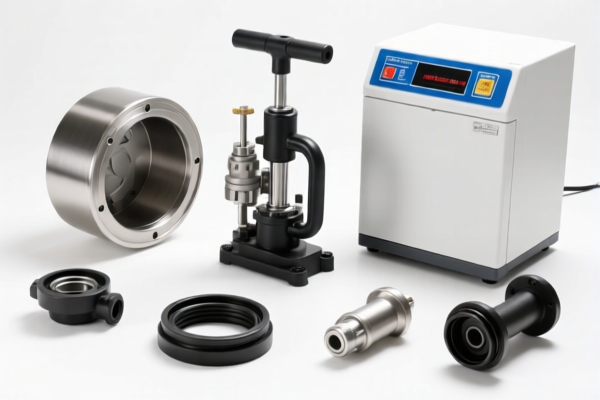
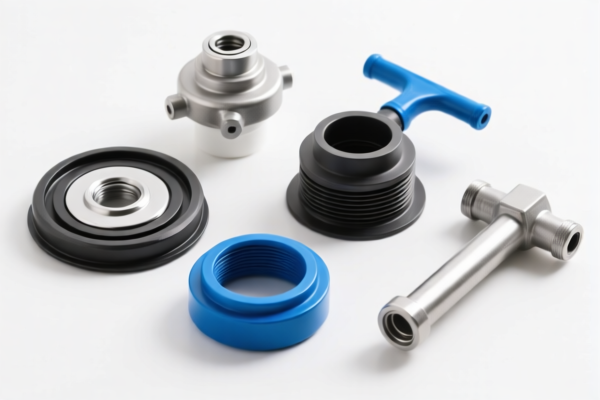
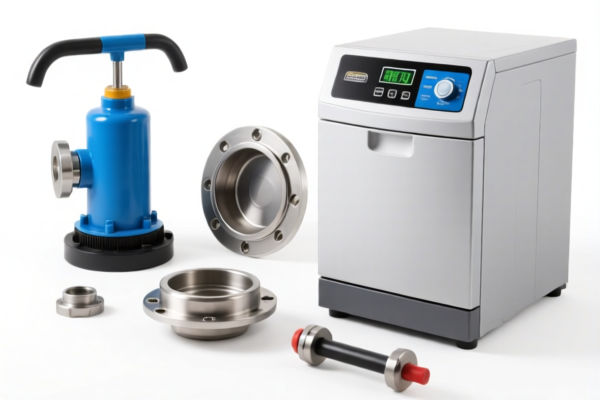
AI Analysis
🌬️ Air Pump or Vacuum Pump Parts
🌐 HS Code Reference & Customs Clearance Guide | 2024/2025 Latest Tariff Analysis | Strategic Compliance Strategy
📌 Part 1: Product Definition & Classification: Do You Truly Understand "Pump Parts"?
Air pumps and vacuum pumps are critical components in industrial manufacturing, medical equipment, HVAC systems, and automotive applications. In international trade, these are not treated as standalone machinery but as accessories or parts specifically designed for Heading 8414 (Air or Vacuum Pumps).
Crucially, Customs authorities distinguish between: 1. Generic Parts: Components not solely dedicated to pumps (e.g., generic motors, unassigned casings). 2. Specific Parts: Components specifically identifiable as used only with air or vacuum pumps (e.g., pistons, valves, impellers designed exclusively for these devices).
⚠️ Key Distinction Point:
- If the part is specifically designed and identifiable for use with air/vacuum pumps (e.g., a diaphragm valve for a vacuum cleaner) → It falls under 8414.90.
- If the part is a general component (e.g., a standard bearing or generic steel bracket not unique to pumps) → It may fall under 8414.90 ("Other") or potentially other headings like 8481 if it’s a valve assembly.
- Material Constraint: Parts made of specific metals (Steel, Aluminum, Copper) may trigger additional punitive tariffs under US trade regulations (Section 232/301 variations), significantly impacting the final tax rate.
📦 Part 2: HS Code Classification Details (Based on Provided Data)
Based on the provided dataset, here are the specific HS Codes and their logical justifications for "Air Pump or Vacuum Pump Parts":
| HS Code | Product Description | Logical Justification & Summary | Material/Category Constraint |
|---|---|---|---|
8414.90.91.80 |
Air Pump or Vacuum Pump Parts (General/Other) | Summary: Fits the "Parts" and "Other" classification. No material conflict noted in the general summary. | ✅ No Material Conflict (General) |
8414.90.91.40 |
Vacuum Pump Parts | Summary: Form and use match "Parts for Vacuum Pumps". | ✅ No Material Conflict |
8414.90.91.40 |
Air Pump & Vacuum Pump Parts | Summary: "Accessories" align with "Parts"; Use is classified under "For Vacuum Pumps". | ✅ No Material Conflict |
8414.90.91.80 |
Air Pump & Vacuum Pump Parts | Summary: "Accessories" attributes align with "Parts"; Belongs to the corresponding equipment category. | ✅ No Material Conflict |
8481.90.90.85 |
Oil Pump Parts | Summary: Classified as parts for pump-type devices, fitting the "Other Parts" category. | ⚠️ High Risk: Steel, Aluminum, Copper parts attract extra 50% tariff |
🔍 Critical Observation:
- Most air/vacuum pump parts fall under 8414.90.91.40 or 8414.90.91.80 with a 35% Total Tax.
- Oil Pump Parts fall under 8481.90.90.85 with a 85% Total Tax due to specific material add-ons.
- Why the difference? The US tariff schedule applies heavier penalties to specific metal components (Steel/Aluminum/Copper) if they are classified as oil pump parts or if they trigger additional Section 232 duties.
💰 Part 3: 2024/2025 Latest Tariff Rate Breakdown (Including Surcharges)
✅ Applicable Country: United States (US)
✅ Origin: China (CN)
✅ Effective Time: Current Trade Regulations (2024/2025)
🎯 1. 8414.90.91.40 & 8414.90.91.80 —— Air/Vacuum Pump Parts (General)
| Item | Content |
|---|---|
| Basic Tariff | 0.0% (Ad valorem) |
| Section 301 Tariff | +25% (Trade War Tariff) |
| Section 122 Tariff | +10% (Specific US Trade Measure) |
| Total Tax Rate | 35.0% |
| Tax Calculation | CIF Value × 35% |
| De Minimis Exemption | ❌ Not Applicable (Section 321 threshold does not apply to these classified goods from China due to high surcharges) |
| Legal Basis | HTSUS: 8414.90.91 → USITC Footnotes (Sec 301) → USITC Footnotes (Sec 122) |
📌 Explanation:
- The 35% total rate is a combination of Section 301 (25%) and Section 122 (10%).
- Base rate is 0%, meaning the entire tax burden comes from punitive trade measures.
- No Material Conflict Warning: This rate applies if the parts are not primarily made of Steel, Aluminum, or Copper that trigger additional Section 232 duties, or if they are classified under the "Other" subheading which may have different nuances.
🎯 2. 8481.90.90.85 —— Oil Pump Parts
| Item | Content |
|---|---|
| Basic Tariff | 0.0% (Ad valorem) |
| Section 301 Tariff | +25% |
| Section 122 Tariff | +10% |
| Steel/Aluminum/Copper Add-on | +50% (Additional Duty for Metal Parts) |
| Total Tax Rate | 85.0% |
| Tax Calculation | CIF Value × 85% |
| De Minimis Exemption | ❌ Not Applicable |
| Legal Basis | HTSUS: 8481.90.90 → USITC Footnotes (Sec 301) → USITC Footnotes (Sec 122) → Section 232 Duties |
📌 Explanation:
- The 85% total rate is extremely high.
- The 50% add-on is specifically for parts made of Steel, Aluminum, or Copper.
- Even if the item is described as "Oil Pump Parts," if it contains these metals, it triggers this punitive rate.
- Warning: Misclassifying Oil Pump Parts as Air Pump Parts to avoid the 50% add-on is a high-risk customs violation.
🛠️ Part 4: Customs Clearance Practical Advice (Battle-Tested Guide)
✅ 1. Preparation Checklist (Non-negotiable)
| Document | Mandatory? | Description |
|---|---|---|
| ✅ Detailed Part Description | ✔️ | Must specify: "Air Pump Part" vs. "Vacuum Pump Part" vs. "Oil Pump Part". Vague terms like "Pump Component" will lead to delays. |
| ✅ Material Composition Report | ✔️ | Critical: Identify if the part is Steel, Aluminum, Copper, Plastic, or Rubber. This determines the 50% add-on risk. |
| ✅ Technical Drawings | ✔️ | Show that the part is specifically designed for air/vacuum pumps (to support 8414.90) and not a general mechanical part. |
| ✅ Commercial Invoice | ✔️ | Must clearly state "Parts for Air/Vacuum Pumps, Model XYZ". |
| ✅ Packing List | ✔️ | Ensure weight and dimensions match the invoice. |
| ✅ Certifications | ✔️ | If applicable (e.g., ISO standards), provide to prove quality and specific use. |
✅ 2. Declaration Tactics (Key Mnemonic)
🔥 "Be Specific on Use, Declare Materials Clearly, Avoid 'Generic' Labels!"
| Scenario | Correct Declaration | Incorrect Declaration | Consequence |
|---|---|---|---|
| Vacuum Pump Diaphragm | "Vacuum Pump Part, Plastic, Model ABC" | "Pump Accessory" | Risk of misclassification to 8481 (85%) |
| Steel Piston for Air Pump | "Air Pump Part, Steel Piston, Model DEF" | "Mechanical Part" | Risk of Section 232 (Steel) duties if misclassified |
| Oil Pump Valve | "Oil Pump Part, Copper Valve, Model GHI" | "Hydraulic Part" | Must declare as 8481.90.90.85 to avoid penalties, but expect 85% tax |
| Mixed Shipment | Separate line items for each HS Code | Bundle all as "Pump Parts" | Customs will audit entire shipment, delay release |
✅ 3. Special Considerations
| Situation | Handling Advice |
|---|---|
| Parts made of Steel/Aluminum/Copper | Check if they fall under 8414 (35%) or 8481 (85%). If they are generic metal parts not unique to pumps, they might be subject to Section 232 duties separately. |
| OEM Custom Parts | Provide client order and design drawings. Prove that the part cannot be used for other machinery. |
| Replacements for Repair | Clearly mark as "Repair Parts" to avoid being treated as new goods, though tax rates often remain the same. |
| Plastic/Rubber Parts | These are less likely to trigger the 50% metal add-on. Always highlight non-metal materials in the description. |
🌍 Part 5: Global Market Comparison (2024/2025)
| Country/Region | Recommended HS Code | Total Tariff (China Origin) | Key Requirements | Notes |
|---|---|---|---|---|
| 🇺🇸 USA | 8414.90.91.40 / .80 |
35% | FCC/CE (if electric), Detailed Description | High Section 301 + 122 duties |
| 🇺🇸 USA | 8481.90.90.85 |
85% | Detailed Material Declaration | Steel/Al/Copper trigger extra 50% |
| 🇨🇳 China | 8414.90.90 |
~0-5% | CCC (if applicable) | No Section 301/122 |
| 🇪🇺 EU | 8414.90.90 |
0% | CE Marking, RoHS | No punitive tariffs |
| 🇯🇵 Japan | 8414.90.00 |
0% | PSE (if electric) | Low tariffs |
📌 Conclusion:
- USA is the most expensive market due to layered punitive tariffs (35% or 85%).
- EU/Japan/China offer significantly lower tax burdens.
- Supply Chain Strategy: Consider sourcing non-critical metal parts from non-CHINA origins (e.g., Vietnam, Malaysia) to avoid Section 301/232 duties, though final assembly rules apply.
📌 Part 6: Common Errors & Pitfalls (Lessons Learned)
❌ Error 1: Using generic terms like "Pump Parts" without specifying Air, Vacuum, or Oil.
👉 Consequence: Customs may default to the highest tax rate (85%) or request additional documentation, causing delays.
❌ Error 2: Ignoring Material Composition for Steel/Aluminum/Copper parts.
👉 Consequence: If classified under 8481, the 50% add-on is applied automatically. If misclassified under 8414 to avoid it, it’s fraud.
❌ Error 3: Assuming "Accessories" means lower tax.
👉 Consequence: In HS Code 8414, "Parts" and "Accessories" are often grouped. The tax rate depends on the 301/122 status, not the word "Accessory".
❌ Error 4: Not separating Oil Pump Parts from Air/Vacuum Pump Parts.
👉 Consequence: 8481 parts (Oil) are taxed at 85%, while 8414 parts (Air/Vacuum) are 35%. Mixing them leads to massive overpayment or penalties.
✅ Correct Practice:
"Vacuum Pump Part, Plastic Diaphragm, Model XYZ, Not Made of Steel/Aluminum/Copper"
"Oil Pump Valve, Copper Alloy, Model ABC, Subject to Section 232 Duties"
🎯 Part 7: Conclusion: Precision Classification Saves Money!
🎯 Remember the Mnemonic:
🔹 "Air/Vacuum is 35%, Oil is 85%! Check Materials, Check Metal!"
🔹 "Steel/Al/Copper Adds 50% on Oil Parts – Avoid the Trap!"
🔹 "Specific Use Declared, Customs Clear, Costs Cured!"
📌 Pro Tip:
- If your parts are primarily plastic or rubber, emphasize this in the commercial invoice to support the 35% rate under 8414.
- If parts are metal, consult a customs broker to determine if they qualify for Section 232 exclusions (if available) or if they must be declared under the higher-risk category.
- Always request an Advance Ruling from US Customs (CBP) if the classification is ambiguous.
📣 Action Item:
📞 Contact a Licensed Customs Broker + Provide Detailed Material Specs + Classify Correctly
🚀 Ensure Smooth Clearance, Minimize Taxes, Maximize Profit!
✨ Professional Classification, Starting from Precision!
💼 Every Percent of Tax Savings Matters!
Customer Reviews
About HS Code Classification
The Harmonized System (HS) is an internationally standardized nomenclature developed by the World Customs Organization (WCO) to classify traded products. Over 200 countries use the HS system as the basis for customs tariffs, trade statistics, and import/export regulations.
Each HS code follows a hierarchical structure:
- Chapter (2 digits) — Broad category of goods (e.g., Chapter 84: Machinery and Mechanical Appliances)
- Heading (4 digits) — More specific grouping within the chapter
- Subheading (6 digits) — Internationally standardized breakdown, used by all WCO member countries
- National subdivisions (8-10 digits) — Country-specific extensions for further classification, such as US HTSUS 10-digit codes
Correct HS code classification is essential for smooth customs clearance, accurate duty payment, and compliance with trade regulations. Misclassification can lead to customs delays, overpayment of duties, or penalties.
When importing from CN to US, the applicable tariff rates may include:
- Most-Favored-Nation (MFN) rate — The standard duty rate applied to WTO members
- General rate — Applied to countries without trade agreements
- Trade remedy duties — Additional tariffs such as Section 301 (anti-dumping), Section 232 (national security), or countervailing duties
The information provided on this page is for reference purposes only. For official classification, please consult with your local customs authority or a licensed customs broker.