Air Storage Tank
CN → US| HS Code | Tariff Rate | Origin | Destination | Doc |
|---|---|---|---|---|
| 3925100000 | 41.3% | CN | US | Official Doc |
| 7304598055 | 35.0% | CN | US | Official Doc |
| 7309000030 | 85.0% | CN | US | Official Doc |
| 7309000090 | 85.0% | CN | US | Official Doc |
| 3925100000 | 41.3% | CN | US | Official Doc |
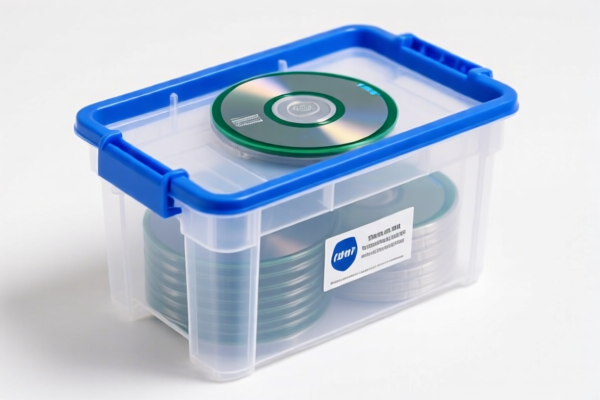
Product Images



AI Analysis
🌬️ Air Storage Tanks (Compressed Air Vessels)
🌐 HS Code Reference & Customs Clearance Guide | 2026 Latest Tariff Analysis | Professional Clearance Strategy
📌 I. Product Definition & Classification: What is an "Air Storage Tank"?
Air Storage Tanks (also known as Compressed Air Receivers or Vessels) are pressure-containing devices used to store compressed air generated by air compressors. Their primary functions include stabilizing air pressure, reducing pulsation, and removing condensation.
In international trade, classification hinges on two critical factors:
1. Material: Plastic (Polymer), Ferrous Metals (Iron/Steel), or Non-ferrous Metals (Aluminum/Copper).
2. Form: Seamless pipes/tubes vs. General storage containers.
⚠️ Key Distinction:
- If the tank is made of Plastic (e.g., small industrial air receivers or corrosion-resistant vessels) → Classified under Chapter 39.
- If the tank is made of Iron/Steel and is a Seamless Tube or hollow profile → Classified under Chapter 73 (7304/7309).
- If the tank is made of Iron/Steel and is a General Container/Tank (not a tube) → Classified under Chapter 73 (7309).
📦 II. HS Code Classification Details (2026 Latest Tariff Authority)
Based on the provided data, here are the four potential HS Codes with their corresponding tax implications:
| HS Code | Product Description | Material Inference | Key Characteristics |
|---|---|---|---|
3925.10.00.00 |
Building components: Tanks, reservoirs, and similar containers, of plastics | Plastic | Matches form (Tank) and use (Air Storage). Primary classification for non-metallic vessels. |
7304.59.80.55 |
Tubes, pipes, and hollow profiles, seamless, of iron or steel (other than of heading 7304.10 to 7304.39) | Iron/Steel | Infers material is metal; classified as a seamless tube or hollow profile extension for pressure applications. |
7309.00.00.30 |
Tanks, vats, drums, and similar containers, of iron or steel, with a capacity ≥ 300L | Metal (Iron/Steel) | Matches use (Container for materials) and form (Tanks). Specifically for larger metal tanks. |
7309.00.00.90 |
Tanks, vats, drums, and similar containers, of iron or steel, other than those of heading 7309.00.30 | Iron/Steel | Matches use (Tanks/Containers) and form. General classification for iron/steel storage tanks (often < 300L or unspecified capacity). |
🔍 Critical Note:
- Plastic Tanks are distinctly separated from Metal Tanks. Misclassifying a plastic tank as steel can lead to severe penalties.
- Metal Tanks are split between "Seamless Tubes" (7304) and "General Containers" (7309). The boundary is the physical form factor.
💰 III. 2026 Latest Tariff Rate Breakdown (Including Surcharges & Policy Add-ons)
✅ Applicable Country: United States (US)
✅ Origin: China (CN)
✅ Effective Date: Current tariffs apply (Section 301 & IEEPA)
🎯 1. 3925.10.00.00 —— Plastic Air Storage Tanks
| Item | Details |
|---|---|
| Base Tariff | 6.3% |
| Section 301 Surcharge | +25.0% (Trade Policy Tariffs) |
| IEEPA Surcharge | +10% (Section 122 Tariff/China Specific) |
| Total Tax Rate | 41.3% |
| Tax Calculation | CIF Value × 41.3% |
| Legal Basis | Base Rate (6.3%) + Section 301 (25%) + IEEPA/Section 122 (10%) |
📌 Explanation:
- Plastic air tanks are subject to the highest combined effective rate among the options due to the base rate (6.3%).
- Total Cost Impact: High. Ensure your pricing model accounts for 41.3% total duty.
🎯 2. 7304.59.80.55 —— Seamless Iron/Steel Tubes (Pressure Vessel Components)
| Item | Details |
|---|---|
| Base Tariff | 0.0% |
| Section 301 Surcharge | +25.0% |
| IEEPA Surcharge | +10% |
| Total Tax Rate | 35.0% |
| Tax Calculation | CIF Value × 35.0% |
| Legal Basis | Base Rate (0%) + Section 301 (25%) + IEEPA/Section 122 (10%) |
📌 Explanation:
- This classification assumes the tank is manufactured from or considered as "seamless tubes" or "hollow profiles."
- Benefit: Lower base rate (0%) results in a 35.0% total rate, which is 6.3% lower than the plastic classification.
- Risk: Must prove the product fits the "seamless tube" definition. If it’s a welded tank or a general container, this code is incorrect.
🎯 3. 7309.00.00.30 —— Iron/Steel Tanks (Capacity ≥ 300L)
| Item | Details |
|---|---|
| Base Tariff | 0.0% |
| Section 301 Surcharge | +25.0% |
| IEEPA Surcharge | +10% |
| Steel/Aluminum/Copper Surcharge | +50% (Section 232/Specific Metal Tariffs) |
| Total Tax Rate | 85.0% |
| Tax Calculation | CIF Value × 85.0% |
| Legal Basis | Base (0%) + Sec 301 (25%) + IEEPA (10%) + Steel/Al/Cu Surcharge (50%) |
📌 Explanation:
- Warning: This code triggers an additional 50% surcharge for steel/aluminum/copper products.
- Total Cost Impact: Extremely High (85.0%). This is likely the most expensive option for standard steel tanks.
- Usage: Only apply if the tank is large (≥300L) and classified under this specific sub-heading.
🎯 4. 7309.00.00.90 —— Iron/Steel Tanks (Other/General)
| Item | Details |
|---|---|
| Base Tariff | 0.0% |
| Section 301 Surcharge | +25.0% |
| IEEPA Surcharge | +10% |
| Steel/Aluminum/Copper Surcharge | +50% (Section 232/Specific Metal Tariffs) |
| Total Tax Rate | 85.0% |
| Tax Calculation | CIF Value × 85.0% |
| Legal Basis | Base (0%) + Sec 301 (25%) + IEEPA (10%) + Steel/Al/Cu Surcharge (50%) |
📌 Explanation:
- Similar to7309.00.00.30, this code attracts the 50% additional surcharge for steel products.
- Total Cost Impact: 85.0%.
- Usage: General iron/steel storage tanks not fitting other specific criteria. Avoid if possible due to high total duty.
🛠️ IV. Customs Clearance Practical Advice (Real-World Pitfall Guide)
✅ 1. Documentation Checklist (Non-negotiable)
| Document | Required | Explanation |
|---|---|---|
| ✅ Product Specifications | ✔️ | Must state material (Plastic vs. Steel), capacity (Liters/Gallons), max pressure (PSI/Bar), and dimensions. |
| ✅ Material Certification | ✔️ | Proof of material composition (e.g., PP/PE for plastic, ASTM A106 for steel). |
| ✅ Photos (Clear Labels) | ✔️ | Show铭牌 (Nameplate) with model number, pressure rating, and material code. |
| ✅ Pressure Vessel Certificate | ✔️ | ASME, CE, or PED certification if applicable. Critical for metal tanks. |
| ✅ Commercial Invoice | ✔️ | Clearly describe as "Air Storage Tank" and specify material. Avoid vague terms like "Container." |
| ✅ Packing List | ✔️ | Detail if tanks are empty, pressurized, or include accessories. |
✅ 2. Declaration Tips (Key Mantra)
🔥 "Material First, Form Second. Plastic vs. Steel Determines the Path!"
| Scenario | Correct HS Code | Wrong Code | Consequence |
|---|---|---|---|
| Plastic Tank | 3925.10.00.00 (41.3%) |
7309... (85%) or 7304... (35%) |
If misclassified as metal, you might underpay/overpay, leading to audits. |
| Steel Tank (Small/Welded) | 7309.00.00.90 (85%) |
7304.59... (35%) |
If declared as "seamless tube" but is welded, customs will reject and impose penalties. |
| Steel Tank (Seamless) | 7304.59.80.55 (35%) |
7309... (85%) |
If it’s a true seamless tube, using 7309 overpays tax by 50%. |
| Large Steel Tank (≥300L) | 7309.00.00.30 (85%) |
7309.00.00.90 (85%) |
Same rate, but correct sub-heading avoids compliance flags. |
✅ 3. Special Circumstances
| Scenario | Handling Advice |
|---|---|
| Hybrid Tanks (Steel Core, Plastic Lining) | Declare as Plastic (3925.10.00.00) if the outer surface is plastic. Provide proof of lining. |
| Air Receiver with Compressor | Do not split. Declare as a complete unit if functionally integrated. If separable, declare components separately. |
| Custom Fabricated Tanks | Provide detailed engineering drawings. Customs may require pre-ruling for non-standard shapes. |
| Used/Refurbished Tanks | Additional inspection for corrosion/safety. Ensure compliance with safety standards (ASME). |
🌍 V. Global Market Customs Comparison (2026 Latest)
| Country/Region | Recommended HS Code | Tariff (China Origin) | Certification | Remarks |
|---|---|---|---|---|
| 🇺🇸 USA | 3925.10.00.00 (Plastic) |
41.3% | N/A | High tariff due to Sec 301 + IEEPA. |
| 🇺🇸 USA | 7304.59.80.55 (Steel Seamless) |
35.0% | N/A | Lower tax if classified as seamless tube. |
| 🇺🇸 USA | 7309.00.00.x0 (Steel Tank) |
85.0% | N/A | Highest tax due to Steel Surcharge. |
| 🇨🇳 China | Varies | 0%-13% | CCC (if applicable) | No Section 301/IEEPA surcharges. |
| 🇪🇺 EU | Varies | 0%-4% | CE/PED | No anti-dumping surcharges for air tanks. |
| 🇬🇧 UK | Varies | 0%-5% | UKCA | Post-Brexit rules apply. |
📌 Conclusion:
- USA is the most expensive market due to layered surcharges.
- Plastic tanks (41.3%) are cheaper than General Steel Tanks (85%) but more expensive than Seamless Steel Tubes (35%) in the US.
- Optimization Strategy: If structurally possible, design tanks to fit the Seamless Tube definition (7304.59.80.55) to save 6.3% vs. plastic and 50% vs. general steel tanks.
📌 VI. Common Errors & Pitfalls (Lessons Learned)
❌ Error 1: Declaring a Welded Steel Tank as a Seamless Tube (7304)
👉 Consequence: Customs inspection reveals welding seams → Fraud allegation, seizure, and back taxes + penalties.
❌ Error 2: Declaring a Steel Tank as Plastic to avoid the 50% steel surcharge
👉 Consequence: Material test shows steel → 85% rate applied retroactively, plus fines.
❌ Error 3: Ignoring the Capacity Threshold (300L) for 7309.00.00.30
👉 Consequence: Misclassification of large tanks → Delay in clearance, additional documentation requests.
❌ Error 4: Vague Description: "Air Container"
👉 Consequence: Customs cannot determine material → Hold for inspection, delaying shipment by weeks.
✅ Correct Practice:
"Air Storage Tank, ASME Certified, Carbon Steel, Seamless Construction, 100L Capacity, Model XYZ, No Compressor Included."
🎯 VII. Conclusion: Precise Classification Saves Money!
🎯 Remember the Mantra:
🔹 "Plastic: 41.3%. Steel Seamless: 35.0%. Steel Tank: 85.0%."
🔹 "Material defines the path. Form defines the rate. Be accurate!"
📌 Pro Tip:
If your tanks are originating from Vietnam, Mexico, or Thailand, you may apply for IEEPA Exemptions, reducing rates to 0%~5%.
Recommend Advance Ruling (Pre-classification) with US Customs (CBP) for large shipments to avoid disputes.
📣 Immediate Action:
📞 Contact your customs broker + Provide Product Photos + Apply for HS Code Pre-ruling
🚀 Let your Air Storage Tanks Clear Quickly, Avoid Penalties, and Maximize Profit!
✨ Professional Customs Clearance Starts with Accurate Classification!
💼 Every Dollar of Duty Counts!
Customer Reviews
About HS Code Classification
The Harmonized System (HS) is an internationally standardized nomenclature developed by the World Customs Organization (WCO) to classify traded products. Over 200 countries use the HS system as the basis for customs tariffs, trade statistics, and import/export regulations.
Each HS code follows a hierarchical structure:
- Chapter (2 digits) — Broad category of goods (e.g., Chapter 84: Machinery and Mechanical Appliances)
- Heading (4 digits) — More specific grouping within the chapter
- Subheading (6 digits) — Internationally standardized breakdown, used by all WCO member countries
- National subdivisions (8-10 digits) — Country-specific extensions for further classification, such as US HTSUS 10-digit codes
Correct HS code classification is essential for smooth customs clearance, accurate duty payment, and compliance with trade regulations. Misclassification can lead to customs delays, overpayment of duties, or penalties.
When importing from CN to US, the applicable tariff rates may include:
- Most-Favored-Nation (MFN) rate — The standard duty rate applied to WTO members
- General rate — Applied to countries without trade agreements
- Trade remedy duties — Additional tariffs such as Section 301 (anti-dumping), Section 232 (national security), or countervailing duties
The information provided on this page is for reference purposes only. For official classification, please consult with your local customs authority or a licensed customs broker.