AirTag Silicone Protective Case
CN → US| HS Code | Tariff Rate | Origin | Destination | Doc |
|---|---|---|---|---|
| 3926904510 | 38.5% | CN | US | Official Doc |
| 3926305000 | 22.8% | CN | US | Official Doc |
| 7326903500 | 92.8% | CN | US | Official Doc |
| 4202329900 | 52.6% | CN | US | Official Doc |
| 3926904510 | 38.5% | CN | US | Official Doc |
Product Images
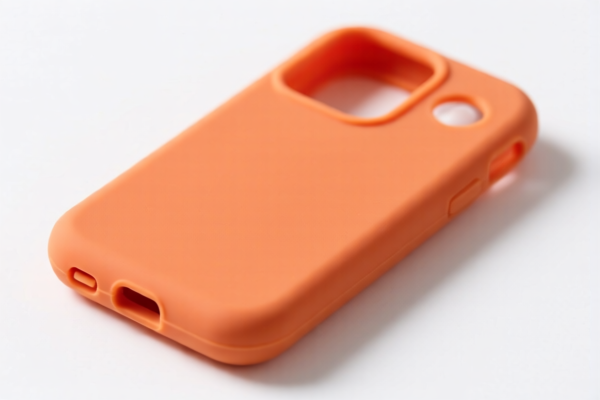
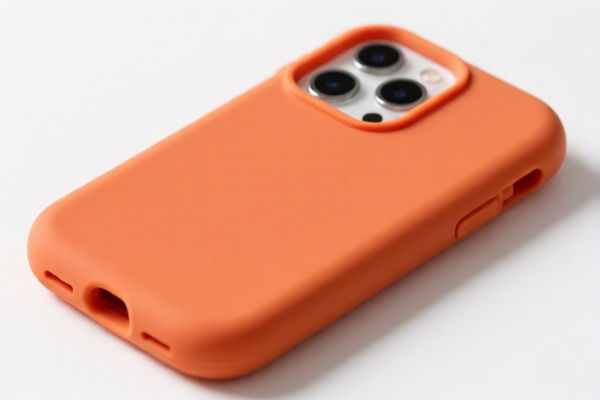
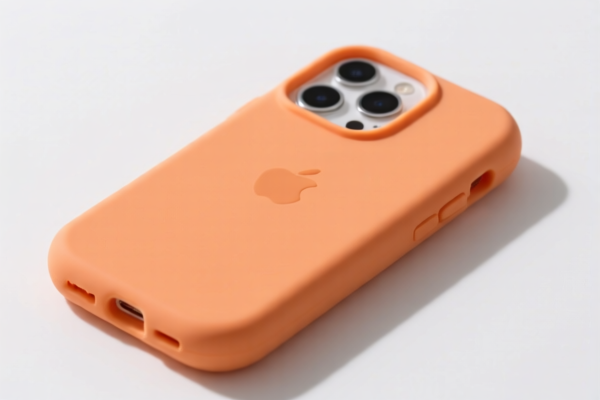
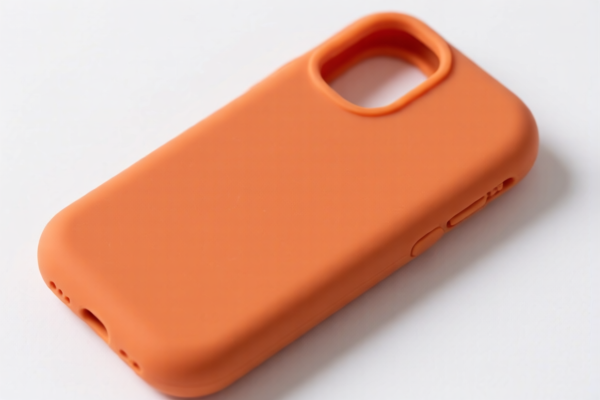
AI Analysis
🍎 AirTag Silicone Protective Case (AirTag Protection Shell)
🌐 HS Code Reference & Customs Clearance Guide | 2026 Latest Tariff Analysis | Professional Clearance Strategy
📌 I. Product Definition & Classification: Do You Really Understand "AirTag Cases"?
The AirTag Silicone Protective Case is an accessory designed to protect Apple AirTags. In international trade, its classification depends heavily on material composition and functional description. It is generally categorized under Chapter 39 (Plastics) or Chapter 42 (Articles of Leather; Saddle Harnesses; Travel Goods), depending on the specific material and design.
⚠️ Key Distinction Points:
- Material: Is it primarily plastic (silicone/rubber counts as plastic/rubber) or textile/leather?
- Function: Is it a standalone "accessory for articles" or considered a "container/package"?
- Regulatory Risk: Due to US-China trade tensions, plastic accessories from China face significant Section 301 and IEEPA tariffs.
📦 II. HS Code Classification Details (2026 Latest Tariff Authority对照)
Based on the provided data, here are the four possible HS Codes for AirTag Protective Cases, ranging from low to high tax liability.
| HS Code | Product Description | Material | Classification Logic | Total Tax Rate |
|---|---|---|---|---|
3926.90.45.10 |
AirTag Protective Case (Plastic) | Plastic | Other plastic articles and parts thereof | 38.5% |
3926.30.50.00 |
AirTag Protective Case (Plastic) | Plastic | Other plastic fittings/accessories | 22.8% |
4202.32.99.00 |
AirTag Protective Case (Plastic/Textile) | Plastic or Textile | Other articles of plastics/textiles, not elsewhere specified | 52.6% |
7326.90.35.00 |
AirTag Protective Case (Steel) | Steel | Other articles of iron/steel | 92.8% |
🔍 Critical Observation:
- Silicone is legally classified as Plastic in most customs jurisdictions (Chapter 39). Therefore,3926.90.45.10and3926.30.50.00are the most relevant codes for "Silicone" cases. -7326.90.35.00applies only if the case is made of Steel (unlikely for consumer accessories but possible for industrial/industrial-grade protective gear). -4202.32.99.00is used if the product is marketed as a "travel accessory" or "bag accessory" rather than a simple plastic part.
💰 III. 2026 Latest Tariff Rate Breakdown (Including Surtaxes & Policy Surcharges)
✅ Applicable Country: United States (US)
✅ Origin: China (CN)
✅ Effective Date: 2025/2026 (Current Trade Policies)
🎯 1. 3926.90.45.10 – Other Plastic Articles & Parts (Most Common for Silicone)
| Item | Content |
|---|---|
| Base Duty Rate | 3.5% (Ad Valorem) |
| Section 301 Surcharge | +25.0% (USITC Section 301) |
| Section 122/IEEPA Surcharge | +10.0% (Trade Facilitation and Enforcement Act) |
| Total Effective Rate | 38.5% |
| Tax Calculation | CIF Value × 38.5% |
| De Minimis Eligibility | ❌ No (Section 301 items generally excluded from $800 de minimis if specifically targeted, or subject to stricter scrutiny). Note: While Section 301 often applies to imports >$800, de minimis has been heavily contested for certain categories. Assume high risk. |
| Legal Basis Path | USITC:3926.90.45.10 → Footnote:301-Section → IEEPA:122 |
📌 Explanation:
- This is the standard classification for plastic/silicone accessories. - The 38.5% rate is punitive but manageable compared to metal products. - Silicone falls under "Plastics" in HS nomenclature unless specifically exempted (which is rare for consumer electronics accessories from China).
🎯 2. 3926.30.50.00 – Other Plastic Fittings/Accessories (Optimized Classification?)
| Item | Content |
|---|---|
| Base Duty Rate | 5.3% |
| Section 301 Surcharge | +7.5% (Reduced Section 301 rate for some subheadings) |
| Section 122/IEEPA Surcharge | +10.0% |
| Total Effective Rate | 22.8% |
| Tax Calculation | CIF Value × 22.8% |
| De Minimis Eligibility | ❓ Check Specific Exclusions |
| Legal Basis Path | USITC:3926.30.50.00 → Footnote:301-Reduced → IEEPA:122 |
📌 Why This Code?
- If the AirTag case is described as a "fitting" or "accessory" rather than a general "plastic article," it may qualify for this lower rate. - 22.8% is significantly lower than 38.5%. This is a key optimization target for importers. - Requirement: Must prove it is a "fitted accessory" not just a generic plastic cover.
🎯 3. 4202.32.99.00 – Other Articles of Plastics/Textiles (Bag/Travel Accessory)
| Item | Content |
|---|---|
| Base Duty Rate | 17.6% |
| Section 301 Surcharge | +25.0% |
| Section 122/IEEPA Surcharge | +10.0% |
| Total Effective Rate | 52.6% |
| Tax Calculation | CIF Value × 52.6% |
| De Minimis Eligibility | ❌ No |
📌 When to Use:
- If the case is marketed as a "travel accessory" or includes a strap/keyring and is sold alongside bags/purses. - Higher risk: Not recommended unless the product design specifically mimics a pouch or bag accessory.
🎯 4. 7326.90.35.00 – Steel Products (High Penalty)
| Item | Content |
|---|---|
| Base Duty Rate | 7.8% |
| Section 301 Surcharge | +25.0% |
| Steel/Aluminum/Copper Surcharge | +50.0% (Specific to metals) |
| Section 122/IEEPA Surcharge | +10.0% |
| Total Effective Rate | 92.8% |
| Tax Calculation | CIF Value × 92.8% |
📌 Warning:
- Only applicable if the case is made of steel (e.g., a metal cage for AirTags). - Do NOT classify plastic cases as steel – this is a clear misclassification. - 92.8% is prohibitive for consumer goods.
🛠️ IV. Customs Clearance Practical Advice (Pitfall Avoidance Guide)
✅ 1. Documentation Checklist (Essential)
| Document | Required | Purpose |
|---|---|---|
| ✅ Product Photos | ✔️ | Clear view of material (silicone texture), branding, and structure. |
| ✅ Material Composition | ✔️ | Must state "100% Silicone" or "Plastic Polymer." |
| ✅ Commercial Invoice | ✔️ | Clearly describe as "AirTag Protective Case, Silicone." |
| ✅ HS Code Justification | ✔️ | Explain why 3926.30.50.00 or 3926.90.45.10 is chosen. |
| ✅ Labeling | ✔️ | "Made in China" must be visible. |
✅ 2. Declaration Strategy (Key Mnemonic)
🔥 "Silicone = Plastic, Not Metal; Fit vs. Part, Rate Varies"
| Scenario | Recommended HS Code | Tax Rate | Reason |
|---|---|---|---|
| Standard Silicone Case | 3926.90.45.10 |
38.5% | Default for plastic articles. |
| Fitted Accessory/Clip-on | 3926.30.50.00 |
22.8% | Optimized for "accessories/fittings." |
| Metal Cage Case | 7326.90.35.00 |
92.8% | High tax, avoid unless necessary. |
| Fabric/Leather Case | 4202.32.99.00 |
52.6% | Misclassification risk if mostly plastic. |
💡 Pro Tip:
- Try to justify3926.30.50.00by emphasizing the case's function as an "accessory" that attaches to the AirTag, rather than a standalone "article." - Avoid describing it as a "container" or "bag" to prevent classification under4202.
✅ 3. Special Circumstances
| Situation | Handling Advice |
|---|---|
| De Minimis ($800 Rule) | ⚠️ Caution: Section 301 items may be scrutinized. While some plastic accessories under $800 may still benefit from de minimis, recent policy shifts suggest stricter enforcement. Assume full duty for large shipments. |
| Origin Marking | Must be "Made in China." Failure to mark can lead to seizure. |
| Product Description | Use "Silicone Protective Case" not "Rubber Case" (Rubber falls under Chapter 40, which may have different rules). Silicone is generally treated as plastic. |
🌍 V. Global Market Comparison (2026)
| Country/Region | Recommended HS Code | Approx. Tax (China Origin) | Notes |
|---|---|---|---|
| 🇺🇸 USA | 3926.90.45.10 |
38.5% | High due to Section 301 & IEEPA. |
| 🇺🇸 USA | 3926.30.50.00 |
22.8% | Optimal if classified as accessory. |
| 🇨🇳 China | 3926.90.99.90 |
~5-10% | Low import duty, but focus is on export. |
| 🇪🇺 EU | 3926.90 |
~4.5% | No Section 301. Lower overall tax burden. |
| 🇬🇧 UK | 3926.90 |
~4.5% | Post-Brexit, tariffs similar to EU pre-2021. |
📌 Conclusion:
- The US market is the most expensive due to layered tariffs (Base + Section 301 + IEEPA). - EU/UK are far more cost-effective for silicone/plastic accessories.
📌 VI. Common Errors & Pitfalls (Lessons Learned)
❌ Error 1: Classifying Silicone as "Rubber" (Chapter 40)
👉 Consequence: Incorrect classification, potential penalties. Silicone is usually treated as plastic (Ch 39).
❌ Error 2: Using 7326.90.35.00 for Plastic Cases
👉 Consequence: 92.8% Tax! Massive overpayment.
❌ Error 3: Ignoring Section 122 (IEEPA) Tariff
👉 Consequence: Underpaying duties. The 10% surcharge applies to most Chinese imports.
❌ Error 4: Declaring as "Gift" to Avoid Tax
👉 Consequence: Customs fraud. High risk of seizure and blacklisting.
✅ Correct Approach:
"AirTag Protective Case, 100% Silicone, Designed to Fit Apple AirTag, Model XYZ, Made in China"
🎯 VII. Conclusion: Professional Declaration, Cost Control, Efficiency!
🎯 Remember the Mnemonic:
🔹 "Silicone is Plastic, Not Metal; Accessory Classification Saves 15%!;
🔹 "Base + 301 + IEEPA = High Tax; Declare Correctly to Save Money!"
📌 Small Tip:
If you can prove the product is a "fitted accessory" (e.g., clips directly onto the AirTag, not just a sleeve), argue for 3926.30.50.00 to reduce the rate from 38.5% to 22.8%. This is a 15.7% savings!
📣 Immediate Action:
📞 Consult a customs broker to validate the "Accessory" vs. "Article" classification.
🚀 Optimize your HS Code to3926.30.50.00for maximum cost efficiency!
✨ Professional Clearance Starts with Accurate Classification!
💼 Every Percent Saved is Profit Earned!
Customer Reviews
About HS Code Classification
The Harmonized System (HS) is an internationally standardized nomenclature developed by the World Customs Organization (WCO) to classify traded products. Over 200 countries use the HS system as the basis for customs tariffs, trade statistics, and import/export regulations.
Each HS code follows a hierarchical structure:
- Chapter (2 digits) — Broad category of goods (e.g., Chapter 84: Machinery and Mechanical Appliances)
- Heading (4 digits) — More specific grouping within the chapter
- Subheading (6 digits) — Internationally standardized breakdown, used by all WCO member countries
- National subdivisions (8-10 digits) — Country-specific extensions for further classification, such as US HTSUS 10-digit codes
Correct HS code classification is essential for smooth customs clearance, accurate duty payment, and compliance with trade regulations. Misclassification can lead to customs delays, overpayment of duties, or penalties.
When importing from CN to US, the applicable tariff rates may include:
- Most-Favored-Nation (MFN) rate — The standard duty rate applied to WTO members
- General rate — Applied to countries without trade agreements
- Trade remedy duties — Additional tariffs such as Section 301 (anti-dumping), Section 232 (national security), or countervailing duties
The information provided on this page is for reference purposes only. For official classification, please consult with your local customs authority or a licensed customs broker.