Airbag
CN → US| HS Code | Tariff Rate | Origin | Destination | Doc |
|---|---|---|---|---|
| 8708951000 | 35.0% | CN | US | Official Doc |
| 3926909989 | 22.8% | CN | US | Official Doc |
| 8708950500 | 37.5% | CN | US | Official Doc |
| 3926907500 | 14.2% | CN | US | Official Doc |
Product Images

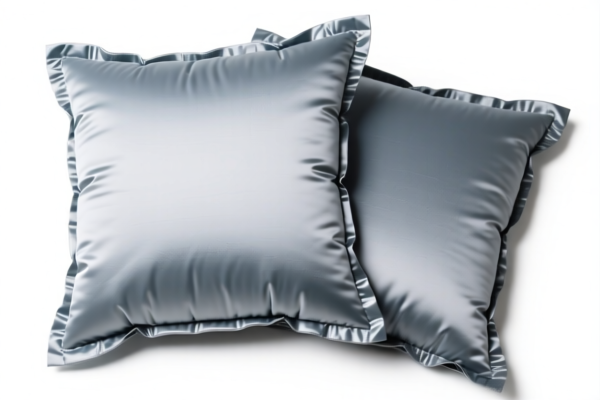
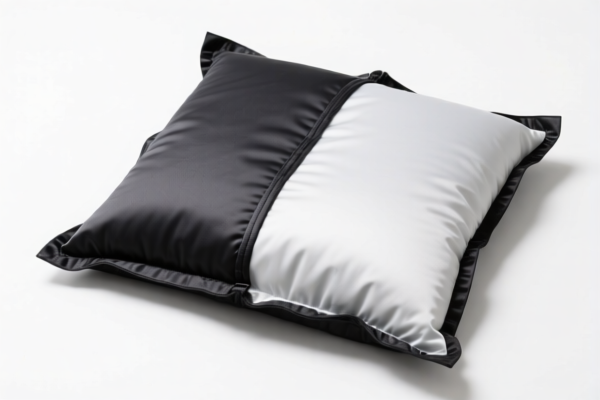
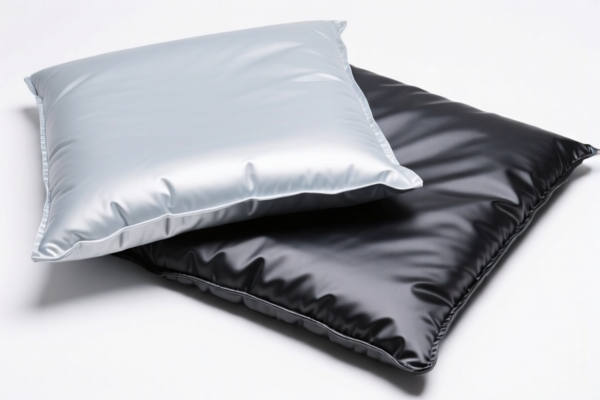
AI Analysis
🚗 Airbags (Automotive Safety Restraint Systems)
🌐 HS Code Reference & Customs Clearance Guide | 2026 Latest Tariff Analysis | Professional Compliance Strategy
📌 1. Product Definition & Classification: What Exactly Is an "Airbag"?
An airbag is a critical passive safety device in modern vehicles, designed to inflate rapidly during a collision to cushion occupants. In international trade, airbags are classified based on their primary function and structural integration within the vehicle's safety system.
Two Main Classification Logic Paths:
- Specific Auto Parts (Section XVII): Classified under Chapter 87 if recognized specifically as an integral part of a vehicle's safety system (e.g., dedicated automotive airbag modules).
- General Plastic/Rubber Articles (Chapter 39): Classified under Chapter 39 if viewed primarily as an inflatable article made of plastic/rubber, often serving as a "catch-all" category when specific auto-part status is ambiguous or if the material composition is emphasized.
⚠️ Key Distinction Point:
- If the product is clearly identified as an "SRS Airbag Module" or "Inflator/Module" for vehicles → Look at HS 8708.
- If the product is a generic "Inflatable Article" made of plastic/rubber without specific vehicle integration proof → Look at HS 3926.
📦 2. HS Code Classification Details (2026 Latest Tariff Authority Reference)
Based on the provided data, here are the four possible classification paths for "Airbags":
| HS Code | Product Description | Logic for Classification | Tax Rate Context |
|---|---|---|---|
8708.95.10.00 |
Automotive Safety Airbags | Direct match with "Safety Airbags" based on form and function. Classified as specific auto parts. | High Tariff |
3926.90.99.89 |
Other Plastic/Rubber Articles | Inferred material is plastic/rubber. Falls under "Plastic and Other Material Articles" as a residual category. | Medium-High Tariff |
8708.95.05.00 |
Airbag Inflator Devices & Modules | Perfect functional match with "Airbag Inflating Devices and Modules." Follows logic for part matching. | Highest Tariff |
3926.90.75.00 |
Inflatable Articles | Matches usage as "Inflatable Articles." Infers plastic/rubber material with no conflict. | Lowest Tariff |
🔍 Key Insight:
- HS 8708 codes are reserved for specific automotive parts. They are highly functional but attract significant trade war tariffs.
- HS 3926 codes are material-based. They are broader and often used as "fallback" categories, potentially offering lower total tax burdens if the product can be justified as a general inflatable article rather than a specific auto part.
💰 3. 2026 Latest Tariff Rate Breakdown (Including Surtaxes & Policy Surcharges)
✅ Applicable Country: United States (US)
✅ Country of Origin: China (CN)
✅ Effective Time: 2025 Nov 10 onwards (including subsequent imports)
🎯 1. 8708.95.10.00 — Automotive Safety Airbags
| Item | Detail |
|---|---|
| Basic Tariff | 0.0% |
| Section 301 Surtax | 25.0% |
| 122 Clause Surcharge | 10.0% |
| Total Tax Rate | 35.0% |
| Tax Calculation | CIF Value × 35.0% |
| Legal Basis Path | USITC:8708.95.10.00 → Section 301: 25% → 122 Clause: 10% |
📌 Explanation:
- 0% Base: Auto parts often have low base tariffs.
- 25% Section 301: Major surcharge for Chinese-made auto components.
- 10% 122 Clause: Additional punitive tariff targeting specific Chinese goods.
- Total 35%: Significant cost impact. Requires precise declaration as "Auto Part" to avoid being miscategorized.
🎯 2. 3926.90.99.89 — Other Plastic and Rubber Articles
| Item | Detail |
|---|---|
| Basic Tariff | 5.3% |
| Section 301 Surtax | 7.5% |
| 122 Clause Surcharge | 10.0% |
| Total Tax Rate | 22.8% |
| Tax Calculation | CIF Value × 22.8% |
| Legal Basis Path | USITC:3926.90.99.89 → Section 301: 7.5% → 122 Clause: 10% |
📌 Note:
- 5.3% Base: Higher than auto parts, but lower surtaxes apply.
- 7.5% Section 301: Reduced surcharge compared to auto parts (25%).
- 10% 122 Clause: Still applies.
- Total 22.8%: Cost-effective option if material composition can be emphasized.
🎯 3. 8708.95.05.00 — Airbag Inflating Devices & Modules
| Item | Detail |
|---|---|
| Basic Tariff | 2.5% |
| Section 301 Surtax | 25.0% |
| 122 Clause Surcharge | 10.0% |
| Total Tax Rate | 37.5% |
| Tax Calculation | CIF Value × 37.5% |
| Legal Basis Path | USITC:8708.95.05.00 → Section 301: 25% → 122 Clause: 10% |
📌 Warning:
- This is the highest tariff rate among the four options.
- Applies when the product is explicitly declared as an inflating device/module.
- Avoid this classification unless necessary for safety compliance, due to high cost.
🎯 4. 3926.90.75.00 — Inflatable Articles
| Item | Detail |
|---|---|
| Basic Tariff | 4.2% |
| Section 301 Surtax | 0.0% |
| 122 Clause Surcharge | 10.0% |
| Total Tax Rate | 14.2% |
| Tax Calculation | CIF Value × 14.2% |
| Legal Basis Path | USITC:3926.90.75.00 → Section 301: 0% → 122 Clause: 10% |
📌 Advantage:
- Lowest Total Tax Rate (14.2%).
- 0% Section 301: No additional 301 tariff for this subheading.
- 10% 122 Clause: Only the 122 clause applies.
- Strategic Value: If the airbag can be justified as a general "inflatable article" (e.g., packaging material, general inflatable product) rather than a specific automotive safety part, this is the most cost-effective classification.
🛠️ 4. Customs Clearance Practical Advice (Avoiding Pitfalls)
✅ 1. Documentation Checklist (Mandatory)
| Document | Required | Notes |
|---|---|---|
| ✅ Product Specification Sheet | ✔️ | Must detail material (plastic/rubber), inflation mechanism, and intended use. |
| ✅ Product Photos | ✔️ | Clear images of the airbag, including any tags or markings indicating auto-use. |
| ✅ Bill of Lading / Commercial Invoice | ✔️ | Ensure description matches HS code logic (e.g., "Inflatable Article" vs. "Auto Airbag"). |
| ✅ Certificate of Origin | ✔️ | Proves China origin to apply surtaxes correctly. |
| ✅ Material Composition Statement | ✔️ | Critical for HS 3926 classification. |
✅ 2. Declaration Tips (Key Mantra)
🔥 "Material Matters, Function Defines, 301 Can Be Avoided!"
| Scenario | Correct Declaration | Wrong Practice |
|---|---|---|
| Generic Inflatable Packaging | 3926.90.75.00 (Inflatable Articles) |
Misdeclare as "Auto Part" → 35%+ |
| Specific Auto Airbag Module | 8708.95.10.00 or 8708.95.05.00 |
Misdeclare as "Plastic Art" → Risk of penalty |
| Mixed Batch (Auto + Generic) | Split Declaration | Combine into one HS Code → High risk of audit |
| Airbag with Inflator | 8708.95.05.00 |
Declare as just "Airbag" → Under-declared value/tax |
✅ 3. Special Cases
| Case | Handling Advice |
|---|---|
| OEM Auto Parts | Must use HS 8708. Provide vehicle compatibility list. |
| Aftermarket Inflatable Products | Can use HS 3926 if not strictly for vehicle safety systems. |
| Samples | Declare as "Samples" with low value to minimize impact, but still apply correct HS Code. |
| Re-export | Ensure origin documentation is clear to avoid double taxation. |
🌍 5. Global Market Customs Comparison (2026 Latest)
| Country/Region | Recommended HS Code | Tariff | Certification | Notes |
|---|---|---|---|---|
| 🇺🇸 USA | 3926.90.75.00 (If eligible) |
14.2% | No specific | Lowest cost if not auto-part |
| 🇺🇸 USA | 8708.95.10.00 (Auto Part) |
35.0% | FMVSS (if auto) | High tariff |
| 🇨🇳 China | 8708.95.10.00 |
0-2% | CCC | No surtaxes |
| 🇪🇺 EU | 8708.95.10.00 |
0-4.5% | ECE R22 | No surtaxes |
| 🇦🇺 Australia | 8708.95.10.00 |
5% | ACMA | Moderate |
📌 Conclusion:
- USA is the only market with high surtaxes (301/122).
- Strategy: If the product is not strictly an auto safety part, use HS 3926 to save 20.8% in taxes.
- Compliance: If it is an auto part, accept the 35% tax to ensure legal compliance.
📌 6. Common Errors & Pitfalls (Lessons Learned)
❌ Error 1: Declaring an Auto Airbag as HS 3926 to save taxes
👉 Consequence: Customs audit, fines, and potential seizure. Auto airbags have specific safety regulations (FMVSS).
❌ Error 2: Declaring a Generic Inflatable as HS 8708
👉 Consequence: Overpaying taxes (35% vs. 14.2%). Unnecessary cost.
❌ Error 3: Ignoring the 122 Clause
👉 Consequence: Unexpected 10% surcharge on all Chinese imports. Always include in calculation.
❌ Error 4: Not separating Inflator from Airbag
👉 Consequence: If declared together, might fall under HS 8708.95.05.00 (37.5%). Split declaration if possible.
✅ Correct Practice:
"Plastic Inflatable Airbag (Non-Automotive Use), Model XYZ, Material: PVC/Rubber"
OR
"Automotive SRS Airbag Module, For Toyota Corolla 2020, FMVSS Compliant"
🎯 7. Conclusion: Precision Classification Saves Money!
🎯 Remember the Mantra:
🔹 "Auto Part? Pay 35%. General Article? Pay 14%.
🔹 "Check the 122 Clause: 10% on All.
🔹 "Don't Guess, Verify! One wrong digit costs thousands!"
📌 Pro Tip:
If you are importing non-auto inflatable products (e.g., for packaging, decoration), insist on HS 3926.90.75.00 to save 20.8% in taxes.
For auto parts, prepare for 35% tax and ensure all safety certifications are in order.
📣 Immediate Action:
📞 Consult your customs broker to determine the primary function of your airbag product.
🚀 Optimize your supply chain by choosing the right HS Code to maximize profit margins.
✨ Professional Customs Clearance Starts with Accurate Classification!
💼 Every cent saved on taxes is pure profit!
Customer Reviews
About HS Code Classification
The Harmonized System (HS) is an internationally standardized nomenclature developed by the World Customs Organization (WCO) to classify traded products. Over 200 countries use the HS system as the basis for customs tariffs, trade statistics, and import/export regulations.
Each HS code follows a hierarchical structure:
- Chapter (2 digits) — Broad category of goods (e.g., Chapter 84: Machinery and Mechanical Appliances)
- Heading (4 digits) — More specific grouping within the chapter
- Subheading (6 digits) — Internationally standardized breakdown, used by all WCO member countries
- National subdivisions (8-10 digits) — Country-specific extensions for further classification, such as US HTSUS 10-digit codes
Correct HS code classification is essential for smooth customs clearance, accurate duty payment, and compliance with trade regulations. Misclassification can lead to customs delays, overpayment of duties, or penalties.
When importing from CN to US, the applicable tariff rates may include:
- Most-Favored-Nation (MFN) rate — The standard duty rate applied to WTO members
- General rate — Applied to countries without trade agreements
- Trade remedy duties — Additional tariffs such as Section 301 (anti-dumping), Section 232 (national security), or countervailing duties
The information provided on this page is for reference purposes only. For official classification, please consult with your local customs authority or a licensed customs broker.