Aircraft Interior Leather
CN → US| HS Code | Tariff Rate | Origin | Destination | Doc |
|---|---|---|---|---|
| 4114203000 | 37.3% | CN | US | Official Doc |
| 4114100000 | 38.2% | CN | US | Official Doc |
| 4205008000 | 35.0% | CN | US | Official Doc |
| 4113200000 | 39.2% | CN | US | Official Doc |
| 4205001000 | 35.0% | CN | US | Official Doc |
Product Images
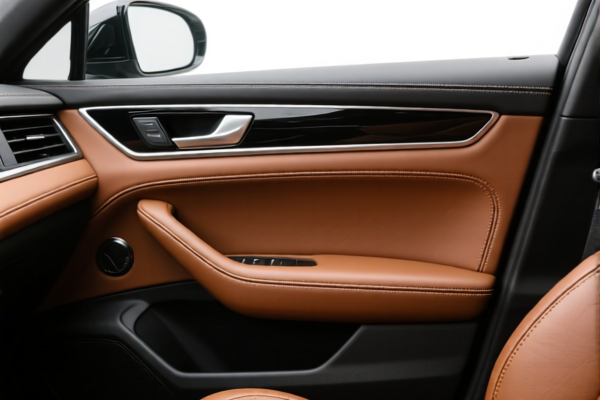
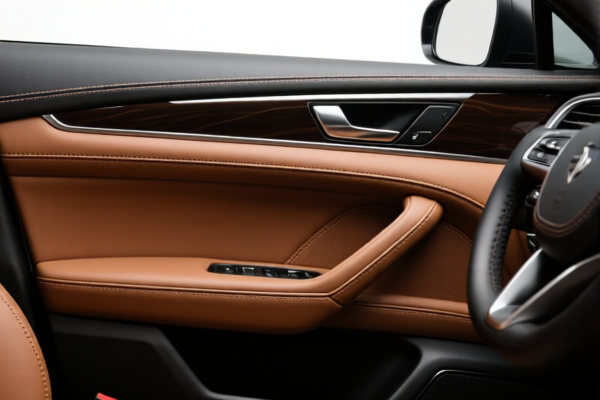
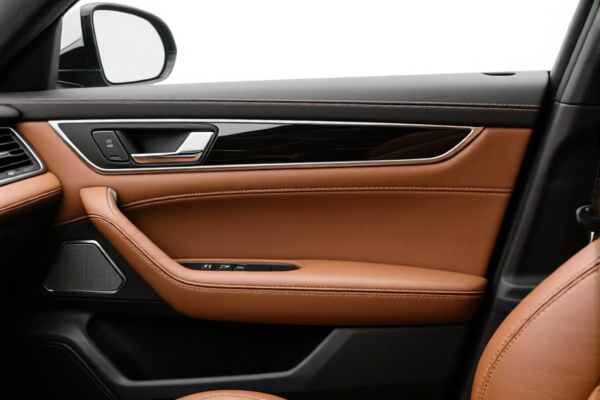
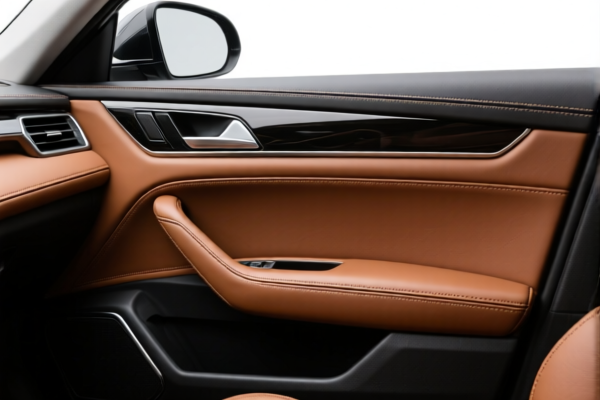
AI Analysis
🛩️ Aircraft Interior Leather (Aviation Grade)
🌐 HS Code Reference & Customs Clearance Guide | 2026 Latest Tariff Analysis | Professional Clearance Strategy
📌 I. Product Definition & Classification: What Exactly Is "Aircraft Interior Leather"?
Aircraft interior leather is not ordinary upholstery leather. It is a highly specialized industrial material engineered to meet stringent aviation safety standards (such as FAA FMVSS 302 for flammability, toxicity, and smoke density). In international trade, its classification depends heavily on the surface treatment (e.g., lacquered/patent vs. suede) and the state of processing (raw hide vs. finished article).
Key Distinctions: * Patent/Lacquered Leather: Leather treated with a plastic coating or lacquer, giving it a shiny, protective finish. * Suede/Napped Leather: Leather where the flesh side or grain side is abraded to create a soft, fuzzy texture. * Finished Leather Articles: Items that have been cut, sewn, or formed into specific components (like seat covers or panels), moving them from "raw material" categories to "manufactured goods."
⚠️ Critical Classification Point:
- If the leather has a plastic/lacquer coating (shiny surface) → It falls under Chapter 41, Heading 4114.
- If the leather is suede or napped → It also falls under Heading 4114 but different subheadings.
- If the leather is just tanned/curried without further manufacturing into a specific article → It may fall under Heading 4113.
- If the leather is already sewn into seats/panels → It falls under Chapter 42 (Leather Articles).
📦 II. HS Code Classification Details (2026 Latest Tariff Alignment)
Based on the provided data for "Animal Leather for Aircraft Interiors," here are the precise classifications:
| HS Code | Product Description | Material Attribute | Application |
|---|---|---|---|
4114.20.30.00 |
Animal leather prepared or further worked after tanning or chroming, including patent-leather and patent-lacquer leather | Patent/Lacquered (Matches lacquer material attribute) | Aircraft interior |
4114.10.00.00 |
Animal leather prepared or further worked after tanning or chroming, including patent-leather and patent-lacquer leather | Suede/Napped (Matches suede material attribute) | Aircraft interior |
4205.00.80.00 |
Other articles of leather or of composition leather | Finished Leather Article (Inferrred as manufactured goods) | Aircraft interior |
4113.20.00.00 |
Other leather, further worked after tanning or chroming, whether or not combined with other materials | Tanned/Finisged Leather (Categorized as further worked leather) | Aircraft interior |
4205.00.10.00 |
Other articles of leather or of composition leather | Finished Leather Article (Intended for technical/other uses) | Aircraft interior |
🔍 Key Insight:
- 4114 covers the leather material itself (processed but not yet assembled into a final product like a seat).
- 4205 covers articles made from leather (e.g., pre-cut seat covers, trim pieces).
- The choice between these affects the base tariff rate, which significantly impacts the total duty burden given the high additional tariffs.
💰 III. 2026 Latest Tariff Rate Breakdown (Including Surtaxes & Policy Add-ons)
✅ Applicable Country: United States (US)
✅ Origin: China (CN)
✅ Effective Date: As per current trade policies (2025-2026 period)
The total tariff consists of three components: 1. Base MFN Tariff: Applied to all imports. 2. Section 301 Tariff (25%): Additional duty on Chinese goods. 3. Section 122 Tariff (10%): Additional duty under specific trade acts (likely referencing IEEPA or specific legislative add-ons for high-risk categories).
🎯 1. 4114.20.30.00 – Patent/Lacquered Leather for Aircraft Interiors
| Item | Detail |
|---|---|
| Base Tariff | 2.3% |
| Section 301 Surcharge | +25.0% |
| Section 122 Surcharge | +10.0% |
| Total Tax Rate | 37.3% |
| Tax Calculation | CIF Value × 37.3% |
| Legal Basis Path | Base MFN + 301 Footnote + 122 Act Provision |
📌 Explanation:
- Base 2.3%: Standard rate for patent-leather.
- 25% + 10%: Aggressive surcharges apply to Chinese-origin leather goods. This makes the effective cost nearly 40% higher than the landed cost.
🎯 2. 4114.10.00.00 – Suede/Napped Leather for Aircraft Interiors
| Item | Detail |
|---|---|
| Base Tariff | 3.2% |
| Section 301 Surcharge | +25.0% |
| Section 122 Surcharge | +10.0% |
| Total Tax Rate | 38.2% |
| Tax Calculation | CIF Value × 38.2% |
| Legal Basis Path | Base MFN + 301 Footnote + 122 Act Provision |
📌 Note:
- Suede leather has a slightly higher base rate (3.2%) than lacquered leather (2.3%).
- Total burden is the highest among the 4114 options at 38.2%.
🎯 3. 4205.00.80.00 – Other Leather Articles (Aircraft Interior)
| Item | Detail |
|---|---|
| Base Tariff | 0.0% |
| Section 301 Surcharge | +25.0% |
| Section 122 Surcharge | +10.0% |
| Total Tax Rate | 35.0% |
| Tax Calculation | CIF Value × 35.0% |
| Legal Basis Path | Base MFN (0%) + 301 Footnote + 122 Act Provision |
📌 Advantage:
- Despite being a "finished article," the base tariff is 0%.
- Total effective rate is 35.0%, which is lower than the raw leather options (37.3% and 38.2%). This is a critical cost-saving optimization point.
🎯 4. 4113.20.00.00 – Other Further Worked Leather
| Item | Detail |
|---|---|
| Base Tariff | 4.2% |
| Section 301 Surcharge | +25.0% |
| Section 122 Surcharge | +10.0% |
| Total Tax Rate | 39.2% |
| Tax Calculation | CIF Value × 39.2% |
| Legal Basis Path | Base MFN + 301 Footnote + 122 Act Provision |
📌 Warning:
- This classification has the highest total tax rate at 39.2%. Avoid this code if other valid classifications apply, as it increases costs unnecessarily.
🎯 5. 4205.00.10.00 – Technical Leather Articles
| Item | Detail |
|---|---|
| Base Tariff | 0.0% |
| Section 301 Surcharge | +25.0% |
| Section 122 Surcharge | +10.0% |
| Total Tax Rate | 35.0% |
| Tax Calculation | CIF Value × 35.0% |
| Legal Basis Path | Base MFN (0%) + 301 Footnote + 122 Act Provision |
📌 Note:
- Same total rate as4205.00.80.00(35.0%).
- Use this if the product is explicitly for "technical uses" (e.g., gaskets, seals) rather than general interior trim.
🛠️ IV. Customs Clearance Practical Advice (Real-World Pitfall Guide)
✅ 1. Documentation Checklist (Non-Negotiable)
| Document | Required | Description |
|---|---|---|
| ✅ Technical Data Sheet | ✔️ | Must specify flammability compliance (FAA FMVSS 302), toxicity, and smoke density. |
| ✅ Material Composition | ✔️ | Clearly state: "Animal Leather, Tanned, [Lacquered/Suede]" to distinguish between 4114 and 4205. |
| ✅ Finished vs. Raw Status | ✔️ | Provide photos showing if the leather is raw hides, semi-finished, or pre-cut/finished articles. |
| ✅ Commercial Invoice | ✔️ | Must explicitly state "For Aircraft Interior Use" and correct HS Code. |
| ✅ Certificate of Origin | ✔️ | Essential for verifying CN origin to apply/avoid surcharges. |
✅ 2. Classification Strategy (Key Mantra)
🔥 "Finished Articles < Raw Leather for Tax Savings!"
| Scenario | Recommended HS Code | Total Tax | Why? |
|---|---|---|---|
| Pre-cut seat covers/trim pieces | 4205.00.80.00 or 4205.00.10.00 |
35.0% | Base tariff 0% makes it cheaper than raw leather (37.3%-39.2%). |
| Lacquered Leather Rolls/Skins | 4114.20.30.00 |
37.3% | Only use if the product is definitely not an "article." |
| Suede Leather Rolls/Skins | 4114.10.00.00 |
38.2% | Higher base rate makes this less attractive. |
| Further Worked but Not Article | 4113.20.00.00 |
39.2% | Avoid if possible; highest tax burden. |
📌 Critical Tip:
- If your supplier provides pre-cut or stitched leather components, declare them as Articles of Leather (Chapter 42) rather than Raw/Tanned Leather (Chapter 41).
- This shifts the base rate from 2.3%-4.2% to 0.0%, saving 2.3%-4.2% on the CIF value before surcharges.
✅ 3. Special Circumstances
| Scenario | Handling Advice |
|---|---|
| Composite Materials | If leather is laminated with fabric or foam, ensure the "essential character" is leather to stay in Chapter 41/42. |
| Synthetic Imitations | If not genuine animal leather, do NOT use 4114/4205. Use Chapter 59 or 39 (Plastics). Misclassification leads to severe penalties. |
| Sample Shipments | Even for samples, HS code determines duty. Do not under-declare value or misclassify as "gift" to avoid 35%+ duties. |
🌍 V. Global Market Comparison (2026 Update)
| Country/Region | Recommended HS Code | Total Effective Rate (CN Origin) | Key Requirement |
|---|---|---|---|
| 🇺🇸 USA | 4205.00.80.00 |
35.0% | FAA Compliance Docs |
| 🇨🇳 China | 4114.20.30.00 |
~2.3% (No 301/122) | GB Standards |
| 🇪🇺 EU | 4114.20.30.00 |
Varies (Check CHIO) | REACH Compliance |
| 🇬🇧 UK | 4114.20.30.00 |
Varies (Check UK GL) | Post-Brexit Rules |
📌 Conclusion:
- The US market imposes the highest effective duty (35-39.2%) due to the叠加 of Base + 301 + 122 tariffs.
- Optimization Strategy: Classify as Finished Articles (4205) to minimize the base rate.
📌 VI. Common Errors & Pitfalls (Blood Lessons)
❌ Error 1: Declaring pre-cut seat covers as "Raw Leather" (4114)
👉 Consequence: Pay 37.3-39.2% instead of 35.0%. Unnecessary cost increase.
❌ Error 2: Declaring synthetic leather as "Animal Leather" (4114)
👉 Consequence: Customs rejection, fines, and potential seizure for fraud.
❌ Error 3: Ignoring "122 Clause" tariff
👉 Consequence: Underpayment of 10%. Customs will demand back-payment + interest.
❌ Error 4: Missing FAA/FMVSS compliance docs
👉 Consequence: Delayed clearance, storage fees, or rejection by aviation authorities.
✅ Correct Practice:
"Finished Leather Articles for Aircraft Interiors, FAA FMVSS 302 Compliant, Pre-cut Seat Trims, Model XYZ"
🎯 VII. Conclusion: Precise Classification Saves Money!
🎯 Remember the Mantra:
🔹 "Finished Article (4205) beats Raw Leather (4114) for Tax Savings!"
🔹 "Base 0% + 25% + 10% = 35% Total. Avoid 4113 (39.2%)!"
📌 Pro Tip:
- If your product is genuine animal leather, ensure it is not mixed with significant synthetic materials that change its essential character.
- Consider applying for an Advance Ruling (Pre-classification) from CBP to lock in the 35.0% rate for 4205.00.80.00 and avoid post-import audits.
📣 Immediate Action:
📞 Consult a customs broker with aviation experience.
📄 Provide product photos and material specs.
🚀 Clear customs smoothly, comply with aviation standards, and protect your margins!
✨ Professional Clearance Starts with Accurate Classification!
💼 Your Cost is Calculated Down to the Penny!
Customer Reviews
About HS Code Classification
The Harmonized System (HS) is an internationally standardized nomenclature developed by the World Customs Organization (WCO) to classify traded products. Over 200 countries use the HS system as the basis for customs tariffs, trade statistics, and import/export regulations.
Each HS code follows a hierarchical structure:
- Chapter (2 digits) — Broad category of goods (e.g., Chapter 84: Machinery and Mechanical Appliances)
- Heading (4 digits) — More specific grouping within the chapter
- Subheading (6 digits) — Internationally standardized breakdown, used by all WCO member countries
- National subdivisions (8-10 digits) — Country-specific extensions for further classification, such as US HTSUS 10-digit codes
Correct HS code classification is essential for smooth customs clearance, accurate duty payment, and compliance with trade regulations. Misclassification can lead to customs delays, overpayment of duties, or penalties.
When importing from CN to US, the applicable tariff rates may include:
- Most-Favored-Nation (MFN) rate — The standard duty rate applied to WTO members
- General rate — Applied to countries without trade agreements
- Trade remedy duties — Additional tariffs such as Section 301 (anti-dumping), Section 232 (national security), or countervailing duties
The information provided on this page is for reference purposes only. For official classification, please consult with your local customs authority or a licensed customs broker.