Aircraft Landing Gear Tires
CN → US| HS Code | Tariff Rate | Origin | Destination | Doc |
|---|---|---|---|---|
| 4011300010 | 35.0% | CN | US | Official Doc |
| 4012130010 | 35.0% | CN | US | Official Doc |
| 4012201010 | 35.0% | CN | US | Official Doc |
Product Images
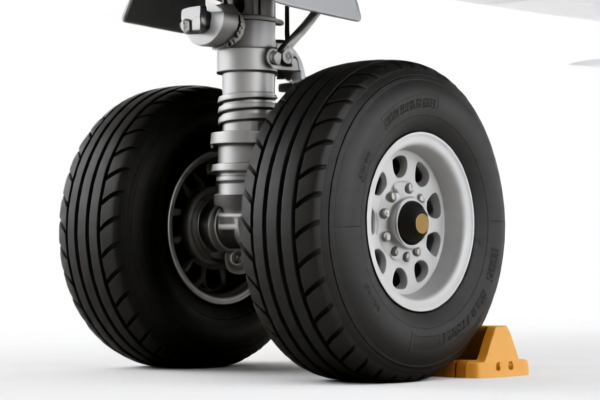
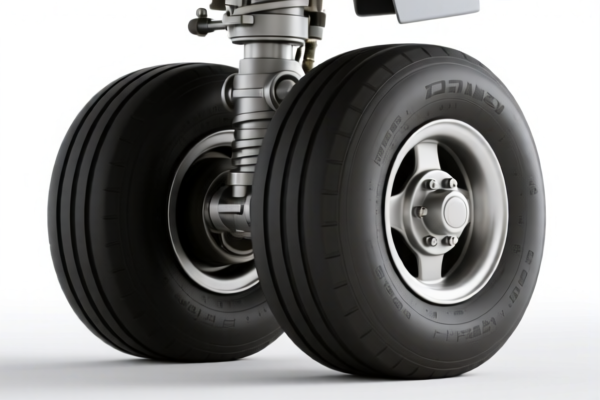
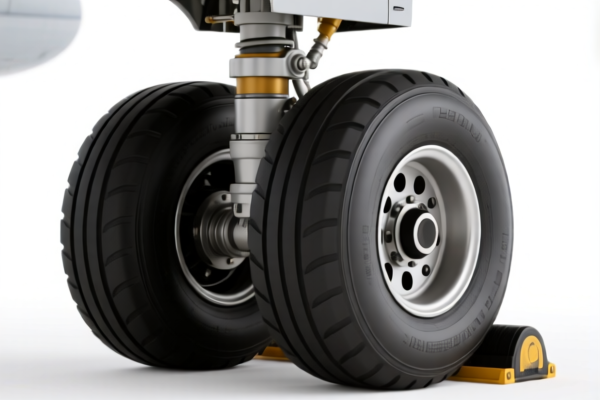
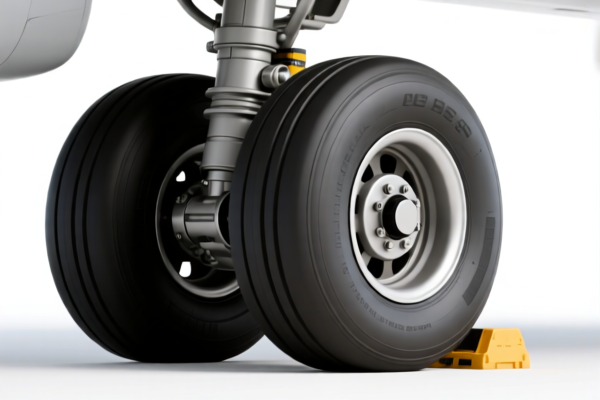
AI Analysis
✈️ Aircraft Landing Gear Tires (Aviation Pneumatic Tires)
🌐 HS Code Reference & Customs Clearance Guide | 2026 Latest Tariff Analysis | Professional Clearance Strategy
📌 I. Product Definition & Classification: Do You Really Understand "Aviation Tires"?
Aircraft landing gear tires are high-performance, specialized pneumatic tires designed to withstand extreme takeoff and landing forces, high speeds, and significant heat generation. In international trade, they are strictly classified based on their condition (new vs. remanufactured) and specific application (civilian vs. military/commercial).
Key Distinction: * New Pneumatic Tires: Brand new rubber tires manufactured for aircraft. * Retreaded/Rebuilt Tires: Tires that have had their tread replaced or repaired. Note: Retreading is a specific manufacturing process that changes the HS code classification in many jurisdictions.
⚠️ Critical Classification Point:
- If the tire is brand new and used for civilian aircraft, it falls under 4011.30.00.10 or 4012.20.10.10 depending on specific technical nuances (tread type).
- If the tire is retreaded/remanned (even if new tread is applied), it typically falls under 4012.13.00.10 (Retreaded pneumatic tires).
- Misclassification Alert: Do not confuse "Aviation Tires" with automotive tires (Chapter 4011 subheadings for motor vehicles). Aviation tires have unique structural reinforcements (steel belts, special rubber compounds) that require precise declaration.
📦 II. HS Code Classification Details (2026 Latest Tariff Authority Comparison)
| HS Code | Product Description | Application Scenario | Condition |
|---|---|---|---|
4011.30.00.10 |
Pneumatic tires, new, of rubber, for aircraft (Civilian) | New tires for commercial airliners, private jets, helicopters | ✅ New |
4012.13.00.10 |
Pneumatic tires, retreaded or used, of rubber, for aircraft (Civilian) | Remanufactured tires with new tread, recycled aviation tires | 🔄 Retreaded/Remanned |
4012.20.10.10 |
Pneumatic tires, new, of rubber, for aircraft (Civilian, Air-filled) | Specific subtype of new aviation tires (often high-pressure variants) | ✅ New |
🔍 Key Reminder:
- All three codes listed in<DATA>carry the same total tax rate of 35.0% due to specific trade policies.
- The distinction lies in customs inspection requirements: Retreaded tires (4012.13) often require additional proof of origin for the casing to ensure they meet safety standards.
- "Civilian Use" is Crucial: Military or special-purpose tires may have different codes or restrictions. Ensure the declaration explicitly states "Civilian Aircraft" (民用航空器).
💰 III. 2026 Latest Tariff Rate Breakdown (Including Surtaxes & Policy Add-ons)
✅ Applicable Country: United States (US)
✅ Country of Origin: China (CN)
✅ Effective Date: From November 10, 2025 (including subsequent imports)
🎯 1. All Applicable HS Codes (4011.30.00.10, 4012.13.00.10, 4012.20.10.10)
| Item | Detail |
|---|---|
| Base Tariff | 0.0% (ad valorem) |
| Section 301 Surcharge | +25.0% |
| Section 122 Tariff | +10.0% |
| Total Tariff Rate | 35.0% |
| Tax Calculation | CIF Value × 35% |
| De Minimis Exemption | ❌ Not Applicable (deny_de_minimis) |
| Legal Basis Path | USITC:4011.30.00.10/4012.13.00.10/4012.20.10.10 → Section 301 → Section 122 |
📌 Explanation:
- "Section 301 Surcharge 25%": This is the standard additional tariff imposed on Chinese goods under the U.S. Trade Act of 1974, Section 301.
- "Section 122 Tariff 10%": This refers to tariffs imposed under Section 122 of the Trade Act of 1974, often invoked for national security or economic protection reasons.
- Total 35%: This is a high-cost barrier. Importers must factor this into their landed cost calculations.
- No Exemptions: Aviation tires are strategic goods; they do not qualify for de minimis exemptions (small package waivers).
🛠️ IV. Customs Clearance Practical Advice (Battle-Tested Pitfall Guide)
✅ 1. Required Documentation Checklist (All Are Mandatory)
| Document | Mandatory? | Description |
|---|---|---|
| ✅ Product Specification Sheet | ✔️ | Must include dimensions, load index, speed rating, ply rating, and compound type. |
| ✅ Certificate of Conformity | ✔️ | Proof that tires meet FAA/EASA/CAAC standards for civilian aircraft. |
| ✅ Commercial Invoice | ✔️ | Must clearly state: "Aviation Pneumatic Tires for Civil Aircraft" and HS Code. |
| ✅ Packing List | ✔️ | Detail number of tires, weight, and any protective covers (aviation tires are sensitive to ozone/UV). |
| ✅ Origin Certificate | ✔️ | Essential for determining surcharge applicability. |
| ✅ Retread Verification (if applicable) | ✔️ | For 4012.13.00.10: Provide details on casing origin and retreading process. |
✅ 2. Declaration Tips (Key Mantra)
🔥 “Specify Civil, State New/Retread, Avoid Mislabeling!”
| Scenario | Correct Declaration | Wrong Action |
|---|---|---|
| New Tire for Boeing 737 | 4011.30.00.10 |
Mislabeling as "Car Tire" → Higher duty + fines |
| Retreaded Tire (New Tread) | 4012.13.00.10 |
Declaring as "New" → Fraud, severe penalties |
| Military Aircraft Tire | Different Code | Using Civilian Code → Clearance Hold |
| Used/Scrap Tires | Prohibited/Restricted | Declaring as "New" → Seizure |
✅ 3. Special Case Handling
| Situation | Handling Advice |
|---|---|
| OEM Aviation Tires | Provide OEM certification and part numbers. Avoid generic descriptions. |
| Retreaded Tires | Must prove the casing was originally an aviation tire. Non-aviation casings cannot be retreaded for aviation use. |
| High-Value Shipments | Consider Bonded Warehouses or FTZ (Foreign Trade Zones) to defer payment if applicable. |
| Safety Certifications | Ensure TC (Technical Standard Order) or equivalent is attached. Without this, customs may hold goods. |
🌍 V. Global Market Comparison (2026 Latest)
| Country/Region | Recommended HS Code | Tariff Rate | Certification Requirements | Notes |
|---|---|---|---|---|
| 🇺🇸 USA | 4011.30.00.10 / 4012.13.00.10 |
35% (China Origin) | FAA TC, DOT, Section 301/122 | Highest tariff burden. No de minimis. |
| 🇨🇳 China | 4011.30.00.10 |
~5-10% | CCC (if applicable), CAAC Approval | Lower duty, but strict safety checks. |
| 🇪🇺 EU | 4011.30.00 |
0-4% | EASA Approval, REACH | No Section 301/122 surcharges. |
| 🇬🇧 UK | 4011.30.00 |
0-4% | UKCA, CAA Approval | Post-Brexit rules apply. |
📌 Conclusion:
- USA is the most expensive market for Chinese-origin aviation tires due to Section 301 (25%) + Section 122 (10%).
- EU/UK/China offer significantly lower tariff barriers, but certification (FAA/EASA/CAAC) remains strict globally.
📌 VI. Common Errors & Pitfalls (Lessons Learned)
❌ Error 1: Declaring "Aviation Tire" without specifying "Civilian"
👉 Consequence: Customs may classify under military codes or hold for inspection → Delay & Storage Fees.
❌ Error 2: Misclassifying Retreaded Tires as New
👉 Consequence: If 4012.13.00.10 is required but 4011.30.00.10 is declared, it is fraud. Result: Seizure + Penalties.
❌ Error 3: Ignoring the "Section 122" Tariff
👉 Consequence: Underpaying by 10%. Result: Back Taxes + Interest upon audit.
❌ Error 4: Using Generic Names ("Rubber Tire")
👉 Consequence: High duty risk. Always use specific HS Code + Product Name.
✅ Correct Declaration Example:
"New Pneumatic Tires for Civil Aircraft, Rubber, Size 28x7.5, Load Index XX, FAA TC Approved, HS Code: 4011.30.00.10"
🎯 VII. Conclusion: Professional Declaration, Cost Control, Efficiency!
🎯 Remember the Mantra:
🔹 "Civilian, New/Retread, 35% Tax, No De Minimis!"
🔹 "HS Code determines fate, 35% is the wall, declare accurately, save your margin!"
📌 Pro Tip:
If your aviation tires are originally manufactured in Vietnam, Mexico, or Thailand, you may qualify for Exemptions from Section 301/122 surcharges, reducing the effective tariff to 0%.
Recommendation: Apply for an Advance Ruling (Ruling Letter) from U.S. Customs before shipment to confirm the final classification and duty liability.
📣 Immediate Action:
📞 Contact a Licensed Customs Broker + Provide Product Specs + Apply for Advance Ruling
🚀 Let your aviation tires pass smoothly, reduce costs, and ensure safety!
✨ Professional Clearance Starts with Accurate Classification!
💼 Every Dollar of Cost Deserves Precise Calculation!
Customer Reviews
About HS Code Classification
The Harmonized System (HS) is an internationally standardized nomenclature developed by the World Customs Organization (WCO) to classify traded products. Over 200 countries use the HS system as the basis for customs tariffs, trade statistics, and import/export regulations.
Each HS code follows a hierarchical structure:
- Chapter (2 digits) — Broad category of goods (e.g., Chapter 84: Machinery and Mechanical Appliances)
- Heading (4 digits) — More specific grouping within the chapter
- Subheading (6 digits) — Internationally standardized breakdown, used by all WCO member countries
- National subdivisions (8-10 digits) — Country-specific extensions for further classification, such as US HTSUS 10-digit codes
Correct HS code classification is essential for smooth customs clearance, accurate duty payment, and compliance with trade regulations. Misclassification can lead to customs delays, overpayment of duties, or penalties.
When importing from CN to US, the applicable tariff rates may include:
- Most-Favored-Nation (MFN) rate — The standard duty rate applied to WTO members
- General rate — Applied to countries without trade agreements
- Trade remedy duties — Additional tariffs such as Section 301 (anti-dumping), Section 232 (national security), or countervailing duties
The information provided on this page is for reference purposes only. For official classification, please consult with your local customs authority or a licensed customs broker.