Aircraft Seat Cushion
CN → US| HS Code | Tariff Rate | Origin | Destination | Doc |
|---|---|---|---|---|
| 3926305000 | 22.8% | CN | US | Official Doc |
| 9404902090 | 23.5% | CN | US | Official Doc |
| 6307909891 | 24.5% | CN | US | Official Doc |
| 6307909885 | 24.5% | CN | US | Official Doc |
| 9404909605 | 17.3% | CN | US | Official Doc |
Product Images
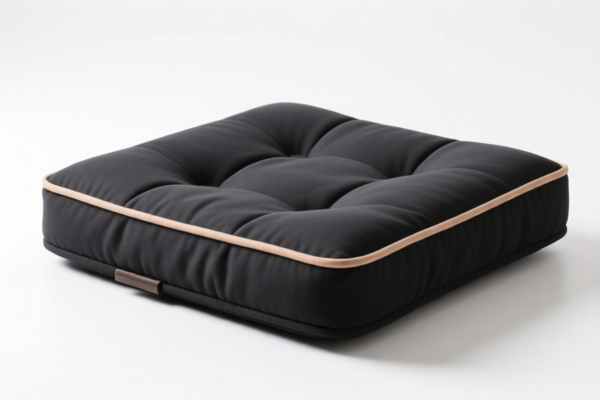
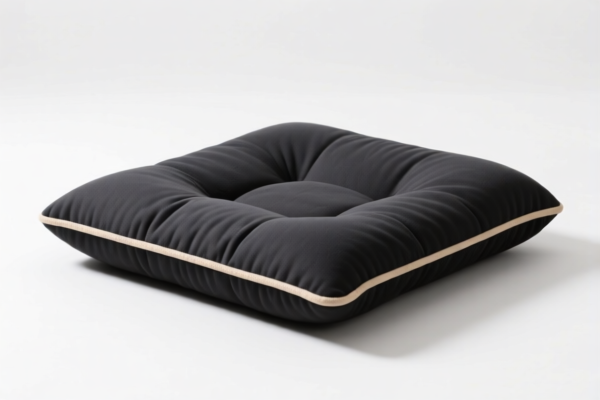
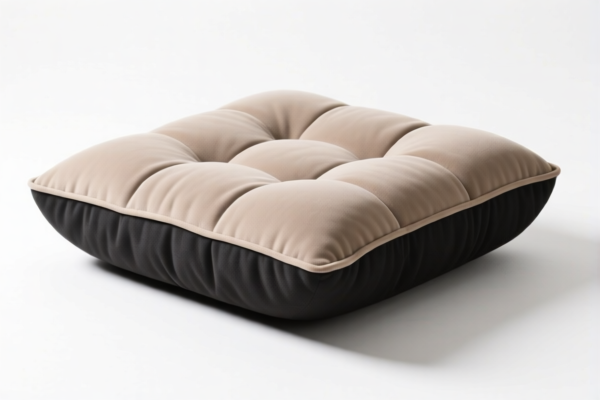
AI Analysis
🪑 Aircraft Seat Cushion (Aerospace & Automotive Components)
🌐 HS Code Reference & Customs Clearance Guide | 2026 Latest Tariff Analysis | Strategic Classification for Aerospace Parts
📌 I. Product Definition: What Exactly is an "Aircraft Seat Cushion"?
An Aircraft Seat Cushion is a critical component of aircraft seating systems, designed for comfort, durability, and strict regulatory compliance (FAA/EASA standards). Unlike generic car or office seat cushions, aerospace cushions must meet rigorous flammability (FAR 25.853), density, and longevity requirements.
In international trade, classification depends heavily on material composition and intended final use (Aerospace vs. General Automotive/Marine).
⚠️ Key Classification Distinction:
- If explicitly designed for aircraft/aerospace use with certified materials → Look at Chapter 94 (Furniture/Bedding) or Chapter 88 (Aircraft Parts) if deemed a specific part.
- If generic foam/plastic cushions used in cars, boats, or general furniture → Look at Chapter 39 (Plastics) or Chapter 63 (Textiles).
- Note: The provided data suggests generic or multi-purpose classifications rather than specific "Aircraft Part" codes (like 8803).
📦 II. HS Code Classification Details (Based on Provided Data)
The following HS Codes are derived from the provided dataset, categorized by material assumption and functional description.
| HS Code | Product Description | Material/Structure Assumption | Tax Rate (Total) |
|---|---|---|---|
3926.30.50.00 |
Other Plastic Articles | Inferred as Plastic/Synthetic Material成品 (Finished good); categorized as a "other" plastic article for furniture/car accessories. | 22.8% |
9404.90.20.90 |
Other Made-up Bedding/Seat Cushions | Inferred as Fiberfill/Sponge/Foam; fits "cushions and similar articles" under Furniture/Bedding. | 23.5% |
6307.90.98.91 |
Other Made-up Textile Articles | Classified as a Finished Textile Article; generic "other" category for made-up textile goods without specific conflict. | 24.5% |
6307.90.98.85 |
Other Made-up Textile Articles (Specific Sub-type) | Inferred as Cotton/Fabric-based; matches "pad-like" morphology and furniture accessory use. | 24.5% |
9404.90.96.05 |
Other Mattress/Bedding Parts | Inferred as Cotton/Non-conflicting Fabric outer shell; falls under "other" bedding/furniture parts. | 17.3% |
🔍 Critical Insight:
-3926.30.50.00assumes the cushion is primarily plastic/rigid foam.
-9404.90.20.90and9404.90.96.05assume textile/foam construction typical of upholstered seats.
-6307codes treat the cushion as a textile product, often attracting higher tariffs due to "Other" general textile rules.
💰 III. 2026 Detailed Tariff Breakdown (Including Additional Duties)
✅ Applicable Country: United States (US)
✅ Origin: China (CN)
✅ Effective Date: Post-November 2025 (Includes Section 301 & IEEPA tariffs)
🎯 1. 3926.30.50.00 —— Other Articles of Plastics (22.8% Total)
| Item | Detail |
|---|---|
| Base Tariff | 5.3% |
| Section 301 Tariff | +7.5% (List 4A/B/C/D depending on precise listing) |
| IEEPA Section 122 Tariff | +10% (Targeting China-origin goods) |
| Total Effective Rate | 22.8% |
| Calculation | CIF Value × 22.8% |
| De Minimis Exemption | ❌ Not Eligible (Deny de_minimis for Section 301/IEEPA goods under $800) |
| Legal Basis | IEEPA:9903.01.25 → USITC:3926.30.50.00 |
📌 Explanation:
- This code is classified under plastics. Even if the cushion is foam, if the outer shell is plastic or the foam is considered a plastic article, this applies.
- The 17.5% additional duty (7.5% + 10%) is significant. Always verify if the foam is "polyurethane" (Chapter 39/40) vs. textile-covered.
🎯 2. 9404.90.20.90 —— Other Bedding/Seat Cushions (23.5% Total)
| Item | Detail |
|---|---|
| Base Tariff | 6.0% |
| Section 301 Tariff | +7.5% |
| IEEPA Section 122 Tariff | +10% |
| Total Effective Rate | 23.5% |
| Calculation | CIF Value × 23.5% |
| De Minimis Exemption | ❌ Not Eligible |
| Legal Basis | IEEPA:9903.01.25 → USITC:9404.90.20.90 |
📌 Explanation:
- This is the most likely code for standard upholstered seat cushions (foam + fabric).
- Chapter 94 (Furniture) often has lower base tariffs than textiles, but the additional duties push the total high.
🎯 3. 9404.90.96.05 —— Other Mattress/Bedding Parts (17.3% Total) ✅ Best Rate Option
| Item | Detail |
|---|---|
| Base Tariff | 7.3% |
| Section 301 Tariff | 0.0% (Exempt or Lower List) |
| IEEPA Section 122 Tariff | +10% |
| Total Effective Rate | 17.3% |
| Calculation | CIF Value × 17.3% |
| De Minimis Exemption | ❌ Not Eligible |
| Legal Basis | IEEPA:9901.25 → USITC:9404.90.96.05 |
📌 Explanation:
- This is the most cost-effective classification among the provided options.
- It assumes the cushion is a "part" of bedding/furniture rather than a standalone textile article.
- Key Advantage: No Section 301 additional duty (only 10% IEEPA).
- Condition: Must be justifiable as a "part" or "accessory" under 9404, not a "textile product."
🎯 4. 6307.90.98.91 & 6307.90.98.85 —— Other Made-up Textile Articles (24.5% Total)
| Item | Detail |
|---|---|
| Base Tariff | 7.0% |
| Section 301 Tariff | +7.5% |
| IEEPA Section 122 Tariff | +10% |
| Total Effective Rate | 24.5% |
| Calculation | CIF Value × 24.5% |
| De Minimis Exemption | ❌ Not Eligible |
📌 Explanation:
- These codes classify the cushion purely as a textile product.
- Highest Risk: Chapter 63 textiles often face stricter scrutiny for "made-up" articles.
- Avoid if possible, as the rate (24.5%) is the highest among the options.
🛠️ IV. Customs Clearance Practical Advice (Real-World Pitfalls)
✅ 1. Documentation Checklist (Non-Negotiable)
| Document | Required? | Notes |
|---|---|---|
| Product Specification Sheet | ✔️ | Must detail material layers (e.g., "Outer: Flame-Retardant Fabric, Inner: High-Density PU Foam"). |
| Material Composition Statement | ✔️ | Crucial for distinguishing between 3926 (Plastic) and 9404 (Furniture) or 6307 (Textile). |
| Photos (Inside & Out) | ✔️ | Show stitching, foam density, and any labels/certifications (e.g., "Flame Retardant"). |
| Commercial Invoice | ✔️ | Clearly state "Seat Cushion for Aircraft/Automotive Use," not just "Cushion." |
| Certificate of Origin (CO) | ✔️ | Required for tariff calculation. |
| FIRMS/HTS Classification Report | ✔️ | If available, include to support HS Code selection. |
✅ 2. Classification Strategy & Tips
🔥 Golden Rule: "Material Defines Code, Use Defines Sub-category!"
| Scenario | Recommended HS Code | Reasoning |
|---|---|---|
| Plastic Shell + Foam Core | 3926.30.50.00 |
The primary characteristic is the plastic structure. |
| Fabric Cover + Foam Core (Standard) | 9404.90.20.90 |
Fits "Cushions" under Furniture. |
| Fabric Cover + Foam Core (Part of System) | 9404.90.96.05 |
Lowest Tax (17.3%). Argue it as a "part/accessory" of bedding/furniture. |
| Heavy Textile/Seat Cover Only | 6307.90.98.91 |
If it's just a cover without significant foam, it may be a textile article. |
⚠️ Avoid:
- Do not use6307codes if the cushion has significant foam (≥50% by weight) and is intended for seating, as9404is more appropriate.
- Do not assume "Aircraft" automatically grants a specific HS Code; unless it's a specialized part under Ch. 88, it defaults to general furniture/plastic rules.
✅ 3. Special Considerations for Aerospace Products
| Issue | Mitigation Strategy |
|---|---|
| Fire Resistance Certification | Provide FAR 25.853 test reports. While not changing HS Code, it validates the product's high value and justifies the description. |
| Dual-Use Items | If the cushion contains electronic heating elements, it may fall under 8516 (Heating) or 8529 (Aircraft Parts), NOT the codes above. Check for electronics! |
| Origin Marking | Ensure each cushion is marked "Made in China" to avoid Section 301/IEEPA disputes. |
🌍 V. Global Market Comparison (2026)
| Market | Recommended HS Code | Approx. Total Duty (China Origin) | Notes |
|---|---|---|---|
| 🇺🇸 USA | 9404.90.96.05 |
17.3% | Best rate. Avoid 6307 (24.5%). |
| 🇨🇳 China | 9404.90.90.00 |
~10% | Import duty + VAT. |
| 🇪🇺 EU | 9404.90 |
~5-12% | Depends on exact material. No Section 301. |
| 🇬🇧 UK | 9404.90 |
~5-12% | Post-Brexit rules apply. |
📌 Conclusion:
- For US Import,9404.90.96.05is the strategic winner due to the 0% Section 301 rate.
- Ensure the product description supports "bedding/furniture part" rather than "textile article."
📌 VI. Common Errors & Pitfalls (Lessons Learned)
❌ Error 1: Classifying as 6307 (Textile) without justification.
👉 Result: Pay 24.5% instead of 17.3%.
👉 Fix: Provide material breakdown showing foam/core importance.
❌ Error 2: Claiming Aerospace Part (Ch. 88) without specific engineering drawings.
👉 Result: Customs rejects Ch. 88, reclassifies to Ch. 94 or 39, and applies penalties.
👉 Fix: Only use Ch. 88 if it's a unique, non-generic part. Otherwise, use Ch. 94.
❌ Error 3: Ignoring IEEPA 10% Surcharge.
👉 Result: Underpaying taxes. All codes above have a 10% IEEPA duty.
👉 Fix: Budget for Base + 301 + 10%.
✅ Correct Declaration Example:
"Seat Cushion, Made-Up, consisting of Polyurethane Foam Core covered with Flame-Retardant Fabric, for use in Aircraft Seating Systems. Model: XYZ-123. Origin: China."
🎯 VII. Conclusion: Optimize Your Customs Strategy
🎯 Key Takeaway:
🔹 Best Rate:
9404.90.96.05(17.3%)
🔹 Avoid:6307Codes (24.5%)
🔹 Critical: Justify "Furniture/Beding Part" over "Textile Article" to save 7.2% in tariffs.
📌 Pro Tip:
If your cushion is heated or contains electronics, do NOT use these codes. Re-classify under Chapter 85 or 88 immediately, as the presence of electrical components changes the classification entirely.
📣 Immediate Action:
📞 Consult a customs broker for a Pre-Ruling on
9404.90.96.05if your product qualifies.
🚀 Save 7.2% on every shipment by choosing the right HS Code!
✨ Precision in Classification = Profit in Your Pocket!
💼 Don't let tariffs eat your margins. Classify smart, clear fast, sell more!
Customer Reviews
About HS Code Classification
The Harmonized System (HS) is an internationally standardized nomenclature developed by the World Customs Organization (WCO) to classify traded products. Over 200 countries use the HS system as the basis for customs tariffs, trade statistics, and import/export regulations.
Each HS code follows a hierarchical structure:
- Chapter (2 digits) — Broad category of goods (e.g., Chapter 84: Machinery and Mechanical Appliances)
- Heading (4 digits) — More specific grouping within the chapter
- Subheading (6 digits) — Internationally standardized breakdown, used by all WCO member countries
- National subdivisions (8-10 digits) — Country-specific extensions for further classification, such as US HTSUS 10-digit codes
Correct HS code classification is essential for smooth customs clearance, accurate duty payment, and compliance with trade regulations. Misclassification can lead to customs delays, overpayment of duties, or penalties.
When importing from CN to US, the applicable tariff rates may include:
- Most-Favored-Nation (MFN) rate — The standard duty rate applied to WTO members
- General rate — Applied to countries without trade agreements
- Trade remedy duties — Additional tariffs such as Section 301 (anti-dumping), Section 232 (national security), or countervailing duties
The information provided on this page is for reference purposes only. For official classification, please consult with your local customs authority or a licensed customs broker.