Aircraft Specific Retreaded Tires
CN → US| HS Code | Tariff Rate | Origin | Destination | Doc |
|---|---|---|---|---|
| 4012130010 | 10.0% | CN | US | Official Doc |
| 4012130050 | 10.0% | CN | US | Official Doc |
| 4011300010 | 35.0% | CN | US | Official Doc |
| 4011300050 | 35.0% | CN | US | Official Doc |
Product Images
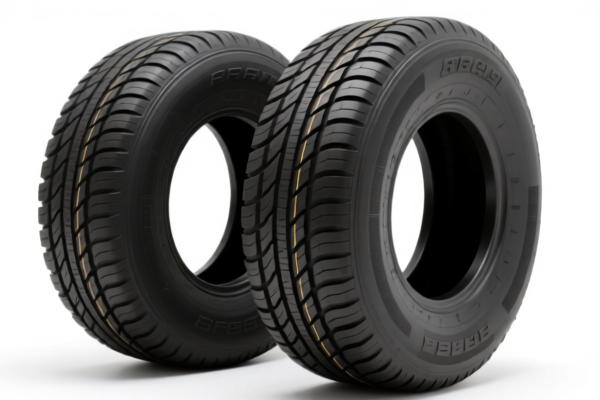
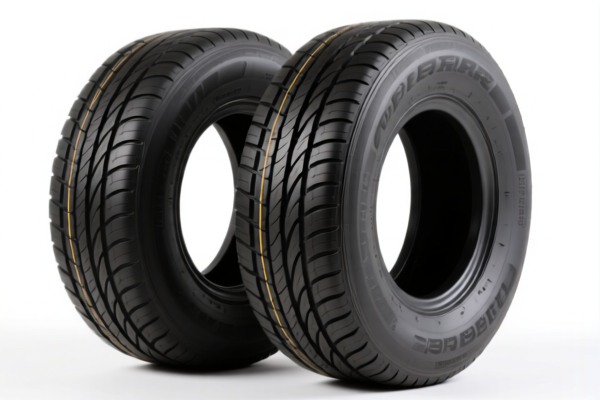
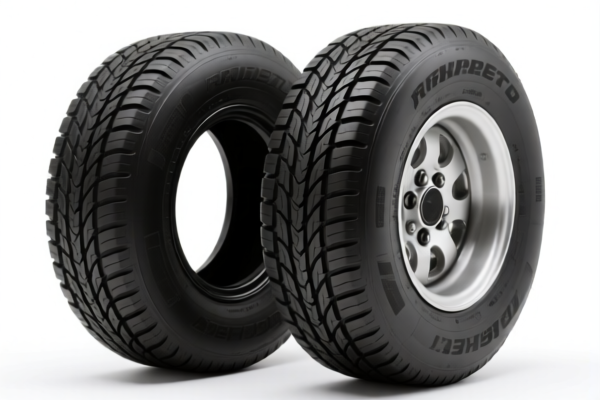
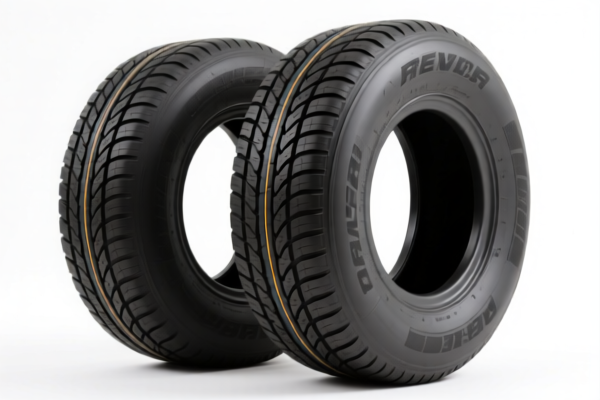
AI Analysis
🛩️ Aircraft Specific Retreaded Tires
🌐 HS Code Reference & Customs Clearance Guide | 2026 Latest Tariff Analysis | Specialized Aviation Logistics Strategy
📌 I. Product Definition & Classification: What Are "Aircraft Specific Retreaded Tires"?
Aircraft specific retreaded tires are specialized rubber products designed for aviation use. Unlike standard automotive tires, these are recapped (retreaded) or used tires that meet rigorous aviation safety standards. In international trade, they are primarily classified under Chapter 40 (Rubber and Articles Thereof), specifically within heading 4012 (Retreaded or used pneumatic tires, of rubber).
The classification depends heavily on the material composition (whether they are explicitly "rubber" or "inflatable") and the condition (retreaded vs. used).
⚠️ Key Distinction Point:
- If the summary explicitly states "Rubber-made retreaded or used pneumatic tires" → Generally lower tax burden (10%).
- If the summary implies "Inflatable tires" without specifying "rubber" or is inferred as such → Higher tax burden (35%).
- Crucial Note: The presence of "Section 301" (122 Section) tariffs adds an extra 10% to the base rate, which combines with other surcharges.
📦 II. HS Code Classification Details (Based on Provided Data)
| HS Code | Product Description | Tax Rate | Tax Breakdown |
|---|---|---|---|
4012.13.00.10 |
Aircraft-specific retreaded tires, matched for aircraft use & rubber-made retreaded or used pneumatic tires | 10.0% | Base: 0.0% + Surcharge: 0.0% + Section 122: 10% |
4012.13.00.50 |
Aircraft-specific retreaded tires, matched for aircraft use & retreaded tires | 10.0% | Base: 0.0% + Surcharge: 0.0% + Section 122: 10% |
4011.30.00.10 |
Aircraft-specific retreaded tires, matched for aircraft use & rubber-made pneumatic tires | 35.0% | Base: 0.0% + Surcharge: 25.0% + Section 122: 10% |
4011.30.00.50 |
Aircraft-specific retreaded tires, matched for aircraft use & pneumatic tires (Inferred as rubber-made) | 35.0% | Base: 0.0% + Surcharge: 25.0% + Section 122: 10% |
🔍 Critical Analysis:
- The 10% rate applies to items clearly identified as "retreaded" or "rubber-made used" under specific subheadings (4012).
- The 35% rate applies to items classified under4011(likely new or differently defined pneumatic tires) where a 25% additional surcharge is applied, plus the mandatory 10% Section 122 tariff.
- Why the difference? Customs authorities scrutinize whether the tire is truly "retreaded" (Chapter 4012) or if it falls under general pneumatic tires (Chapter 4011). Misclassification can lead to a 25% penalty in tariffs.
💰 III. Detailed Tariff Rate Explanation (2026 Latest)
✅ Applicable Market: United States (US)
✅ Origin: China (CN) (Implied by "122 Section" which refers to Section 301/Trade War tariffs)
✅ Effective Date: Current as of 2025-2026
🎯 1. 4012.13.00.10 & 4012.13.00.50 – The 10% Tariff Tier
| Item | Content |
|---|---|
| Base Tariff | 0% |
| Additional Surcharge | 0% |
| Section 122 (Section 301) Tariff | +10% |
| Total Effective Rate | 10% |
| Calculation | CIF Value × 10% |
| De Minimis Exemption | ❌ Not Eligible (Section 301 tariffs generally override de minimis exemptions) |
| Legal Basis | USTR Section 301 List 4A / Trade Policy Rulebook |
📌 Explanation:
- These codes represent retreaded tires explicitly categorized under Chapter 4012.
- While the base tariff is 0%, the 10% Section 301 tariff still applies to Chinese-origin goods.
- No additional 25% surcharge is applied here, making this the preferred classification if the goods are indeed retreaded.
🎯 2. 4011.30.00.10 & 4011.30.00.50 – The 35% Tariff Tier
| Item | Content |
|---|---|
| Base Tariff | 0% |
| Additional Surcharge | +25% |
| Section 122 (Section 301) Tariff | +10% |
| Total Effective Rate | 35% |
| Calculation | CIF Value × 35% |
| De Minimis Exemption | ❌ Not Eligible |
| Legal Basis | USTR Section 301 List 3/4 + USITC Footnotes |
📌 Explanation:
- These codes fall under 4011, which may be interpreted as new pneumatic tires or tires not meeting the strict "retreaded" definition of 4012.
- The 25% additional surcharge is a significant penalty, likely due to trade friction measures on specific rubber products.
- Combined with the 10% Section 301 tariff, the total duty is 3.5 times higher than the 4012 classification.
🛠️ IV. Customs Clearance Practical Advice (Real-World Pitfall Guide)
✅ 1. Documentation Checklist (Non-Negotiable)
| Document | Required | Description |
|---|---|---|
| ✅ Product Specification Sheet | ✔️ | Must explicitly state "Retreaded" or "Recapped". Include manufacturer details of the retreading process. |
| ✅ Certificate of Origin | ✔️ | Crucial for determining Section 301 applicability. |
| ✅ Commercial Invoice | ✔️ | Description must match HS Code precisely. Avoid vague terms like "Tires". Use "Aircraft Retreaded Tires". |
| ✅ Bill of Lading | ✔️ | Ensure weight and quantity match invoice. |
| ✅ Retreading Process Documentation | ✔️ | Proof that the tires underwent certified retreading (e.g., ISO 9001 certified retread facility). |
| ✅ Aviation Safety Certification | ✔️ | FAA/EASA approval documents if applicable. |
✅ 2. Declaration Strategy (Key Mnemonics)
🔥 "Retreaded = 4012, New = 4011, Mislabel = 35% Pain!"
| Scenario | Correct Declaration | Incorrect Declaration | Consequence |
|---|---|---|---|
| True Retreaded Tires | 4012.13.00.10 |
4011.30.00.10 |
Overpayment of 25% surcharge |
| New Pneumatic Tires | 4011.30.00.10 |
4012.13.00.10 |
Under-declaration → Penalty + Smuggling Risk |
| Used Tires (Non-Retreaded) | Verify if "Retreaded" applies | Declare as "Retreaded" | Fraud Risk if not certified retreaded |
| Mixed Shipment | Separate lines for 4012 and 4011 | Combined line item | Customs Hold + Inspection Delay |
✅ 3. Special Considerations
| Issue | Solution |
|---|---|
| "Inferred as Rubber-Made" | Ensure your invoice explicitly states "Rubber-Made" to avoid the 35% rate. Ambiguity leads to the higher bracket. |
| Section 301 Exclusions | Check if your specific manufacturer/product ID is on the Section 301 Exclusion List. If excluded, the 10% (or 25%) surcharge may be waived. |
| Aviation Specificity | Emphasize "Aircraft-Specific" in descriptions to justify the specialized nature, but ensure it aligns with HS definitions. |
🌍 V. Global Market Comparison (2026)
| Region | Recommended HS Code | Duty Rate | Key Requirements | Notes |
|---|---|---|---|---|
| 🇺🇸 USA | 4012.13.00.10 |
10% | Section 301 Compliance | Avoid 4011 to save 25%. |
| 🇨🇳 China | 4012.13.00.10 |
0% | Standard Import | Low duty for retreaded tires. |
| 🇪🇺 EU | 4012.10.00.00 |
Various | CE Marking, Safety Standards | Different HS structure; check TARIC code. |
| 🇬🇧 UK | 4012.10.00.00 |
Various | UKCA Marking | Post-Brexit rules apply. |
| 🇦🇺 Australia | 4012.10.00.00 |
5% | RCM Certification | Generally favorable for rubber goods. |
📌 Conclusion:
- USA is the most critical market due to Section 301 tariffs.
- Misclassification between 4012 and 4011 is the #1 risk, costing an extra 25%.
- Retreaded status must be proven with documentation.
📌 VI. Common Errors & Pitfalls (Blood-Red Lessons)
❌ Error 1: Declaring Retreaded Tires as New Pneumatic Tires (4011).
👉 Result: You pay 35% instead of 10%. Loss: 25% of CIF Value.
❌ Error 2: Declaring New Tires as Retreaded (4012).
👉 Result: Customs Fraud. Goods seized, heavy fines, potential blacklisting.
❌ Error 3: Vague Description "Aircraft Tires" without specifying Retreaded/Used.
👉 Result: Customs may infer "New" → 35% Rate.
❌ Error 4: Ignoring Section 301 Exclusions.
👉 Result: Paying 10% when you could have paid 0% if your manufacturer is on the exclusion list.
✅ Correct Practice:
"Aircraft Retreaded Tires, Rubber-Made, Specific for [Model], Cert. No. [XXX], Origin: CN"
🎯 VII. Conclusion: Precision Classification Saves Money!
🎯 Remember the Mnemonic:
🔹 "Retreaded = 4012 = 10% | Pneumatic/New = 4011 = 35%"
🔹 "Prove it's Retreaded, or Pay the Penalty!"
📌 Pro Tip:
- If your tires are not retreaded but used, ensure they meet the definition of "Used Pneumatic Tires" under 4012. If not, they may fall under waste/reject categories with different duties.
- Always apply for a Section 301 Exclusion if your product was eligible during the open periods.
📣 Immediate Action:
📞 Audit your invoices for keywords "Retreaded" vs. "Pneumatic".
📄 Gather retreading certificates from your supplier.
🚀 File accurately under 4012.13.00.10/50 to minimize costs.
✨ Professional Clearance Starts with Accurate Classification!
💼 Don't let a 25% surcharge cut into your aviation logistics margins!
Customer Reviews
About HS Code Classification
The Harmonized System (HS) is an internationally standardized nomenclature developed by the World Customs Organization (WCO) to classify traded products. Over 200 countries use the HS system as the basis for customs tariffs, trade statistics, and import/export regulations.
Each HS code follows a hierarchical structure:
- Chapter (2 digits) — Broad category of goods (e.g., Chapter 84: Machinery and Mechanical Appliances)
- Heading (4 digits) — More specific grouping within the chapter
- Subheading (6 digits) — Internationally standardized breakdown, used by all WCO member countries
- National subdivisions (8-10 digits) — Country-specific extensions for further classification, such as US HTSUS 10-digit codes
Correct HS code classification is essential for smooth customs clearance, accurate duty payment, and compliance with trade regulations. Misclassification can lead to customs delays, overpayment of duties, or penalties.
When importing from CN to US, the applicable tariff rates may include:
- Most-Favored-Nation (MFN) rate — The standard duty rate applied to WTO members
- General rate — Applied to countries without trade agreements
- Trade remedy duties — Additional tariffs such as Section 301 (anti-dumping), Section 232 (national security), or countervailing duties
The information provided on this page is for reference purposes only. For official classification, please consult with your local customs authority or a licensed customs broker.