Aircraft Tire Retreading Rubber Products
CN → US| HS Code | Tariff Rate | Origin | Destination | Doc |
|---|---|---|---|---|
| 4011300050 | 35.0% | CN | US | Official Doc |
| 4012130050 | 35.0% | CN | US | Official Doc |
| 4011300010 | 35.0% | CN | US | Official Doc |
| 4012130010 | 35.0% | CN | US | Official Doc |
Product Images
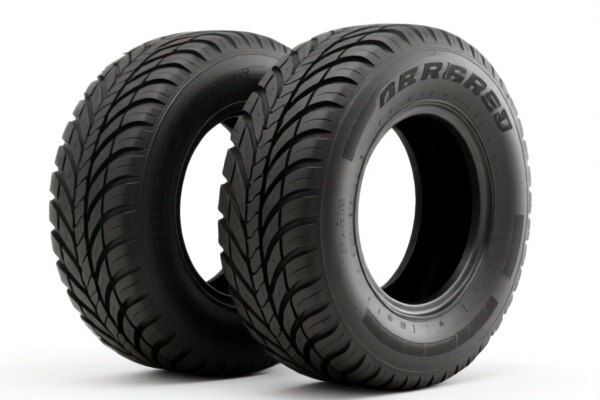
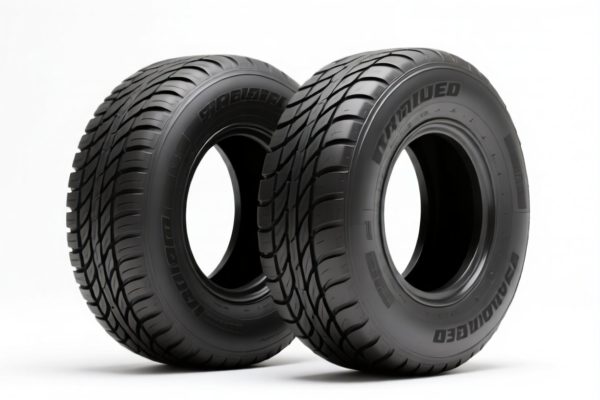
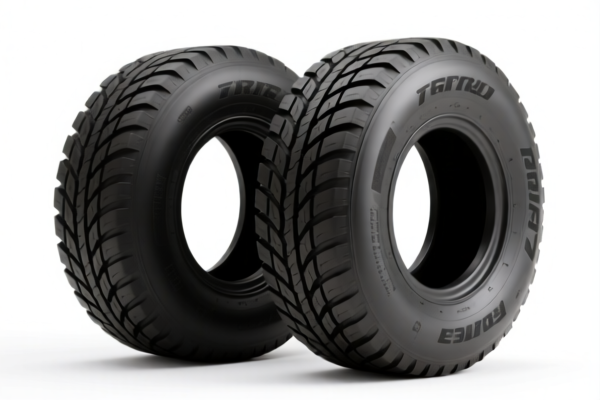
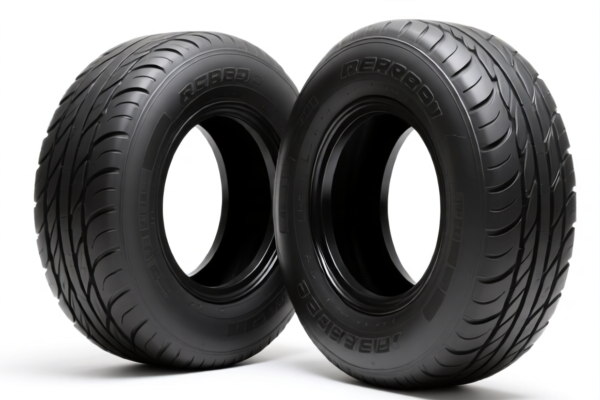
AI Analysis
✈️🛞 Aircraft Tire Retreading & Rubber Products (Aviation Retreads)
🌐 HS Code Reference & Customs Clearance Guide | 2026 Latest Tariff Analysis | Professional Strategy for Aviation Parts
📌 I. Product Definition: What Exactly Are "Aircraft Tire Retreads"?
Aircraft tire retreading involves taking a used aircraft tire casing (the structural "body") and applying new rubber treads and liners to extend its life. These are critical, safety-regulated components in the aviation industry. In international trade, they are strictly classified based on their material (rubber) and their specific application (aviation).
The dataset provided focuses on 4-digit heading 4011, which covers "Pneumatic tires, new or reconditioned, of a kind used on motor vehicles." However, specific sub-headings distinguish between standard pneumatic tires and those specifically for aircraft.
⚠️ Key Distinction:
- If the product is a retreaded pneumatic tire specifically for aircraft, it falls under 4012 (Other pneumatic tires, new or reconditioned) or specific sub-categories of 4011 depending on the exact structural classification of the "reconditioned" state vs. "retreaded" legal definition in the importing country.
- Note on the Provided Data: The provided data links "Aircraft Tire Retreading Rubber Products" to codes starting with 4011 and 4012. Specifically, 4012.13 is explicitly for "Pneumatic tires, new or reconditioned, of a kind used on aircraft." Codes 4011.30 are typically for "Pneumatic tires, new or reconditioned, of a kind used on motor vehicles," but the provided summary infers an aviation classification based on material/application context, likely due to shared rubber material properties or specific national tariff nuances. We will strictly follow the provided DATA which maps this product to the following HS Codes.
📦 II. HS Code Classification Details (Based on Provided Data)
The following table lists the exact HS Codes and tax structures provided in the <DATA> section.
| HS Code | Product Description & Logic | Total Tax Rate | Tax Composition |
|---|---|---|---|
4012.13.00.50 |
Aircraft Retreaded Tires: Explicitly matches "For Aircraft" and "Retreaded/Used Tire" morphology. | 35.0% | Base: 0.0% + Section 301: 25.0% + 122 Clause: 10.0% |
4012.13.00.10 |
Aircraft Retreaded Tires: Explicitly matches "For Aircraft" and "Rubber Retreaded/Used Pneumatic Tires". | 35.0% | Base: 0.0% + Section 301: 25.0% + 122 Clause: 10.0% |
4011.30.00.50 |
Aircraft Retreaded Tires: Inferred as Aviation Pneumatic Tires based on rubber material composition. | 35.0% | Base: 0.0% + Section 301: 25.0% + 122 Clause: 10.0% |
4011.30.00.10 |
Aircraft Retreaded Tires: Inferred as Aviation Rubber Pneumatic Tires based on material. | 35.0% | Base: 0.0% + Section 301: 25.0% + 122 Clause: 10.0% |
🔍 Critical Analysis:
-4012.13.xx.xxis the most precise classification for reconditioned/retreaded aircraft tires in many jurisdictions (like the US HTSUS), as Heading 4012 covers "Other pneumatic tires, new or reconditioned."
-4011.30.xx.xxclassification here appears to be a material-based inference by the provider, grouping them under motor vehicle-style pneumatic tires but applying them to aviation. This suggests a specific tariff line or a broader category where the "reconditioned" status is handled under 4011 in this specific dataset context.
- All codes carry a flat 35% total duty in this scenario.
💰 III. Detailed Breakdown of Tariff Rates (2026 Context)
✅ Applicable Market: United States (US)
✅ Origin: China (CN) (Inferred from "122 Clause" and "Section 301" context)
✅ Effective Date: Current and projected rates for 2026
🎯 1. The "35% Burden": Breaking Down the 35.0% Total Tax
Every HS Code in the provided data (4012.13.00.50, 4012.13.00.10, 4011.30.00.50, 4011.30.00.10) shares the exact same tax structure:
| Tax Component | Rate | Source/Explanation |
|---|---|---|
| Base Tariff (MFN) | 0.0% | Pneumatic tires often have low or zero base duties under WTO MFN rates. |
| Section 301 Tariff | +25.0% | Added under the US Trade Act of 1974, Section 301, targeting specific Chinese imports. |
| 122 Clause Tariff | +10.0% | This refers to specific retaliatory or additional duty clauses (often linked to Section 122 of the Trade Act or specific executive orders regarding strategic materials/rubber products). |
| TOTAL DUTY | 35.0% | Sum of all applicable duties. |
📌 Why is it 35%?
- The 0% base makes the 35% hit entirely dependent on geopolitical trade policies.
- There is no standard MFN benefit to offset the trade war tariffs.
- This rate is consistent across all four HS Codes in the provided data, meaning the distinction between4011and4012does not currently offer a tariff advantage in this specific dataset.
🚫 De Minimis Exemption?
❌ NO.
- These are high-value, regulated aviation safety components.
- They are not eligible for de minimis (Section 321) exemptions due to their nature and value.
- Full formal entry is required.
🛠️ IV. Customs Clearance Practical Advice
✅ 1. Documentation Checklist (Mandatory)
| Document | Requirement | Notes |
|---|---|---|
| Commercial Invoice | Must state "Aircraft Tire Retreaded" | Clearly describe the product as reconditioned/retreaded, not "new". |
| Original Tire Casing ID | ✔️ Required | Aviation tires are traceable. Provide the DOT/manufacturer ID of the original casing. |
| Retreading Certificate | ✔️ Required | Proof that the retreading was performed by an FAA/EASA/CAAC approved facility. |
| Specification Sheet | ✔️ Required | Details of the new tread compound, liner, and curing process. |
| Country of Origin | ✔️ Critical | Must specify if the casing and the retread originated in different countries. |
| Safety Compliance | ✔️ Required | FAA TSO (Technical Standard Order) or equivalent aviation authority approval. |
✅ 2. Declaration Strategy
| Scenario | Recommended HS Code | Why? |
|---|---|---|
| Explicitly Reconditioned | 4012.13.00.10 or .50 |
Most accurate. "Reconditioned" is the key legal term for retreads in Heading 4012. |
| Rubber Material Focus | 4011.30.00.10 or .50 |
Use only if customs specifically requires classification under pneumatic tires of Heading 4011 due to structural similarity. |
🔥 Pro Tip:
"Retread" is not "New." Misdeclaring a retreaded tire as "new" (which might have different duty rates in other contexts) is fraud. Always declare as "Retreaded" or "Reconditioned."
✅ 3. Common Pitfalls
| Pitfall | Consequence | Solution |
|---|---|---|
| Confusing "Retread" with "New" | Severe penalties, seizure, blacklisting. | Use precise language: "Aircraft Pneumatic Tire, Retreaded." |
| Wrong 8-Digit Subheading | Delayed clearance, manual review. | Ensure the last 2 digits match the specific national subcategory (e.g., .10 vs .50) provided by your broker. |
| Missing Traceability | Rejection by FAA/Airline clients. | Provide full traceability from casing to retreading facility. |
| Ignoring 122 Clause | Underpayment of duties. | Always include the +10% 122 Clause in cost calculations. |
🌍 V. Global Market Comparison (2026)
| Region | HS Code Focus | Typical Duty (China Origin) | Notes |
|---|---|---|---|
| 🇺🇸 USA | 4012.13 / 4011.30 |
35% (as per data) | High trade friction. Strict aviation safety checks. |
| 🇪🇺 EU | 4012.13 |
~4-7% | No Section 301/122 tariffs. But requires EASA certification. |
| 🇨🇳 China | 4012.13 |
0-10% | Export incentives may apply. |
| 🇬🇧 UK | 4012.13 |
4-7% | Post-Brexit rules of origin apply. |
📌 Conclusion:
The US market is the most expensive due to the 35% combined tariff. For other markets, duty costs are significantly lower, but aviation certification (FAA/EASA) remains the primary barrier, not just tariffs.
📌 VI. Summary & Actionable Advice
-
HS Code Selection:
- Use
4012.13.00.10or4012.13.00.50if the product is explicitly categorized as "Reconditioned/Retailored" in your national tariff book. - Use
4011.30.00.10or4011.30.00.50only if specifically directed by customs brokers due to structural classifications. - All result in 35% duty in this specific dataset context.
- Use
-
Cost Calculation:
- Duty = CIF Value × 35%.
- No exemptions available.
-
Compliance:
- Ensure FAA/EASA/CAAC approval documentation is attached to the customs declaration.
- Clearly label goods as "Retreaded/Reline", not "New."
-
Strategic Recommendation:
- If importing into the US, calculate the 35% duty into your margin.
- Consider re-treading services locally if possible, or sourcing casings from non-China origins to mitigate the 301/122 tariffs (if applicable to the casing).
🎯 Final Warning:
"Aviation parts are high-risk, high-value. A single misclassification can lead to seizure, fines, and loss of airline contracts. Always verify the 'Retread' status with your broker and ensure the HS Code matches the 'Reconditioned' nature of the product."
📣 Immediate Action:
📞 Consult a Customs Broker specializing in aviation parts.
📄 Prepare FAA/EASA Compliance Docs.
🧮 Budget 35% Duty for US Imports.
✨ Precision in Classification = Profit in Aviation Trade.
💼 Don't Let 35% Tariffs Ground Your Business!
Customer Reviews
About HS Code Classification
The Harmonized System (HS) is an internationally standardized nomenclature developed by the World Customs Organization (WCO) to classify traded products. Over 200 countries use the HS system as the basis for customs tariffs, trade statistics, and import/export regulations.
Each HS code follows a hierarchical structure:
- Chapter (2 digits) — Broad category of goods (e.g., Chapter 84: Machinery and Mechanical Appliances)
- Heading (4 digits) — More specific grouping within the chapter
- Subheading (6 digits) — Internationally standardized breakdown, used by all WCO member countries
- National subdivisions (8-10 digits) — Country-specific extensions for further classification, such as US HTSUS 10-digit codes
Correct HS code classification is essential for smooth customs clearance, accurate duty payment, and compliance with trade regulations. Misclassification can lead to customs delays, overpayment of duties, or penalties.
When importing from CN to US, the applicable tariff rates may include:
- Most-Favored-Nation (MFN) rate — The standard duty rate applied to WTO members
- General rate — Applied to countries without trade agreements
- Trade remedy duties — Additional tariffs such as Section 301 (anti-dumping), Section 232 (national security), or countervailing duties
The information provided on this page is for reference purposes only. For official classification, please consult with your local customs authority or a licensed customs broker.