Airplane Interior Buffalo Grain Panel
CN → US| HS Code | Tariff Rate | Origin | Destination | Doc |
|---|---|---|---|---|
| 3926305000 | 22.8% | CN | US | Official Doc |
| 3926909989 | 22.8% | CN | US | Official Doc |
| 3921905050 | 39.8% | CN | US | Official Doc |
| 3921904090 | 39.2% | CN | US | Official Doc |
Product Images
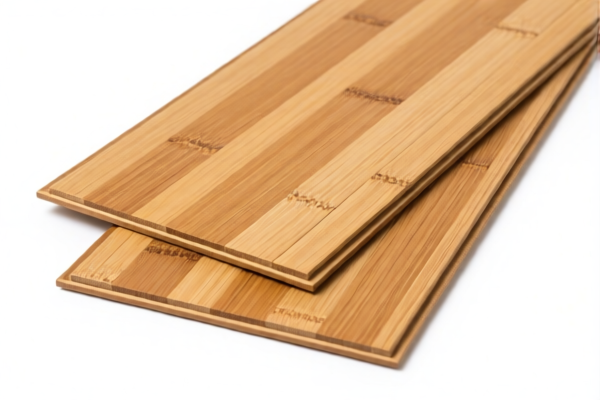
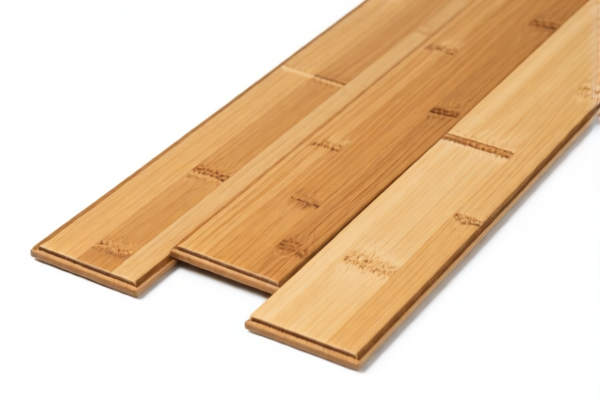
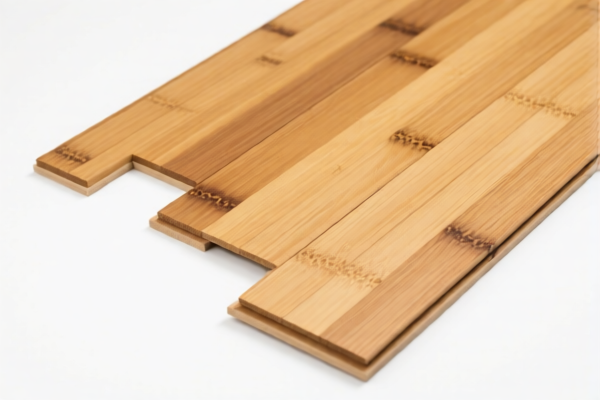
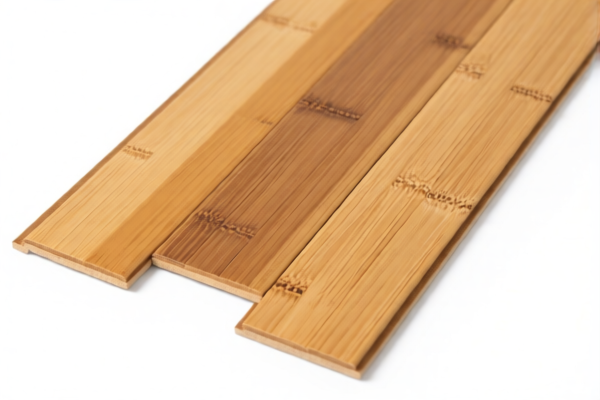
AI Analysis
🛫 Airplane Interior Buffalo Grain Panel (Aircraft Cabin Decorative Panel)
🌐 HS Code Reference & Customs Clearance Guide | 2026 Latest Tariff Analysis | Professional Strategy for Aviation Interiors
📌 I. Product Definition & Classification: What is a "Buffalo Grain Panel"?
The Buffalo Grain Panel is a decorative interior component used in commercial aviation cabins. It mimics the texture of buffalo hide or coarse leather, providing a premium aesthetic for seat backs, sidewalls, or ceiling panels. In international trade, its classification depends strictly on its material composition and form factor (whether it is a finished "article" or a raw "sheet/board").
Key Distinction:
- If the panel is a finished decorative part (e.g., molded, textured, ready-to-install): It typically falls under Chapter 39, Heading 3926 (Other articles of plastics).
- If the panel is a sheet/board material (e.g., plastic laminate, composite sheet before final molding): It may fall under Chapter 39, Heading 3921 (Plastics in primary forms or sheets/boards).
⚠️ Critical Classification Point:
- Finished Decorative Element: Use 3926 codes.
- Raw Material/Sheet: Use 3921 codes.
- Note: Aviation materials often involve composites or resin-impregnated papers, which can blur lines between 3921 and 3926.
📦 II. HS Code Classification Details (2026 Tariff Cross-Reference)
| HS Code | Product Description | Application Scenario | Material/Form Inference |
|---|---|---|---|
3926.30.50.00 |
Articles of plastics: Other – Specifically inferred as decorative panels for aircraft interiors | Finished buffalo-grain textured plates for cabin decor | ✅ Plastic/Synthetic Material, Finished Article |
3926.90.99.89 |
Other articles of plastics – General category for specific-use items not elsewhere specified | Custom aircraft interior fittings, non-standard decorative plates | ✅ Plastic/Resin/Composite, Specific-Use Part |
3921.90.50.50 |
Other plates, sheets, film, foil and strip – Plastic or composite materials | Plastic board/sheath format for aircraft interior lining | ✅ Plastic/Composite, Sheet/Board Form |
3921.90.40.90 |
Other plastic plates/sheets – Flexible or other categories under "Other" | Flexible plastic decorative panels for cabin walls | ✅ Plastic, Flexible/Other Plate Definition |
🔍 Key Insight:
- 3926 codes generally apply if the item is a finished good ready for installation.
- 3921 codes apply if the item is a semi-finished material (sheet/board) that will undergo further manufacturing.
- Misclassification risk: Declaring a finished panel as a raw sheet (3921) may trigger higher scrutiny or incorrect duty calculation if the form is clearly a finished article.
💰 III. 2026 Latest Tariff Rate Breakdown (Including Surtaxes & Policy Add-ons)
✅ Applicable Country: United States (US)
✅ Origin: China (CN)
✅ Effective Date: From November 10, 2025 (Including subsequent imports)
🎯 1. 3926.30.50.00 & 3926.90.99.89 – Finished Plastic Articles for Aircraft Interiors
| Item | Content |
|---|---|
| Base Tariff Rate | 5.3% (ad valorem) |
| Section 301 Surtax | +7.5% |
| Section 122 Tariff | +10% (Specific trade measure) |
| Total Effective Rate | 22.8% |
| Tax Calculation | CIF Value × 22.8% |
| De Minimis Exemption? | ❌ No (deny_de_minimis applies) |
| Legal Basis Path | Base: 3926 → 301: 7.5% → 122: 10% |
📌 Explanation:
- Base 5.3%: Standard Most Favored Nation (MFN) rate for plastic articles.
- Section 301 (7.5%): Additional tariff on Chinese plastics/plastic products.
- Section 122 (10%): Specific surtax applied to certain imported goods.
- Total 22.8%: A significant but manageable rate for high-value aviation interiors.
🎯 2. 3921.90.50.50 & 3921.90.40.90 – Plastic Sheets/Boards for Aircraft Interiors
| Item | Content |
|---|---|
| Base Tariff Rate | 4.8% (3921.90.50.50) / 4.2% (3921.90.40.90) |
| Section 301 Surtax | +25.0% |
| Section 122 Tariff | +10% |
| Total Effective Rate | 39.8% (3921.90.50.50) / 39.2% (3921.90.40.90) |
| Tax Calculation | CIF Value × 39.8% / 39.2% |
| De Minimis Exemption? | ❌ No (deny_de_minimis applies) |
| Legal Basis Path | Base: 3921 → 301: 25% → 122: 10% |
📌 Critical Warning:
- USITC Section 301 surtax for plastics in sheet/board form is significantly higher (25%) compared to finished articles (7.5%).
- Total Rates ~39%: This is a high-cost classification. Misdeclaring a finished panel as a sheet can lead to unexpected high duties.
- Why the difference? Finished goods (3926) are often viewed as higher-value-added products, while raw sheets (3921) are more susceptible to base material tariffs.
🛠️ IV. Customs Clearance Practical Advice (Battle-Tested Pitfall Avoidance)
✅ 1. Required Documentation Checklist (Mandatory)
| Document | Must Provide? | Explanation |
|---|---|---|
| ✅ Product Specification Sheet | ✔️ | Must specify: Material (e.g., PVC, ABS, Composite), Texture (Buffalo Grain), Dimensions, Thickness. |
| ✅ Product Photos | ✔️ | Clear images showing: Texture, edges, packaging, and any labels. Must prove it is a "panel" not a raw roll/sheet. |
| ✅ Commercial Invoice | ✔️ | Describe as: "Finished Decorative Panel for Aircraft Interior, Plastic Material, Buffalo Grain Finish" |
| ✅ Packing List | ✔️ | Detail weight and dimensions per package. |
| ✅ Certificate of Origin (CO) | ✔️ | Required to verify Chinese origin for 301/122 tax application. |
| ✅ Technical Data Sheet (TDS) | Optional but Recommended | To prove material composition (e.g., resin content, plastic type). |
✅ 2. Declaration Strategy (Key Mnemonic)
🔥 "Finished Panel = 3926 (22.8%); Sheet/Board = 3921 (39%+); Name Clearly!"
| Scenario | Correct Declaration | Wrong Practice |
|---|---|---|
| Finished Decorative Panel | HS: 3926.30.50.00 |
Declaring as "Plastic Sheet" → Risk of 39% duty + penalty |
| Raw Plastic Sheet/Board | HS: 3921.90.50.50 |
Declaring as "Finished Panel" → Misclassification |
| Composite Material (Resin+Paper) | HS: 3926.90.99.89 |
Generic "Plastic Part" → Delay in clearance |
| Buffalo Grain Texture | Include in description | Omitting texture → May be misidentified as plain plastic |
✅ 3. Special Case Handling
| Situation | Handling Advice |
|---|---|
| Custom OEM Panels | Provide original design files or customer POs to prove "Finished Article" status. |
| Mixed Materials | If the panel has a metal core or fabric layer, declare as composite. Use 3926.90.99.89 if plastic is the main character. |
| Aviation Specific | Mention "Aircraft Interior Use" in the description. This does not reduce tariff but helps customs understand the product context. |
| High Value | For expensive custom panels, consider Advance Ruling to lock in the HS Code and avoid post-clearance audits. |
🌍 V. Global Market Comparison (2026 Latest)
| Country/Region | Recommended HS Code | Tariff Rate | Certification | Note |
|---|---|---|---|---|
| 🇺🇸 USA | 3926.30.50.00 |
22.8% | None Specific | High surtax; ensure "Finished" classification. |
| 🇨🇳 China | 3926.30.50.00 |
~5-6% | CCC (if applicable) | Low duty; focus on export compliance. |
| 🇪🇺 EU | 3926.90.90 |
0-4% | CE (if electronic) | No surtax; favorable for aviation parts. |
| 🇬🇧 UK | 3926.90.99 |
0-6% | UKCA | Post-Brexit rules may vary; check latest. |
| 🇯🇵 Japan | 3926.90.90 |
0-5% | PSE (if needed) | Stable tariffs for plastic articles. |
📌 Conclusion:
- The USA is the most expensive market due to Section 301 and Section 122 tariffs.
- Classification as3926(Finished) vs3921(Sheet) can save ~17% in duties (22.8% vs 39.8%).
- Strategy: Emphasize the "Finished Decorative Panel" nature in documentation to support3926classification.
📌 VI. Common Mistakes & Pitfall Guide (Lessons Learned)
❌ Mistake 1: Declaring finished panels as "Plastic Sheets"
👉 Consequence: Higher duty (39.8% vs 22.8%) + potential penalty for misdeclaration.
👉 Fix: Use "Panel" or "Article" in the description, not "Sheet" or "Board."
❌ Mistake 2: Ignoring Section 122 Tariff
👉 Consequence: Unexpected 10% surtax on invoices.
👉 Fix: Ensure your broker applies the 122 code correctly alongside 301.
❌ Mistake 3: Vague Description "Plastic Part"
👉 Consequence: Customs may reclassify under a less favorable code or hold shipment.
👉 Fix: Use precise terms: "Buffalo Grain Decorative Panel, PVC Material, Aircraft Interior Use."
❌ Mistake 4: Not Proving "Finished" Status
👉 Consequence: Customs may view it as raw material if packaging is minimal.
👉 Fix: Include photos showing the finished texture and edges.
✅ Correct Declaration Example:
"Finished Decorative Panel for Aircraft Cabin Interior, Made of PVC Plastic with Buffalo Grain Finish, Model ABC, Country of Origin: China"
🎯 VII. Conclusion: Precision Classification for Cost Savings
🎯 Remember the Mnemonic:
🔹 "Finished Panel = 3926 (22.8%); Sheet = 3921 (39%+); Describe Texture, Avoid Sheets!"
🔹 "Tariff Difference is 17%, Clear Description Saves Thousands!"
📌 Pro Tip:
If your buffalo grain panels are originally manufactured in Vietnam, Mexico, or Thailand, you may qualify for IEEPA Exemptions, reducing tariffs to 0-5%.
Recommend Apply for Advance Ruling to confirm the "Finished Article" status and secure the lower 22.8% rate.
📣 Immediate Action:
📞 Contact a licensed customs broker + Provide Product Photos + Specify "Finished Panel" in Invoice
🚀 Ensure smooth customs clearance, avoid 39% duty, and maximize profit margins!
✨ Professional Clearance Starts with Accurate Classification!
💼 Every Percentage Point of Duty is a Potential Cost Saved!
Customer Reviews
About HS Code Classification
The Harmonized System (HS) is an internationally standardized nomenclature developed by the World Customs Organization (WCO) to classify traded products. Over 200 countries use the HS system as the basis for customs tariffs, trade statistics, and import/export regulations.
Each HS code follows a hierarchical structure:
- Chapter (2 digits) — Broad category of goods (e.g., Chapter 84: Machinery and Mechanical Appliances)
- Heading (4 digits) — More specific grouping within the chapter
- Subheading (6 digits) — Internationally standardized breakdown, used by all WCO member countries
- National subdivisions (8-10 digits) — Country-specific extensions for further classification, such as US HTSUS 10-digit codes
Correct HS code classification is essential for smooth customs clearance, accurate duty payment, and compliance with trade regulations. Misclassification can lead to customs delays, overpayment of duties, or penalties.
When importing from CN to US, the applicable tariff rates may include:
- Most-Favored-Nation (MFN) rate — The standard duty rate applied to WTO members
- General rate — Applied to countries without trade agreements
- Trade remedy duties — Additional tariffs such as Section 301 (anti-dumping), Section 232 (national security), or countervailing duties
The information provided on this page is for reference purposes only. For official classification, please consult with your local customs authority or a licensed customs broker.