Album Bag
CN → US| HS Code | Tariff Rate | Origin | Destination | Doc |
|---|---|---|---|---|
| 3923900080 | 38.0% | CN | US | Official Doc |
| 4202923120 | 52.6% | CN | US | Official Doc |
| 6307909891 | 24.5% | CN | US | Official Doc |
| 4202923131 | 52.6% | CN | US | Official Doc |
| 6307909875 | 24.5% | CN | US | Official Doc |
Product Images
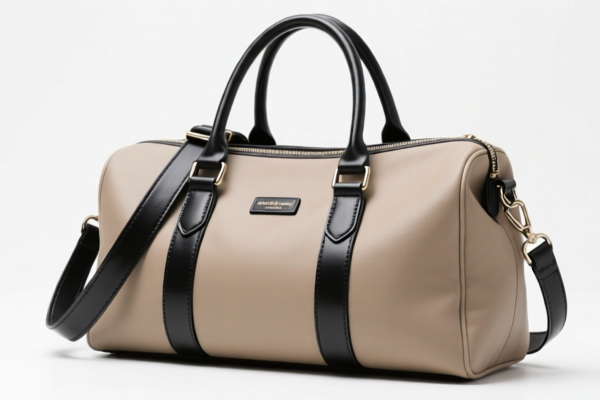
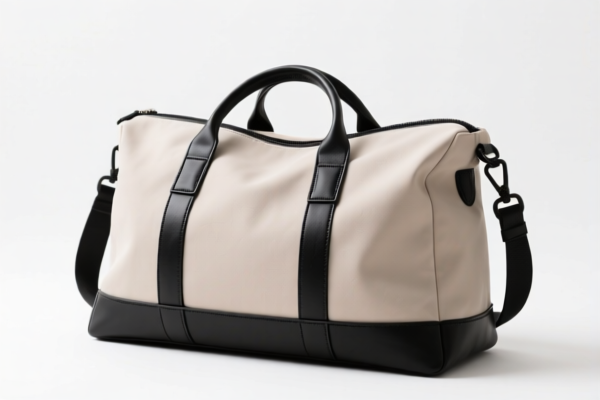
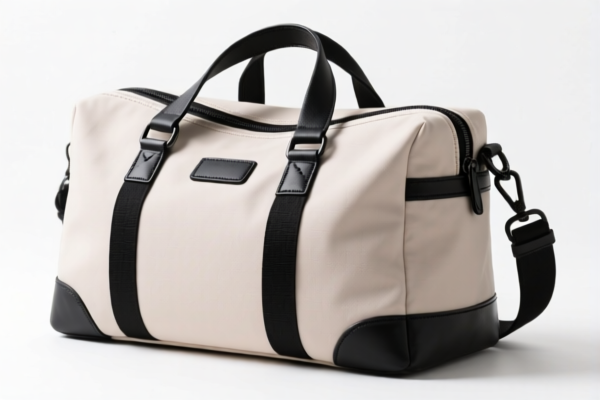
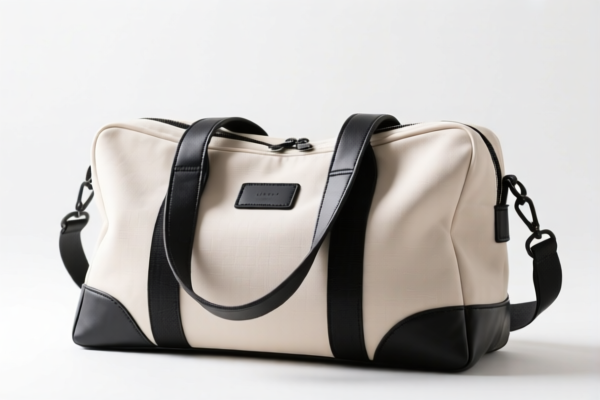
AI Analysis
🎵 Album Bags: The Ultimate Packaging Classification Guide (2026 Customs Update)
🌐 HS Code Reference & Customs Clearance Strategy | 2026 Tariff Analysis | Professional Import/Export Compliance
📌 I. Product Definition & Classification: What Exactly is an "Album Bag"?
An "Album Bag" is a generic term in international trade that can refer to various storage solutions for music vinyls, CD cases, or photo albums. In customs classification, the material composition and intended use are the decisive factors. It generally falls into three categories:
- Plastic/Synthetic Bags: Protective sleeves for vinyl records or CD cases (PVC, PE, PP).
- Travel/Personal Use Bags: Soft-sided pouches with handles/straps for carrying multiple albums (Textile, Leather, or Plastic-coated fabric).
- Textile Articles: Non-woven bags or fabric storage sacks.
⚠️ Critical Distinction:
- If it is a simple sleeve without handles, made of plastic/textile, it is often classified as a packaging article or textile accessory.
- If it has handles, straps, or a structured shape for carrying, it is classified as a bag/satchel (Chapter 42).
- Misclassification Risk: Declaring a structured bag as a "sleeve" (Chapter 39/63) to avoid higher tariffs can lead to audits, penalties, and cargo detention.
📦 II. HS Code Classification Matrix (2026 Latest Tariff Schedule)
Based on the provided data, here are the five possible HS Codes for "Album Bags," ranging from packaging to personal use bags.
| HS Code | Product Description & Inference | Material Basis | Category Scope | Total Tax Rate (China to US) |
|---|---|---|---|---|
| 3923.90.00.80 | Packaging Container: Simple sleeves or pouches, inferred as plastic/synthetic fiber, classified under "Other packaging articles." | Plastic / Synthetic Fiber | Packaging Supplies / Containers | 38.0% |
| 4202.92.31.20 | Travel/Personal Bag: Bag for carrying albums, inferred as textile material or plastic film surface, classified under "Satchels/Bags." | Textile Material / Plastic Film | Travel / Similar Bags | 52.6% |
| 6307.90.98.91 | Finished Textile Product: Non-structured textile item, inferred as textile material, classified under "Other made-up articles." | Textile Material | Finished Consumer Goods / Textile Articles | 24.5% |
| 4202.92.31.31 | Textile Bag: Bag with outer surface made of textile materials, classified under "Satchels/Bags." | Textile Material | Travel / Similar Bags | 52.6% |
| 6307.90.98.75 | Textile Accessory: Made-up textile article for storage, inferred as textile material, classified under "Other textile articles." | Textile Material | Textile Finished Goods | 24.5% |
🔍 Key Insight:
- Cheapest Option: 6307.90.98.75 or 6307.90.98.91 (24.5% total tax) – Best for simple, non-structured textile sleeves.
- Most Expensive: 4202.92.31.20 or 4202.92.31.31 (52.6% total tax) – Applies if the bag has handles/structure, classifying it as a "bag" under Chapter 42.
- Middle Ground: 3923.90.00.80 (38.0%) – Applies if made of plastic/synthetic but not structured as a traditional bag.
💰 III. 2026 Detailed Tariff Breakdown (Section 301 & IEEPA)
✅ Applicable Country: United States (US)
✅ Origin: China (CN)
✅ Effective Date: Ongoing (Including subsequent imports as per 2026 regulations)
🎯 1. HS Code 3923.90.00.80 (Plastic Packaging)
| Item | Detail |
|---|---|
| Base Tariff | 3.0% (Ad Valorem) |
| Section 301 Add-on | 25.0% (USITC Footnote 9903.88.01) |
| IEEPA Add-on (122 Clause) | 10.0% (Targeted Chinese Products) |
| Total Tax Rate | 38.0% |
| De Minimis Exemption | ❌ Not Eligible |
| Legal Path | IEEPA:9903.01.25 → USITC:3923.90.00.80 → SECTION_301 |
📌 Explanation:
- Plastic packaging items are heavily scrutinized. The 25% Section 301 tariff is standard for most Chinese plastic products.
- The additional 10% IEEPA tariff applies specifically to certain Chinese goods, pushing the total to 38%.
🎯 2. HS Codes 4202.92.31.20 & 4202.92.31.31 (Textile/Plastic Bags)
| Item | Detail |
|---|---|
| Base Tariff | 17.6% (Ad Valorem) |
| Section 301 Add-on | 25.0% (USITC Footnote 9903.88.01) |
| IEEPA Add-on (122 Clause) | 10.0% (Targeted Chinese Products) |
| Total Tax Rate | 52.6% |
| De Minimis Exemption | ❌ Not Eligible |
| Legal Path | IEEPA:9903.01.25 → USITC:4202.92.31 → SECTION_301 |
📌 Explanation:
- Chapter 42 items (Leather goods, travel goods, satchels) have a high base duty of 17.6%.
- This is the most expensive category. If your "Album Bag" has handles, a strap, or a rigid structure, it falls here.
- Strategy: Avoid this classification unless the product is undeniably a "bag" under US customs definitions.
🎯 3. HS Codes 6307.90.98.91 & 6307.90.98.75 (Other Textile Articles)
| Item | Detail |
|---|---|
| Base Tariff | 7.0% (Ad Valorem) |
| Section 301 Add-on | 7.5% (USITC Footnote 9903.88.01) |
| IEEPA Add-on (122 Clause) | 10.0% (Targeted Chinese Products) |
| Total Tax Rate | 24.5% |
| De Minimis Exemption | ❌ Not Eligible |
| Legal Path | IEEPA:9903.01.25 → USITC:6307.90.98 → SECTION_301 |
📌 Explanation:
- These codes are for "Other made-up articles" (non-woven bags, simple fabric sacks).
- Lowest Tax Rate (24.5%). Ideal for simple, unstructured textile sleeves or storage sacks.
- Caution: Must prove the item is NOT a "bag" (Chapter 42). No handles, no zippers, no structured shape.
🛠️ IV. Customs Clearance Practical Advice (Avoiding Pitfalls)
✅ 1. Documentation Checklist (Must-Haves)
| Document | Required? | Purpose |
|---|---|---|
| ✅ Product Specifications | ✔️ | Must specify material (PVC, Cotton, Non-woven), dimensions, and weight. |
| ✅ Photos (Open & Closed) | ✔️ | Crucial to prove/disprove handles, straps, or rigid structure. |
| ✅ Commercial Invoice | ✔️ | Describe accurately: "Plastic Sleeve for Vinyl" vs. "Fabric Storage Bag." |
| ✅ Bill of Lading | ✔️ | Ensure HS Code matches invoice description. |
| ✅ Material Declaration | ✔️ | Explicitly state if it contains textile, plastic, or leather. |
✅ 2. Classification Strategy & Tricks
🔥 Golden Rule:
"Handles = Bag (52.6%); No Handles = Packaging/Textile (24.5%-38%)"
| Scenario | Recommended HS Code | Reasoning |
|---|---|---|
| Simple Vinyl Sleeve (PVC) | 3923.90.00.80 |
Plastic packaging; no structure. Tax: 38.0% |
| Simple Vinyl Sleeve (Fabric) | 6307.90.98.75 |
Textile article; no handles/structure. Tax: 24.5% |
| Bag with Handle/Strap (Textile) | 4202.92.31.31 |
Classified as a "Bag" under Ch 42. Tax: 52.6% |
| Bag with Handle/Strap (Plastic) | 4202.92.31.20 |
Classified as a "Bag" under Ch 42. Tax: 52.6% |
| Non-woven Shopping Bag for Albums | 6307.90.98.91 |
If it lacks the structure of a traditional bag, it may be "Other Textile Article." Tax: 24.5% |
📌 Note:
- If you declare a handled bag as6307(Textile Article) to save tax, US Customs (CBP) will likely challenge it.
- Evidence is Key: Provide photos showing the absence of handles or straps to support6307classification.
✅ 3. Special Cases
| Case | Handling Advice |
|---|---|
| Mixed Materials | If bag is 50% fabric + 50% plastic, check the "Essential Character." If plastic dominates, 3923 may apply (38%). If textile dominates, 6307 (24.5%) is better. |
| Custom Printed Bags | Same rules apply. Printing does not change the HS code unless it changes the function. |
| Sets (Album + Bag) | If sold together, the bag may determine the classification if it gives the set its essential character. |
🌍 V. Global Market Comparison (2026)
| Region | Preferred HS Code | Est. Total Duty | Notes |
|---|---|---|---|
| 🇺🇸 USA | 6307.90.98.75 |
24.5% | Lowest rate for textile; 4202 is 52.6% |
| 🇪🇺 EU | 6307.90.98 |
~2% - 5% | No Section 301; lower base duties for textiles |
| 🇨🇳 China | 6307.90.98 |
5% - 10% | Low base duties; no retaliatory tariffs |
| 🇨🇦 Canada | 6307.90.98 |
~0% - 5% | CUSMA may allow duty-free if originating |
📌 Conclusion:
- US Market: Highly sensitive to classification.4202(Bags) is punitive. Aim for6307(Other Textile) or3923(Plastic Packaging) if product allows.
- Non-US Markets: Much more favorable for textiles (6307), often <10%.
📌 VI. Common Errors & Pitfalls (Learn from Others' Mistakes)
❌ Error 1: Declaring a handled tote bag for albums as a "Sleeve" (6307)
👉 Consequence: CBP reclassifies to 4202, adds 28% difference in duty + penalties + storage fees.
👉 Fix: Declare as 4202.92.31.31 if handles exist.
❌ Error 2: Using Plastic description for a Fabric bag (3923)
👉 Consequence: Audit for misdeclaration. Seizure risk if value is high.
👉 Fix: Accurate material declaration is mandatory.
❌ Error 3: Ignoring IEEPA 10% Surcharge
👉 Consequence: Underpayment of duties.
👉 Fix: Always include the 10% IEEPA in cost calculations for Chinese-origin goods entering the US.
✅ Correct Declaration Example:
"Non-woven Fabric Storage Sleeve for Vinyl Records, No Handles, 12x12 inches, Made in China"
→ HS:6307.90.98.75(Tax: 24.5%)
🎯 VII. Conclusion: Strategic Classification for Cost Efficiency
🎯 Key Takeaways:
🔹 Check for Handles: If yes, prepare for 52.6% tax (
4202).
🔹 No Handles?: Declare as Textile Article (6307) for 24.5% tax.
🔹 Plastic Sleeve?: Declare as Packaging (3923) for 38.0% tax.🔹 "Classify Correctly, Save 28%!"
🔹 "Handles mean Bags, Bags mean Higher Duties."
📌 Pro Tip:
If your album bags are simple, unstructured, and made of fabric, insist on HS Code 6307.90.98.75. This offers the lowest legal tax rate (24.5%) compared to the penalized bag rate. Always provide clear photos to customs brokers to support this classification.
📣 Action Item:
📞 Consult a Customs Broker: Provide samples and photos.
📝 Apply for Advance Ruling: If volume is high, get a CBP ruling to lock in the 24.5% rate.
🚀 Optimize Supply Chain: Consider sourcing from Vietnam/Mexico for US market to avoid Section 301/IEEPA tariffs entirely.
✨ Smart Classification, Smarter Profits!
💼 Don't let misclassification eat your margin!
Customer Reviews
About HS Code Classification
The Harmonized System (HS) is an internationally standardized nomenclature developed by the World Customs Organization (WCO) to classify traded products. Over 200 countries use the HS system as the basis for customs tariffs, trade statistics, and import/export regulations.
Each HS code follows a hierarchical structure:
- Chapter (2 digits) — Broad category of goods (e.g., Chapter 84: Machinery and Mechanical Appliances)
- Heading (4 digits) — More specific grouping within the chapter
- Subheading (6 digits) — Internationally standardized breakdown, used by all WCO member countries
- National subdivisions (8-10 digits) — Country-specific extensions for further classification, such as US HTSUS 10-digit codes
Correct HS code classification is essential for smooth customs clearance, accurate duty payment, and compliance with trade regulations. Misclassification can lead to customs delays, overpayment of duties, or penalties.
When importing from CN to US, the applicable tariff rates may include:
- Most-Favored-Nation (MFN) rate — The standard duty rate applied to WTO members
- General rate — Applied to countries without trade agreements
- Trade remedy duties — Additional tariffs such as Section 301 (anti-dumping), Section 232 (national security), or countervailing duties
The information provided on this page is for reference purposes only. For official classification, please consult with your local customs authority or a licensed customs broker.