Alcohol Plasticizer Mixture
CN → US| HS Code | Tariff Rate | Origin | Destination | Doc |
|---|---|---|---|---|
| 382499 | 0.0% | CN | US | Official Doc |
| 321290 | 0.0% | CN | US | Official Doc |
| 3824999310 | 40.0% | CN | US | Official Doc |
| 3824999320 | 40.0% | CN | US | Official Doc |
Product Images
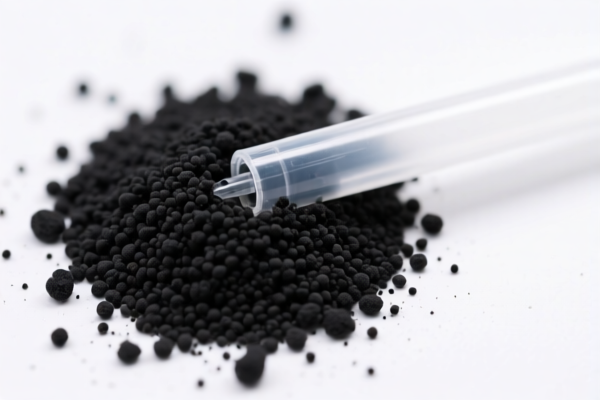

AI Analysis
🧪 Alcohol-Based Plasticizer Mixtures (Not Elsewhere Specified)
🌐 HS Code Reference & Customs Clearance Guide | 2026 Latest Tariff Analysis | Professional Classification Strategy
📌 I. Product Definition: What Are "Alcohol Plasticizer Mixtures"?
These are chemical preparations primarily composed of alcohols and plasticizing agents, designed to modify the flexibility and workability of materials such as plastics, resins, or rubber. Unlike pure plasticizers (which might fall under specific headings like 39 or 38 depending on origin), these are preparations/mixtures where alcohol serves as a base or carrier for plasticizing functions.
⚠️ Key Distinction:
- If the mixture is primarily for plasticizing and not classified elsewhere (e.g., not a specific polymer prep), it falls under Chapter 38 (Chemical Products).
- The critical differentiator for tariff rates is the carbon chain length of the alcohols contained in the mixture.
📦 II. HS Code Classification Details (2026 Latest Tariff Authority)
Based on the provided data, there are 4 distinct classifications. Two are general "catch-all" codes with error/no data, while two are specific subheadings with detailed tax information.
| HS Code | Product Description | Applicable Scenario | Tax Status |
|---|---|---|---|
3824.99 |
Mixtures based on alcohol, used as plasticizers, not elsewhere specified; includes mixtures primarily composed of alcohol and plasticizing agents | General industrial use, flexible materials modification | ⚠️ Error: Failed to retrieve tax info |
3212.90 |
Other preparations for the manufacture of plastics or for use in plastic processing, including mixtures containing alcohol and plasticizing components | Industrial applications involving plastic formulation | ⚠️ Error: Failed to retrieve tax info |
3824.99.93.10 |
Prepared binders... : Mixtures of acyclic, monohydric, unsubstituted alcohols: Containing C₁₁ or lower alcohols only | Mixtures with short-chain alcohols (e.g., ethanol, propanol, butanol up to undecanol) | ✅ 30.0% Total |
3824.99.93.20 |
Prepared binders... : Mixtures of acyclic, monohydric, unsubstituted alcohols: Containing C₁₂ or higher alcohols only | Mixtures with long-chain alcohols (e.g., dodecanol, stearyl alcohol) | ✅ 0.0% Total |
🔍 Critical Insight:
-3824.99and3212.90are broad categories. If your product does not meet the specific "C₁₁ or lower" or "C₁₂ or higher" criteria, it may fall here. However, tax information is unavailable, posing a high compliance risk.
-3824.99.93.10and3824.99.93.20are specific subheadings with clear tax rates. You must determine the exact alcohol composition to choose between these.
💰 III. 2026 Latest Tariff Rate Breakdown (Detailed Tax Clauses)
✅ Applicable Jurisdiction: Implied General/US-China Trade Context (Based on "Additional Tariff" structure)
✅ Origin: China (CN)
✅ Product Type: Chemical Preparations / Alcohol Mixtures
🎯 1. 3824.99.93.10 —— Mixtures Containing C₁₁ or Lower Alcohols Only
| Item | Details |
|---|---|
| Base Tariff | 5.0% |
| Additional Tariff | +25.0% |
| Total Tariff Rate | 30.0% |
| Tax Calculation | CIF Value × 30% |
| De Minimis Eligibility | ❌ No (High tariff rates typically exclude de minimis relief) |
| Legal Basis | General Chemical Preparations under Chapter 38, Subheading 99.93.10 |
📌 Explanation:
- This classification applies to mixtures where the alcohol component consists of short to medium-chain alcohols (Carbon count ≤ 11).
- Examples: Mixtures containing Ethanol, Isopropanol, Butanol, Hexanol, Octanol, Decanol, or Undecanol.
- Warning: This carries a significant 30% burden. Proper chemical analysis (GC-MS) is required to confirm carbon chain lengths.
🎯 2. 3824.99.93.20 —— Mixtures Containing C₁₂ or Higher Alcohols Only
| Item | Details |
|---|---|
| Base Tariff | 0.0% |
| Additional Tariff | 0.0% |
| Total Tariff Rate | 0.0% |
| Tax Calculation | CIF Value × 0% = $0 |
| De Minimis Eligibility | ✅ Likely Eligible (0% rate often allows for lower-value shipments) |
| Legal Basis | General Chemical Preparations under Chapter 38, Subheading 99.93.20 |
📌 Explanation:
- This classification applies to mixtures with long-chain alcohols (Carbon count ≥ 12).
- Examples: Mixtures containing Dodecanol (C12), Tetradecanol, Hexadecanol, Stearyl Alcohol (C18), etc.
- Benefit: Zero Duty. This is a highly favorable classification if your product uses long-chain alcohols as the plasticizing base.
🛠️ IV. Customs Clearance Practical Advice (Avoiding Pitfalls)
✅ 1. Required Documentation Checklist
| Document | Must Provide | Description |
|---|---|---|
| ✅ Chemical Analysis Report | ✔️ | CRITICAL: Must specify the Carbon Chain Length of the primary alcohols. GC-MS or HPLC reports are preferred. |
| ✅ Safety Data Sheet (SDS) | ✔️ | Section 3: Composition/Information on Ingredients. Must list alcohol types and percentages. |
| ✅ Product Specification | ✔️ | Describe the plasticizing function, alcohol content, and other additives. |
| ✅ Commercial Invoice | ✔️ | Clearly state "Alcohol-Based Plasticizer Mixture" and list HS Code. |
| ✅ Certificate of Origin | ✔️ | To determine eligibility for any preferential treatments (if applicable). |
✅ 2. Classification Strategy (Key Tips)
🔥 “Carbon Chain Determines Duty! ≤C11 pays 30%, ≥C12 pays 0%!”
| Scenario | Correct HS Code | Tax Rate | Risk |
|---|---|---|---|
| Mixture with Ethanol, Butanol, or Octanol | 3824.99.93.10 |
30% | High (Requires precise proof of ≤C11) |
| Mixture with Stearyl Alcohol or C18 Alcohols | 3824.99.93.20 |
0% | Low (Favorable rate) |
| Mixture with Mixed Alcohols (C10 + C14) | ❓ Complex | ⚠️ Risk | Must determine primary alcohol or fall to 3824.99 (No Data) |
| General Plasticizer Mixture (No Alcohol Spec) | 3824.99 |
⚠️ Error | High Risk: No tax data available. Customs may assess at higher default rates. |
✅ 3. Special Considerations
| Situation | Handling Advice |
|---|---|
| Mixed Alcohol Chains | If the mixture contains both C₁₁ and C₁₂+ alcohols, you must determine which is predominant by weight/volume. If neither is clearly predominant, consult a customs broker immediately as it may fall under the general 3824.99 with unknown tax. |
| "Not Elsewhere Specified" Clause | Ensure the product is not more specifically described elsewhere (e.g., as a specific resin prep under Chapter 39). If it fits another chapter, Chapter 38 is only the "fallback." |
| Labeling | Clearly label packages with chemical composition summary. Mislabeling can lead to reclassification and penalties. |
🌍 V. Global Market Comparison (2026 Context)
| Market | Recommended HS Code | Tariff (China Origin) | Notes |
|---|---|---|---|
| 🇺🇸 USA | 3824.99.93.10 or .93.20 |
30% or 0% | Section 301 tariffs may apply. Verify if "plasticizer" has specific exemptions. |
| 🇨🇳 China | 3824.99 |
Varies | Import duties for chemical preparations vary. Check latest Chinese tariff schedule. |
| 🇪🇺 EU | 3824.99 |
~5-6% | EU TARIC code may differ. VAT applies separately. |
📌 Conclusion:
- The tariff differential is extreme (30% vs 0%).
- Accurate chemical profiling is non-negotiable.
- If your product uses long-chain alcohols (≥C12), you save 30% in duties. If it uses short/medium chains (≤C11), budget for 30%.
📌 VI. Common Errors & Pitfalls (Blood Lessons)
❌ Error 1: Assuming all "Alcohol Plasticizers" have the same tax rate.
👉 Result: Paying 30% when you qualify for 0% (or vice versa, if you misclassify and get penalized).
✅ Fix: Provide a GC-MS Report showing carbon chain distribution.
❌ Error 2: Using the generic 3824.99 without knowing the tax data.
👉 Result: Customs may reject the declaration or assess a higher default rate due to "Failed to retrieve tax info."
✅ Fix: Always try to fit into 3824.99.93.10 or .93.20 if possible.
❌ Error 3: Misidentifying the "Primary" alcohol in a mixed mixture.
👉 Result: Misclassification and potential audits.
✅ Fix: Determine the alcohol with the highest weight percentage.
🎯 VII. Conclusion: Precision Saves Money!
🎯 Remember the Golden Rule:
🔹 “≤C11 → 30% Duty! ≥C12 → 0% Duty!”
🔹 “No Chemical Proof? No Clear HS Code! High Risk!”
📌 Pro Tip:
If your mixture contains both short and long-chain alcohols, calculate the total weight percentage. If >50% is C₁₂+, use 3824.99.93.20 (0%). If >50% is C₁₁ or lower, use 3824.99.93.10 (30%). If it’s a 50/50 split, consult a customs broker for a binding ruling.
📣 Immediate Action:
📞 Get a GC-MS Analysis of your alcohol mixture.
📄 Select HS Code based on the dominant carbon chain.
🚀 Clear Customs Efficiently and Maximize Savings!
✨ Professional Clearance Starts with Precise Classification!
💼 Your Chemical Composition is Your Tax Strategy!
Customer Reviews
About HS Code Classification
The Harmonized System (HS) is an internationally standardized nomenclature developed by the World Customs Organization (WCO) to classify traded products. Over 200 countries use the HS system as the basis for customs tariffs, trade statistics, and import/export regulations.
Each HS code follows a hierarchical structure:
- Chapter (2 digits) — Broad category of goods (e.g., Chapter 84: Machinery and Mechanical Appliances)
- Heading (4 digits) — More specific grouping within the chapter
- Subheading (6 digits) — Internationally standardized breakdown, used by all WCO member countries
- National subdivisions (8-10 digits) — Country-specific extensions for further classification, such as US HTSUS 10-digit codes
Correct HS code classification is essential for smooth customs clearance, accurate duty payment, and compliance with trade regulations. Misclassification can lead to customs delays, overpayment of duties, or penalties.
When importing from CN to US, the applicable tariff rates may include:
- Most-Favored-Nation (MFN) rate — The standard duty rate applied to WTO members
- General rate — Applied to countries without trade agreements
- Trade remedy duties — Additional tariffs such as Section 301 (anti-dumping), Section 232 (national security), or countervailing duties
The information provided on this page is for reference purposes only. For official classification, please consult with your local customs authority or a licensed customs broker.