Alfalfa Baler
CN → US| HS Code | Tariff Rate | Origin | Destination | Doc |
|---|---|---|---|---|
| 8433400000 | 35.0% | CN | US | Official Doc |
| 8433905025 | 35.0% | CN | US | Official Doc |
| 8436800090 | 35.0% | CN | US | Official Doc |
| 8432800080 | 35.0% | CN | US | Official Doc |
| 8432800010 | 35.0% | CN | US | Official Doc |
Product Images
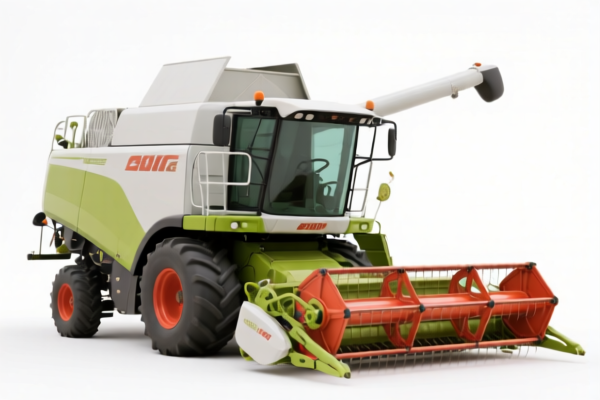
AI Analysis
🚜 Alfalfa Baler: The Ultimate 2026 HS Code & Customs Clearance Guide
🌐 Global Trade Authority | 2026 Tariff Breakdown | Precision Customs Strategy for Agricultural Machinery
📌 I. Product Definition: What is an "Alfalfa Baler"?
An Alfalfa Baler is a critical piece of agricultural machinery designed specifically for harvesting, compressing, and binding alfalfa (lucerne) or other straw/hay crops into dense, transportable bundles (square or round bales).
In international trade, its classification hinges on function and component specificity: 1. The Machine Itself: A complete unit used for crop harvesting/baling (HS Code 8433.40.00.00 or 8436.80.00.90). 2. The Machine Parts: Individual components, belts, needles, or baling chambers sold separately (HS Code 8433.90.50.25). 3. The "Grey Area": General agricultural machinery vs. specialized balers (HS Code 8432.80.00.10 / 8432.80.00.80).
⚠️ Critical Distinction:
- If imported as a complete operational unit, it falls under Harvesters/Balers.
- If imported as spare parts for an existing baler, it falls under Parts.
- Misclassification leads to 35% Tariff Shocks and potential customs seizures!
📦 II. HS Code Classification Matrix (2026 Authoritative Mapping)
Based on your provided data, here is the authoritative mapping for Alfalfa Balers and their components:
| HS Code | Product Description | Classification Logic | Tax Rate (Total) |
|---|---|---|---|
8433.40.00.00 |
Alfalfa Baler (Main Unit) | Classified strictly as a Baling/Binding Machine for straw or feed. | 35.0% |
8433.90.50.25 |
Baler Spare Parts | Classified as Parts of hay balers/binders. | 35.0% |
8436.80.00.90 |
Crop Harvesting Machine | Classified as Other Machinery for crop preparation/harvest. | 35.0% |
8432.80.00.80 |
Agricultural Machine | Classified as machinery for Soil Preparation/Growing/Harvesting. | 35.0% |
8432.80.00.10 |
Agri/Garden/Forest Machine | Classified broadly under Agricultural Machinery usage. | 35.0% |
🔍 Key Insight:
While the descriptions vary slightly (Main Unit vs. Parts vs. General Ag Machine), ALL listed HS Codes carry the same 35% Total Tax burden in this specific scenario.
However, the correct HS Code matters for: - Regulatory Compliance (e.g., EPA certification for engines). - Quota Management (if applicable). - Post-Entry Audit (Customs must see the description match the code).
💰 III. 2026 Tariff Breakdown & Legal Basis
✅ Applicable Scenario: Importing Alfalfa Balers (CN Origin)
✅ Tax Structure: Base + Section 301 (Add-on) + Section 122 (New Add-on)
🎯 The "35% Total Tax" Formula (Uniform Across All Codes)
| Tax Component | Rate | Legal Source | Description |
|---|---|---|---|
| Base Duty | 0.0% | HTSUS General | No standard MFN duty on most agricultural machinery. |
| Section 301 Duty | +25.0% | 19 U.S.C. § 1307 | The "Trade War" tariff on Chinese goods. |
| Section 122 Duty | +10.0% | IEEPA / USTR | The "Additional" tariff (often linked to recent USTR actions or specific country targeting). |
| 🔴 TOTAL RATE | 35.0% | Sum of above | Must be paid on CIF Value. |
📌 Detailed Explanation of the 35%: 1. Base 0%: The US government does not tax the act of importing basic farm equipment normally. 2. 25% Section 301: This is the primary penalty. It applies to 8433 (Harvesting Machinery) and 8432 (Soil Preparation Machinery) due to China's trade practices. 3. 10% Section 122: This is a new layer (based on your data). It acts as an additional surcharge on top of the 301 tariffs. 4. No De Minimis: Unlike small parcels (<$800), commercial agricultural machinery is NEVER exempt from these duties.
🛠️ IV. Customs Clearance Strategy & Actionable Advice
✅ 1. Documentation Checklist (Non-Negotiable)
To avoid delays and ensure the 35% calculation is accepted (rather than a higher audit rate):
| Document | Requirement | Why It Matters |
|---|---|---|
| Commercial Invoice | Must state "Alfalfa Baler" + Exact HS Code | Must match the description in the 8433/8432 series. |
| Packing List | Detail Machine Parts vs. Assembly | If shipping as "Parts" (8433.90...), ensure no complete machine parts are mixed in. |
| Technical Specs | Engine type, Bale size, Weight, Voltage | Customs officers check if it's actually "Agricultural Machinery" or "Industrial Press". |
| Country of Origin | China (CN) | Mandatory. If Origin is not China, Section 301/122 might not apply, changing the rate drastically. |
| BOM (Bill of Materials) | For parts imports | To prove 8433.90.50.25 is correct for spare parts. |
✅ 2. Declaration Strategy: Which HS Code to Pick?
🏆 The Golden Rule: Use the Specific Code over the General Code.
| Scenario | Recommended HS Code | Reason | Risk of Wrong Choice |
|---|---|---|---|
| Importing a Brand New Baler | 8433.40.00.00 |
Most Specific. Matches "Baling Machine" definition perfectly. | Using 8432 (General Ag) might trigger a "Special Purpose" inquiry. |
| Importing Spare Parts | 8433.90.50.25 |
Most Accurate. "Parts of hay balers". | Using general "Machinery Parts" codes can lead to reclassification fines. |
| Importing a Custom/Unique Model | 8436.80.00.90 |
Fallback. "Other machinery for crop preparation". | Use only if the machine doesn't fit 8433 or 8432 definitions. |
⚡ Pro Tip:
Do not simply guess8432.80.00.10(General Ag) for a specific Balers unless you are 100% sure the machine has no specific baler classification.8433.40.00.00is the industry standard for Baling Machines.
✅ 3. Cost Calculation Example (CIF $100,000)
| Item | Calculation | Cost |
|---|---|---|
| Base Duty | $100,000 × 0% | $0 |
| Section 301 | $100,000 × 25% | $25,000 |
| Section 122 | $100,000 × 10% | $10,000 |
| Total Duty | $35,000 | |
| Effective Cost | $135,000 |
🌍 V. Global Market Comparison (2026)
| Destination | HS Code | Base Rate | Add-on | Total Rate | Strategy |
|---|---|---|---|---|---|
| 🇺🇸 USA | 8433.40.00.00 |
0% | +35% | 35% | High Risk: Plan cash flow for 35% duty. |
| 🇨🇳 China | 8433.40.00.00 |
10-12% | 0% | ~12% | Export to China is easier, but import back is hard. |
| 🇪🇺 EU | 8433.40.00 |
0% | 0% | 0% | No 301/122: EU offers duty-free entry for Agri-machinery (subject to VAT). |
| 🇯🇵 Japan | 8433.40.00 |
0% | 0% | 0% | No Tariffs: Highly competitive market for Chinese Agri-machinery. |
🚨 Conclusion: The 35% tariff is unique to the US market for Chinese-origin Alfalfa Balers.
Strategy: If targeting the US market, consider duty drawbacks or third-party transshipment (if legally compliant and origin changes) to8433.40.00.00via Vietnam/Mexico to avoid Section 301/122.
⚠️ VI. Common Pitfalls & "Blood" Lessons
❌ Mistake 1: Calling it "Tractor Part" to avoid 301.
👉 Consequence: Customs will reclassify it as 8433 (Baler) + 35% PLUS penalty for false declaration.
✅ Fix: Be honest. Declare as "Alfalfa Baler".
❌ Mistake 2: Shipping "Complete Machine" as "Spare Parts" (8433.90.50.25).
👉 Consequence: You will be fined 3x the duty difference. It is illegal to ship a complete machine as parts.
✅ Fix: If it's a machine, use 8433.40.00.00. If it's a needle/belt, use 8433.90.50.25.
❌ Mistake 3: Ignoring Section 122 (10%).
👉 Consequence: Many brokers only calculate 25%. You arrive with only 25% cash. The 10% is mandatory.
✅ Fix: Budget for 35% flat.
🎯 VII. Final Verdict & Action Plan
🚀 Action Plan for Importers:
1. Verify Origin: Ensure your Certificate of Origin (CO) is correct. If it's not China, you might avoid the 35% entirely.
2. Select Correct Code: Use 8433.40.00.00 for the machine itself.
3. Budget for 35%: Calculate your landed cost immediately: CIF Price × 1.35.
4. Prepare Technical Docs: Have the machine manual ready to prove it is a "Baler" and not a "General Agricultural Press".
💡 Expert Quote:
"In 2026, the Alfalfa Baler tariff landscape is binary: 0% for non-Chinese origin, or 35% for Chinese origin. There is no middle ground. Your margin depends on your HS Code accuracy."
✨ Clearance Start Today!
💼 Don't let 35% eat your profits. Get the code right, declare it right, ship fast!
Customer Reviews
About HS Code Classification
The Harmonized System (HS) is an internationally standardized nomenclature developed by the World Customs Organization (WCO) to classify traded products. Over 200 countries use the HS system as the basis for customs tariffs, trade statistics, and import/export regulations.
Each HS code follows a hierarchical structure:
- Chapter (2 digits) — Broad category of goods (e.g., Chapter 84: Machinery and Mechanical Appliances)
- Heading (4 digits) — More specific grouping within the chapter
- Subheading (6 digits) — Internationally standardized breakdown, used by all WCO member countries
- National subdivisions (8-10 digits) — Country-specific extensions for further classification, such as US HTSUS 10-digit codes
Correct HS code classification is essential for smooth customs clearance, accurate duty payment, and compliance with trade regulations. Misclassification can lead to customs delays, overpayment of duties, or penalties.
When importing from CN to US, the applicable tariff rates may include:
- Most-Favored-Nation (MFN) rate — The standard duty rate applied to WTO members
- General rate — Applied to countries without trade agreements
- Trade remedy duties — Additional tariffs such as Section 301 (anti-dumping), Section 232 (national security), or countervailing duties
The information provided on this page is for reference purposes only. For official classification, please consult with your local customs authority or a licensed customs broker.