Alginic acid powder
CN → US| HS Code | Tariff Rate | Origin | Destination | Doc |
|---|---|---|---|---|
| 1302390090 | 20.7% | CN | US | Official Doc |
| 1302390010 | 20.7% | CN | US | Official Doc |
| 2938900000 | 13.7% | CN | US | Official Doc |
Product Images



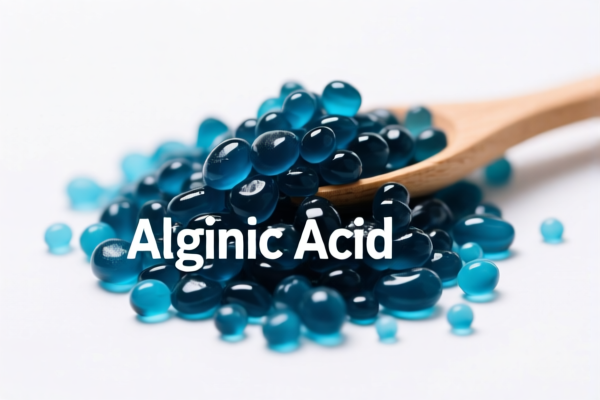
AI Analysis
🌿 Alginic Acid Powder (海藻酸钠粉末)
🌐 HS Code Classification & Customs Clearance Guide | 2026 Updated Tariff Analysis | Expert Compliance Strategy
📌 One Product, Multiple HS Codes — Know the Difference to Avoid 45%+ Tariffs!
📦 I. Product Definition & Classification: What Is Alginic Acid Powder?
Alginic acid powder is a natural polysaccharide extracted from brown seaweed (e.g., Laminaria, Macrocystis). It is widely used as a thickener, stabilizer, emulsifier, and gelling agent in food, pharmaceuticals, cosmetics, and industrial applications.
⚠️ Key Classification Challenge:
This product can be classified under two different HS Code categories, depending on the material origin, chemical structure, and intended use: - As a plant-derived mucilage or thickener → HS Code 1302.39.00.10 / 1302.39.00.90 - As a natural glycoside derivative → HS Code 2938.90.00.00🔍 Critical Insight:
The correct HS Code determines your total tariff rate, which can vary from 13.7% to 20.7% — a 7% difference that directly impacts your profit margin!
📊 II. HS Code Classification Breakdown (2026 Official Tariff Authority)
| HS Code | Product Description | Material Type | Morphology | Key Reasoning |
|---|---|---|---|---|
1302.39.00.10 |
Alginic acid powder, classified as plant-derived mucilage/thickener | Plant source (brown algae) | Powder | Matches 1302.39 category: Other plant mucilages and thickeners (not including carrageenan) |
1302.39.00.90 |
Alginic acid powder, plant mucilage/thickener (non-carrageenan) | Plant source | Powder | Same as above; used when no specific subheading applies |
2938.90.00.00 |
Alginic acid powder, classified as natural glycoside derivative | Natural glycoside derivative | Powder | Matches 2938.90 category: Other natural glycosides and their derivatives |
✅ All three codes apply to the same physical product — alginic acid powder — but only one should be selected based on material classification logic.
📌 Why This Matters:
-1302.39.00.10&1302.39.00.90→ Higher tariff (20.7%)
-2938.90.00.00→ Lower tariff (13.7%)
- Incorrect classification = overpaying 7%+ in duties
💰 III. 2026 Tariff Rate Analysis (U.S. Customs – China Origin)
✅ Applicable Country: United States (US)
✅ Origin: China (CN)
✅ Effective Date: November 10, 2025 (inclusive)
🎯 1. 1302.39.00.10 & 1302.39.00.90 — Plant Mucilage / Thickener (Non-Carrageenan)
| Item | Details |
|---|---|
| Base Duty Rate | 3.2% (ad valorem) |
| Additional Duty (Section 301) | +7.5% (from USITC) |
| Section 122 (IEEPA) Duty | +10% (for China-origin goods under IEEPA) |
| Total Effective Duty | 20.7% |
| Tax Calculation | CIF Value × 20.7% |
| De Minimis Threshold | ❌ Not eligible (denied under U.S. de minimis rule) |
| Legal Basis Path | IEEPA:9903.01.25 → USITC:1302.39.00.10 → FOOTNOTE:9903.88.01 |
📌 Explanation:
- 7.5% = U.S. Section 301 Tariff (China-specific trade action)
- 10% = IEEPA (International Emergency Economic Powers Act) — applies to all China-origin goods under national security concerns
- Total = 20.7% — high-risk, high-cost classification
🎯 2. 2938.90.00.00 — Natural Glycoside Derivative
| Item | Details |
|---|---|
| Base Duty Rate | 3.7% (ad valorem) |
| Additional Duty (Section 301) | 0.0% (no 301 duty on this subheading) |
| Section 122 (IEEPA) Duty | +10% (still applies to China-origin goods) |
| Total Effective Duty | 13.7% |
| Tax Calculation | CIF Value × 13.7% |
| De Minimis Threshold | ✅ Eligible (under $800 de minimis rule) |
| Legal Basis Path | IEEPA:9903.01.24 → 2938.90.00.00 → FOOTNOTE:9903.88.01 |
📌 Why Lower?
- Although IEEPA 10% still applies, the base rate is lower (3.7%) and no Section 301 tariff is triggered for this code. - Critical advantage: You may qualify for de minimis exemption (if shipment < $800), meaning zero duty on small packages!
🛠️ IV. Customs Clearance Best Practices (Pro Tips to Save 7%+)
✅ 1. Required Documentation (MUST-HAVE)
| Document | Required? | Why It Matters |
|---|---|---|
| ✅ Product Specification Sheet | ✔️ | Prove chemical composition: "Alginic acid, from brown seaweed, powder form" |
| ✅ Certificate of Analysis (CoA) | ✔️ | Confirm purity, moisture, ash content, and absence of carrageenan |
| ✅ Material Safety Data Sheet (MSDS/SDS) | ✔️ | Show non-toxicity and natural origin |
| ✅ Commercial Invoice | ✔️ | Must state: "Alginic acid powder, natural glycoside derivative" or "plant mucilage" |
| ✅ Certificate of Origin (CO) | ✔️ | For preferential treatment (e.g., if from Vietnam/Mexico) |
| ✅ Label & Packaging Photos | ✔️ | Show "powder" form and no additives |
✅ 2.申报技巧(Key Tips to Avoid Overpayment)
🔥 “Label It Right, Pay It Less”
- If you can prove it’s a glycoside derivative, use2938.90.00.00→ save 7% - If you classify it as a thickener, use1302.39.00.10or.90→ pay 20.7% - Never use both codes — only one is valid per shipment.📌 Critical Rule:
- Alginic acid is chemically a glycoside derivative →2938.90.00.00is technically correct under WTO Harmonized System rules. - But customs may challenge it if you don’t provide strong scientific justification.
✅ 3. Special Case Handling
| Scenario | Recommended Action |
|---|---|
| Used in food/pharma | Use 2938.90.00.00 + submit FDA/CFR compliance docs |
| High-purity grade (>98%) | Emphasize "natural glycoside derivative" in invoice |
| Shipment < $800 | Use 2938.90.00.00 → may qualify for de minimis exemption |
| Shipment > $800 | Still use 2938.90.00.00 → only 13.7% vs 20.7% |
| Customs challenges the code | Submit technical data + scientific reference (e.g., IUPAC name: "Alginic acid") |
🌍 V. Global Market Tariff Comparison (2026)
| Country/Region | Recommended HS Code | Base Duty | Additional Duties | Notes |
|---|---|---|---|---|
| 🇺🇸 United States | 2938.90.00.00 |
3.7% | +10% (IEEPA) | Total: 13.7% |
| 🇨🇳 China | 2938.90.00.00 |
0% | 0% | No extra tariffs |
| 🇪🇺 European Union | 2938.90.00.00 |
0% | 0% (if CE/REACH compliant) | No additional duties |
| 🇦🇺 Australia | 2938.90.00.00 |
0% | 0% | No extra tariffs |
| 🇯🇵 Japan | 2938.90.00.00 |
0% | 0% | No extra tariffs |
📌 Conclusion:
- The U.S. is the only market with high additional tariffs (IEEPA + 301). - All other major markets treat alginic acid as a glycoside derivative → low or zero duty.
🚨 VI. Common Mistakes & Risk Warnings (Avoid These!)
❌ Mistake 1: Using 1302.39.00.10 for all alginic acid powder
👉 Result: Pay 20.7% instead of 13.7% → 7% overpayment
❌ Mistake 2: Not providing scientific proof of glycoside structure
👉 Result: Customs rejects 2938.90.00.00 → forced to pay 20.7%
❌ Mistake 3: Labeling as “carrageenan” or “thickener” in invoice
👉 Result: Triggered under 1302.39.00.10 → higher tariff
❌ Mistake 4: Assuming all powders are the same
👉 Result: Misclassification → penalties, delays, or seizure
✅ Correct Labeling Example:
"Alginic acid powder, natural glycoside derivative, from brown seaweed, powder form, 98% purity, for food/pharma use"
🎯 VII. Final Verdict: Choose Wisely, Save Big!
✅ Best HS Code for Alginic Acid Powder (U.S.):
2938.90.00.00→ 13.7% total duty
✅ Lower cost, better compliance, de minimis eligible❌ Avoid:
1302.39.00.10or1302.39.00.90unless you cannot prove glycoside classification🔥 Pro Tip:
If your product is high-purity, natural, and used in regulated industries, apply for a Pre-Clearance Ruling (Advance Ruling) from U.S. Customs to lock in the lower rate.
📌 Summary: Your 2026 Alginic Acid Powder Export Playbook
| Step | Action |
|---|---|
| 1️⃣ | Use 2938.90.00.00 as primary HS Code |
| 2️⃣ | Provide CoA, SDS, technical specs |
| 3️⃣ | Label as "natural glycoside derivative" |
| 4️⃣ | Target de minimis exemption for small shipments |
| 5️⃣ | Apply for Advance Ruling if exporting large volumes |
📣 Act Now!
📞 Contact a licensed U.S. customs broker + submit product data for HS Code pre-approval
💼 Save 7% on every shipment — that’s thousands in annual savings!
✨ Precision Classification = Profit Protection!
💼 Your next shipment shouldn’t be a tax surprise — it should be a win!
Customer Reviews
About HS Code Classification
The Harmonized System (HS) is an internationally standardized nomenclature developed by the World Customs Organization (WCO) to classify traded products. Over 200 countries use the HS system as the basis for customs tariffs, trade statistics, and import/export regulations.
Each HS code follows a hierarchical structure:
- Chapter (2 digits) — Broad category of goods (e.g., Chapter 84: Machinery and Mechanical Appliances)
- Heading (4 digits) — More specific grouping within the chapter
- Subheading (6 digits) — Internationally standardized breakdown, used by all WCO member countries
- National subdivisions (8-10 digits) — Country-specific extensions for further classification, such as US HTSUS 10-digit codes
Correct HS code classification is essential for smooth customs clearance, accurate duty payment, and compliance with trade regulations. Misclassification can lead to customs delays, overpayment of duties, or penalties.
When importing from CN to US, the applicable tariff rates may include:
- Most-Favored-Nation (MFN) rate — The standard duty rate applied to WTO members
- General rate — Applied to countries without trade agreements
- Trade remedy duties — Additional tariffs such as Section 301 (anti-dumping), Section 232 (national security), or countervailing duties
The information provided on this page is for reference purposes only. For official classification, please consult with your local customs authority or a licensed customs broker.