Alkylbenzene Copolymer Monomer
CN → USProduct Images
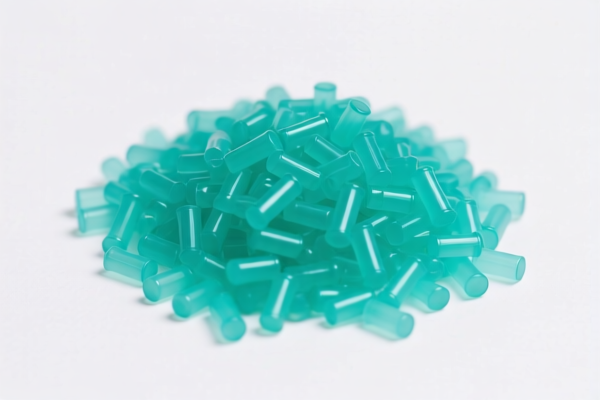
AI Analysis
🧪 Alkylbenzene Copolymer Monomer (Industrial Chemicals)
🌐 HS Code Reference & Customs Clearance Guide | 2026 Latest Tariff Resolution | Professional Compliance Strategy
📌 I. Product Definition & Classification: What is an "Alkylbenzene Copolymer Monomer"?
This term is technically ambiguous in trade declarations, which is the primary cause of customs errors. It requires precise scientific breakdown:
1. The Monomer Component (Single Molecule): * Alkylbenzene: A benzene ring with one or more alkyl chains attached (e.g., Ethylbenzene, Propylbenzene). * Copolymer Monomer: A specific molecule ready to polymerize. Common examples include Styrene (Vinylbenzene), Alpha-Methylstyrene, or Alkylated Styrenes.
2. The Copolymer Component (The Result): * If the product is already polymerized, it is a plastic/resin, not a monomer.
⚠️ Critical Distinction for Customs:
- If the product is a pure chemical liquid/powder intended for further processing → It is a Monomer/Chemical Raw Material.
- If the product is a solid resin/plastic → It is a Polymer/Plastic.
- "Alkylbenzene" alone usually refers to Ethylbenzene or Isopropylbenzene, which are petrochemical intermediates.
Most Common HS Codes for this Category: * 2902: Cycloalkanes, acyclic hydrocarbons, aromatic hydrocarbons (This is the most likely home for pure alkylbenzenes and styrene monomers). * 3902: Primary Forms of Polymers of Olefins (If it's a copolymer resin). * 3903/3904/3906: Specific Plastics (Polystyrene, etc., if already polymerized).
📌 Key Classification Point:
- Pure Styrene or Alkylbenzene (C9-C12) → Chapter 29
- Polystyrene or Alkylbenzene-based Resin → Chapter 39
📦 II. HS Code Classification Details (2026 Latest Tariff Authority对照)
| HS Code | Product Description | Application Scenario | State of Matter |
|---|---|---|---|
2902.20.00.00 |
Ethylbenzene (Alkylbenzene) | Raw material for Styrene production | Liquid |
2902.30.00.00 |
p-Xylene, o-Xylene, m-Xylene | Aromatic hydrocarbons | Liquid |
2902.44.00.00 |
Ethylbenzene (if not elsewhere specified) | Alternative for Alkylbenzene derivatives | Liquid |
2902.90.00.00 |
Other acyclic hydrocarbons (includes some alkylbenzenes) | Generic Alkylbenzenes not in 2902.20/30/44 | Liquid |
3903.11.00.00 |
Polystyrene, unblended (Copolymerized Styrene) | Solid plastic beads/resin | Solid |
3906.90.00.00 |
Acrylic Polymers (if copolymer involves acrylates) | Specialized copolymers | Solid/Liquid |
🔍 Important Note:
- "Alkylbenzene" is not a single HS Code. It depends on the specific alkyl chain length and structure.
- Ethylbenzene is the most common "Alkylbenzene" in trade.
- If the product is a "Copolymer Monomer", it likely refers to Styrene-butadiene precursors or Alpha-methylstyrene. These fall under 2902 or 2903 (Halogenated derivatives).
💰 III. 2026 Latest Tariff Rate Details (Including Additional Duties, Policy Surcharge)
✅ Applicable Country: United States (US)
✅ Origin: China (CN)
✅ Effective Date: November 10, 2025 onwards (Including subsequent imports)
🎯 1. 2902.20.00.00 / 2902.44.00.00 —— Ethylbenzene / Alkylbenzene (Liquid Chemicals)
| Item | Content |
|---|---|
| Base Duty Rate | 0% (ad valorem) |
| USITC Additional Duty | +25% (Under Section 301, USITC Footnote 9903.88.01) |
| IEEPA Additional Duty | +10% (For China/HK origin, effective Nov 10, 2025) |
| Total Duty Rate | 35% |
| Tax Calculation | CIF Value × 35% |
| De Minimis Eligibility | ❌ No (deny_de_minimis) |
| Legal Authority Path | IEEPA:9903.01.25 → USITC:2902.20.00.00 → FOOTNOTE:9903.88.01 |
📌 Explanation:
- Ethylbenzene is a key petrochemical intermediate.
- The 35% total rate is high for a commodity chemical.
- No de minimis exemption: Small shipments are still taxed.
🎯 2. 2902.90.00.00 —— Other Aromatic Hydrocarbons (Generic Alkylbenzenes)
| Item | Content |
|---|---|
| Base Duty Rate | 0% |
| USITC Additional Duty | +25% |
| IEEPA Additional Duty | +10% |
| Total Duty Rate | 35% |
| Tax Calculation | CIF × 35% |
| De Minimis Eligibility | ❌ No |
| Legal Authority Path | IEEPA:9903.01.25 → USITC:2902.90.00.00 → FOOTNOTE:9903.88.01 |
📌 Note:
- If your "Alkylbenzene Copolymer Monomer" is a specific C9 or C10 alkylbenzene not listed in 2902.20/30/44, it may fall here.
- Same 35% rate applies.
🎯 3. 3903.11.00.00 —— Polystyrene (If Already Polymerized)
| Item | Content |
|---|---|
| Base Duty Rate | 0% |
| USITC Additional Duty | +25% |
| IEEPA Additional Duty | +10% |
| Total Duty Rate | 35% |
| Tax Calculation | CIF × 35% |
| De Minimis Eligibility | ❌ No |
| Legal Authority Path | IEEPA:9903.01.25 → USITC:3903.11.00.00 → FOOTNOTE:9903.88.01 |
📌 Note:
- If the product is solid plastic beads (Polystyrene), it is classified under Chapter 39, not Chapter 29.
- Still 35% total duty.
🛠️ IV. Customs Clearance Practical Advice (Real-World Pitfall Guide)
✅ 1. Required Documentation Checklist (None Can Be Missing)
| Document | Must Provide | Description |
|---|---|---|
| ✅ Chemical Safety Data Sheet (SDS) | ✔️ | Must specify CAS Number, Chemical Name, and Purity |
| ✅ Certificate of Analysis (COA) | ✔️ | Confirms if it is Monomer (Liquid) or Polymer (Solid) |
| ✅ Formula / Structure Diagram | ✔️ | To prove it is not a hazardous waste or regulated substance |
| ✅ Commercial Invoice | ✔️ | Must list CAS Number explicitly (e.g., "Ethylbenzene, CAS 100-41-4") |
| ✅ Bill of Lading | ✔️ | Ensure Hazard Class is declared if applicable (most alkylbenzenes are flammable liquids) |
| ✅ Non-Deteriorated Certificate | ✔️ | For chemicals, confirms product stability |
✅ 2. Declaration Tips (Key Mantra)
🔥 "Liquid Chemicals, Solid Plastics: One HS Code Each! Never Mix Monomers with Polymers!"
| Scenario | Correct Declaration | Wrong Practice |
|---|---|---|
| Pure Ethylbenzene Liquid | 2902.20.00.00 |
Declare as "Plastic Raw Material" → Ambiguity |
| Styrene Monomer Liquid | 2902.35.00.00 (if Styrene) |
Declare as "Copolymer" → Misclassification |
| Polystyrene Beads | 3903.11.00.00 |
Declare as "Monomer" → Incorrect Chapter |
| Alkylbenzene C9 Mix | 2902.90.00.00 |
Declare as "Petroleum Oil" → Wrong Chapter 27 |
✅ 3. Special Case Handling
| Scenario | Handling Advice |
|---|---|
| Hazardous Chemicals | Alkylbenzenes are often Flammable Liquids (Class 3). Must declare UN Number (e.g., UN 1110 for Ethylbenzene) on B/L and Invoice. |
| Copolymer Monomer Mix | If it is a pre-mix for polymerization (e.g., Styrene + Butadiene), declare as "Polymerization Grade Chemicals". HS Code may vary based on dominant component. |
| Origin Shift | If shipped via Vietnam or Mexico, check if IEEPA exemption applies. Some chemical intermediates may have different rules. |
| Environmental Compliance | Ensure EPA and DOT compliance for transport. High-purity monomers may require HAZMAT documentation. |
🌍 V. Global Market Customs Comparison (2026 Latest)
| Country/Region | Recommended HS Code | Duty Rate | Certification Requirements | Notes |
|---|---|---|---|---|
| 🇺🇸 USA | 2902.20.00.00 or 3903.11.00.00 |
35% (China) | DOT/HAZMAT | High duty, strict hazmat rules |
| 🇨🇳 China | 2902.20.00.00 or 3903.11.00.00 |
0% - 2% | None | Low duty, no surcharge |
| 🇪🇺 EU | 2902.20.00 or 3903.11.00 |
0% - 6.5% | REACH Registration | REACH is critical for chemicals |
| 🇯🇵 Japan | 2902.20.00 or 3903.11.00 |
0% - 3% | JIS Standards | No surcharge |
| 🇦🇺 Australia | 2902.20.00 or 3903.11.00 |
5% | AICIS Registration | Chemical inventory check required |
📌 Conclusion:
- USA is the most expensive market for Chinese chemical imports due to 35% total duty.
- EU requires REACH registration, which can take months.
- China/EU/Japan have lower duties, but environmental compliance is stricter.
📌 VI. Common Mistakes & Pitfalls (Blood Lessons)
❌ Mistake 1: Declaring "Alkylbenzene" as "Petroleum Products" (Chapter 27)
👉 Consequence: Misclassification → Penalties + Back Taxes (Chapter 27 has different HS codes).
❌ Mistake 2: Mixing Monomer and Polymer in one shipment
👉 Consequence: Customs will separate them → Delay + Storage Fees.
❌ Mistake 3: Not declaring Hazmat for Flammable Liquids
👉 Consequence: Shipment Rejected by DOT/Carrier → Return or Destruction.
❌ Mistake 4: Vague Description "Chemical for Plastic"
👉 Consequence: Customs Hold for 1-2 weeks → Missed Delivery Dates.
✅ Correct Practice:
"Ethylbenzene, CAS No. 100-41-4, Liquid, Flammable, UN 1110, Purity 99.5%, for Polymerization Use"
🎯 VII. Conclusion: Professional Declaration, Save Time, Reduce Costs!
🎯 Remember the Mantra:
🔹 "Monomer is Liquid, Polymer is Solid: Chapter 29 vs. Chapter 39."
🔹 "Hazmat Declaration is Mandatory for Alkylbenzenes."
🔹 "35% Duty in USA: Plan Your Supply Chain Early."
📌 Pro Tip:
If your "Alkylbenzene Copolymer Monomer" is a custom mix for a specific polymerization process, consider applying for an Advance Ruling from US Customs to confirm the HS Code. This can save you from unexpected 35% duties and Hazmat rejections.
📣 Immediate Action:
📞 Contact a Hazmat-Experienced Customs Broker + Provide SDS + CAS Number + Apply for Customs Ruling
🚀 Ensure your Alkylbenzene clears customs Smoothly, Legally, and Profitably!
✨ Professional Clearance, Starting from Accurate Classification!
💼 Every Penny of Cost Deserves Precise Calculation!
Customer Reviews
About HS Code Classification
The Harmonized System (HS) is an internationally standardized nomenclature developed by the World Customs Organization (WCO) to classify traded products. Over 200 countries use the HS system as the basis for customs tariffs, trade statistics, and import/export regulations.
Each HS code follows a hierarchical structure:
- Chapter (2 digits) — Broad category of goods (e.g., Chapter 84: Machinery and Mechanical Appliances)
- Heading (4 digits) — More specific grouping within the chapter
- Subheading (6 digits) — Internationally standardized breakdown, used by all WCO member countries
- National subdivisions (8-10 digits) — Country-specific extensions for further classification, such as US HTSUS 10-digit codes
Correct HS code classification is essential for smooth customs clearance, accurate duty payment, and compliance with trade regulations. Misclassification can lead to customs delays, overpayment of duties, or penalties.
When importing from CN to US, the applicable tariff rates may include:
- Most-Favored-Nation (MFN) rate — The standard duty rate applied to WTO members
- General rate — Applied to countries without trade agreements
- Trade remedy duties — Additional tariffs such as Section 301 (anti-dumping), Section 232 (national security), or countervailing duties
The information provided on this page is for reference purposes only. For official classification, please consult with your local customs authority or a licensed customs broker.