Alkylbenzene Rubber Additive
CN → US| HS Code | Tariff Rate | Origin | Destination | Doc |
|---|---|---|---|---|
| 4005200000 | 35.0% | CN | US | Official Doc |
| 4005990000 | 35.0% | CN | US | Official Doc |
| 38112000 | 0.0% | CN | US | Official Doc |
| 39119000 | 0.0% | CN | US | Official Doc |
| 3404905110 | 35.0% | CN | US | Official Doc |
| 3404905150 | 35.0% | CN | US | Official Doc |
Product Images
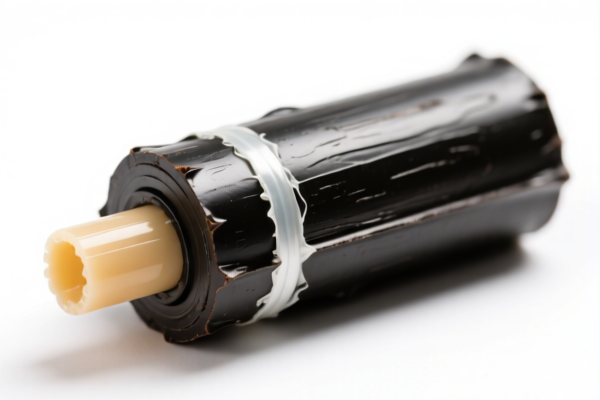
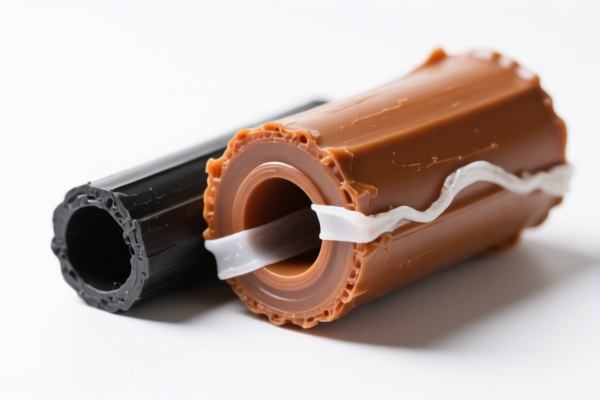
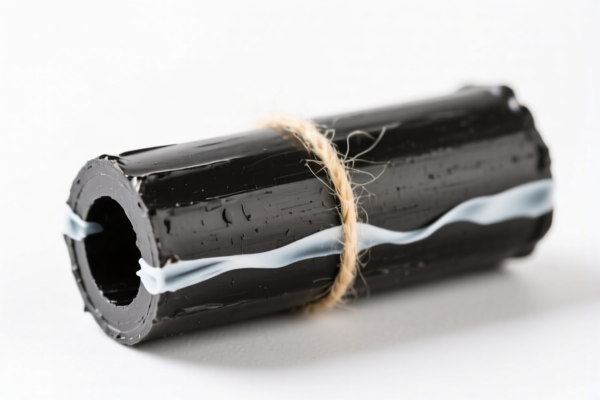
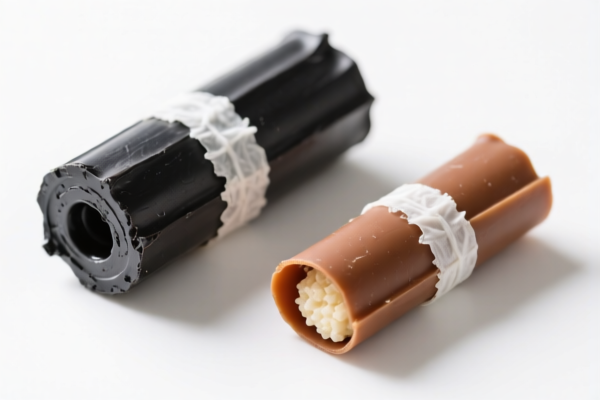
AI Analysis
🧪 Alkylbenzene Rubber Additive (Alkylbenzene Rubber Additive)
🌐 HS Code Reference & Clearance Guide | 2026 Latest Tariff Analysis | Professional Classification Strategy
📌 I. Product Definition & Classification: What Exactly Is an "Alkylbenzene Rubber Additive"?
An Alkylbenzene Rubber Additive is a chemical compound used primarily in the rubber industry. It serves one of two potential functions depending on its chemical structure and application: 1. Rubber Processing Aid/Plasticizer: If it functions to improve the processability, flexibility, or viscosity of unvulcanized rubber compounds. 2. Chemical Additive for Lubricants/Oils: If it is formulated as a solution or dispersion specifically for mineral oils or other lubricating liquids (acting as an anti-oxidant, anti-wear agent, or viscosity modifier).
⚠️ Key Classification Pivot:
The critical distinction lies in its primary use and form: - If it is a specific additive for rubber (e.g., dispersing agent, processing aid) → Look at Chapter 40 (Rubber) or Chapter 39 (Plastics/Polymers). - If it is an additive for lubricating oils (even if named "Rubber Additive" but used in oil contexts) → Look at Chapter 38 (Miscellaneous Chemical Products). - Note: The prompt explicitly mentions "Alkylbenzene Rubber Additive which functions as an additive for rubber or related materials." This strongly points towards rubber processing or preparation, but海关 (Customs) often scrutinizes the exact chemical nature.
📦 II. HS Code Classification Details (2026 Latest Tariff Authority Comparison)
Based on the provided <DATA>, here are the 6 potential HS Codes and the reasoning for each:
| HS Code | Product Description | Application Scenario | Why This Code? |
|---|---|---|---|
4005.20.00.00 |
Compounded rubber, unvulcanized... Solutions; dispersions | Rubber processing solutions, latex compounds | If the additive is in solution/dispersion form and intended for rubber compounding. |
4005.99.00.00 |
Compounded rubber, unvulcanized... Other: Other | Solid rubber additives, non-solution forms | If the additive is in primary forms (solid/paste) and not covered by the specific "solution" subheading. |
3404.90.51.10 |
Artificial waxes and prepared waxes: ... Of chemically modified lignite | Waxy rubber additives derived from lignite | If the product is chemically classified as a wax derived from lignite (rare for alkylbenzene, but possible in specific trade definitions). |
3404.90.51.50 |
Artificial waxes and prepared waxes: ... Other | General artificial wax additives | If it is a wax-type additive not derived from lignite. |
3811.20.00 |
Anti-oxidation products, anti-wear agents... for mineral oils... specifically applicable to "Alkylbenzene Rubber Additive" | Lubricant additives, oil additives | Direct Match: The description explicitly links this code to "Alkylbenzene Rubber Additive" used as an additive for lubricants. |
3911.90.00 |
Other products of synthetic polymers... | Polymeric rubber additives | If classified as a synthetic polymer of butadiene/ethylene/etc., not covered by lubricant categories. |
🔍 Critical Analysis:
- The most direct textual match in the provided data is3811.20.00, which explicitly mentions "Alkylbenzene Rubber Additive" in the context of lubricant oils.
- However, if the product is purely for rubber processing (not oils),4005.20.00.00or4005.99.00.00are more technically accurate for rubber-specific compounds.
-3911.90.00is a fallback for polymer-based additives not fitting other categories.
💰 III. 2026 Latest Tariff Rate Details (Including Surcharge Taxes)
✅ Applicable Country: USA (US)
✅ Origin: China (CN)
✅ Effective Date: 2025/2026 (as per 301/Tariff Act)
🎯 1. 4005.20.00.00 & 4005.99.00.00 (Rubber-Related Additives)
| Item | Content |
|---|---|
| Base Tariff | 0.0% (ad valorem) |
| Section 301 Surcharge | +25.0% |
| Total Tax Rate | 25.0% |
| Tax Calculation | CIF Value × 25% |
| De Minimis Exemption | ❌ Not Eligible (High-value chemical products usually excluded) |
| Legal Basis | USITC:4005.20.00.00 / USITC:4005.99.00.00 + 301 Tariff List |
📌 Explanation:
- These codes fall under Chapter 40 (Rubber).
- While the base rate is 0%, the 25% Section 301 surcharge applies to most Chinese-origin rubber-related chemicals.
- Total Cost Increase: 25% of CIF value.
🎯 2. 3404.90.51.10 & 3404.90.51.50 (Artificial Waxes)
| Item | Content |
|---|---|
| Base Tariff | 0.0% (for 51.50) / 0.0% (for 51.10) |
| Section 301 Surcharge | +25.0% (for 51.10) / 0.0% (for 51.50) |
| Total Tax Rate | 25.0% (51.10) / 0.0% (51.50) |
| Tax Calculation | CIF × Rate |
| De Minimis Exemption | ❌ Not Eligible |
📌 Explanation:
-3404.90.51.50(Other artificial waxes) has 0% total tax (0% base + 0% surcharge).
-3404.90.51.10(Lignite-derived waxes) has 25% total tax.
- Strategy: If the product can be classified as "Other artificial wax" (51.50), it is tax-free from surcharges. This requires strong technical justification.
🎯 3. 3811.20.00 (Lubricant Additives)
| Item | Content |
|---|---|
| Base Tariff | Information Failed to Retrieve |
| Section 301 Surcharge | Error / Unknown |
| Total Tax Rate | Error (Must verify with CBP) |
| Tax Calculation | N/A |
| De Minimis Exemption | ❌ Unknown |
📌 Explanation:
- The provided data indicates a failure to retrieve tax information for this code.
- Risk: High. Lubricant additives often have different tariff treatment than rubber additives.
- Action: Requires Advance Ruling from US Customs and Border Protection (CBP) to confirm the 301 surcharge status. Historically, many chemical additives under 3811 face 7.5% - 25% duties depending on origin.
🎯 4. 3911.90.00 (Synthetic Polymers)
| Item | Content |
|---|---|
| Base Tariff | Information Failed to Retrieve |
| Section 301 Surcharge | Error / Unknown |
| Total Tax Rate | Error (Must verify with CBP) |
| Tax Calculation | N/A |
| De Minimis Exemption | ❌ Unknown |
📌 Explanation:
- Similar to3811, tax info is missing.
- Chapter 39 products may be subject to 25% surcharge if deemed Chinese-origin rubber/plastic compounds.
🛠️ IV. Clearance Practical Advice (Real-World Pitfall Guide)
✅ 1. Required Documentation Checklist (Non-Negotiable)
| Document | Must Provide | Notes |
|---|---|---|
| ✅ Technical Data Sheet (TDS) | ✔️ | Must specify chemical composition, function (rubber vs. oil additive), and HS Code justification. |
| ✅ Safety Data Sheet (SDS) | ✔️ | Crucial for chemical clearance. Check Section 9 for classification. |
| ✅ Product Photo | ✔️ | Label must show "Alkylbenzene Rubber Additive" and chemical name. |
| ✅ Statement of Use | ✔️ | Explicitly state: "Used in rubber compounding" OR "Used in lubricant oils". This determines HS Code. |
| ✅ Commercial Invoice | ✔️ | Describe as "Chemical Additive for Rubber Processing" or "Lubricant Additive". |
| ✅ Bill of Lading | ✔️ | Ensure no hazardous material markings unless classified as such. |
✅ 2. Declaration Tips (Key Mnemonic)
🔥 "Function Determines Code, Form Determines Subheading, 301 Applies to Rubber/Wax!"
| Scenario | Correct Declaration | Wrong Practice |
|---|---|---|
| Product is in solution for rubber | 4005.20.00.00 + 25% Tax |
Declare as oil additive → Risk of misclassification penalty |
| Product is solid/paste for rubber | 4005.99.00.00 + 25% Tax |
Declare as wax → Risk of reclassification |
| Product is wax-type | 3404.90.51.50 → 0% Tax |
Declare as rubber additive → Unnecessary 25% cost |
| Product is lubricant additive | 3811.20.00 → Verify Tax |
Assume 0% → Risk of surprise 25% surcharge |
✅ 3. Special Handling
| Situation | Advice |
|---|---|
| HS Code Uncertainty | Apply for CBP Ruling (16 U.S.C. §1625) before shipment. Use the product name and TDS. |
| High-Value Shipment | Calculate total landed cost including 25% surcharge. Budget for 25% duty if rubber-related. |
| Origin Documentation | Ensure Certificate of Origin (CO) is accurate. Misdeclared origin triggers 100% penalty. |
| Chemical Classification | If "Alkylbenzene" suggests it's a wax, argue for 3404.90.51.50 (0% tax) with expert chemical proof. |
🌍 V. Global Market Clearance Comparison (2026 Latest)
| Country/Region | Recommended HS Code | Tariff (CN Origin) | Certification | Notes |
|---|---|---|---|---|
| 🇺🇸 USA | 4005.99.00.00 or 3811.20.00 |
25% (Rubber/Wax) / Unknown (Lubricant) | None required for clearance | 25% Surcharge applies to most rubber/wax chemicals. |
| 🇨🇳 China | 3811.20.00 or 4005.99.00.00 |
7.5% - 10% | CCC (if applicable) | No 301 surcharge for imports into China. |
| 🇪🇺 EU | 3811.20.00 |
5.3% | REACH Registration | REACH compliance is mandatory for chemicals. |
| 🇦🇺 Australia | 3811.20.00 |
5% | AICIS Registration | Chemical Inventory Check Required. |
📌 Conclusion:
- USA: Expect 25% additional tariff if classified under Chapter 40 or 3404.10.
- EU/Australia: Focus on chemical registration (REACH/AICIS) rather than tariff.
- China: Import duties are lower, but environmental compliance is strict.
📌 VI. Common Errors & Pitfalls (Lessons Learned)
❌ Error 1: Misclassifying a rubber additive as a lubricant additive to avoid 25% tax.
👉 Consequence: CBP reclassifies during audit → Back taxes + 25% surcharge + Penalties.
❌ Error 2: Claiming 0% tax for 3404.90.51.50 without proof it's a wax.
👉 Consequence: If deemed a rubber compound, 25% surcharge applies retroactively.
❌ Error 3: Ignoring 301 List updates.
👉 Consequence: Tariffs may increase from 25% to 100% for certain strategic chemicals.
❌ Error 4: Using vague descriptions like "Chemical Mixture".
👉 Consequence: Customs detention for unclear classification → Storage fees + Delays.
✅ Correct Action:
"Alkylbenzene Rubber Additive, CAS No. [XX-XX-X], Used in Rubber Compounding, Solvent-Based, For Industrial Use Only"
🎯 VII. Conclusion: Professional Declaration Saves Money!
🎯 Remember the Mnemonic:
🔹 "Rubber/Wax = 25% Surcharge"
🔹 "Lubricant Additive = Verify First"
🔹 "Wax Form = Possible 0% Tax"
🔹 "Clear Function = Clear Tax"
📌 Pro Tip:
- If your product is alkylbenzene-based, consult a chemical expert to see if it qualifies as "Artificial Wax" (3404.90.51.50) for 0% tax.
- If it is strictly a rubber processing aid, budget for 25% total duty.
- Always get a CBP Advance Ruling for chemical products to avoid surprise liabilities.
📣 Immediate Action:
📞 Contact a licensed customs broker + Provide TDS/SDS + File for CBP Ruling
🚀 Ensure accurate HS Code, minimize tariff, and smooth clearance!
✨ Professional Clearance Starts with Precise Classification!
💼 Every Dollar Saved on Tariffs is Pure Profit!
Customer Reviews
About HS Code Classification
The Harmonized System (HS) is an internationally standardized nomenclature developed by the World Customs Organization (WCO) to classify traded products. Over 200 countries use the HS system as the basis for customs tariffs, trade statistics, and import/export regulations.
Each HS code follows a hierarchical structure:
- Chapter (2 digits) — Broad category of goods (e.g., Chapter 84: Machinery and Mechanical Appliances)
- Heading (4 digits) — More specific grouping within the chapter
- Subheading (6 digits) — Internationally standardized breakdown, used by all WCO member countries
- National subdivisions (8-10 digits) — Country-specific extensions for further classification, such as US HTSUS 10-digit codes
Correct HS code classification is essential for smooth customs clearance, accurate duty payment, and compliance with trade regulations. Misclassification can lead to customs delays, overpayment of duties, or penalties.
When importing from CN to US, the applicable tariff rates may include:
- Most-Favored-Nation (MFN) rate — The standard duty rate applied to WTO members
- General rate — Applied to countries without trade agreements
- Trade remedy duties — Additional tariffs such as Section 301 (anti-dumping), Section 232 (national security), or countervailing duties
The information provided on this page is for reference purposes only. For official classification, please consult with your local customs authority or a licensed customs broker.