All Plastic Rubber Bands
CN → US| HS Code | Tariff Rate | Origin | Destination | Doc |
|---|---|---|---|---|
| 3926909905 | 22.8% | CN | US | Official Doc |
| 3926901000 | 20.9% | CN | US | Official Doc |
| 4016993510 | 35.0% | CN | US | Official Doc |
| 4016993550 | 35.0% | CN | US | Official Doc |
| 4017000000 | 37.7% | CN | US | Official Doc |
Product Images
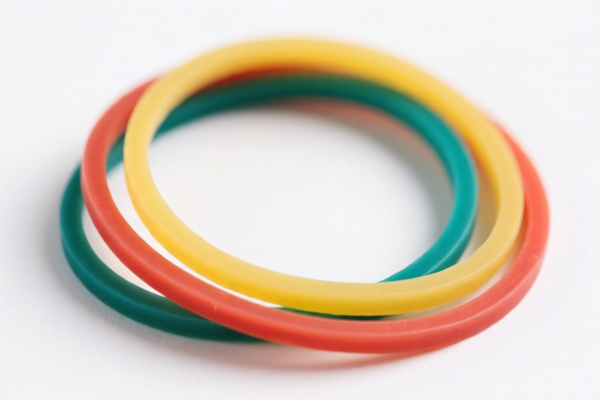
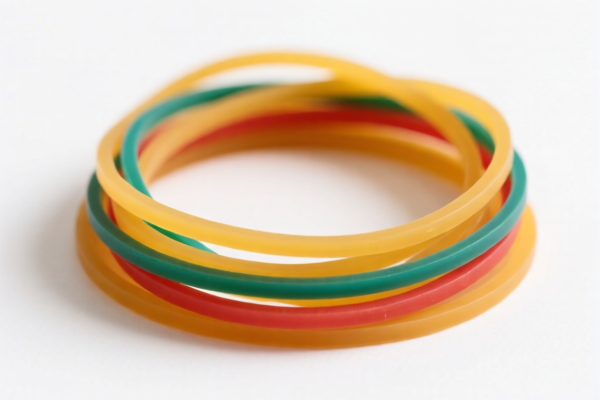
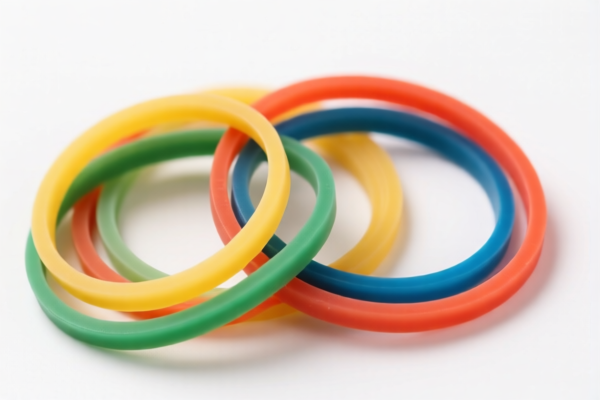
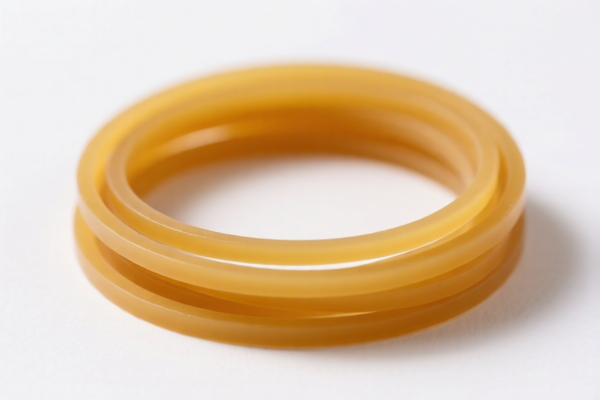
AI Analysis
🇨🇳 All Plastic Rubber Bands (文具用塑料橡皮筋 / Plastic Material Elastic Bands)
🌐 HS Code Reference & Customs Clearance Guide | 2026 Latest Tariff Analysis | Professional Entry Strategy
📌 I. Product Definition & Classification: What Exactly Are "Plastic Rubber Bands"?
In international trade, "Plastic Rubber Bands" are broadly classified based on material composition and specific use. Although commonly referred to as "rubber bands," if the material is primarily synthetic plastic (polymer) rather than natural rubber, it falls under Chapter 39 (Plastics). If it contains significant natural rubber components, it may fall under Chapter 40 (Rubber).
Key Distinction Points: * Plastic/Polymer Material: Falls under HS 3926 (Other articles of plastics and articles of other materials of headings 3901 to 3914). * Natural Rubber Material: Falls under HS 4016 (Other articles of vulcanized rubber other than hard rubber). * Use Case: Office supplies (stationery) vs. Industrial packaging vs. General utility.
⚠️ Critical Warning:
- Misdeclaring a natural rubber band as plastic can lead to significant tariff penalties (due to higher duties on rubber).
- Misdeclaring a plastic band as rubber can lead to customs delays for material verification.
- 122 Clauses (Section 301) and Additional Tariffs apply differently to Chapters 39 and 40.
📦 II. HS Code Classification Details (2026 Latest Tariff Authority)
Based on the provided data, here are the five specific HS Codes applicable to "Plastic Rubber Bands" and their detailed tax structures.
| HS Code | Product Description | Material/Type | Applicable Scenario |
|---|---|---|---|
3926.90.99.05 |
Stationery Plastic Rubber Bands | Plastic, Elastic Strip | Office stationery, school supplies, elastic bands for papers. |
3926.90.10.00 |
Plastic Material Rubber Bands | Plastic (Other Plastic Articles) | General plastic elastic bands, not specifically for stationery. |
3926.90.99.89 |
Other Plastic/Elastic Articles | Rubber/Elastomer (Plastic Sub-cat.) | Unlisted other articles made of rubber/elastic materials under plastic chapter. |
4016.99.35.10 |
Rubber Rubber Bands | Natural Rubber | Natural rubber elastic bands, general utility. |
4016.99.35.50 |
Natural Rubber Articles | Natural Rubber (Vulcanized) | Vulcanized natural rubber products, other forms. |
🔍 Key Insight:
- Chapter 39 (Plastics) generally has a lower base tariff (3.4% - 5.3%) compared to Chapter 40 (Rubber) which has a 0% base but faces heavy Section 301 duties (25%).
- However, the Total Tax Rate for Plastic (Ch 39) is 20.9% - 22.8%, while Rubber (Ch 40) is 35.0%.
- Always verify the Material Safety Data Sheet (MSDS) to prove if the product is plastic or natural rubber.
💰 III. 2026 Latest Tariff Rate Details (Including Surtaxes & Policy Add-ons)
✅ Applicable Country: United States (US)
✅ Origin: China (CN)
✅ Effective Time: Post-2025 (Includes Section 301 & IEEPA Add-ons)
🎯 1. 3926.90.99.05 —— Stationery Plastic Rubber Bands
| Item | Content |
|---|---|
| Base Tariff | 5.3% (General Rate) |
| Section 301 Surcharge | +7.5% |
| 122 Clauses Tariff | +10% |
| Total Tax Rate | 22.8% |
| Tax Calculation | CIF Value × 22.8% |
| De Minimis Eligibility | ⚠️ Check Specific Rules (Usually < $800 exempt, but subject to scrutiny if high volume) |
| Legal Basis Path | USITC:3926.90.99.05 → Section 301: 7.5% → 122 Clauses: 10% |
📌 Explanation:
- This is the most favorable rate for Plastic Bands.
- The "122 Clauses" refer to specific enforcement provisions under Section 301, adding an extra 10% on top of the standard 7.5% surcharge.
🎯 2. 3926.90.10.00 —— Plastic Material Rubber Bands (General)
| Item | Content |
|---|---|
| Base Tariff | 3.4% (Lower base for plastic articles) |
| Section 301 Surcharge | +7.5% |
| 122 Clauses Tariff | +10% |
| Total Tax Rate | 20.9% |
| Tax Calculation | CIF Value × 20.9% |
| De Minimis Eligibility | ⚠️ Check Specific Rules |
| Legal Basis Path | USITC:3926.90.10.00 → Section 301: 7.5% → 122 Clauses: 10% |
📌 Note:
- This is the lowest total tax rate (20.9%) among all plastic categories.
- Use this code only if the product does not qualify as "Stationery" (3926.90.99.05) and is not an "other unlisted article" (3926.90.99.89).
🎯 3. 3926.90.99.89 —— Other Rubber/Elastic Plastic Articles
| Item | Content |
|---|---|
| Base Tariff | 5.3% |
| Section 301 Surcharge | +7.5% |
| 122 Clauses Tariff | +10% |
| Total Tax Rate | 22.8% |
| Tax Calculation | CIF Value × 22.8% |
| De Minimis Eligibility | ⚠️ Check Specific Rules |
| Legal Basis Path | USITC:3926.90.99.89 → Section 301: 7.5% → 122 Clauses: 10% |
📌 Explanation:
- This is a "catch-all" for plastic elastic articles not listed elsewhere.
- Tax rate is identical to Stationery bands (3926.90.99.05) because the base rate (5.3%) is the same.
🎯 4. 4016.99.35.10 —— Rubber Rubber Bands (Natural)
| Item | Content |
|---|---|
| Base Tariff | 0.0% (No base duty for some rubber articles) |
| Section 301 Surcharge | +25.0% (Higher than plastic) |
| 122 Clauses Tariff | +10% |
| Total Tax Rate | 35.0% |
| Tax Calculation | CIF Value × 35.0% |
| De Minimis Eligibility | ❌ High Risk of Audit |
| Legal Basis Path | USITC:4016.99.35.10 → Section 301: 25% → 122 Clauses: 10% |
📌 Warning:
- Even though the base tariff is 0%, the Section 301 surcharge is 25% (vs. 7.5% for plastic).
- Total cost is 35.0%, which is significantly higher than plastic alternatives.
🎯 5. 4016.99.35.50 —— Natural Rubber Articles (Vulcanized)
| Item | Content |
|---|---|
| Base Tariff | 0.0% |
| Section 301 Surcharge | +25.0% |
| 122 Clauses Tariff | +10% |
| Total Tax Rate | 35.0% |
| Tax Calculation | CIF Value × 35.0% |
| De Minimis Eligibility | ❌ High Risk of Audit |
| Legal Basis Path | USITC:4016.99.35.50 → Section 301: 25% → 122 Clauses: 10% |
📌 Note:
- Identical tax structure to4016.99.35.10.
- Only use if the product is explicitly vulcanized natural rubber and not synthetic plastic.
🛠️ IV. Customs Clearance Practical Advice (Battle-Tested Guide)
✅ 1. Preparation Checklist (Non-Negotiable)
| Document | Required | Explanation |
|---|---|---|
| ✅ Product Composition Report | ✔️ | Must specify % of plastic vs. natural rubber. Critical for Chapter 39 vs. 40. |
| ✅ Product Photos | ✔️ | Clear images showing texture, flexibility, and packaging. |
| ✅ Commercial Invoice | ✔️ | Accurate description: "Plastic Elastic Bands" or "Natural Rubber Bands". Do NOT use generic "Rubber Bands" if plastic. |
| ✅ Material Safety Data Sheet (MSDS) | ✔️ | Proves chemical composition. |
| ✅ Customs Bond | ✔️ | Ensure continuous bond is in place for regular imports. |
✅ 2. Declaration Tips (Key Mantras)
🔥 "Material First, Code Second. Plastic is Cheaper, Rubber is Heavier."
| Scenario | Correct Declaration | Wrong Declaration | Consequence |
|---|---|---|---|
| Plastic Stationery Bands | 3926.90.99.05 |
4016.99.35.10 |
Overpay Tax (22.8% vs 35.0%) |
| General Plastic Bands | 3926.90.10.00 |
3926.90.99.05 |
Minor classification error, may require correction. |
| Natural Rubber Bands | 4016.99.35.10 |
3926.90.99.05 |
Customs Penalties for misclassification + back taxes. |
✅ 3. Special Circumstances
| Situation | Handling Advice |
|---|---|
| Mixed Materials | If >50% plastic, classify under Chapter 39. If >50% rubber, Chapter 40. Provide test reports. |
| OEM Custom Colors | Do not add color codes to HS Code. Keep description generic but accurate. |
| Small Sample Shipments | Still subject to full tariffs unless eligible for De Minimis ($800). Plan accordingly. |
🌍 V. Global Market Comparison (2026 Latest)
| Country/Region | Recommended HS Code (Plastic) | Total Tariff (China Origin) | Notes |
|---|---|---|---|
| 🇺🇸 USA | 3926.90.10.00 / 3926.90.99.05 |
20.9% - 22.8% | Includes 301 + 122 Clauses. |
| 🇨🇳 China | 3926.90.99.05 |
~5-10% (Import Duty) | No Section 301. |
| 🇪🇺 EU | 3926.90.99 |
~6.5% | No Section 301. |
| 🇬🇧 UK | 3926.90.99 |
~6.5% | Post-Brexit tariffs similar to EU. |
📌 Conclusion:
- USA is the highest cost market due to Section 301 + 122 Clauses.
- Plastic (Ch 39) is always cheaper than Natural Rubber (Ch 40) when importing into the US from China.
- Strategy: If your product is made of plastic, emphasize "Plastic Material" in all documentation to qualify for 20.9-22.8% instead of 35.0%.
📌 VI. Common Mistakes & Pitfalls (Blood Lessons)
❌ Mistake 1: Using "Rubber Bands" as the product name for plastic products.
👉 Result: Customs may assume natural rubber → Charge 35.0% → Refund delay + Audit.
❌ Mistake 2: Declaring plastic bands under 4016.99.35.10.
👉 Result: Overpayment of 12.2% in taxes. (35.0% - 22.8% = 12.2%).
❌ Mistake 3: Ignoring "122 Clauses".
👉 Result: Many importers forget the additional 10% surcharge, leading to unexpected bill shocks at customs.
❌ Mistake 4: Mixing Natural and Plastic bands in one shipment without separate declarations.
👉 Result: Customs will classify the entire shipment at the highest rate or demand re-classification. Separate them!
✅ Correct Action:
"Plastic Elastic Bands, 50mm, for Office Use, 100% Synthetic Polymer, Model XYZ"
🎯 VII. Conclusion: Precise Classification Saves Money!
🎯 Remember the Mantra:
🔹 "Plastic = 3926 = 20.9-22.8%"
🔹 "Rubber = 4016 = 35.0%"
🔹 "Always declare material. Never guess the code!"
📌 Pro Tip:
If your plastic bands are made in Vietnam, Mexico, or Thailand, you may qualify for 0% Section 301 duties.
Consider supply chain diversification to reduce the 20.9-22.8% US tariff burden.
📣 Immediate Action:
📞 Consult with a licensed customs broker.
🚀 Provide Material Composition Reports to secure the lower 20.9% rate.
💼 Save 12.2% by classifying correctly!
✨ Professional Clearance, Starts with Accurate Classification!
💼 Every cent counts in cross-border trade!
Customer Reviews
About HS Code Classification
The Harmonized System (HS) is an internationally standardized nomenclature developed by the World Customs Organization (WCO) to classify traded products. Over 200 countries use the HS system as the basis for customs tariffs, trade statistics, and import/export regulations.
Each HS code follows a hierarchical structure:
- Chapter (2 digits) — Broad category of goods (e.g., Chapter 84: Machinery and Mechanical Appliances)
- Heading (4 digits) — More specific grouping within the chapter
- Subheading (6 digits) — Internationally standardized breakdown, used by all WCO member countries
- National subdivisions (8-10 digits) — Country-specific extensions for further classification, such as US HTSUS 10-digit codes
Correct HS code classification is essential for smooth customs clearance, accurate duty payment, and compliance with trade regulations. Misclassification can lead to customs delays, overpayment of duties, or penalties.
When importing from CN to US, the applicable tariff rates may include:
- Most-Favored-Nation (MFN) rate — The standard duty rate applied to WTO members
- General rate — Applied to countries without trade agreements
- Trade remedy duties — Additional tariffs such as Section 301 (anti-dumping), Section 232 (national security), or countervailing duties
The information provided on this page is for reference purposes only. For official classification, please consult with your local customs authority or a licensed customs broker.