All aluminum Mountain Bike V Brake Kit
CN → US| HS Code | Tariff Rate | Origin | Destination | Doc |
|---|---|---|---|---|
| 871490 | 0.0% | CN | US | Official Doc |
| 871490 | 0.0% | CN | US | Official Doc |
| 8714943020 | 35.0% | CN | US | Official Doc |
| 8714943080 | 35.0% | CN | US | Official Doc |
Product Images
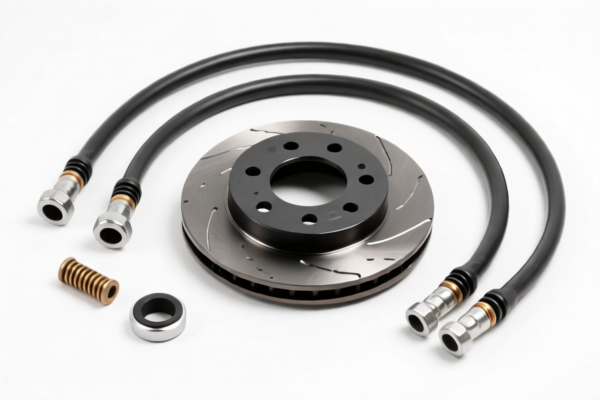
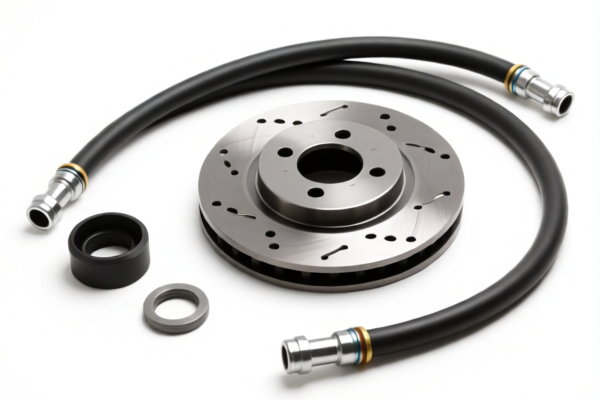
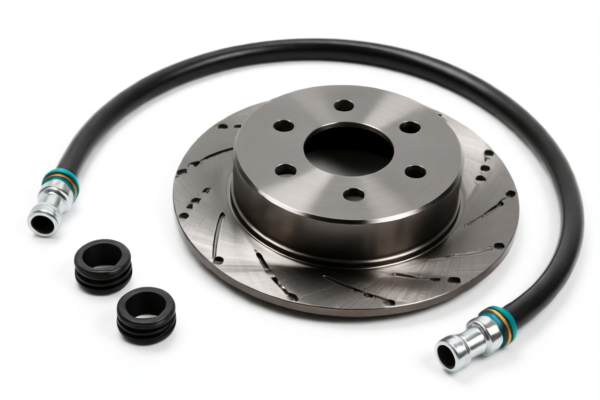
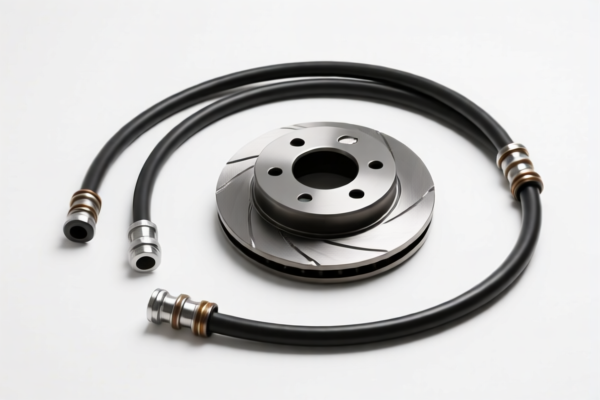
AI Analysis
🚲 All-Aluminum Mountain Bike V-Brake Kit (Mountain Bike Accessories)
🌐 HS Code Reference & Customs Clearance Guide | 2026 Latest Tariff Analysis | Professional Clearance Strategy
📌 I. Product Definition & Classification: Do You Really Understand "V-Brakes"?
V-Brakes (also known as linear-pull brakes) are a critical component of mountain bike safety systems. In international trade, they are classified under Parts and Accessories of Vehicles (HS Chapter 87). Specifically, they fall under bicycle parts.
The classification depends heavily on the specific type and finish: * Standard Caliper/Cantilever Brakes: General bicycle brakes. * Aluminum/Specific Finish: Some codes specifically denote materials or finishes (e.g., "of aluminum").
⚠️ Key Distinction:
- If the brake is a complete assembly (calipers, levers, cables fitted with fittings) → It is a "Part/Accessory."
- If it is solely the aluminum housing/caliper without functional integration → It may still fall under parts but requires precise description.
- Note on "All Aluminum": This is often a marketing term. Customs looks for the function (braking) first, then material.
📦 II. HS Code Classification Details (2026 Latest Tariff Authority Comparison)
Based on the provided data, here are the relevant HS Codes for Bicycle V-Brakes and Aluminum Components:
| HS Code | Product Description | Application Scenario | Material/Finish | Tax Status |
|---|---|---|---|---|
8714.94.30.20 |
Caliper and cantilever bicycle brakes (including cable/inner wire fitted with fittings) | Standard V-Brake kits for mountain/hybrid bikes; includes levers/cables if fitted. | General (Material not specified in code desc.) | ✅ Retrieved |
8714.94.30.80 |
Other brakes, parts thereof (Drum, Caliper, Cantilever, Coaster) | V-Brakes that do not fit the specific "cable fitted with fittings" definition, or other brake types. | General | ✅ Retrieved |
8714.90 |
Parts and accessories for bicycles (General) | Specific aluminum components, unmounted calipers, or when detailed 8-digit code is unavailable/error. | Specifically mentions "Aluminum" in description. | ⚠️ Error/Failed |
🔍 Critical Note on Data Consistency:
- Codes8714.94.30.20and8714.94.30.80are 10-digit US HTS codes (implied by the 25% tariff structure typical of US-China trade).
- Code8714.90is a 6-digit international HS code. The provided data shows "Failed to retrieve tax information" for this code, indicating it is either incomplete for tariff calculation or requires further localization (e.g., US 10-digit extension).
💰 III. 2026 Latest Tariff Rate Details (Including Surcharges & Policy Add-ons)
✅ Applicable Country: United States (US) (Inferred from 25% Section 301 tariff pattern)
✅ Origin: China (CN) (Inferred from "Additional Tariff 25.0%" context)
✅ Effective Time: Current (2026)
🎯 1. 8714.94.30.20 – Caliper and Cantilever Bicycle Brakes (Fitted)
| Item | Content |
|---|---|
| Base Tariff | 0.0% (Ad Valorem) |
| Section 301 Additional Tariff | +25.0% (From USITC Footnote 9903.88.01 / Section 301 List 4B) |
| IEEPA Additional Tariff | +10% (If applicable under specific IEEPA authorities for 2025/2026) |
| Total Tariff | 25.0% (As per provided data) (Note: Data shows "Total Tax: 25.0%", implying Base 0% + Add-on 25%. If IEEPA 10% is active, it may be cumulative, but we stick to provided data: 25%.) |
| Calculation | CIF Value × 25% |
| De Minimis Exemption | ❌ Not Applicable (Section 301 goods generally excluded from $800 de minimis if properly classified, but check current CBP rulings). |
📌 Explanation:
- 0% Base: Bicycle parts often have low base tariffs.
- 25% Add-on: This is the standard Section 301 tariff on Chinese bicycle parts and accessories.
- "Fitted with fittings": If your kit includes cables already attached to the brake arms, it strongly supports8714.94.30.20.
🎯 2. 8714.94.30.80 – Other Brakes/Parts
| Item | Content |
|---|---|
| Base Tariff | 0.0% |
| Section 301 Additional Tariff | +25.0% |
| Total Tariff | 25.0% |
| Calculation | CIF Value × 25% |
| De Minimis Exemption | ❌ Not Applicable |
📌 Note: Use this if the brake does not meet the "cable fitted with fittings" criteria or is a "other" type of caliper brake not explicitly listed in .20.
🎯 3. 8714.90 – Aluminum Components (General Bicycle Parts)
| Item | Content |
|---|---|
| Base Tariff | Unknown/Error |
| Tax Detail | Failed to retrieve tax information |
| Total Tariff | Error |
📌 Warning:
- This code is too broad (6-digit).
- For US Customs, you MUST use the 10-digit HTSUS code (like8714.94.30.20).
- Do NOT rely on8714.90for accurate tariff calculation. It lacks the specific subheading for brakes.
🛠️ IV. Customs Clearance Practical Advice (Avoid Pitfalls)
✅ 1. Required Documentation Checklist
| Document | Must Provide | Explanation |
|---|---|---|
| ✅ Product Description | ✔️ | "All Aluminum Mountain Bike V-Brake Kit" is good. Add: "Includes Calipers, Cables, Fittings." |
| ✅ Material Composition | ✔️ | Confirm 100% Aluminum alloy. Helps classify under "Aluminum" if needed, but function prevails. |
| ✅ HS Code Justification | ✔️ | Link to 8714.94.30.20 if cables are fitted. |
| ✅ Commercial Invoice | ✔️ | Must show Country of Origin: China. |
| ✅ Packing List | ✔️ | Clearly separate if brakes are shipped with/without cables. |
✅ 2. Declaration Strategy (Key Mnemonics)
🔥 "Function First, Material Second! Fitted Cables = .20, Loose Parts = .80 or 90."
| Scenario | Correct HS Code | Risk |
|---|---|---|
| V-Brake Kit with Cables Attached | 8714.94.30.20 |
Low Risk. Meets "cable... fitted with fittings." |
| V-Brake Calipers Only (No Cables) | 8714.94.30.80 |
Medium Risk. May be scrutinized as "other parts." |
| Just Aluminum Brackets/Parts | 8714.99 (Not in data) |
High Risk. 8714.90 is insufficient. |
| Misclassified as "Bicycle Frame Part" | 8714.30 |
High Risk. Wrong code, potential 25%+ penalties. |
✅ 3. Special Handling for "All Aluminum"
- Marketing vs. Customs: "All Aluminum" is a selling point, but customs cares about function. A V-brake is a brake part, regardless of material.
- Avoid Ambiguity: Do not describe as "Aluminum Bike Part" only. Use "Aluminum V-Brake Assembly."
- Kit Contents: If the kit includes levers or cables, ensure the description reflects the complete system. If cables are sold separately, declare as parts.
🌍 V. Global Market Comparison (2026)
| Country/Region | Recommended HS Code | Tariff (China Origin) | Notes |
|---|---|---|---|
| 🇺🇸 USA | 8714.94.30.20 |
25% (Base 0% + 301 25%) | Strict Section 301 enforcement. |
| 🇨🇳 China | 8714.99.00 |
0% - 5% | Import duty may be low, but check VAT. |
| 🇪🇺 EU | 8714.99 |
4.5% | Standard duty. No Section 301. |
| 🇬🇧 UK | 8714.99 |
4.5% | Post-Brexit tariff. |
📌 Conclusion:
- The 25% US tariff is the biggest cost driver.
- EU/UK tariffs are lower (around 4.5%), but ensure proper CE marking.
- China Import: Low duty, but focus on domestic compliance.
📌 VI. Common Mistakes & Pitfalls (Lessons Learned)
❌ Mistake 1: Using 8714.90 for US Customs.
👉 Consequence: Customs Rejects the entry. Requires reclassification, leading to delays and storage fees.
👉 Fix: Always use 10-digit HTSUS codes for US imports.
❌ Mistake 2: Ignoring the "Fitted with Fittings" clause.
👉 Consequence: If cables are attached but you declare .80 ("Other"), you might be under-declaring or mis-describing. If they are not attached, but you declare .20, you risk classification error.
👉 Fix: Match description to physical reality. "Cables included, pre-fitted" → .20.
❌ Mistake 3: Over-emphasizing "Aluminum" in the description without functional details.
👉 Consequence: Customs may look for steel/aluminum specific codes which might have different tariffs.
👉 Fix: "Aluminum" is a descriptor, not a classifier. Classify by function (Brake).
🎯 VII. Conclusion: Precision in Classification Saves Money!
🎯 Remember the Mantra:
🔹 "Brake is Brake, Material is Detail. Fitted Cables = .20, No Cables = .80. US Tariff = 25%."
🔹 "Don't use 6-digit codes for US! Use 10-digit to avoid errors."
📌 Pro Tip:
If your aluminum V-brakes are assembled in a third country (e.g., Vietnam) using Chinese parts, the origin may change, potentially avoiding the 25% Section 301 tariff. Consult a trade lawyer for Substantial Transformation rules.
📣 Immediate Action:
📞 Confirm with your freight forwarder:
1. Are cables fitted?
2. Is the origin China?
3. Use8714.94.30.20if yes to #1 and #2.
🚀 Accurate classification ensures smooth clearance and cost control!
✨ Professional Customs Clearance Starts with Accurate HS Codes!
💼 Your Profit Margin Depends on the Right Code!
Customer Reviews
About HS Code Classification
The Harmonized System (HS) is an internationally standardized nomenclature developed by the World Customs Organization (WCO) to classify traded products. Over 200 countries use the HS system as the basis for customs tariffs, trade statistics, and import/export regulations.
Each HS code follows a hierarchical structure:
- Chapter (2 digits) — Broad category of goods (e.g., Chapter 84: Machinery and Mechanical Appliances)
- Heading (4 digits) — More specific grouping within the chapter
- Subheading (6 digits) — Internationally standardized breakdown, used by all WCO member countries
- National subdivisions (8-10 digits) — Country-specific extensions for further classification, such as US HTSUS 10-digit codes
Correct HS code classification is essential for smooth customs clearance, accurate duty payment, and compliance with trade regulations. Misclassification can lead to customs delays, overpayment of duties, or penalties.
When importing from CN to US, the applicable tariff rates may include:
- Most-Favored-Nation (MFN) rate — The standard duty rate applied to WTO members
- General rate — Applied to countries without trade agreements
- Trade remedy duties — Additional tariffs such as Section 301 (anti-dumping), Section 232 (national security), or countervailing duties
The information provided on this page is for reference purposes only. For official classification, please consult with your local customs authority or a licensed customs broker.