Alloy Nail File
CN → US| HS Code | Tariff Rate | Origin | Destination | Doc |
|---|---|---|---|---|
| 8214203000 | 14.0% | CN | US | Official Doc |
| 9615906000 | 21.0% | CN | US | Official Doc |
| 8214209000 | 14.1% | CN | US | Official Doc |
| 9615904000 | 15.3% | CN | US | Official Doc |
Product Images
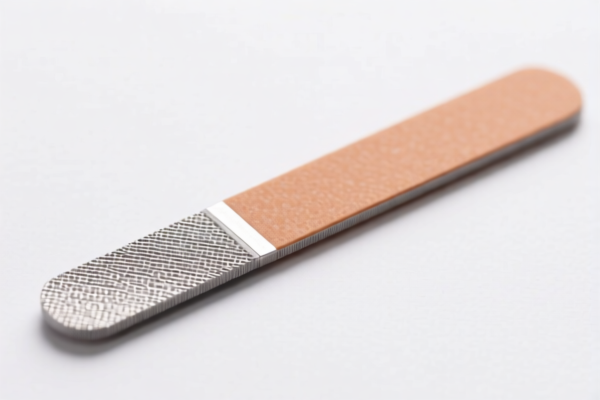
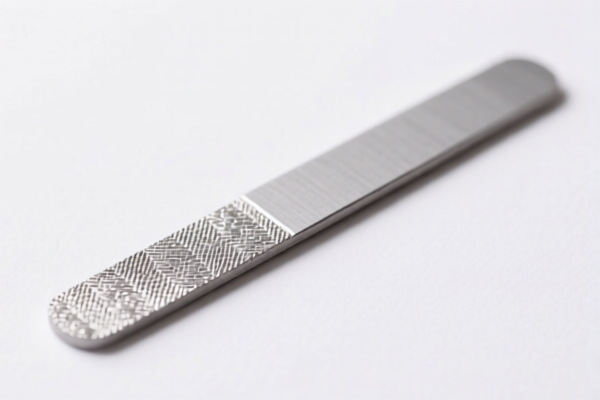
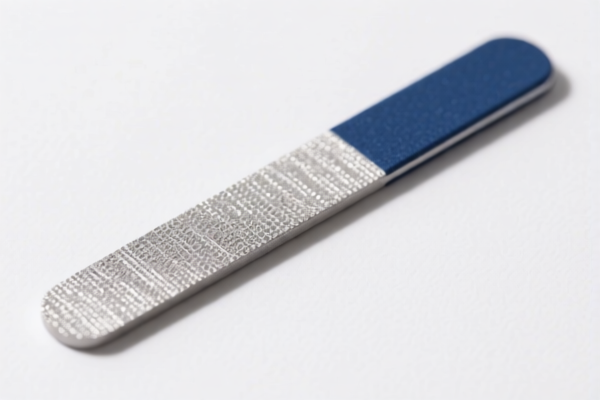
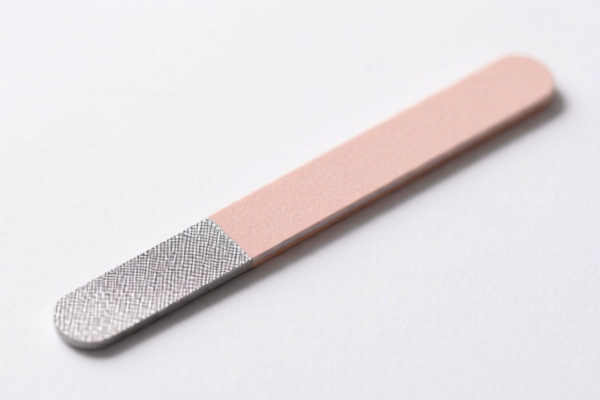
AI Analysis
🧴 Alloy Nail File (Nail Files / Manicure Tools)
🌐 HS Code Reference & Customs Clearance Guide | 2024-2025 Latest Tariff Analysis | Professional Entry Strategy
📌 1. Product Definition & Classification: What Exactly is an "Alloy Nail File"?
An Alloy Nail File is a manicure tool typically made from metal alloys (such as stainless steel) or composite materials with abrasive surfaces. Its primary function is to shape, smooth, or buff fingernails. In international trade, it is categorized based on its specific utility and material composition.
⚠️ Key Distinction Point:
- If the file is primarily used for personal grooming/manicuring and fits the description of "nail care tools," it generally falls under Chapter 82 (Articles of Iron or Steel) or Chapter 96 (Miscellaneous Manufactured Articles), depending on specific material and design.
- Crucial Note: The provided data indicates conflicting classifications due to interpretative differences between "Manicure Tools" (Ch 82) and "Beauty/Personal Care Accessories" (Ch 96). The chosen HS Code significantly impacts the total duty rate due to Section 301 (122 Section) tariffs.
📦 2. HS Code Classification Details (Based on Provided Data)
The following HS Codes are derived directly from the provided dataset. Each code reflects a different regulatory interpretation of the "Alloy Nail File."
| HS Code | Product Description | Classification Logic | Total Tax Rate |
|---|---|---|---|
8214.20.30.00 |
Manicure Tool (Specific Sub-heading) | Falls under "Manicure Tools" per classification explanations. Matches the utility and form of nail care instruments. | 14.0% |
9615.90.60.00 |
Beauty/Personal Care Accessory (Comb/Hairpin Category) | Treated as a beauty tool falling under "combs, hair-curlers, and similar articles." Material inferred as metal/abrasive. | 21.0% |
8214.20.90.00 |
Manicure/Pedicure Set Component | Classified as part of manicure/foot-care sets. No material conflict with other categories. | 14.1% |
9615.90.40.00 |
Cosmetic/Beauty Accessory (Plastic/Metal) | Treated as a hair/accessory item. Material often plastic or metal; fits "similar articles" category. | 15.3% |
🔍 Critical Insight:
- Chapter 82 (8214) generally applies to tools (including metal files), while Chapter 96 (9615) applies to personal care appliances/accessories.
- The difference in total tax rates ranges from 14.0% to 21.0%. This is a 7% variance solely due to classification choice.
- All codes include a "122 Section" (Section 301) tariff, indicating additional duties for goods originating from China.
💰 3. 2024-2025 Tariff Rate Breakdown (Detailed Tax Clauses)
✅ Applicable Country: United States (US)
✅ Origin: China (CN) (Implied by "Section 122" reference)
✅ 生效时间: Current (Post-2025 policies active)
🎯 1. 8214.20.30.00 – Manicure Tool (Metal/Alloy File)
| Item | Content |
|---|---|
| Base Duty | 4.0% |
| Section 301 (122) Duty | +10.0% |
| Add-on Duties | 0.0% |
| Total Effective Rate | 14.0% |
| Tax Calculation | CIF Value × 14.0% |
| De Minimis Eligibility | ❌ No (Section 301 goods are excluded) |
| Legal Basis Path | HTS:8214.20.30 → USITC:Footnote 301 → IEEPA:Section 301 |
📌 Explanation:
- This is the most favorable rate among the options provided.
- It classifies the item strictly as a tool under Chapter 82, which has a lower base duty (4%) compared to Chapter 96.
- The 10% Section 301 tariff is mandatory for Chinese origin goods in this category.
🎯 2. 9615.90.60.00 – Beauty Accessory (Higher Tax Bracket)
| Item | Content |
|---|---|
| Base Duty | 11.0% |
| Section 301 (122) Duty | +10.0% |
| Add-on Duties | 0.0% |
| Total Effective Rate | 21.0% |
| Tax Calculation | CIF Value × 21.0% |
| De Minimis Eligibility | ❌ No |
| Legal Basis Path | HTS:9615.90.60 → USITC:Footnote 301 → IEEPA:Section 301 |
📌 Explanation:
- Classification as a "beauty accessory" under Chapter 96 incurs a higher base duty (11%).
- This results in a 7% higher total cost compared to8214.20.30.00.
- Risk: If customs determines the item is not a "beauty accessory" but a "tool," you may face back duties and penalties.
🎯 3. 8214.20.90.00 – Manicure Tool (Other)
| Item | Content |
|---|---|
| Base Duty | 4.1% |
| Section 301 (122) Duty | +10.0% |
| Add-on Duties | 0.0% |
| Total Effective Rate | 14.1% |
| Tax Calculation | CIF Value × 14.1% |
| De Minimis Eligibility | ❌ No |
| Legal Basis Path | HTS:8214.20.90 → USITC:Footnote 301 |
📌 Explanation:
- Very similar to8214.20.30.00, but a "catch-all" for manicure tools not specifically listed elsewhere.
- The 0.1% difference is negligible, but8214.20.30.00is more precise if the file is a standard manicure tool.
🎯 4. 9615.90.40.00 – Beauty Accessory (Plastic/Metal)
| Item | Content |
|---|---|
| Base Duty | 5.3% |
| Section 301 (122) Duty | +10.0% |
| Add-on Duties | 0.0% |
| Total Effective Rate | 15.3% |
| Tax Calculation | CIF Value × 15.3% |
| De Minimis Eligibility | ❌ No |
| Legal Basis Path | HTS:9615.90.40 → USITC:Footnote 301 |
📌 Explanation:
- Intermediate rate. May apply if the file is made primarily of plastic with metal edges, but still considered a "beauty accessory."
🛠️ 4. Customs Clearance Practical Advice (Pitfall Avoidance)
✅ 1. Documentation Checklist (Mandatory)
| Document | Must Provide | Description |
|---|---|---|
| ✅ Product Specification Sheet | ✔️ | Detail material (e.g., Stainless Steel, Aluminum Alloy), abrasive type, dimensions. |
| ✅ Product Photos | ✔️ | Clear images of the file, showing both sides (abrasive surface). |
| ✅ Commercial Invoice | ✔️ | Accurately describe as "Alloy Manicure File" or "Metal Nail File". Avoid vague terms like "Tool." |
| ✅ Declaration of Origin | ✔️ | Confirm Country of Origin (China). |
| ✅ Material Composition Proof | ✔️ | If claimed as plastic/metal mix, provide supplier confirmation. |
✅ 2. Declaration Strategy (Key Mnemonic)
🔥 "Classify as Tool, Not Toy, to Save Money!"
| Scenario | Recommended HS Code | Reason | Risk if Wrong |
|---|---|---|---|
| Pure Metal/Alloy File | 8214.20.30.00 |
Fits "Manicure Tools" in Ch 82. | Misclassifying as Ch 96 → +7% Tax |
| Plastic/Composite File | 9615.90.40.00 or 9615.90.60.00 |
Fits "Beauty Accessories" in Ch 96. | Misclassifying as Ch 82 → Audit Risk |
| Set with Other Tools | 8214.20.30.00 |
Part of a manicure set. | Splitting parts → Complexity & Delay |
✅ 3. Special Considerations
| Situation | Handling Advice |
|---|---|
| OEM Custom Files | Provide design drawings to prove it is a "tool" and not a "general article." |
| Multi-material Files | If >50% metal by weight/value, prefer Chapter 82. If plastic dominant, Chapter 96. |
| Section 301 Exemptions | Check if your specific HTS code was excluded from Section 301 tariffs. Most Ch 82/96 manicure tools are not exempt. |
| De Minimis (Section 321) | ❌ Do Not Use for Section 301 goods. Shipments under $800 will be taxed if HS code is subject to Section 301. |
🌍 5. Global Market Comparison (2024-2025)
| Country/Region | Recommended HS Code | Estimated Duty | Notes |
|---|---|---|---|
| 🇺🇸 USA | 8214.20.30.00 |
14.0% | Includes 10% Section 301. Best for metal files. |
| 🇨🇳 China | 8214.20.30.00 |
15-20% | Import duties vary. No Section 301. |
| 🇪🇺 EU | 8214.20.90 |
12-14% | No Section 301. May require CE marking. |
| 🇬🇧 UK | 8214.20.90 |
12-14% | Post-Brexit tariffs. No Section 301. |
| 🇨🇦 Canada | 8214.20.30 |
5-10% | No Section 301. Lower base duties. |
📌 Conclusion:
- USA is the most expensive market due to Section 301 tariffs.
- Chapter 82 (8214.20.30.00) is the optimal choice for metal/alloy nail files, offering the lowest total duty (14.0%) among the provided options.
- Chapter 96 options carry a 30-50% higher tax burden and should be avoided unless the product is clearly non-metallic.
📌 6. Common Errors & Pitfalls (Lessons Learned)
❌ Error 1: Classifying as "General Tool" (e.g., 8205.90.80)
👉 Consequence: Incorrect classification → Penalty + Back Duties.
✅ Fix: Use specific 8214.20.30.00 for manicure tools.
❌ Error 2: Omitting "Section 301" awareness
👉 Consequence: Assuming $800 de minimis applies → Shipment seized/taxed.
✅ Fix: Always pay Section 301 duties regardless of shipment value.
❌ Error 3: Using vague descriptions like "Beauty Item"
👉 Consequence: Customs may reclassify to 9615.90.60.00 → Higher Tax (21.0%).
✅ Fix: Clearly state "Alloy Manicure File" in the invoice.
🎯 7. Final Recommendation
🎯 Best Practice for Alloy Nail File:
🔹 HS Code:
8214.20.30.00
🔹 Total Duty: 14.0%
🔹 Description: "Alloy Manicure File, Stainless Steel, for Personal Use"
🔹 Strategy: Avoid Chapter 96 classifications to save 7% in taxes.
📣 Immediate Action:
📞 Consult a Customs Broker: Verify if your specific alloy composition qualifies for
8214.20.30.00.
🚀 Optimize Cost: Choose the lowest valid HS Code to maximize profit margins in the US market.
✨ Precision in Classification is Profit in Practice!
💼 Every 1% of tax saved is 1% more margin kept!
Customer Reviews
About HS Code Classification
The Harmonized System (HS) is an internationally standardized nomenclature developed by the World Customs Organization (WCO) to classify traded products. Over 200 countries use the HS system as the basis for customs tariffs, trade statistics, and import/export regulations.
Each HS code follows a hierarchical structure:
- Chapter (2 digits) — Broad category of goods (e.g., Chapter 84: Machinery and Mechanical Appliances)
- Heading (4 digits) — More specific grouping within the chapter
- Subheading (6 digits) — Internationally standardized breakdown, used by all WCO member countries
- National subdivisions (8-10 digits) — Country-specific extensions for further classification, such as US HTSUS 10-digit codes
Correct HS code classification is essential for smooth customs clearance, accurate duty payment, and compliance with trade regulations. Misclassification can lead to customs delays, overpayment of duties, or penalties.
When importing from CN to US, the applicable tariff rates may include:
- Most-Favored-Nation (MFN) rate — The standard duty rate applied to WTO members
- General rate — Applied to countries without trade agreements
- Trade remedy duties — Additional tariffs such as Section 301 (anti-dumping), Section 232 (national security), or countervailing duties
The information provided on this page is for reference purposes only. For official classification, please consult with your local customs authority or a licensed customs broker.