Alloy Necklace
CN → US| HS Code | Tariff Rate | Origin | Destination | Doc |
|---|---|---|---|---|
| 9505906000 | 10.0% | CN | US | Official Doc |
| 7117191500 | 25.5% | CN | US | Official Doc |
| 7113205000 | 22.7% | CN | US | Official Doc |
| 7113202900 | 22.7% | CN | US | Official Doc |
| 6117909005 | 32.1% | CN | US | Official Doc |
Product Images


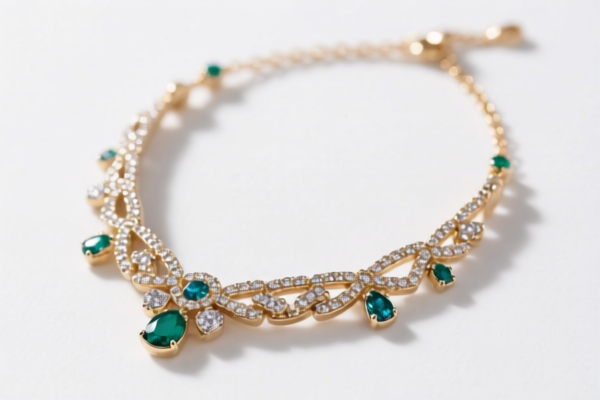
AI Analysis
💎 Alloy Necklace: Global HS Code Classification & 2026 Clearance Strategy
🌐 HS Code Reference & Clearance Guide | 2026 Latest Tariff Analysis | Professional Entry Strategy
📌 Product Definition: What exactly is an "Alloy Necklace"?
An alloy necklace is a jewelry item made primarily from non-precious metal mixtures (such as zinc, copper, or iron alloys), often plated or decorated for aesthetic purposes. In international trade, the classification depends heavily on: 1. Material Composition: Is it pure base metal, or is it plated with precious metals? 2. Function & Design: Is it "imitation jewelry" (costume) or considered a "jewelry" piece? 3. Construction: Is it a simple chain or a complex pendant assembly?
⚠️ Critical Classification Divergence:
- If viewed as general decoration (festival/play items) → 9505.90.60.00
- If viewed as base metal imitation jewelry (chains, pendants) → 7117.19.15.00
- If viewed as base metal jewelry plated with precious metals → 7113.20.50.00 / 7113.20.29.00
Note: The tax burden varies drastically (10% vs. 25.5%) based on this distinction.
📦 II. Detailed HS Code Breakdown (2026 Official Tariff Mapping)
The data below reflects the specific classification logic and tariff structure for Alloy Necklaces.
| HS Code | Classification Logic & Summary | Primary Tax Rate | Tax Composition Details |
|---|---|---|---|
| 9505.90.60.00 | Festival/Entertainment Items Classified as decorations or items for amusement based on alloy material and festive use. |
10.0% | Base: 0% Additional: 0% 122 Clause: 10% |
| 7117.19.15.00 | Imitation Jewelry (Base Metal Chains) Classified as jewelry articles made of base metal, specifically chains or similar forms. Appears twice in data. |
25.5% | Base: 8.0% Additional: 7.5% 122 Clause: 10% |
| 7113.20.50.00 | Base Metal Jewelry (Plated) Jewelry of base metal, potentially plated with precious metals (gold/silver). |
22.7% | Base: 5.2% Additional: 7.5% 122 Clause: 10% |
| 7113.20.29.00 | Base Metal Jewelry (Form & Material) Matches the form of necklaces, made of base metal, consistent with logic of plated jewelry. |
22.7% | Base: 5.2% Additional: 7.5% 122 Clause: 10% |
🔍 Key Analysis:
- Category 1 (9505) is the lowest cost option (10%) but applies only if the item is clearly for festivals, parties, or decoration rather than personal adornment fashion.
- Category 2 (7117) is the standard "Costume Jewelry" classification (25.5%). If the necklace is a chain or looks like standard fashion jewelry, this is the most likely code.
- Categories 3 & 4 (7113) apply if the alloy is plated with precious metals (e.g., gold-plated alloy). These carry a slightly lower total duty (22.7%) than the standard imitation jewelry but require proof of plating.
💰 III. 2026 Tariff Rate Deep Dive (Detailed Breakdown)
✅ Context: Import into markets with "122 Clause" surcharges (common in China-origin import scenarios). ✅ Product: Alloy Necklace
🎯 1. 9505.90.60.00 – Festival & Decoration (Lowest Duty)
- Total Duty: 10.0%
- Breakdown:
- Basic Tariff: 0.0%
- Additional Tariff: 0.0%
- Clause 122 Surcharge: 10.0%
- 📝 Logic: This classification treats the necklace as a prop or party favor (e.g., Halloween necklace, Christmas decoration) rather than serious fashion jewelry.
- ⚠️ Risk: If customs officers determine the item is worn daily as fashion jewelry, they may reject this code and reclassify to 7117.
🎯 2. 7117.19.15.00 – Imitation Jewelry (Highest Duty)
- Total Duty: 25.5%
- Breakdown:
- Basic Tariff: 8.0%
- Additional Tariff: 7.5%
- Clause 122 Surcharge: 10.0%
- 📝 Logic: This is the standard classification for costume jewelry made of base metals (alloy) without precious metal plating.
- 📝 Logic: Applies to standard chains, pendants, and general fashion necklaces.
🎯 3. & 4. 7113.20.50.00 / 7113.20.29.00 – Plated Jewelry (Medium Duty)
- Total Duty: 22.7%
- Breakdown:
- Basic Tariff: 5.2%
- Additional Tariff: 7.5%
- Clause 122 Surcharge: 10.0%
- 📝 Logic: Used when the base alloy is plated with gold, silver, or other precious metals.
- 💡 Benefit: Saves 2.8% compared to the standard imitation jewelry code (7117).
🛠️ IV. Practical Clearance & Risk Management
✅ 1. Preparation Checklist (Must-Haves)
| Document | Requirement | Why it Matters |
|---|---|---|
| Product Photos | High-res images of the necklace close-up | To prove if it is "plated" (for 7113) or "base alloy" (for 7117). |
| Material Certificate | Composition analysis (Zn, Cu, Fe content) | Confirms "Base Metal" status; distinguishes from "Precious Metal." |
| Usage Declaration | "Party Accessory" vs. "Fashion Jewelry" | Crucial for deciding between 9505 (10%) and 7117 (25.5%). |
| Plating Details | If plated, specify metal and thickness | Essential for claiming the lower 7113 rate (22.7%). |
| Invoice & Packing List | Accurate CIF Value | Determines the exact tax amount (Base + Additional + 122%). |
✅ 2. Declaration Strategy: The "1024" Rule
🔥 Golden Rule: "Match the Product to the User, Not Just the Material!"
| Scenario | Recommended HS Code | Strategy |
|---|---|---|
| Cheap Party Favors | 9505.90.60.00 |
Declare as "Festival Decoration." Duty: 10%. |
| Standard Fashion Chain | 7117.19.15.00 |
Declare as "Imitation Jewelry." Duty: 25.5%. |
| Gold-Plated Alloy Chain | 7113.20.50.00 |
Declare as "Base Metal Jewelry (Plated)." Duty: 22.7%. |
| Mixed Bag | Separate | Do not mix 9505 and 7117 in one line item to avoid audit flags. |
✅ 3. Special Case Handling
| Situation | Action Plan |
|---|---|
| "Is it a Chain?" | If the item is primarily a chain (link-based), 7117.19.15.00 is safer. 9505 is risky for chains. |
| "Is it Plated?" | If you claim 7113 (22.7%), you must prove the plating. Otherwise, customs will revert to 7117 (25.5%). |
| "High Volume" | If importing >1000 units, expect closer scrutiny on "Festival" claims. |
| "Low Value" | Ensure the declaration value reflects the "plated" or "costume" reality to avoid under-declaration penalties. |
🌍 V. Strategic Insight: Cost Optimization
💡 How to Save on Tax?
- Rebrand for Festivals: If selling to a Christmas market, market the necklaces explicitly as "Christmas Party Pendants". This supports the
9505.90.60.00classification (10% tax vs 25.5%). - Upgrade Plating: If your alloy is plated with gold/silver, ensure the plating certificate is prominent. This moves the item to
7113(22.7%), saving 2.8% over standard costume jewelry. - Avoid "Generic" Descriptions: Never just write "Alloy Necklace." Use specific terms like "Gold-Plated Alloy Chain" or "Plastic Base Metal Party Necklace."
⚠️ Risk Warning
The "122 Clause" is Non-Negotiable:
Regardless of the base code (9505 or 7117), the 10% Clause 122 Surcharge applies in all scenarios provided in the data.
Total Cost = (Base + Additional) + 10%.
Do not try to hide the "Alloy" nature; it triggers the additional 7.5% surcharge in the 7117/7113 categories.
📌 VI. Common Mistakes & Pitfalls (Avoid These!)
❌ Mistake 1: Misdeclaring "Party Wear" as "Fashion Jewelry"
Result: Paying 25.5% instead of 10%.
Fix: If the item is clearly for a costume party, declare as 9505.
❌ Mistake 2: Ignoring Plating Evidence
Result: Customs rejects 7113 claim and charges 7117 (25.5%).
Fix: Provide plating thickness reports for 7113 claims.
❌ Mistake 3: Using "Precious Metal" for Alloy
Result: Fraud penalty. Alloy is Base Metal.
Fix: Always use "Base Metal" or "Alloy" in description.
✅ Pro Tip:
"Know your market, know your material. Party = 10%, Fashion = 25.5%, Plated = 22.7%. The 122 Clause is always +10%!"
🚀 Conclusion: Clear the Way for Profit
By understanding the nuance between Festival Decor (9505), Imitation Jewelry (7117), and Plated Jewelry (7113), you can optimize your tax burden.
🎯 Final Recommendation:
- If your business is seasonal (Halloween, Christmas), push for 9505.90.60.00.
- If your business is year-round fashion, ensure your plating specs are perfect for 7113.20.50.00 (22.7%) rather than defaulting to 7117.19.15.00 (25.5%).
- Always declare the 122 Clause explicitly to avoid clearance delays.
✨ Precision in Classification = Precision in Profit!
💼 Don't let a 15.5% tax gap eat your margins!
Customer Reviews
About HS Code Classification
The Harmonized System (HS) is an internationally standardized nomenclature developed by the World Customs Organization (WCO) to classify traded products. Over 200 countries use the HS system as the basis for customs tariffs, trade statistics, and import/export regulations.
Each HS code follows a hierarchical structure:
- Chapter (2 digits) — Broad category of goods (e.g., Chapter 84: Machinery and Mechanical Appliances)
- Heading (4 digits) — More specific grouping within the chapter
- Subheading (6 digits) — Internationally standardized breakdown, used by all WCO member countries
- National subdivisions (8-10 digits) — Country-specific extensions for further classification, such as US HTSUS 10-digit codes
Correct HS code classification is essential for smooth customs clearance, accurate duty payment, and compliance with trade regulations. Misclassification can lead to customs delays, overpayment of duties, or penalties.
When importing from CN to US, the applicable tariff rates may include:
- Most-Favored-Nation (MFN) rate — The standard duty rate applied to WTO members
- General rate — Applied to countries without trade agreements
- Trade remedy duties — Additional tariffs such as Section 301 (anti-dumping), Section 232 (national security), or countervailing duties
The information provided on this page is for reference purposes only. For official classification, please consult with your local customs authority or a licensed customs broker.