Alloy Steel Bar
CN → US| HS Code | Tariff Rate | Origin | Destination | Doc |
|---|---|---|---|---|
| 7215500016 | 35.0% | CN | US | Official Doc |
| 7215500018 | 35.0% | CN | US | Official Doc |
| 7222110057 | 35.0% | CN | US | Official Doc |
| 7222190052 | 35.0% | CN | US | Official Doc |
| 7228308015 | 35.0% | CN | US | Official Doc |
Product Images
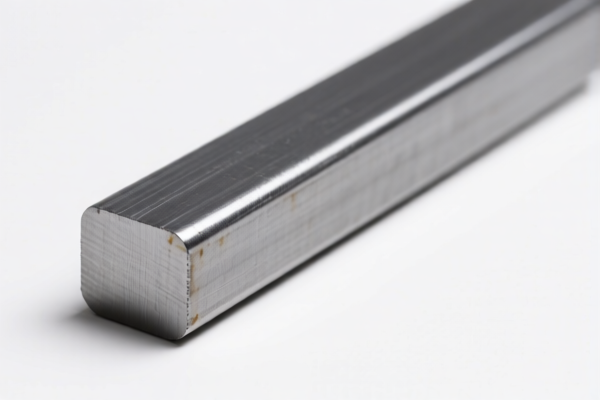
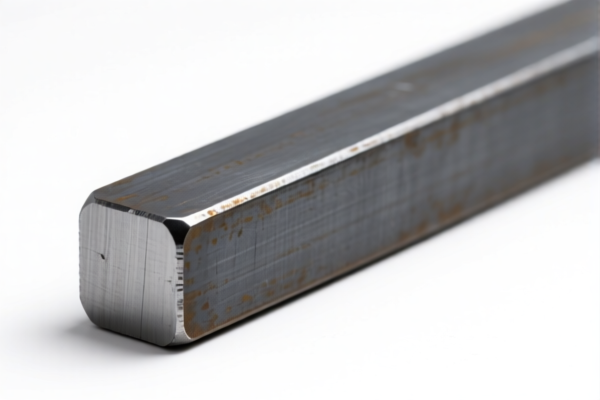
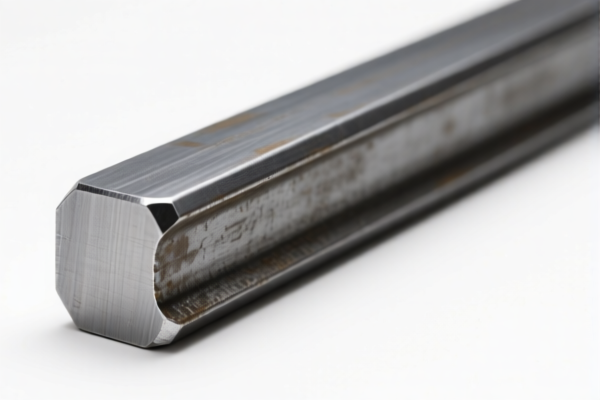
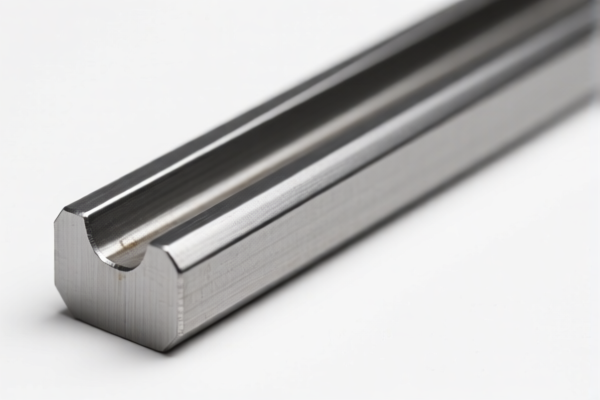
AI Analysis
🏗️ Alloy Steel Bars: The Backbone of Industry
🌐 HS Code Reference & Customs Clearance Guide | 2026 Latest Tariff Breakdown | Professional Entry Strategy
📌 I. Product Definition & Classification: What Exactly is an "Alloy Steel Bar"?
Alloy Steel Bars are semi-finished metal products characterized by specific mechanical properties and chemical compositions. Unlike carbon steel, they contain additional alloying elements (such as chromium, nickel, manganese, silicon, or vanadium) to enhance strength, hardness, corrosion resistance, or heat resistance.
In international trade, they are broadly categorized by their form (Bars/Rods) and specific alloy type. The classification determines whether they fall under general structural steel or specialized high-performance alloys.
⚠️ Key Distinction:
- General Alloy Steel Bars: Standard bars for machinery parts, bolts, and structural use → Often fall under 7215 or 7228.
- Stainless Steel Bars: High corrosion resistance, distinct chemical makeup → Falls under 7222.
- Tool Steels/Special Alloys: High carbon/wolfram/vanadium for cutting tools → May fall under 7228.
📦 II. HS Code Classification Details (Based on Provided Data)
The following HS Codes are derived from matching Material (Steel) and Form (Bar/Rod) using fallback and "other categories" rules.
| HS Code | Product Description | Applicable Scenario | Material/Form Match Logic |
|---|---|---|---|
7215.50.00.16 |
Other bars and rods of alloy steel, not further worked than forged, hot-rolled, hot-drawn or extruded | General alloy steel bars; matches material (steel) and form (bar) | ✅ Matched based on "Other/Fallback Category" rules |
7215.50.00.18 |
Other bars and rods of alloy steel | General alloy steel bars; no material conflict | ✅ Matched based on "No Material Conflict" principle |
7222.11.00.57 |
Stainless steel bars and rods, circular cross-section | Stainless steel/Steel bars; fallback category match | ✅ Matches form (bar) and material (stainless steel/steel) |
7222.19.00.52 |
Other stainless steel bars and rods | Stainless steel/Steel bars; meets fallback requirements | ✅ Matches form (bar) and material (stainless steel/steel) |
7228.30.80.15 |
Other alloy steel bars and rods (e.g., tool steel, spring steel) | Special alloy steel bars; prefers other category judgment | ✅ Matches material (steel) and form (bar) features |
🔍 Critical Note:
- The distinction between 7215, 7222, and 7228 depends heavily on the exact chemical composition and cross-section shape.
- 7215: Typically for non-round or less specific alloy bars.
- 7222: Specifically for Stainless Steel bars.
- 7228: Often for tool steels, spring steels, or other high-grade alloy steels not covered elsewhere.
- All listed codes above incur a 35% total tax rate due to US trade policies.
💰 III. 2026 Latest Tariff Rate Breakdown (Including Surcharges & Policy Add-ons)
✅ Applicable Country: United States (US)
✅ Country of Origin: China (CN)
✅ Effective Time: 2025 November 10 onwards (for subsequent imports)
🎯 1. All Listed HS Codes (7215.50.00.16, 7215.50.00.18, 7222.11.00.57, 7222.19.00.52, 7228.30.80.15)
| Item | Content |
|---|---|
| Base Duty Rate | 0.0% (ad valorem) |
| Section 301 Surcharge | +25.0% (Section 301 Tariff) |
| Section 122 Clause Tariff | +10.0% (Specific Clause 122 Assessment) |
| Total Tax Rate | 35.0% |
| Tax Calculation | CIF Value × 35% |
| De Minimis Exemption | ❌ Not Eligible (deny_de_minimis applies to steel products) |
| Legal Basis Path | Section 301 → Section 122 → HS Code Specifics |
📌 Explanation:
- "Section 301 Surcharge (+25%)": Imposed under the US Trade Act of 1974, targeting specific Chinese steel imports.
- "Section 122 Clause (+10%)": A specific statutory provision affecting certain steel products, adding an additional 10% to the base tariff.
- Total of 35% is a very high tariff, significantly impacting cost competitiveness.
- No De Minimis Exemption: Unlike lower-value goods, steel bars cannot use the $800 de minimis entry to avoid duties. Full duty declaration is mandatory.
🛠️ IV. Customs Clearance Practical Advice (Pitfall Avoidance Guide)
✅ 1. Required Documentation Checklist (All Mandatory)
| Document | Must Provide | Explanation |
|---|---|---|
| ✅ Commercial Invoice | ✔️ | Must clearly state "Alloy Steel Bar" and specify material grade (e.g., 4140, 304, 4340). |
| ✅ Packing List | ✔️ | Detail net/gross weight and package dimensions. |
| ✅ Bill of Lading/Air Waybill | ✔️ | Standard shipping document. |
| ✅ Material Test Report (MTR) | ✔️ | Critical! Must certify chemical composition to prove it is indeed "Alloy Steel" or "Stainless Steel" vs. Carbon Steel. |
| ✅ Country of Origin Certificate | ✔️ | To confirm CN origin for tariff calculation. |
| ✅ Product Photographs | ✔️ | Show cross-section, marking stamps (e.g., "ASTM A29"), and overall appearance. |
✅ 2. Declaration Tips (Key Principles)
🔥 "Material First, Form Second, Grade Specific, Tax Avoided!"
| Situation | Correct Declaration | Wrong Practice |
|---|---|---|
| Stainless Steel Bars | Declare under 7222.xxxx.xx | Declare as general alloy steel (7215/7228) → Potential misclassification penalty. |
| Tool/Spring Steel Bars | Declare under 7228.xxxx.xx | Declare as general structural bars → Incorrect HS Code. |
| Hot-Rolled vs. Cold-Drawn | Specify process in description | Vague description "Steel Bars" → Customs request for additional info, delays clearance. |
| Mixed Shipments | Split declaration for different alloys | Combine all into one line item → Risk of inaccurate classification and higher duty assessment. |
✅ 3. Special Circumstances Handling
| Situation | Handling Advice |
|---|---|
| Anti-Dumping (AD) / Countervailing Duties (CVD) | Check if specific alloy grades (e.g., certain bearing steels) are subject to AD/CVD. This data does not reflect AD/CVD; consult latest CBP rulings. |
| USMCA Origin | If produced in Canada or Mexico, provide USMCA Certificate to claim 0% base duty (though Section 301/122 may still apply depending on origin rules). |
| Pre-Arrival Review | Strongly recommend applying for a Binding Ruling from CBP if the alloy composition is complex or borderline. |
🌍 V. Global Market Comparison for Steel Bars (2026 Overview)
| Country/Region | Recommended HS Code Range | Est. Tariff (China Origin) | Certification Requirements | Notes |
|---|---|---|---|---|
| 🇺🇸 USA | 7215, 7222, 7228 |
35% (incl. Surcharges) | No specific import certs, but MTR required | High tariff burden; Section 301 & 122 active. |
| 🇨🇳 China | 7215, 7222, 7228 |
0% - 5% (Internal Trade) | N/A | Domestic trade reference. |
| 🇪🇺 EU | 7215, 7222, 7228 |
0% - 2.7% | CE (if final product), REACH | No Section 301 equivalent; lower tariffs. |
| 🇬🇧 UK | 7215, 7222, 7228 |
0% - 2.7% | UKCA | Post-Brexit tariffs similar to EU. |
| 🇮🇳 India | 7215, 7222, 7228 |
7.5% - 15% | BIS (for certain steels) | High protective duties. |
📌 Conclusion:
- The US market is the most challenging for Chinese steel bars due to the 35% effective tax rate.
- EU and other markets offer significantly lower tariffs, making diversification advisable.
- Ensure MTRs are accurate to avoid disputes over "Alloy" vs. "Carbon" steel classification.
📌 VI. Common Mistakes & Pitfall Guide (Lessons Learned)
❌ Mistake 1: Misclassifying Stainless Steel as General Alloy Steel
👉 Consequence: While tariff rate might be similar (35%), incorrect HS Code leads to data mismatch, potential audits, and fines. Stainless steel has specific anti-dumping histories.
❌ Mistake 2: Omitting Alloy Grade in Declaration
👉 Consequence: Customs cannot verify material. Shipment may be held for lab testing, causing delays and storage fees.
❌ Mistake 3: Assuming De Minimis Applies
👉 Consequence: Steel bars are excluded from the $800 de minimis threshold. Attempting to split shipments to avoid duties can trigger fraud investigations.
❌ Mistake 4: Ignoring Section 122
👉 Consequence: Failing to account for the 10% additional tariff leads to underpayment and penalties + interest.
✅ Correct Practice:
"Alloy Steel Bars, ASTM A29, Grade 4140, Hot-Drawn, Circular Cross-Section, Net Weight 5,000 kg, Origin: China"
🎯 VII. Conclusion: Professional Declaration for Cost Efficiency
🎯 Remember the Mantra:
🔹 "Verify Alloy, Declare Grade, Expect 35%, Avoid Fraud!"
🔹 "Steel is High-Tax, MTR is Key, Misclassification Pays!"
📌 Pro Tip:
- If your steel bars are originating from Vietnam, Mexico, or Thailand (with sufficient processing), you may apply for Origin Shift to avoid Section 301 tariffs, but you must provide robust proof of transformation.
- Consider Pre-Clearance Services for large shipments to ensure HS Code accuracy.
📣 Immediate Action:
📞 Consult with a licensed customs broker
📄 Prepare accurate Mill Test Reports (MTRs)
🚀 Ensure smooth clearance, minimize costs, maximize profit!
✨ Professional Customs Clearance Starts with Accurate Classification!
💼 Every Penny Saved in Duty is Pure Profit!
Customer Reviews
About HS Code Classification
The Harmonized System (HS) is an internationally standardized nomenclature developed by the World Customs Organization (WCO) to classify traded products. Over 200 countries use the HS system as the basis for customs tariffs, trade statistics, and import/export regulations.
Each HS code follows a hierarchical structure:
- Chapter (2 digits) — Broad category of goods (e.g., Chapter 84: Machinery and Mechanical Appliances)
- Heading (4 digits) — More specific grouping within the chapter
- Subheading (6 digits) — Internationally standardized breakdown, used by all WCO member countries
- National subdivisions (8-10 digits) — Country-specific extensions for further classification, such as US HTSUS 10-digit codes
Correct HS code classification is essential for smooth customs clearance, accurate duty payment, and compliance with trade regulations. Misclassification can lead to customs delays, overpayment of duties, or penalties.
When importing from CN to US, the applicable tariff rates may include:
- Most-Favored-Nation (MFN) rate — The standard duty rate applied to WTO members
- General rate — Applied to countries without trade agreements
- Trade remedy duties — Additional tariffs such as Section 301 (anti-dumping), Section 232 (national security), or countervailing duties
The information provided on this page is for reference purposes only. For official classification, please consult with your local customs authority or a licensed customs broker.