Alloy Steel Bars and Rods
CN → US| HS Code | Tariff Rate | Origin | Destination | Doc |
|---|---|---|---|---|
| 7222110001 | 35.0% | CN | US | Official Doc |
| 7222190001 | 35.0% | CN | US | Official Doc |
Product Images
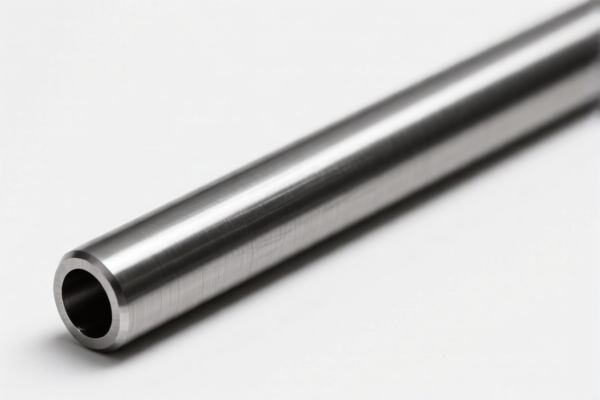
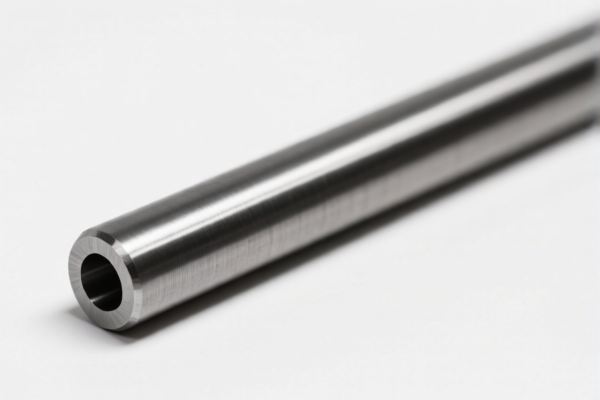
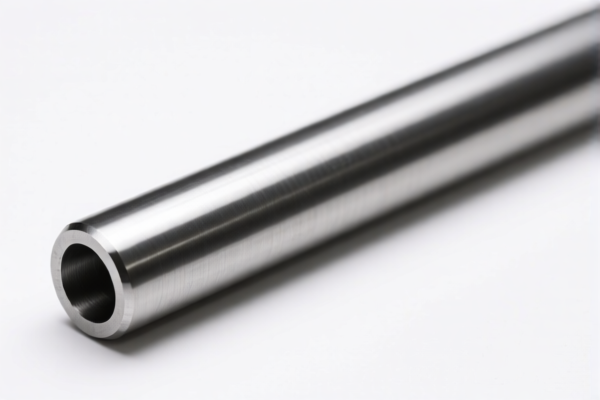
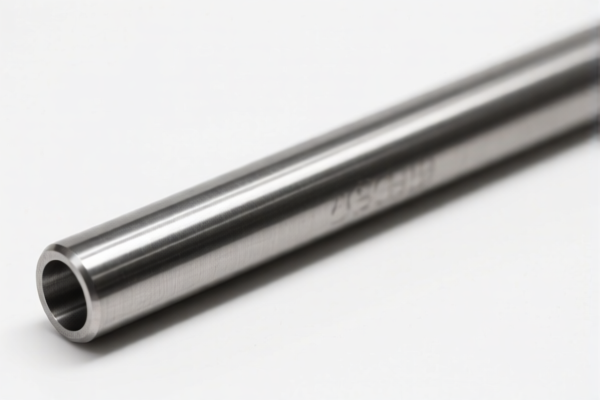
AI Analysis
🏗️ Alloy Steel Bars and Rods
🌐 HS Code Reference & Customs Clearance Guide | 2026 Latest Tariff Analysis | Professional Clearance Strategy
📌 Part 1: Product Definition and Classification: Do You Really Understand "Alloy Steel Bars"?
Alloy steel bars and rods are critical raw materials widely used in automotive, machinery manufacturing, aerospace, and construction industries. In international trade, they are primarily classified based on their cross-sectional shape and processing state.
Hot-Rolled/Extruded Bars: The most common form, not further worked than hot-rolled, hot-drawn, or extruded. Electroslag/Vacuum Arc Remelted (ESR/VAR): High-purity steel produced through advanced remelting processes, often used for critical applications like aerospace or mold steel.
⚠️ Key Distinction Point:
- If the steel is Electroslag Remelted (ESR) or Vacuum Arc Melted (VAR) with a circular cross-section, it falls under 7222.11.00.01.
- If the steel is Electroslag Remelted (ESR) or Vacuum Arc Melted (VAR) but has a non-circular cross-section (or other shapes), it falls under 7222.19.00.01.
📦 Part 2: HS Code Classification Details (2026 Latest Tariff Authority Comparison)
| HS Code | Product Description | Applicable Scenario | Cross-Section Shape |
|---|---|---|---|
7222.11.00.01 |
Other bars and rods of stainless steel; angles, shapes and sections of stainless steel: Bars and rods, not further worked than hot-rolled, hot-drawn or extruded: Of circular cross-section Electroslag or vacuum arc remelted | High-purity circular steel rods, used in aerospace, medical implants, or high-end molds | ✅ Circular |
7222.19.00.01 |
Other bars and rods of stainless steel; angles, shapes and sections of stainless steel: Bars and rods, not further worked than hot-rolled, hot-drawn or extruded: Other Electroslag or vacuum arc remelted | High-purity non-circular bars (square, hexagonal, flat, etc.) or other sections | ✅ Non-Circular/Other |
🔍 Key Reminder:
- Both codes specifically refer to Stainless Steel (not general carbon alloy steel) that has undergone Electroslag Remelting (ESR) or Vacuum Arc Remelting (VAR).
- If the product is standard hot-rolled alloy steel without ESR/VAR treatment, it would fall under different HS codes (e.g., 7228.30). Ensure the remelting process is clearly stated in the product description and invoices.
💰 Part 3: 2026 Latest Tariff Rate Details (Including Surcharge Tax Policy)
✅ Applicable Country: United States (US)
✅ Origin: China (CN)
✅ Effective Date: November 10, 2025 (and subsequent imports)
🎯 1. 7222.11.00.01 —— Electroslag or Vacuum Arc Remelted Circular Bars
| Item | Content |
|---|---|
| Base Tariff | 0.0% (ad valorem) |
| Section 301 Surcharge | +25.0% |
| Total Tariff Rate | 25.0% |
| Tax Calculation | CIF Value × 25.0% |
| De Minimis Exemption | ❌ Not Eligible |
| Legal Basis Path | USITC:7222.11.00.01 → SECTION_301:7222.11.00.01 |
📌 Explanation:
- Base Tax: 0% indicates that under normal Most Favored Nation (MFN) treatment, there is no tariff.
- Surcharge Tax: The 25% is imposed under Section 301 of the Trade Act of 1974, specifically targeting certain Chinese stainless steel products.
- No Additional IEEPA Tax: Unlike some consumer electronics, this specific steel category does not currently have an additional IEEPA tax layer in this dataset.
🎯 2. 7222.19.00.01 —— Electroslag or Vacuum Arc Remelted Other Bars
| Item | Content |
|---|---|
| Base Tariff | 0.0% (ad valorem) |
| Section 301 Surcharge | +25.0% |
| Total Tariff Rate | 25.0% |
| Tax Calculation | CIF Value × 25.0% |
| De Minimis Exemption | ❌ Not Eligible |
| Legal Basis Path | USITC:7222.19.00.01 → SECTION_301:7222.19.00.01 |
📌 Note:
- Same tariff structure as circular bars.
- Applicable to square, hexagonal, flat, or other non-circular high-purity stainless steel bars.
- Even if the cross-section is small, if it is ESR/VAR processed, it is subject to the 25% surcharge.
🛠️ Part 4: Customs Clearance Practical Advice (Real-World Pitfall Avoidance)
✅ 1. Document Checklist (Essential)
| Document | Required | Explanation |
|---|---|---|
| ✅ Product Specification Sheet | ✔️ | Must clearly state: Material (e.g., 316L, 410), Process (ESR/VAR), Cross-section shape, Dimensions. |
| ✅ Mill Test Certificate (MTC) | ✔️ | Crucial to prove the Electroslag Remelting or Vacuum Arc Remelting process. Without this, customs may classify it as standard hot-rolled steel, leading to misclassification. |
| ✅ Commercial Invoice | ✔️ | Must explicitly mention "Electroslag Remelted" or "Vacuum Arc Melted". Do not just write "Stainless Steel Bar". |
| ✅ Packing List | ✔️ | Detail net weight, gross weight, and number of bundles. |
| ✅ Certificate of Origin | ✔️ | Required for proof of Chinese origin. |
✅ 2. Declaration Tips (Key Mantra)
🔥 “Process Defined, Shape Specified, ESR/VAR Proven!”
| Scenario | Correct Declaration | Wrong Practice |
|---|---|---|
| Circular, ESR Process | 7222.11.00.01Description: "Circular Stainless Steel Bar, ESR, 316L, Hot-Drawn" |
Declaring as "General Steel Bar" or omitting "ESR" |
| Square, VAR Process | 7222.19.00.01Description: "Square Stainless Steel Bar, VAR, 420, Extruded" |
Declaring under non-specialty steel codes |
| Standard Hot-Rolled (No ESR/VAR) | Not Covered in This Data (Likely 7228.30 or similar) |
❌ Misdeclaring standard bars as ESR bars to avoid tariffs (Fraud Risk!) |
✅ 3. Special Handling
| Situation | Handling Advice |
|---|---|
| Mixed Shipments (ESR + Standard) | Must Split Declarations! ESR bars go to 7222.11/19.00.01 (25% tax).Standard bars may have different rates. Do not mix in one HS Code line to avoid customs audits. |
| Import Value High | With a 25% tax, the cost impact is significant. Calculate landed cost precisely. Consider tariff engineering if product form can be changed (e.g., further processing may change classification, but be cautious). |
| Proof of Remelting | If customs questions the classification, provide MTC (Mill Test Certificate) highlighting the "Remelting" step. This is the key evidence. |
🌍 Part 5: Global Market Comparison (2026 Latest)
| Country/Region | Recommended HS Code | Tariff (China Origin) | Certification | Remarks |
|---|---|---|---|---|
| 🇺🇸 USA | 7222.11.00.01 / 7222.19.00.01 |
25.0% | None Specific | Section 301 Surcharge applies. |
| 🇨🇳 China | 7222.11.00 / 7222.19.00 |
0% - 5% (Export Duty May Apply) | N/A | Export duty may apply for some steel products. |
| 🇪🇺 EU | 7222.11 / 7222.19 |
6.5% - 8.0% | CE (if end-product) | No Section 301 surcharge. |
| 🇯🇵 Japan | 7222.11 / 7222.19 |
6.0% | JIS Standard | Lower tariff but strict quality inspection. |
📌 Conclusion:
- USA: 25% tariff is the primary cost driver. Ensure accurate classification to avoid penalties.
- Other Markets: Tariffs are significantly lower (6-8%), but quality standards (JIS, EN) are strict.
📌 Part 6: Common Errors & Pitfalls (Lessons Learned)
❌ Error 1: Omitting "ESR" or "VAR" in the product description.
👉 Consequence: Customs may classify as general stainless steel bars, leading to misclassification penalties and potential retroactive duties.
❌ Error 2: Mixing ESR and non-ESR bars in one HS Code declaration.
👉 Consequence: If non-ESR bars have a lower tariff, this is tariff evasion. If non-ESR have a higher tariff, you overpay. Both are risky. Split shipments!
❌ Error 3: Providing only "Stainless Steel Rod" as description.
👉 Consequence: Customs may request additional documentation, causing delay in clearance.
✅ Correct Practice:
"Stainless Steel Bar, Circular, 316L, Electroslag Remelted (ESR), Hot-Drawn, Diameter 20mm, Length 3m"
🎯 Part 7: Conclusion: Professional Declaration, Cost Control, Risk Reduction
🎯 Remember the Mantra:
🔹 “ESR/VAR is Key, 25% Tax Waive-Not!”
🔹 “MTC is Proof, Classification is King!”
📌 Tips:
- If your product is NOT ESR/VAR, do NOT use these codes. Consult a customs broker for the correct standard alloy steel HS code.
- For high-value ESR bars, consider applying for a Pre-Ruling from CBP if the classification is ambiguous.
- Always verify if the Section 301 exclusions apply to your specific product type (rare for stainless steel, but check latest lists).
📣 Immediate Action:
📞 Contact Professional Customs Broker
📄 Provide Mill Test Certificate (MTC)
🚀 Ensure 'ESR/VAR' is Clearly Stated on Invoice & Packing List
✨ Professional Clearance Starts with Accurate Classification!
💼 Your Every Dollar of Cost Deserves to Be Calculated Precisely!
Customer Reviews
About HS Code Classification
The Harmonized System (HS) is an internationally standardized nomenclature developed by the World Customs Organization (WCO) to classify traded products. Over 200 countries use the HS system as the basis for customs tariffs, trade statistics, and import/export regulations.
Each HS code follows a hierarchical structure:
- Chapter (2 digits) — Broad category of goods (e.g., Chapter 84: Machinery and Mechanical Appliances)
- Heading (4 digits) — More specific grouping within the chapter
- Subheading (6 digits) — Internationally standardized breakdown, used by all WCO member countries
- National subdivisions (8-10 digits) — Country-specific extensions for further classification, such as US HTSUS 10-digit codes
Correct HS code classification is essential for smooth customs clearance, accurate duty payment, and compliance with trade regulations. Misclassification can lead to customs delays, overpayment of duties, or penalties.
When importing from CN to US, the applicable tariff rates may include:
- Most-Favored-Nation (MFN) rate — The standard duty rate applied to WTO members
- General rate — Applied to countries without trade agreements
- Trade remedy duties — Additional tariffs such as Section 301 (anti-dumping), Section 232 (national security), or countervailing duties
The information provided on this page is for reference purposes only. For official classification, please consult with your local customs authority or a licensed customs broker.