Allyl Resin for Composite Materials
CN → US| HS Code | Tariff Rate | Origin | Destination | Doc |
|---|---|---|---|---|
| 3906100000 | 41.3% | CN | US | Official Doc |
| 3920511000 | 41.0% | CN | US | Official Doc |
| 3906902000 | 41.3% | CN | US | Official Doc |
| 3920515050 | 41.5% | CN | US | Official Doc |
| 3906100000 | 41.3% | CN | US | Official Doc |
Product Images
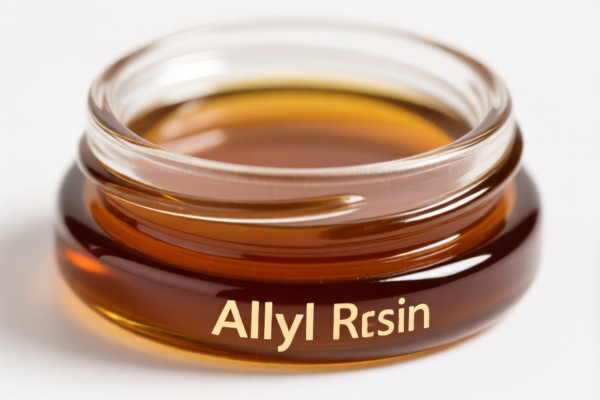



AI Analysis
🧪 Allyl Resin for Composite Materials (Allyl Glycidyl Ether & Derivatives)
🌐 HS Code Reference & Customs Clearance Guide | 2026 Latest Tariff Analysis | Professional Entry Strategy
📌 I. Product Definition & Classification: Do You Understand "Allyl Resin"?
Allyl Resin, primarily composed of allyl glycidyl ether (AGE) or its copolymers, is a specialized unsaturated polyester resin known for its excellent low-temperature flexibility, high dielectric properties, and resistance to moisture. In international trade, it is strictly classified as a primary form polymer, used largely as a raw material for reinforcing composites, circuit boards, and aerospace components.
⚠️ Critical Distinction:
- If the product is a liquid or solid pre-polymer/resin in its basic form (not yet mixed with hardeners/fillers for final use) → Classified under Chapter 39 (Plastics) as primary polymers. - If it is a finished mixture with curing agents → May fall under 3906 or 3920 depending on viscosity and form, but typically still 3906 for "other acrylic or vinyl polymers" or specific allyl classifications. - Key Note: Allyl resins are often grouped with Acrylic Resins in customs interpretation due to similar chemical structures (C=C double bonds), leading to specific HS codes under 3906 or 3920.
📦 II. HS Code Classification Details (2026 Latest Tariff Authority Mapping)
Based on the provided data, the following HS Codes apply to Allyl Resin for Composite Materials, categorized by physical form and specific composition:
| HS Code | Product Description | Application Scenario | Form/State | Total Tax |
|---|---|---|---|---|
3906.10.00.00 |
Allyl/Acrylic Resin in primary form; used in composites | Raw material for molding compounds, adhesives | Liquid/Solid Primary Polymer | 41.3% |
3906.90.20.00 |
Other Acrylic/Vinyl Polymers (including Allyl); primary form | Specialty resins not covered in 3906.10 | Primary Form Raw Material | 41.3% |
3920.51.10.00 |
Acrylic Resin Sheets/Plates (Non-foam, Unreinforced) | Pre-formed sheets for machining | Solid Sheet/Plate | 41.0% |
3920.51.50.50 |
Other Acrylic Plates/Sheets (Based on material consistency) | Custom shaped solid resins | Solid Form | 41.5% |
🔍 Key Insight:
- Codes 3906.10.00.00 and 3906.90.20.00 apply when the resin is in its primary, unprocessed form (liquid or raw powder/granules). This is the most common classification for bulk allyl resin purchases. - Codes 3920.51.10.00 and 3920.51.50.50 apply if the resin has been processed into non-foam, unreinforced solid sheets/plates. - Tax Variance: The total tax ranges from 41.0% to 41.5%, driven by slight differences in base duties (6.0%–6.5%).
💰 III. 2026 Latest Tariff Rate Breakdown (Including Surcharges & Policy Add-ons)
✅ Applicable Country: United States (US)
✅ Origin: China (CN)
✅ Effective Date: November 10, 2025 (for subsequent imports)
🎯 1. 3906.10.00.00 & 3906.90.20.00 —— Primary Form Allyl/Acrylic Resins
| Item | Detail |
|---|---|
| Base Duty Rate | 6.3% (Ad Valorem) |
| Section 301 Surcharge | +25.0% (USITC Footnote 9903.88.01) |
| Section 122 Tariff | +10.0% (Specific to certain polymer imports under 122 Clause) |
| Total Effective Rate | 41.3% |
| Calculation Basis | CIF Value × 41.3% |
| De Minimis Exemption | ❌ Not Eligible (High-risk category for de minimis clearance) |
| Legal Path | USITC:3906.10.00.00 → FOOTNOTE:301-301 → SECTION:122 |
📌 Explanation:
- Base Duty (6.3%): Standard MFN rate for primary acrylic/allyl polymers. - 301 Surcharge (25%): Applied to Chinese-origin plastics/resins under Trade Act Section 301. - 122 Clause (10%): An additional specific tariff often applied to certain industrial chemicals/polymers to protect domestic production. - Total (41.3%): This is a heavy duty burden. Cost planning must include this full percentage.
🎯 2. 3920.51.10.00 —— Non-Foam, Unreinforced Acrylic/Allyl Sheets
| Item | Detail |
|---|---|
| Base Duty Rate | 6.0% (Ad Valorem) |
| Section 301 Surcharge | +25.0% |
| Section 122 Tariff | +10.0% |
| Total Effective Rate | 41.0% |
| Calculation Basis | CIF Value × 41.0% |
| De Minimis Exemption | ❌ Not Eligible |
| Legal Path | USITC:3920.51.10.00 → FOOTNOTE:301 → SECTION:122 |
📌 Note:
- Slightly lower base duty (6.0% vs 6.3%) due to the processed sheet form, but the surcharges remain identical. - Total tax is 41.0%.
🎯 3. 3920.51.50.50 —— Other Acrylic/Allyl Plates/Sheets
| Item | Detail |
|---|---|
| Base Duty Rate | 6.5% (Ad Valorem) |
| Section 301 Surcharge | +25.0% |
| Section 122 Tariff | +10.0% |
| Total Effective Rate | 41.5% |
| Calculation Basis | CIF Value × 41.5% |
| De Minimis Exemption | ❌ Not Eligible |
| Legal Path | USITC:3920.51.50.50 → FOOTNOTE:301 → SECTION:122 |
📌 Note:
- Highest base duty (6.5%) for specific acrylic sheet classifications. - Total tax is 41.5%.
🛠️ IV. Customs Clearance Practical Advice (Real-World Pitfall Guide)
✅ 1. Required Documentation Checklist (Non-Negotiable)
| Document | Required | Explanation |
|---|---|---|
| ✅ Product Specification Sheet | ✔️ | Must clearly state "Allyl Resin" or "Allyl Glycidyl Ether Polymer". Avoid vague terms like "Chemical Mix." |
| ✅ Chemical Structure Formula | ✔️ | Proves the product is a primary polymer (HS 3906) vs. a finished good. |
| ✅ MSDS (Safety Data Sheet) | ✔️ | Required for hazmat classification and safe transport. |
| ✅ Commercial Invoice | ✔️ | Must list HS Code, Country of Origin (China), and Unit Price. |
| ✅ Packing List | ✔️ | Details net/gross weight, package count, and container type. |
| ✅ Bill of Lading (B/L) | ✔️ | Standard shipping document. |
| ✅ Certificate of Origin (CO) | ✔️ | Mandatory for proving Chinese origin (to apply surcharges correctly). |
✅ 2. Declaration Tips (Key Mnemonics)
🔥 “Form Determines Code, Origin Determines Tax!”
| Scenario | Correct Declaration | Common Mistake |
|---|---|---|
| Bulk Liquid Resin | HS 3906.10.00.00 or 3906.90.20.00 | Misclassifying as "Plastic Sheets" (3920) → Risk of audit |
| Solid Resin Granules | HS 3906.10.00.00 | Declaring as "Chemical Intermediate" with wrong HS |
| Pre-Cut Sheets | HS 3920.51.10.00 | Failing to specify "Non-Foam, Unreinforced" |
| Mixed with Hardener | Check HS 3906 vs 3920 based on form | Assuming it's still "resin" without checking physical state |
📌 Critical Rule:
- If the product is liquid or powder/granules, it is Primary Form → Use 3906. - If it is solid sheets/plates, use 3920. - Do not declare "Allyl Resin" under general "Chemical Products" (Chapter 29 or 38) without justification; Customs will default to Chapter 39 (Plastics).
✅ 3. Special Case Handling
| Situation | Recommendation |
|---|---|
| OEM Custom Resin | Provide Client Order + Formula to prove it’s a primary polymer, not a finished composite part. |
| Small Sample Shipments | ❌ High Risk: Small shipments of Chinese origin plastics are frequently flagged for 301/122 duties. Avoid de minimis if value > $800. |
| Transshipment via 3rd Country | CAUTION: Changing packaging does not change Origin. US Customs traces back to China → 41%+ tax still applies. |
| Bonded Warehouse Entry | Use Bonded Entry to defer taxes until final sale/usage within the US. |
🌍 V. Global Market Comparison (2026 Update)
| Country/Region | Recommended HS Code | Base Duty | Surcharges | Total Est. Tax | Notes |
|---|---|---|---|---|---|
| 🇺🇸 USA | 3906.10.00.00 |
6.3% | 301: 25%, 122: 10% | 41.3% | Highest Barrier |
| 🇨🇳 China | 3906.10.00.00 |
6.3% | None | 6.3% | Low entry, high export tax |
| 🇪🇺 EU | 3906.90.00 |
6.5% | None | 6.5% | No Section 301 equivalents |
| 🇬🇧 UK | 3906.90.90 |
6.5% | None | 6.5% | Post-Brexit alignment with EU |
| 🇯🇵 Japan | 3906.90.00 |
6.0% | None | 6.0% | FTAs may reduce duty |
📌 Conclusion:
- USA is the most expensive market for Allyl Resin due to Section 301 + 122 tariffs. - EU, UK, Japan offer ~6% duty, significantly cheaper. - Strategy: If targeting the US, consider pricing in the 41% tax or explore supply chain diversification (e.g., sourcing from Vietnam/India for non-Chinese origin, if feasible).
📌 VI. Common Errors & Pitfalls (Lessons Learned)
❌ Error 1: Declaring "Allyl Resin" under HS 3907 (Polyacetals, etc.)
👉 Consequence: Misclassification → Penalty + Back Taxes. Allyl is typically grouped with Acrylics (3906).
❌ Error 2: Assuming "Composite Material" means HS 3926 (Articles of Plastic)
👉 Consequence: Allyl resin is a raw material for composites, not a finished composite article. Use 3906/3920.
❌ Error 3: Ignoring Section 122
👉 Consequence: Underpayment by 10%. Always check for 122 Clause applicability on polymer imports from China.
❌ Error 4: Using "De Minimis" (800/17000) for small shipments
👉 Consequence: Blocked. Plastic products from China are largely excluded from de minimis exemptions under 301/122.
✅ Correct Declaration Example:
"Allyl Glycidyl Ether Polymer, Primary Form, Liquid, For Use in Composite Materials, HS 3906.10.00.00, Origin: China"
🎯 VII. Conclusion: Professional Declaration Saves Money!
🎯 Remember the Rules:
🔹 "Primary Form = 3906, Sheets = 3920"
🔹 "China Origin + Plastic = 301 (25%) + 122 (10%)"
🔹 "Total Tax ≈ 41%"
🔹 "No De Minimis for Chinese Plastics!"
📌 Pro Tip:
If you are importing large volumes to the US, consider applying for an HTS Exclusion (if available) or use Bonded Warehouses to defer tax payments. Always consult a licensed customs broker to verify the latest 122 Clause applicability.
📣 Immediate Action:
📞 Contact a Customs Broker + Provide MSDS + Verify HS Code Pre-Ruling
🚀 Avoid Delays, Penalties, and Surprise Taxes!
✨ Professional Customs Clearance Starts with Precise Classification!
💼 Your Cost Efficiency Depends on Accurate HS Codes!
Customer Reviews
About HS Code Classification
The Harmonized System (HS) is an internationally standardized nomenclature developed by the World Customs Organization (WCO) to classify traded products. Over 200 countries use the HS system as the basis for customs tariffs, trade statistics, and import/export regulations.
Each HS code follows a hierarchical structure:
- Chapter (2 digits) — Broad category of goods (e.g., Chapter 84: Machinery and Mechanical Appliances)
- Heading (4 digits) — More specific grouping within the chapter
- Subheading (6 digits) — Internationally standardized breakdown, used by all WCO member countries
- National subdivisions (8-10 digits) — Country-specific extensions for further classification, such as US HTSUS 10-digit codes
Correct HS code classification is essential for smooth customs clearance, accurate duty payment, and compliance with trade regulations. Misclassification can lead to customs delays, overpayment of duties, or penalties.
When importing from CN to US, the applicable tariff rates may include:
- Most-Favored-Nation (MFN) rate — The standard duty rate applied to WTO members
- General rate — Applied to countries without trade agreements
- Trade remedy duties — Additional tariffs such as Section 301 (anti-dumping), Section 232 (national security), or countervailing duties
The information provided on this page is for reference purposes only. For official classification, please consult with your local customs authority or a licensed customs broker.