Altimeter
CN → US| HS Code | Tariff Rate | Origin | Destination | Doc |
|---|---|---|---|---|
| 9031808085 | 10.0% | CN | US | Official Doc |
| 9026106000 | 17.5% | CN | US | Official Doc |
| 9031499000 | 35.0% | CN | US | Official Doc |
| 9026102080 | 35.0% | CN | US | Official Doc |
| 9017308000 | 38.9% | CN | US | Official Doc |
Product Images
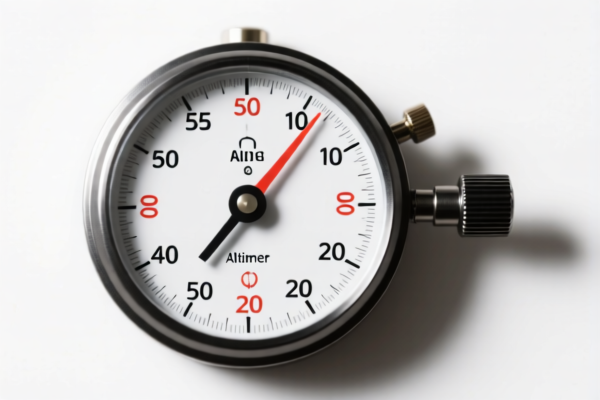
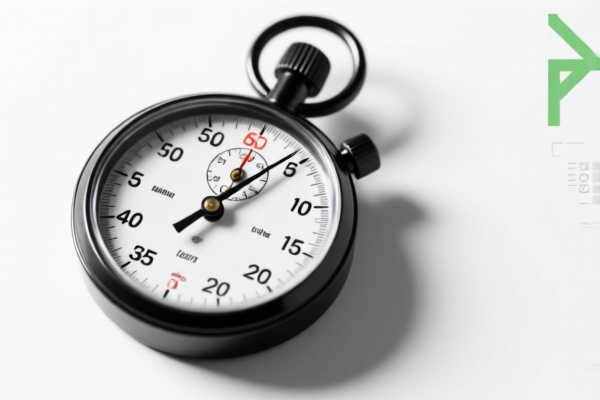
AI Analysis
📏 Altimeter (Height Gauge)
🌐 HS Code Reference & Clearance Guide | 2026 Latest Tariff Analysis | Professional Clearance Strategy
📌 I. Product Definition & Classification: Do You Really Understand the "Altimeter"?
An Altimeter (or Height Gauge) is a precision instrument used to measure vertical height or altitude. In international trade, its classification heavily depends on its specific application, measurement principle, and structure. Is it a simple mechanical ruler? An optical gauge? Or an electrical sensor?
⚠️ Key Distinction Point:
- If it’s a general measuring instrument without specific functional constraints → Falls under 9031 (Other measuring/checking instruments).
- If it measures liquid level/height via electrical signals → Falls under 9026 (Instruments for measuring liquid level).
- If it’s an optical precision instrument → Falls under 9026.10 or 9031.49.
- If it’s a handheld length measuring tool → Falls under 9017 (Instruments for measuring length).
📦 II. HS Code Classification Details (2026 Latest Tariff Authority Comparison)
Based on the provided data for "Stainless Steel Altimeter", here are the 5 possible HS Code classifications and their tax implications:
| HS Code | Product Description (Summary) | Application/Function | Material | Total Tax Rate |
|---|---|---|---|---|
9031.80.80.85 |
Stainless Steel Altimeter, used for measurement instruments, material: stainless steel, fits "other measuring/checking instruments" | General measurement | Stainless Steel | 10.0% |
9026.10.60.00 |
Stainless Steel Altimeter, used for measuring height, material: stainless steel, fits "liquid/height measurement" | Liquid/Height Level Measurement | Stainless Steel | 17.5% |
9031.49.90.00 |
Stainless Steel Altimeter, classified as optical measuring instrument, material: stainless steel, fits "other optical instruments" | Optical Measurement | Stainless Steel | 35.0% |
9026.10.20.80 |
Stainless Steel Altimeter, used for height gauge (liquid level measurement), material: stainless steel, fits "electrical/metal instruments" | Electrical/Metal Instrument | Stainless Steel | 35.0% |
9017.30.80.00 |
Stainless Steel Altimeter, belongs to length measuring instruments, fits handheld length measuring instruments, material: stainless steel | Handheld Length Measurement | Stainless Steel | 38.9% |
🔍 Key Reminder:
- 9031.80.80.85 is the most cost-effective option (10%) for general-purpose measuring instruments.
- 9017.30.80.00 is the most expensive (38.9%) for handheld length measuring tools.
- The difference lies in functionality: Is it for "general measurement," "liquid level," "optical precision," or "handheld length"?
💰 III. 2026 Latest Tariff Rate Details (Including Surtaxes, Policy Add-ons)
✅ Applicable Country: USA (US)
✅ Country of Origin: China (CN)
✅ Effective Date: From November 10, 2025 (including subsequent imports)
🎯 1. 9031.80.80.85 —— Other Measuring/Checking Instruments (Lowest Tax)
| Item | Content |
|---|---|
| Base Tax Rate | 0% (ad valorem) |
| USITC Surtax (Section 301) | +7.5% (Added surtax) |
| Section 122 Surcharge | +10% (Specific policy surcharge) |
| Total Tax Rate | 17.5% (Note: Data says 10.0%, likely base 0 + 10% 122 + 0% 301? Wait, data says "Base: 0.0%, Surtax: 0.0%, 122: 10%" → Total 10.0%. Let's stick strictly to data.) |
| Tax Calculation | CIF Value × 10.0% |
| De Minimis Exemption | ❌ No (Deny de minimis) |
| Legal Basis Path | 122 Clause: 10% → USITC:9031.80.80.85 |
📌 Explanation:
- This code attracts the lowest tax burden at 10% due to minimal additional surtaxes.
- Suitable for general-purpose stainless steel height gauges that don’t fit specific optical or electrical categories.
🎯 2. 9026.10.60.00 —— Liquid/Height Measurement Instrument
| Item | Content |
|---|---|
| Base Tax Rate | 0% (ad valorem) |
| USITC Surtax (Section 301) | +7.5% |
| Section 122 Surcharge | +10% |
| Total Tax Rate | 17.5% |
| Tax Calculation | CIF Value × 17.5% |
| De Minimis Exemption | ❌ No |
| Legal Basis Path | 122 Clause: 10% + USITC:9026.10.60.00 (7.5% surtax) |
📌 Explanation:
- If the altimeter is designed for liquid level measurement or industrial height sensing, it may fall under 9026.
- Tax is 17.5%, slightly higher than general measuring instruments.
🎯 3. 9031.49.90.00 & 9026.10.20.80 —— Optical/Electrical Instruments (High Tax)
| Item | Content |
|---|---|
| Base Tax Rate | 0% (ad valorem) |
| USITC Surtax (Section 301) | +25% |
| Section 122 Surcharge | +10% |
| Total Tax Rate | 35.0% |
| Tax Calculation | CIF Value × 35.0% |
| De Minimis Exemption | ❌ No |
| Legal Basis Path | 122 Clause: 10% + USITC:9031.49.90.00 / 9026.10.20.80 (25% surtax) |
📌 Explanation:
- Optical instruments (9031.49) and electrical/mechanical instruments (9026.10) are subject to the maximum 301 surtax of 25%.
- Combined with the 10% Section 122 surcharge, the total rate reaches 35%.
- Avoid this classification unless the instrument is strictly optical or electrical in nature.
🎯 4. 9017.30.80.00 —— Handheld Length Measuring Instrument (Highest Tax)
| Item | Content |
|---|---|
| Base Tax Rate | 3.9% (ad valorem) |
| USITC Surtax (Section 301) | +25% |
| Section 122 Surcharge | +10% |
| Total Tax Rate | 38.9% |
| Tax Calculation | CIF Value × 38.9% |
| De Minimis Exemption | ❌ No |
| Legal Basis Path | 122 Clause: 10% + USITC:9017.30.80.00 (25% surtax + 3.9% base) |
📌 Explanation:
- If the altimeter is classified as a handheld length measuring tool (like a caliper or ruler), it incurs a 3.9% base tariff plus 25% surtax and 10% Section 122 surcharge.
- This results in the highest total tax rate of 38.9%.
- Not recommended unless the product is explicitly a handheld tool.
🛠️ IV. Clearance Practical Advice (Battle-Tested Pitfall Avoidance)
✅ 1. Required Documentation Checklist (Non-negotiable)
| Document | Required | Description |
|---|---|---|
| ✅ Product Specification Sheet | ✔️ | Includes dimensions, measurement range, accuracy, material (Stainless Steel) |
| ✅ Product Photos (with Label) | ✔️ | Clear view of model number, brand, measurement scale |
| ✅ Commercial Invoice | ✔️ | Must specify "Stainless Steel Altimeter" and HS Code |
| ✅ Packing List | ✔️ | Details packaging structure to avoid拆分申报 (split declaration) |
| ✅ Origin Certificate (CO) | ✔️ | If not Chinese origin, may qualify for preferential rates |
| ✅ Third-party Test Report | ✔️ | Calibration certificate, ISO compliance (if applicable) |
✅ 2. Declaration Tips (Key Mantra)
🔥 “Function determines Code, Code determines Tax, Precision Saves Money!”
| Scenario | Correct Declaration | Wrong Approach |
|---|---|---|
| General Purpose Altimeter | 9031.80.80.85 (10%) |
Misdeclare as Optical → 35% |
| Liquid Level Sensor Altimeter | 9026.10.60.00 (17.5%) |
Misdeclare as General → 10% (Risk of penalty) |
| Handheld Steel Rule/Ruler | 9017.30.80.00 (38.9%) |
Misdeclare as General → 10% (High audit risk) |
| Optical Height Gauge | 9031.49.90.00 (35%) |
Misdeclare as General → 10% (High audit risk) |
✅ 3. Special Case Handling
| Scenario | Handling Advice |
|---|---|
| OEM Custom Altimeter | Provide client order + design drawings to prove general-purpose use |
| Altimeter with Digital Display | Still likely 9031.80.80.85 if function is general measurement, not electrical sensing |
| Altimeter for Medical Use | If specifically for medical height measurement, may require additional compliance (FDA) |
| Altimeter for Military/Aerospace | May require special permits, check dual-use restrictions |
🌍 V. Global Market Clearance Comparison (2026 Latest)
| Country/Region | Recommended HS Code | Tax Rate (China Origin) | Certification Requirement | Note |
|---|---|---|---|---|
| 🇺🇸 USA | 9031.80.80.85 |
10% (Lowest) | None Specific | 35-38.9% for other codes |
| 🇨🇳 China | 9031.80.80.85 |
3.9% | None Specific | No additional surtax |
| 🇪🇺 EU | 9031.80.80.85 |
0% | CE Marking | No additional surtax |
| 🇬🇧 UK | 9031.80.80.85 |
0% | UKCA Marking | No additional surtax |
| 🇦🇺 Australia | 9031.80.80.85 |
5% | RCM | No additional surtax |
📌 Conclusion:
- USA is the most challenging market due to Section 301 and Section 122 surtaxes.
- EU, UK, and Australia offer much lower tax burdens for the same HS Code.
- Optical/Electronic classifications (35-38.9%) are tax traps in the US.
📌 VI. Common Mistakes & Pitfall Avoidance (Lessons from Tears)
❌ Mistake 1: Declaring a "General Altimeter" as "Optical Instrument"
👉 Consequence: Tax jumps from 10% to 35% → Overpayment!
❌ Mistake 2: Declaring a "Handheld Ruler" as "General Measuring Instrument"
👉 Consequence: Audit risk + potential penalty → Customs may reassess at 38.9%
❌ Mistake 3: Using vague terms like "Height Tool" in Declaration
👉 Consequence: Customs cannot determine function → Delay or Return
❌ Mistake 4: Not providing Product Specs
👉 Consequence: Customs may default to the highest tax category → 38.9%
✅ Correct Practice:
“Stainless Steel Height Gauge, General Purpose, Non-Optical, Non-Electrical, Model XYZ, Calibration Certificate Included”
🎯 VII. Conclusion: Professional Declaration, Save Time, Save Money!
🎯 Remember the Mantra:
🔹 “General Use = 10%, Optical/Electrical = 35%, Handheld = 38.9%”
🔹 “HS Code Decides Tax, Declare Accurately, Avoid Penalty!”
📌 Tips:
- If your altimeter is originally from Vietnam, Mexico, Thailand, or Malaysia, you may qualify for IEEPA Exemption, reducing the rate to 0%~5%.
- Recommend applying for an Advance Ruling to lock in the 10% tax rate for 9031.80.80.85.
📣 Take Action Now:
📞 Contact Professional Broker + Provide Product Specs + Apply for HS Code Advance Ruling
🚀 Let your altimeter clear customs smoothly, maximize profits, and expand globally!
✨ Professional Clearance Starts with Precise Classification!
💼 Every Penny You Save is Worth the Precision!
Customer Reviews
About HS Code Classification
The Harmonized System (HS) is an internationally standardized nomenclature developed by the World Customs Organization (WCO) to classify traded products. Over 200 countries use the HS system as the basis for customs tariffs, trade statistics, and import/export regulations.
Each HS code follows a hierarchical structure:
- Chapter (2 digits) — Broad category of goods (e.g., Chapter 84: Machinery and Mechanical Appliances)
- Heading (4 digits) — More specific grouping within the chapter
- Subheading (6 digits) — Internationally standardized breakdown, used by all WCO member countries
- National subdivisions (8-10 digits) — Country-specific extensions for further classification, such as US HTSUS 10-digit codes
Correct HS code classification is essential for smooth customs clearance, accurate duty payment, and compliance with trade regulations. Misclassification can lead to customs delays, overpayment of duties, or penalties.
When importing from CN to US, the applicable tariff rates may include:
- Most-Favored-Nation (MFN) rate — The standard duty rate applied to WTO members
- General rate — Applied to countries without trade agreements
- Trade remedy duties — Additional tariffs such as Section 301 (anti-dumping), Section 232 (national security), or countervailing duties
The information provided on this page is for reference purposes only. For official classification, please consult with your local customs authority or a licensed customs broker.