Aluminum Alloy Non Standard Parts
CN → US| HS Code | Tariff Rate | Origin | Destination | Doc |
|---|---|---|---|---|
| 8487900080 | 88.9% | CN | US | Official Doc |
| 8487900040 | 38.9% | CN | US | Official Doc |
| 7616995190 | 87.5% | CN | US | Official Doc |
| 7616995170 | 37.5% | CN | US | Official Doc |
Product Images
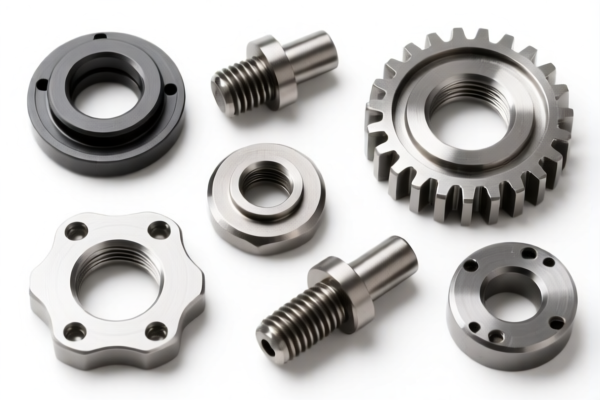
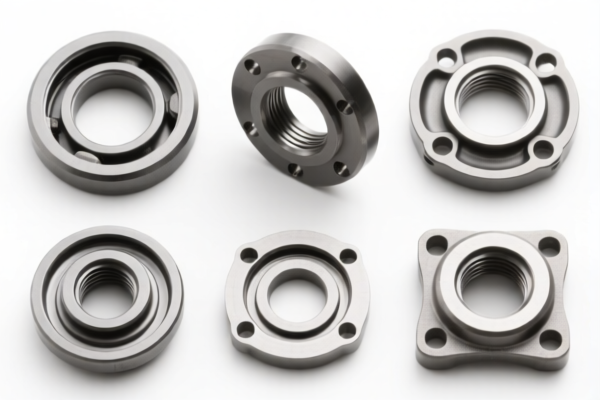
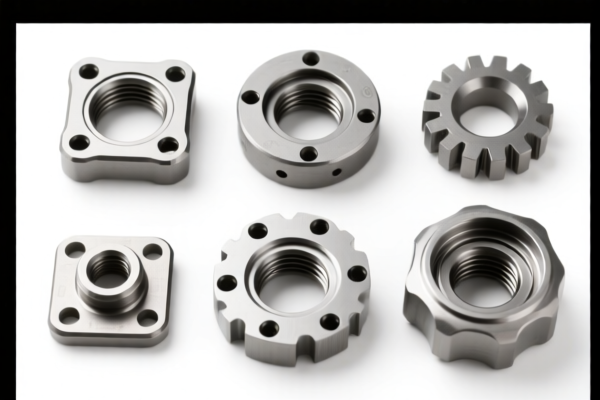
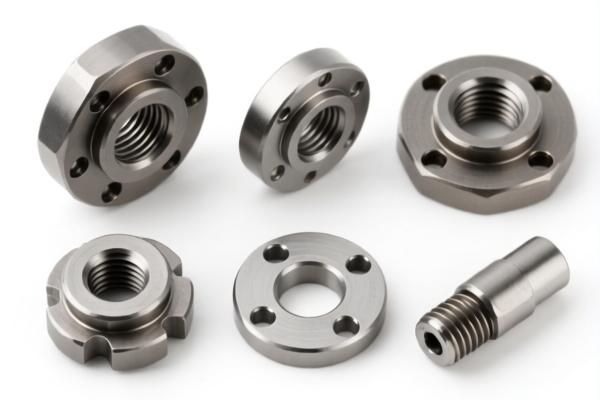
AI Analysis
🏭 Aluminum Alloy Non-Standard Parts (Machinery Components)
🌐 HS Code Reference & Customs Clearance Guide | 2024 Latest Tariff Analysis | Professional Clearance Strategy
📌 I. Product Definition & Classification: What Are "Non-Standard Parts"?
Aluminum Alloy Non-Standard Parts refer to mechanical components manufactured specifically for machinery, equipment, or industrial apparatus. These are not generic, off-the-shelf items but are custom-fitted or uniquely shaped for specific operational needs.
In international trade, they are primarily categorized based on their function and composition:
- Machinery Parts (General): Components like housings, brackets, gears, or shafts that are integral to the operation of machinery but do not contain electrical features.
- General Aluminum Articles: Finished or semi-finished aluminum products that do not fit specific machinery definitions (e.g., pure structural components, decorative frames, or simple fixtures).
⚠️ Key Distinction:
- If the part is integral to a machine and has no electrical connectors, coils, or contacts → It is a Machinery Part. - If the part is a general aluminum object (forging, casting, or simple article) not specified elsewhere → It is an Article of Aluminum.
📦 II. HS Code Classification Details (2024 Latest Tariff Alignment)
| HS Code | Product Description | Application Scenario | Electrical Features? |
|---|---|---|---|
8487.90.00.80 |
Machinery parts, not containing electrical connectors, insulators, coils, contacts or other electrical features; Other | General machine housings, non-electrical brackets, custom casings, mechanical linkages | ❌ No |
8487.90.00.40 |
Machinery parts; Other | Oil Seals (and similar sealing components) specifically for machinery | ❌ No |
7616.99.51.90 |
Other articles of aluminum: Forgings/Castings/Other; Other | General aluminum forgings, castings, or non-machinery specific aluminum articles (e.g., decorative, structural, or miscellaneous) | N/A |
7616.99.51.70 |
Other articles of aluminum: Forgings | Aluminum Forgings specifically intended as general articles (not classified as machinery parts under Ch. 84) | N/A |
🔍 Critical Reminder:
- Machinery Parts (Ch. 84) take precedence if the part is clearly identified as such for a specific machine and lacks electrical features. - Aluminum Articles (Ch. 76) apply when the part is a general aluminum component, especially if it is a forging or does not fit the specific machinery definition. - Electrical Features Check: If the aluminum part contains wires, connectors, or insulators, it cannot be classified under8487.90.00. It may fall under Ch. 85 (Electrical Machinery). The data provided assumes no electrical features.
💰 III. 2024 Latest Tariff Rate Breakdown (Including Surtaxes & Policy Add-ons)
✅ Applicable Country: USA (US)
✅ Country of Origin: China (CN)
✅ Effective Time: Current rates (Subject to 301 Tariffs & Steel/Aluminum Surtaxes)
🎯 1. 8487.90.00.80 – Machinery Parts (Other, Non-Electrical)
| Item | Content |
|---|---|
| Base Tariff | 3.9% |
| Section 301 Surtax | +25.0% |
| Steel/Aluminum Surtax | +50.0% (Note: Specific surtax for Aluminum products under certain provisions) |
| Total Tariff Rate | 78.9% |
| Tax Calculation | CIF Value × 78.9% |
| De Minimis Exemption | ❌ Not Eligible |
| Legal Basis Path | USITC:8487.90.00.80 → 301:25% → Aluminum Surtax:50% |
📌 Explanation:
- The 78.9% total rate is extremely high. It combines the standard base duty (3.9%), the Section 301 additional duty (25%), and a specific 50% surtax applicable to certain aluminum/steel machinery components. - This classification is risky for cost management due to the additive nature of the surtaxes.
🎯 2. 8487.90.00.40 – Machinery Parts (Oil Seals, etc.)
| Item | Content |
|---|---|
| Base Tariff | 3.9% |
| Section 301 Surtax | +25.0% |
| Steel/Aluminum Surtax | Not Applied (Specific to "Other" machinery parts, not always included for seals/separates) |
| Total Tariff Rate | 28.9% |
| Tax Calculation | CIF Value × 28.9% |
| De Minimis Exemption | ❌ Not Eligible |
| Legal Basis Path | USITC:8487.90.00.40 → 301:25% |
📌 Note:
- If your part is specifically an Oil Seal or similar sealing component, the 50% aluminum surtax may not apply, resulting in a significantly lower rate of 28.9% compared to 78.9% for general machinery parts. - Ensure the description accurately reflects "Oil Seals" if applicable.
🎯 3. 7616.99.51.90 – Other Articles of Aluminum (Other)
| Item | Content |
|---|---|
| Base Tariff | 2.5% |
| Section 301 Surtax | +25.0% |
| Steel/Aluminum Surtax | +50.0% |
| Total Tariff Rate | 77.5% |
| Tax Calculation | CIF Value × 77.5% |
| De Minimis Exemption | ❌ Not Eligible |
| Legal Basis Path | USITC:7616.99.51.90 → 301:25% → Aluminum Surtax:50% |
📌 Explanation:
- General aluminum articles face the 77.5% total rate. - This is slightly lower than8487.90.00.80(78.9%) due to a lower base rate (2.5% vs 3.9%), but the 50% surtax is still applied.
🎯 4. 7616.99.51.70 – Other Articles of Aluminum (Forgings)
| Item | Content |
|---|---|
| Base Tariff | 2.5% |
| Section 301 Surtax | +25.0% |
| Steel/Aluminum Surtax | Not Applied |
| Total Tariff Rate | 27.5% |
| Tax Calculation | CIF Value × 27.5% |
| De Minimis Exemption | ❌ Not Eligible |
| Legal Basis Path | USITC:7616.99.51.70 → 301:25% |
📌 Key Advantage:
- If the aluminum parts are Forgings and are classified under Ch. 76 (Articles of Aluminum) rather than Ch. 84 (Machinery Parts), the 50% aluminum surtax is NOT applied. - This results in the lowest possible rate of 27.5%, making it the most cost-effective classification if the product fits this description.
🛠️ IV. Customs Clearance Practical Advice (Real-World Pitfall Avoidance)
✅ 1. Documentation Checklist (Essential)
| Document | Required | Description |
|---|---|---|
| ✅ Product Spec Sheet | ✔️ | Detailed dimensions, material alloy (e.g., 6061-T6), tolerance levels. |
| ✅ Engineering Drawings | ✔️ | Crucial for proving "Non-Standard" nature and distinguishing from generic parts. |
| ✅ Commercial Invoice | ✔️ | Must clearly state "Aluminum Alloy Forging" or "Machinery Part" as per HS choice. |
| ✅ Packing List | ✔️ | Separate packaging if mixing classifications (not recommended). |
| ✅ Bill of Lading | ✔️ | Standard shipping document. |
| ✅ Origin Certificate | ✔️ | Proof of China origin (triggers surtaxes). |
✅ 2. Classification Strategy (Key Mnemonic)
🔥 "Forging is Cheap, Seals are Mid, General Parts are Expensive!"
| Scenario | Recommended HS Code | Total Rate | Why? |
|---|---|---|---|
| Aluminum Forgings (General Use) | 7616.99.51.70 |
27.5% | Best Choice. Base + 301 only. No 50% surtax. |
| Oil Seals (Machinery) | 8487.90.00.40 |
28.9% | Second Best. Specific subheading avoids aluminum surtax. |
| General Aluminum Articles | 7616.99.51.90 |
77.5% | Expensive due to 50% surtax. |
| General Machinery Parts | 8487.90.00.80 |
78.9% | Most Expensive. Base + 301 + 50% surtax. |
✅ 3. Special Handling Tips
| Situation | Advice |
|---|---|
| Custom Machinery Components | If the part is unique to one machine, argue for 8487.90.00.80 only if necessary. Try to reclassify as "Forging" (7616.99.51.70) if it can be described as a general aluminum forging. |
| Mixed Shipments | Do not mix "Forgings" and "General Machinery Parts" in one HS line. Declare separately to optimize tax. |
| Electrical Features? | If the part has any wire, connector, or insulator, DO NOT use 8487 or 7616. It may be Ch. 85. |
| Pre-Ruling | Due to the high tax variance (27.5% vs 78.9%), apply for a Binding Tariff Information (BTI) or US CBP Ruling before shipment. |
🌍 V. Global Market Comparison (2024/2025)
| Country/Region | Recommended HS Code | Approx. Tariff (China Origin) | Certification | Notes |
|---|---|---|---|---|
| 🇺🇸 USA | 7616.99.51.70 |
27.5% | N/A | Best rate via "Forging" classification. Avoid Ch. 84 if possible. |
| 🇨🇳 China | 7616.99.51.70 |
2.5% (Import) | N/A | Low import duty. |
| 🇪🇺 EU | 7616.99.90 |
~0-5% | CE/RoHS if applicable | Generally lower tariffs than US. |
| 🇬🇧 UK | 7616.99.90 |
~0-5% | UKCA | Post-Brexit rules apply. |
📌 Conclusion:
- USA is the most punitive market for aluminum parts due to the 50% surtax on general articles and machinery parts. - Classification is critical: Moving from8487.90.00.80(78.9%) to7616.99.51.70(27.5%) saves over 50% in taxes.
📌 VI. Common Errors & Pitfalls (Lessons Learned)
❌ Error 1: Classifying "Aluminum Forgings" as "Machinery Parts" (8487.90.00.80)
👉 Consequence: Pay 78.9% instead of 27.5%. Huge overpayment!
❌ Error 2: Ignoring the "Electrical Features" check
👉 Consequence: If the part has a wire, 8487 is invalid. Customs will reclassify, leading to fines and delays.
❌ Error 3: Vague Descriptions ("Aluminum Part")
👉 Consequence: Customs will assign the highest possible tariff or delay clearance for further inquiry.
✅ Correct Description Example:
"Aluminum Alloy 6061-T6 Forging, Non-Standard, No Electrical Features, Used as Housing for Industrial Pump, Model XYZ"
🎯 VII. Conclusion: Professional Declaration Saves Money!
🎯 Remember the Golden Rule:
🔹 "Forging < 30%, Seals < 30%, General Parts > 75%."
🔹 "Check for Electricity. Check for Forging. Choose Wisely."📌 Pro Tip:
If your parts are Forgings, always try to classify under7616.99.51.70to avoid the 50% surtax.
If they are Oil Seals, use8487.90.00.40.
Only use8487.90.00.80or7616.99.51.90if no other option exists, and budget for ~78% tax.
📣 Immediate Action:
📞 Contact a customs broker for a Pre-Ruling on your specific drawings.
🚀 Optimize your classification to save 50%+ in tariffs.
✨ Precision Classification, Maximum Profit!
💼 Every percentage point counts in global trade.
Customer Reviews
About HS Code Classification
The Harmonized System (HS) is an internationally standardized nomenclature developed by the World Customs Organization (WCO) to classify traded products. Over 200 countries use the HS system as the basis for customs tariffs, trade statistics, and import/export regulations.
Each HS code follows a hierarchical structure:
- Chapter (2 digits) — Broad category of goods (e.g., Chapter 84: Machinery and Mechanical Appliances)
- Heading (4 digits) — More specific grouping within the chapter
- Subheading (6 digits) — Internationally standardized breakdown, used by all WCO member countries
- National subdivisions (8-10 digits) — Country-specific extensions for further classification, such as US HTSUS 10-digit codes
Correct HS code classification is essential for smooth customs clearance, accurate duty payment, and compliance with trade regulations. Misclassification can lead to customs delays, overpayment of duties, or penalties.
When importing from CN to US, the applicable tariff rates may include:
- Most-Favored-Nation (MFN) rate — The standard duty rate applied to WTO members
- General rate — Applied to countries without trade agreements
- Trade remedy duties — Additional tariffs such as Section 301 (anti-dumping), Section 232 (national security), or countervailing duties
The information provided on this page is for reference purposes only. For official classification, please consult with your local customs authority or a licensed customs broker.