Aluminum Alloy Rods, Bars, and Profiles
CN → US| HS Code | Tariff Rate | Origin | Destination | Doc |
|---|---|---|---|---|
| 7604293030 | 12.6% | CN | US | Official Doc |
| 7604295020 | 13.0% | CN | US | Official Doc |
Product Images
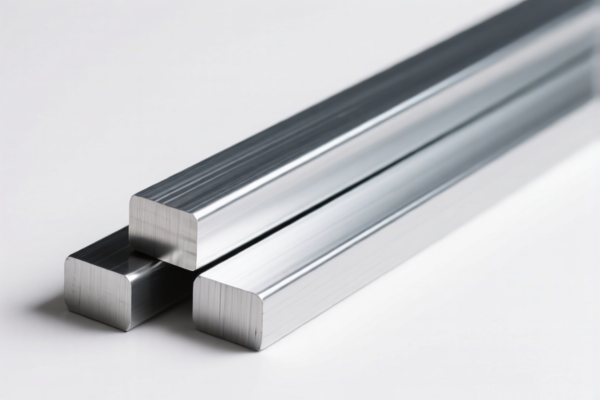
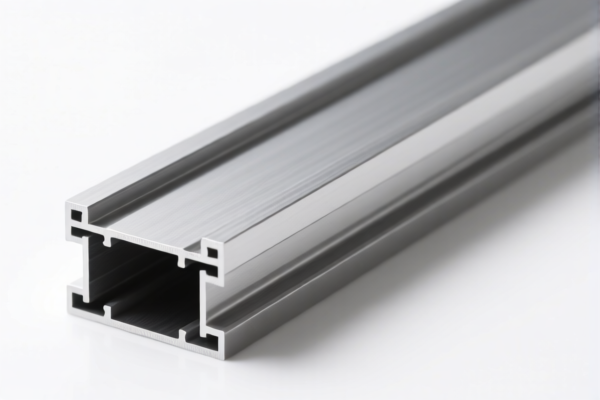
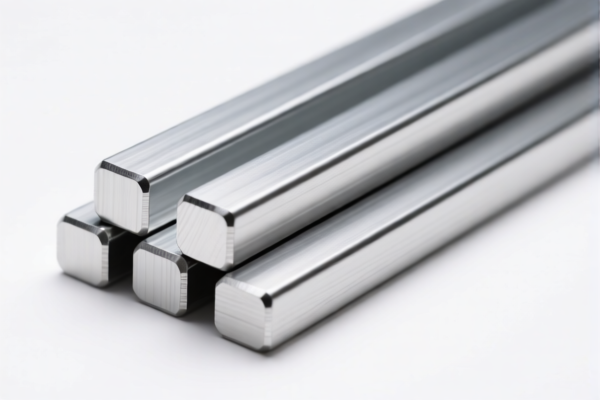
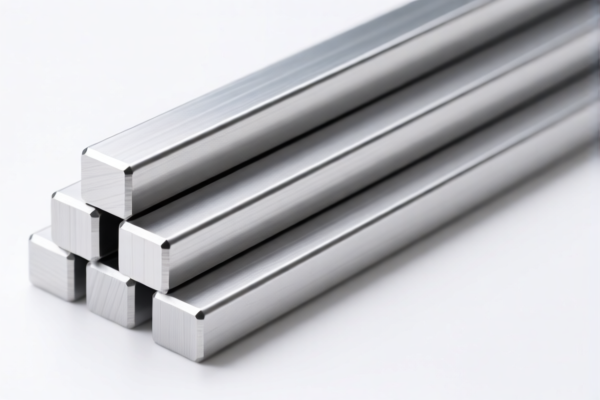
AI Analysis
🏗️ Aluminum Alloy Rods, Bars, and Profiles: High-Strength Heat-Treatable Variants
🌐 HS Code Reference & Customs Clearance Guide | 2026 Tariff Analysis | Precision Compliance Strategy
📌 I. Product Definition & Classification: What Exactly Are We Shipping?
Aluminum rods, bars, and profiles are essential structural components in aerospace, automotive, construction, and industrial machinery sectors. When dealing with High-Strength Heat-Treatable Alloys (as specified in your inquiry), the classification hinges on two critical factors:
1. Cross-Section Shape: Round vs. Other.
2. Alloy Type: Specifically those described in Statistical Note 6 to Chapter 76 of the Harmonized System (typically high-strength series like 2xxx, 6xxx, or 7xxx).
⚠️ Key Distinction:
- If the cross-section is ROUND → It falls under "Bars and Rods: Having a round cross section" → HS 7604.29.30.30
- If the cross-section is NON-ROUND (square, hexagonal, I-beam, channel, etc.) → It falls under "Bars and Rods: Other" → HS 7604.29.50.20
📦 II. HS Code Classification Details (2026 Tariff Authority对照)
| HS Code | Product Description | Applicable Scenario | Cross-Section Shape |
|---|---|---|---|
7604.29.30.30 |
Aluminum bars, rods, profiles: Of aluminum alloys: Other: Bars and rods: Having a round cross section High-strength heat-treatable alloys | Round rods, cylindrical bars, round extrusions for aerospace/automotive shafts | ⚪ Round Only |
7604.29.50.20 |
Aluminum bars, rods, profiles: Of aluminum alloys: Other: Bars and rods: Other High-strength heat-treatable alloys | Square bars, hexagonal rods, I-beams, channels, custom profiles for structural use | 🔷 Non-Round (Other) |
🔍 Critical Reminder:
- The phrase "High-strength heat-treatable alloys of a kind described in statistical note 6 to this chapter" is mandatory for both codes. Ensure your commercial invoice and technical datasheets explicitly state this classification.
- Do not confuse these with non-heat-treatable alloys (e.g., 1xxx, 3xxx, 5xxx series), which may have different sub-classifications.
- Round vs. Non-Round is the primary divider. Misclassifying a round bar as a profile (or vice versa) can lead to severe penalties.
💰 III. 2026 Latest Tariff Rate Breakdown (Including Additional Duties & Policy Surcharges)
✅ Applicable Country: USA (US)
✅ Country of Origin: China (CN) (Assumed based on typical trade context; adjust if origin differs)
✅ Effective Date: 2025-11-10 onwards (for subsequent imports)
🎯 1. 7604.29.30.30 — Aluminum Round Bars/Rods (High-Strength Heat-Treatable)
| Item | Detail |
|---|---|
| Base Tariff | 2.6% (ad valorem) |
| Section 301 / IEEPA Surcharge | 0.0% |
| Total Tax Rate | 2.6% |
| Tax Calculation | CIF Value × 2.6% |
| De Minimis Exemption Eligible? | ✅ Yes (Low total rate may allow informal entry under certain thresholds, but verify with CBP) |
| Legal Basis Path | HTSUS:7604.29.30.30 → USITC:7604.29.30 → Section 301: Footnote 9903.88.01 (if applicable, but here 0%) |
📌 Interpretation:
- This code has a moderate base tariff of 2.6%.
- No additional Section 301 or IEEPA surcharges apply to this specific sub-heading for Chinese origin, making it highly competitive.
- Ideal for high-volume shipments of round aerospace-grade aluminum rods.
🎯 2. 7604.29.50.20 — Aluminum Non-Round Bars/Profiles (High-Strength Heat-Treatable)
| Item | Detail |
|---|---|
| Base Tariff | 0.0% |
| Section 301 / IEEPA Surcharge | 0.0% |
| Total Tax Rate | 0.0% |
| Tax Calculation | CIF Value × 0.0% = $0 Duty |
| De Minimis Exemption Eligible? | ✅ Yes (Duty-free) |
| Legal Basis Path | HTSUS:7604.29.50.20 → USITC:7604.29.50 |
📌 Note:
- This code is duty-free.
- Applies to all non-round shapes (square, hex, I-beam, custom extrusions) made from high-strength heat-treatable alloys.
- Zero tariff advantage makes this the most cost-effective classification for structural aluminum components.
🛠️ IV. Customs Clearance Practical Advice (Battle-Tested Pitfall Avoidance)
✅ 1. Documentation Checklist (Non-Negotiable)
| Document | Must Provide? | Description |
|---|---|---|
| ✅ Product Specification Sheet | ✔️ | Must specify alloy series (e.g., 6061-T6, 7075-T6), heat treatment status, and mechanical properties. |
| ✅ Technical Data Sheet | ✔️ | Must explicitly state "High-Strength Heat-Treatable Alloy per Statistical Note 6, Chapter 76". |
| ✅ Commercial Invoice | ✔️ | Clearly describe as "Aluminum Bars/Rods/Profiles, High-Strength Heat-Treatable Alloy, [Round/Non-Round]". Avoid generic terms like "Aluminum Metal". |
| ✅ Packing List | ✔️ | Detail dimensions, weight, and packaging type. |
| ✅ Bill of Lading/Air Waybill | ✔️ | Standard shipping docs. |
| ✅ Certificate of Origin | ✔️ | Required to prove CN origin for duty calculation (if applicable). |
| ✅ Photos of Product & Labels | ✔️ | Show cross-section shape clearly. |
✅ 2. Declaration Tips (Key Mantra)
🔥 "Round or Not? Define the Shape! Heat-Treatable? State It Clearly!"
| Scenario | Correct Declaration | Wrong Approach |
|---|---|---|
| Round Rods | 7604.29.30.30 |
Mislabeling as "Aluminum Pipe" or generic "Bar" → Risk of misclassification |
| Square/Hex Bars | 7604.29.50.20 |
Calling them "Rods" → Incorrect sub-category |
| Non-Heat-Treatable Alloy | ❌ Do NOT use these codes | These codes are exclusively for High-Strength Heat-Treatable Alloys. For others, use 7604.21/22/29 general provisions. |
| Mixed Shipment | Separate HS Codes by shape | Do not lump round and non-round into one line item if HS codes differ. |
✅ 3. Special Case Handling
| Situation | Handling Advice |
|---|---|
| Custom Extruded Profiles | Ensure cross-section is clearly described. If it’s not round, use 7604.29.50.20. |
| Mixed Origin Products | If some bars are from Vietnam/Mexico (exempt from Section 301) and some from China, separate shipments to maximize duty-free status where possible. |
| Alloy Ambiguity | If the alloy is not clearly "high-strength heat-treatable," you may fall into a higher general tariff bucket. Provide mill certificates to prove alloy type. |
| Duty Drawback Eligibility | If these metals are re-exported, check for Duty Drawback opportunities. |
🌍 V. Global Market Comparison (2026 Latest)
| Country/Region | Recommended HS Code | Tariff (CN Origin) | Certification Requirements | Notes |
|---|---|---|---|---|
| 🇺🇸 USA | 7604.29.30.30 / 7604.29.50.20 |
2.6% / 0.0% | None specific | No Section 301 surcharge for these sub-codes! |
| 🇨🇳 China | 7604.29.30.30 / 7604.29.50.20 |
Varies (Import Duty) | None | Standard import procedures. |
| 🇪🇺 EU | 7604.29 series |
~0-2% (varies by member state) | CE Mark (if used in machinery) | Low tariffs, strong focus on alloy composition. |
| 🇬🇧 UK | 7604.29 series |
~2-3% | UKCA Mark (post-Brexit) | Similar to EU standards. |
| 🇨🇦 Canada | 7604.29 series |
~0% (if CUSMA eligible) | None | Check for CUSMA preferential rates. |
📌 Conclusion:
- USA offers favorable duty rates for high-strength heat-treatable aluminum bars/rods, especially for non-round profiles (0%).
- No hidden surcharges currently apply to these specific HTS codes, unlike many other metal products.
- Precision in description is key to maintaining this low-tax status.
📌 VI. Common Errors & Pitfall Guide (Lessons from the Frontline)
❌ Error 1: Calling all aluminum bars "Rods"
👉 Consequence: If non-round bars are misclassified as round rods, you might face 2.6% vs 0% discrepancy or audit triggers.
✅ Fix: Clearly state shape: "Round Rod" or "Square Bar".
❌ Error 2: Omitting "Heat-Treatable Alloy" in description
👉 Consequence: Customs may classify under general aluminum bars (higher tariff) due to lack of specificity.
✅ Fix: Always include "High-Strength Heat-Treatable Alloy" in the commercial invoice.
❌ Error 3: Using generic terms like "Aluminum Metal"
👉 Consequence: High risk of inspection, delay, and potential misclassification.
✅ Fix: Use precise HS-aligned language: "Aluminum Alloy Rods, High-Strength, Heat-Treatable, Round".
❌ Error 4: Confusing with Aluminum Wire or Tubes
👉 Consequence: Different HS codes (7614 for wire, 7610 for structures).
✅ Fix: Ensure product is a solid bar/rod/profile, not hollow (tube) or stranded (wire).
🎯 VII. Conclusion: Precision Classification, Maximum Profit!
🎯 Remember the Mantra:
🔹 "Round or Square? Define the Shape! Heat-Treatable? Specify the Alloy! 2.6% or 0%? Choose Wisely!"
🔹 "HS Code 7604.29.30.30 = 2.6% (Round), 7604.29.50.20 = 0% (Non-Round). Zero Surcharge!"
📌 Pro Tip:
If your aluminum bars are sourced from Vietnam, Mexico, or Thailand, verify if they qualify for FTZ (Free Trade Zone) benefits or Section 301 exemptions, though the current 0-2.6% rates are already very competitive for CN-origin goods under these specific sub-codes.
Recommendation: Always request a Pre-Ruling (Advance Ruling) from CBP if you are shipping large volumes or uncertain about alloy classification.
📣 Immediate Action:
📞 Contact a Licensed Customs Broker + Provide Mill Certificates + Apply for Pre-Ruling
🚀 Ensure Smooth Customs Clearance, Minimize Tax Liability, Maximize Your Margin!
✨ Professional Classification Starts Here!
💼 Every Decimal Point in Tax Matters!
Customer Reviews
About HS Code Classification
The Harmonized System (HS) is an internationally standardized nomenclature developed by the World Customs Organization (WCO) to classify traded products. Over 200 countries use the HS system as the basis for customs tariffs, trade statistics, and import/export regulations.
Each HS code follows a hierarchical structure:
- Chapter (2 digits) — Broad category of goods (e.g., Chapter 84: Machinery and Mechanical Appliances)
- Heading (4 digits) — More specific grouping within the chapter
- Subheading (6 digits) — Internationally standardized breakdown, used by all WCO member countries
- National subdivisions (8-10 digits) — Country-specific extensions for further classification, such as US HTSUS 10-digit codes
Correct HS code classification is essential for smooth customs clearance, accurate duty payment, and compliance with trade regulations. Misclassification can lead to customs delays, overpayment of duties, or penalties.
When importing from CN to US, the applicable tariff rates may include:
- Most-Favored-Nation (MFN) rate — The standard duty rate applied to WTO members
- General rate — Applied to countries without trade agreements
- Trade remedy duties — Additional tariffs such as Section 301 (anti-dumping), Section 232 (national security), or countervailing duties
The information provided on this page is for reference purposes only. For official classification, please consult with your local customs authority or a licensed customs broker.